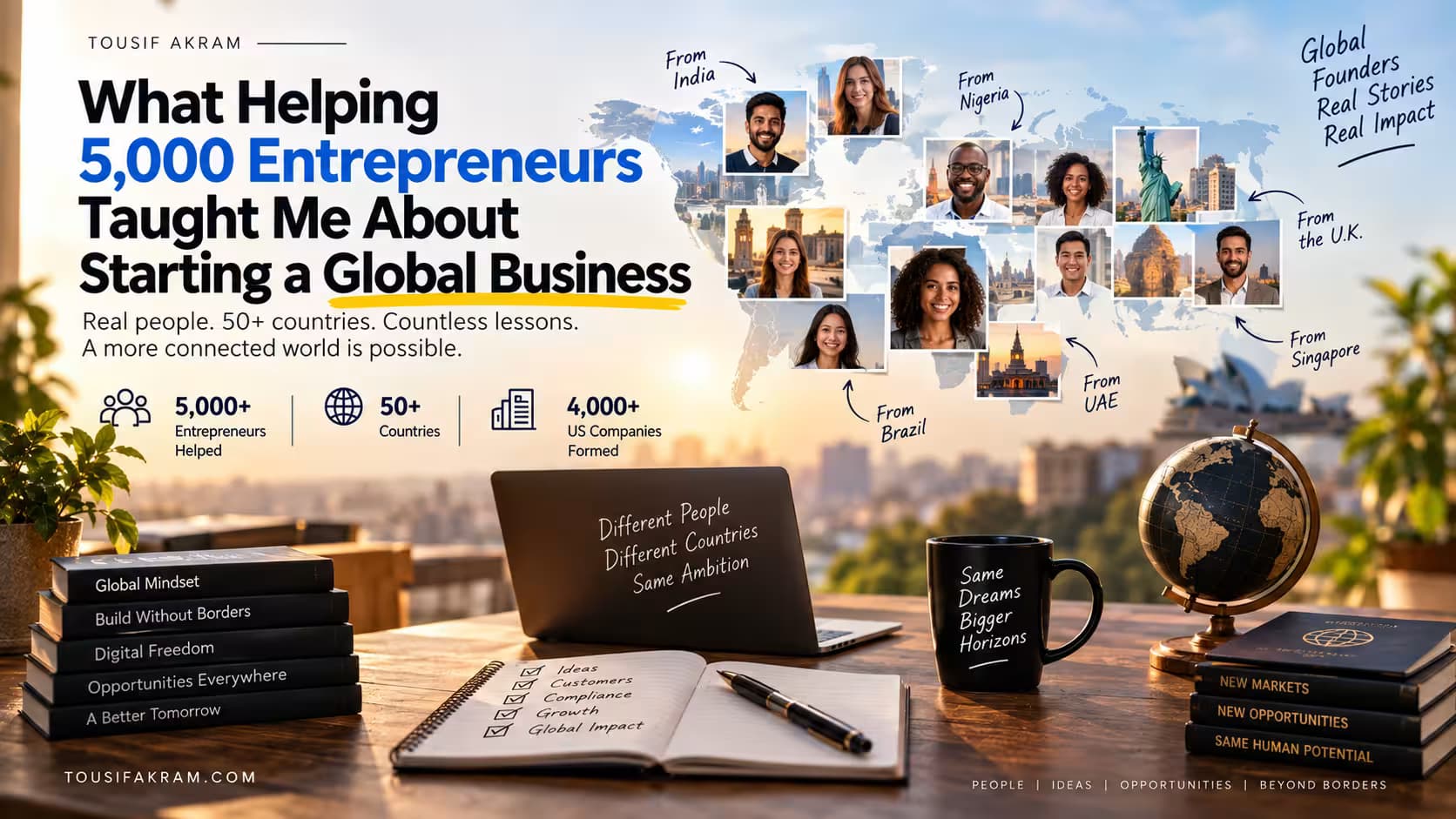
What Helping 5,000 Entrepreneurs Taught Me About Starting a Global Business

Tousif Akram
IRS CAA | Founder, FormLLC
What Helping 5,000 Entrepreneurs Taught Me About Starting a Global Business
When I started working with international clients, I wasn't thinking about helping thousands of entrepreneurs build businesses. I was simply trying to find opportunities beyond the place where I lived.
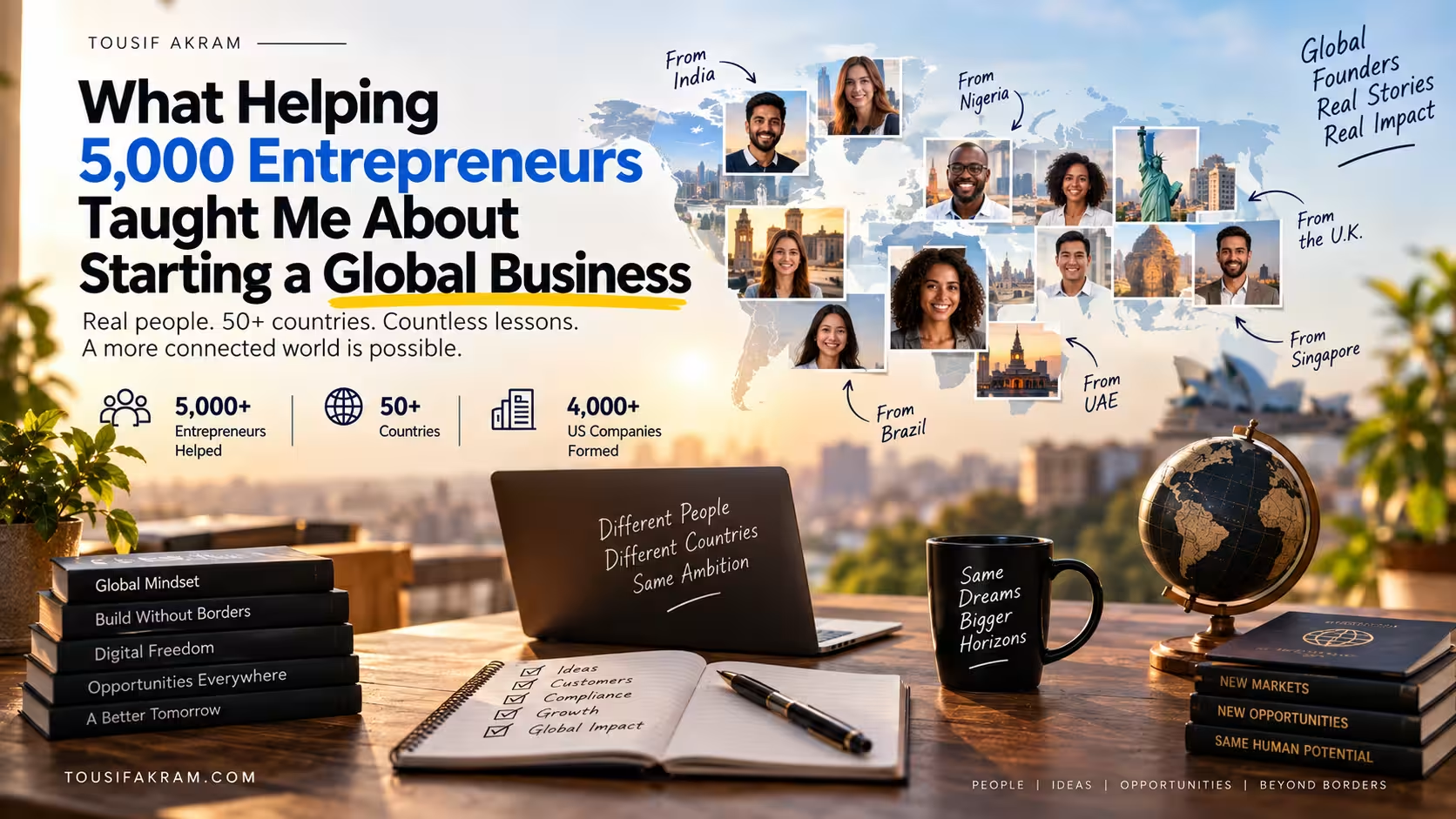
Today, FormLLC has helped more than 5,000 founders across 50+ countries establish their presence in the United States. That has given me the opportunity to speak with developers, freelancers, agency owners, ecommerce sellers, consultants, SaaS founders, and people starting their first businesses.
Their countries and business models are different, but many of the challenges they face are surprisingly similar. After thousands of conversations, I've learned that starting a global business is often less about geography and more about infrastructure, trust, clarity, and understanding what comes next.
What I Learned About Starting a Global Business
This is probably the lesson I feel most personally. I grew up in Bihar, India, and before FormLLC, I started working while I was still young. I taught students, eventually ran a small coaching centre, and later discovered freelancing platforms such as Fiverr. My first international payment was around $20.
The amount itself wasn't life-changing, but the idea behind it was. Someone on the other side of the world had paid me for something I knew how to do.
I didn't have a large office, I wasn't living in Silicon Valley, and I didn't have a large business network. I simply had a skill, an internet connection, a client, and the responsibility to deliver what I had promised.
That experience changed the way I thought about geography. It made me realize that the internet had created a new possibility: you could live in one place and create value for people somewhere completely different.
Years later, I saw the same pattern repeatedly through FormLLC. A developer in India, an agency owner in Nigeria, an ecommerce entrepreneur in the UAE, a consultant in Europe, or a software founder building for American customers may have completely different businesses, but they can share the same ambition to build something beyond the market immediately around them.
That doesn't mean everyone needs a U.S. company. It means the ability to serve international customers is no longer reserved for people who live in traditional business centers.
Most Founders Don't Actually Want a Company. They Want What It Makes Possible.
This is something I learned by listening to customers. A founder rarely wakes up thinking, "I really want an LLC." They usually want something else.
They want to sell to international customers, build a SaaS business, work with larger companies, receive payments more efficiently, establish a professional business identity, separate business and personal activities, expand into new markets, build an agency, sell products internationally, or create something that can eventually become much bigger.
The LLC is often just infrastructure supporting those goals.
That's an important distinction because company formation is only one part of launching and operating a business. Founders may also need to consider tax identification, banking, licenses, permits, insurance, accounting, compliance, and other operational requirements depending on their circumstances.
This is why I've increasingly thought about entrepreneurship in terms of Day 1 and Day 2. Day 1 is forming the company. Day 2 is actually operating it.
Day 2 is where many founders start discovering the questions they didn't know they needed to ask.
Forming a Company Is Easier Than Understanding How to Operate One
Company formation can feel like the finish line, but it is usually the beginning of the operational work.
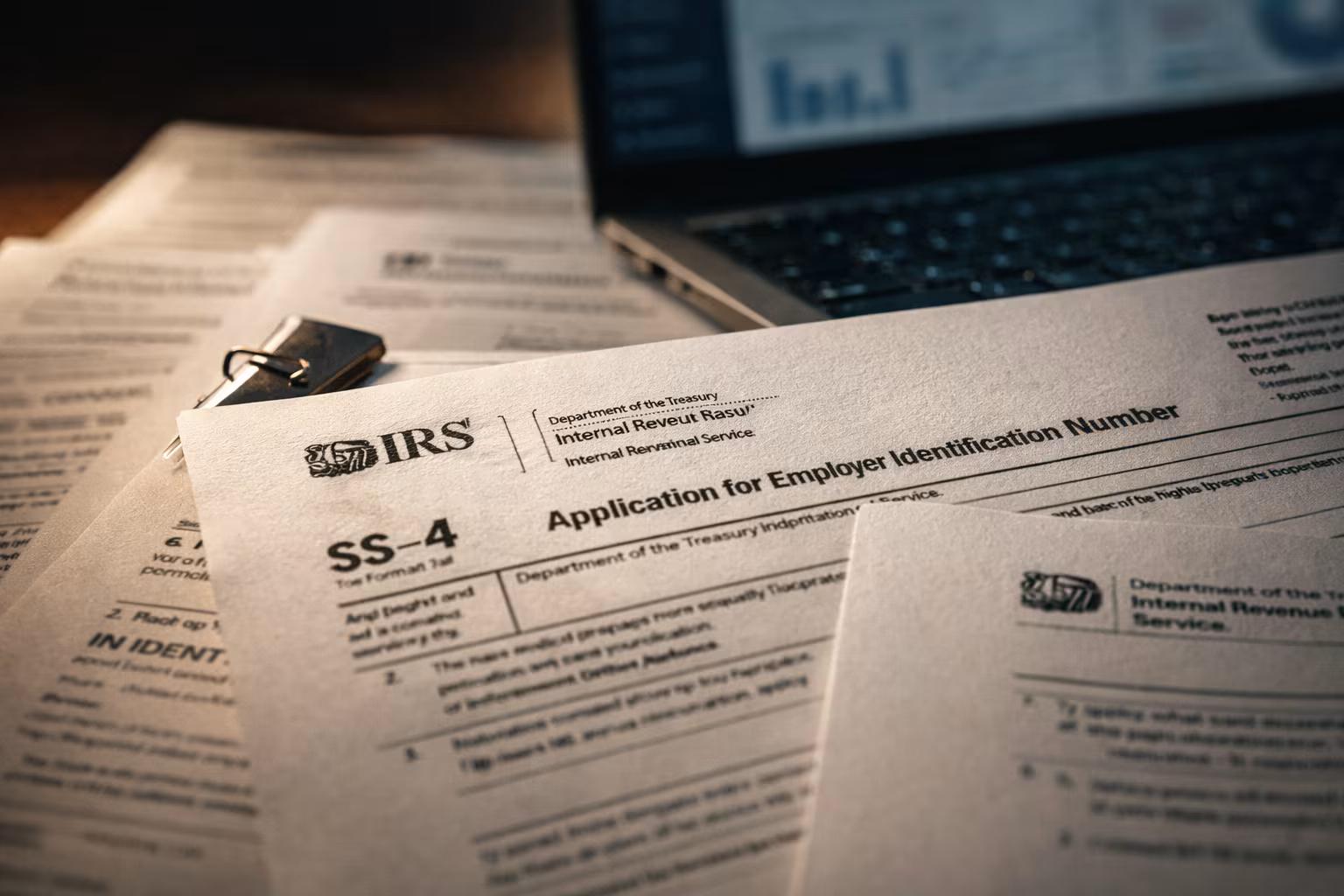
Once a company exists, founders may need to think about an EIN, business banking, payment processors, bookkeeping, federal and state obligations, annual reports, licenses, tax filings, contracts, company records, hiring, international transactions, and changing business circumstances.
The exact requirements depend on the business, entity type, ownership, location, and activities. For example, certain foreign-owned U.S. disregarded entities can have Form 5472 reporting requirements in relevant circumstances.
That's one reason I dislike the idea that forming a U.S. LLC is some kind of magic shortcut. It isn't.
A company can give you a legal structure, but it doesn't automatically give you a successful business, guarantee a bank account, guarantee payment-processor approval, eliminate tax responsibilities, or remove the need to understand compliance.
The company is infrastructure. The business is what you build on top of it.
If you are an international founder exploring the U.S. structure, you can also read our guide on forming a US LLC from India
Founders Often Spend Too Much Time Asking Which State
I understand why people ask about Wyoming, Delaware, New Mexico, and other states. State selection can matter, but I've seen founders become so focused on choosing the "perfect" state that they haven't clearly answered more fundamental questions.
What are you selling? Who are your customers? Where are they located? Where do you actually operate? How will customers pay you? Will you have employees? Will you raise investment? Will you sell physical products? Are you a freelancer, agency, SaaS company, ecommerce seller, or something else?
What will your business look like two years from now?
Those questions should influence the structure you choose. My experience has taught me that there is no universal company structure that is right for every founder.
The better question isn't, "Which company structure does everyone else use?"
It is, "Which structure makes sense for the business I am actually building?"
Speed Matters, but Shortcuts Can Become Expensive
Founders are usually in a hurry, and I understand that. When you have a product idea, a new customer, an investor conversation, or a business opportunity in front of you, waiting can feel painful.
I've felt that pressure myself while building FormLLC.
But one thing I've learned is that speed and shortcuts are not the same thing. A good process should be fast where it can be fast, but it should also be careful where being careless can create problems later.
This is particularly important when founders are dealing with government forms, tax matters, identity verification, and financial institutions.
An EIN is an important federal tax identifier, but obtaining an EIN is only one part of getting a business operational.
For non-resident founders, you can learn more about the process in our guide to EIN without an SSN.
That's why I've become increasingly uncomfortable with promises that sound too good to be true, such as guaranteed bank accounts, instant approvals, tax-free businesses, or claims that everything will be handled forever.
Founders don't need attractive promises. They need accurate expectations.
Trust Is More Valuable Than a Sale
One of the biggest lessons I've learned from working with international customers is that trust works differently when you're selling across borders.
Imagine you're a founder in another country. You're about to send money to a company you've never met, provide personal information, navigate a foreign business system, and hope the person on the other side will still answer your questions after you pay.
That's very different from simply buying a product online.
That's why communication became so important to me early in my career. When I was freelancing, I enjoyed talking to clients and understanding what they actually needed. I also tried to do more than the minimum when I believed it would improve the customer's experience.
That mindset stayed with me as FormLLC grew.
A founder may forget exactly how quickly you completed a form, but they are less likely to forget whether you disappeared when they had a problem.
The Difficult Questions Often Teach You More Than the Easy Ones
One of the experiences that stayed with me involved a customer facing a potential penalty of around $25,000.
I spent a night working through the situation, trying to understand what had happened and what information was relevant.
I don't want to turn that story into a dramatic marketing case study. The important lesson for me was simpler: a founder doesn't care that you successfully formed their company six months ago if they're facing a serious problem today.
That's when they need someone to help them understand what happened and what their next steps might be.
It also taught me that you have to know where your expertise ends.
FormLLC is a business formation service, not a U.S. law firm or CPA firm. For situations requiring specialized legal or tax advice, founders should work with appropriately licensed professionals.
Being transparent about that isn't a weakness. I believe it's part of responsible service.
Global Founders Don't All Want the Same Thing
One of the biggest mistakes someone can make when serving international entrepreneurs is treating "non-U.S. founder" as one category.
It isn't.
A freelancer in India is different from a venture-backed SaaS founder in Singapore. An Amazon seller has different needs from a software developer, and a consultant has different concerns from an ecommerce company.
A founder who wants a U.S. entity for contracting purposes may have a very different situation from someone preparing for venture investment. Even within the same country, two founders can have completely different businesses.
That's why I believe good business guidance should start with questions rather than assumptions.
Before recommending a structure, understand the person. Before selling a service, understand the business. Before talking about compliance, understand the actual circumstances.
The more founders I've helped, the more I've realized that listening is part of the product.
International Business Is Not Just About Incorporation
This is probably one of the biggest changes in my thinking since I started FormLLC.
Initially, company formation was the obvious problem, but conversations with customers kept expanding.
After formation, founders would ask how to get their EIN, how to open a business bank account, how to receive payments, what they need to file, what happens the following year, whether they can use the company for their SaaS business, and what changes if the business grows.
These questions showed me that company formation is only one piece of a much larger system.
Founders need to understand which pieces actually apply to them rather than assuming they need every possible service.
Banking is another important part of the post-formation process. If you're a non-resident founder, you can learn more in our guide to US bank accounts for non-residents.
The goal isn't to make the business more complicated. The goal is to make sure the infrastructure supports what the founder is actually trying to build.
Starting a Global Business Doesn't Mean Looking Global
This might sound strange, but I don't think you need to look like a multinational company on day one.
You need to solve a real problem for a real customer.
My own journey started with teaching students, then moved into freelancing, international clients, helping entrepreneurs, and eventually building FormLLC.
The path wasn't perfectly planned. It developed one problem at a time.
I've seen something similar with many founders I've worked with. They start with a small service, find a few customers, improve their delivery, understand the market, build systems, and then expand.
The company gets bigger because the underlying business gets better, not because the founder put "Global" in the company name.
Being From a Smaller City Can Change How You Think About Opportunity
There is another lesson here that is personal for me.
I know what it feels like to build from a place that isn't usually associated with global technology companies.
I grew up in Bihar, and today I run a business serving founders across dozens of countries. That experience has changed the way I think about talent.
Talent is global. Business infrastructure isn't always.
There are smart developers, designers, marketers, consultants, and entrepreneurs in places that rarely appear on startup maps.
What they sometimes lack isn't ambition. It's access to customers, reliable information, international payment systems, business infrastructure, and people who can explain complicated processes in simple language.
The internet has already made it possible for someone in a small city to sell knowledge, products, or services to someone thousands of kilometers away.
The next challenge is making the infrastructure around that opportunity easier to understand.
That is one of the reasons I built FormLLC.
Helping 5,000 Founders Changed What I Think My Company Is Actually Supposed to Do
Crossing 5,000 founders wasn't just a number for me. It made me think about what FormLLC should become.
If we were only helping people submit formation documents, the job would be relatively simple.
But the questions founders ask tell a bigger story.
They aren't simply trying to own an LLC. They're trying to build something.
Maybe it's their first agency, a SaaS company, an ecommerce brand, a consulting business, or a side project they hope will eventually replace their job.
Maybe it's a startup they believe could become much larger.
The formation document is not the destination. It's one piece of the infrastructure supporting the destination.
That changed the way I think about our responsibility.
I want FormLLC to be known not just for helping founders form companies, but for helping them understand what comes next.
That means being honest about what we know, being honest about what we don't do, explaining complicated requirements clearly, not promising outcomes we cannot control, and remaining available when founders have questions.
My Biggest Lesson: Don't Confuse a Global Business With a U.S. Company
This distinction is important.
A U.S. LLC can be useful for some international founders, but forming a U.S. entity doesn't automatically make a business global.
A global business is built by serving customers across markets, understanding those customers, delivering value consistently, handling operations responsibly, and building systems that can support growth.
The entity is one component. The founder's ability to solve problems is another.
The product, distribution, customer trust, compliance, and operations all matter too.
That's why I don't tell every entrepreneur, "You need a U.S. LLC."
Sometimes the right answer is that they should first focus on getting their first customers. Sometimes another structure makes more sense. Sometimes they need professional legal or tax advice before making a decision.
And sometimes a U.S. company genuinely fits what they're trying to build.
The important thing is understanding the difference.
Starting a Global Business: Why I Would Start Smaller
If I were starting a global business today, I wouldn't begin by asking how to build a $10 million company.
I'd ask what problem I can solve for one person.
Then I'd ask whether I can solve it for ten people, whether I can make the process repeatable, whether I can serve customers outside my immediate market, and what infrastructure I actually need at that stage.
That's how I think about entrepreneurship today.
Start with the problem, find the customer, deliver the result, learn, improve, build trust, and then add infrastructure as the business actually requires it.
Don't build a complicated machine for a business that doesn't exist yet.
What 5,000 Founders Have Taught Me
If I had to reduce everything I've learned from working with thousands of entrepreneurs into a few principles, they would be simple.
Geography is not destiny, and you can build opportunities far beyond your immediate surroundings.
Your first customer matters more than your first company because a legal entity doesn't validate a business; customers do.
Formation is only the beginning. Once the company exists, the real operational questions begin.
I've also learned not to choose infrastructure before understanding the business because your structure should support what you're building.
Speed is valuable, but careless shortcuts can be expensive.
Trust compounds over time, so every interaction either makes it easier or harder for someone to trust you again.
Founders should ask questions before making decisions and know when to bring in specialists for legal, tax, accounting, or other professional matters.
Most importantly, build for the customer you have today.
You don't need the infrastructure of a multinational company when you have your first customer.
Think beyond borders, but don't ignore the responsibilities that come with operating across them.
What I Believe Now
When I received that first $20 international payment, I didn't know where it would eventually lead.
I didn't know I'd build a company helping thousands of entrepreneurs. I didn't know I'd work with founders across 50+ countries.
I didn't know that one day I'd spend so much of my time thinking about company formation, EINs, banking, compliance, and international business infrastructure.
I simply knew that someone somewhere else was willing to pay me because I could solve a problem for them.
That idea still matters to me.
If someone in a small village or a smaller city can connect to a customer on the other side of the world, then the definition of where a business can begin has changed.
The next challenge is making sure the infrastructure doesn't become the thing that stops that person from growing.
That's the problem I see, and that's the problem I'm still working on.
I've helped more than 5,000 founders, but I still feel like I'm learning from every new founder I meet.
Every entrepreneur brings a different question, and sometimes one founder's question becomes the next thing a company needs to solve.
This article is for general informational purposes only and does not constitute legal, tax, or financial advice. Tousif Akram and FormLLC are not a law firm or CPA firm. Consult a licensed professional for advice specific to your situation.
Ready to Form Your US LLC?
Free 30-minute consultation with no obligation and no sales pressure.
Book Free Call