How to Open a US Bank Account as a Non-Resident LLC Owner

Tousif Akram
IRS CAA | Founder, FormLLC
US Bank Account Non Resident: How to Open a US Bank Account
Opening a US bank account non resident entrepreneurs can use is an important step for Indian founders who serve US or international customers. A US business account can make it easier to receive USD payments, pay eligible business expenses, manage company finances, and build a more efficient international payment setup.
However, opening a US account as a non-US resident is different from opening a traditional account as a US resident. Banks and financial institutions may request company formation documents, an EIN, identification, proof of address, ownership information, and details about the business.
This guide explains how Indian entrepreneurs can approach US business banking, the documents they may need, the application process, common costs, and important compliance considerations.
Can a Non-Resident Open a US Bank Account?
Yes. Non-US residents may be able to open a US bank account, particularly when they own a US-registered business such as an LLC or corporation.
The exact process depends on the bank or financial institution. Some traditional banks require applicants to visit a US branch, while certain online business banking providers may accept eligible non-resident founders remotely.
For Indian entrepreneurs, opening an account in the name of a US company can provide a practical way to manage business transactions separately from personal finances.
However, forming a US company and obtaining an EIN does not guarantee banking approval. Each institution has its own eligibility rules, identity verification procedures, and compliance requirements.
US Bank Account Non Resident Requirements
The requirements vary between providers, but a non-resident applying for a US business account will commonly need several documents.
You may be asked to provide:
- A valid passport or government-issued identification
- US LLC or corporation formation documents
- Articles of Organization or equivalent company documents
- Employer Identification Number (EIN)
- Operating Agreement, where applicable
- Proof of residential address
- Business address information
- Details about company ownership and beneficial owners
- Information about the company's business activities
- Tax identification information
- Additional documents requested during compliance checks
Some providers may also ask about expected transaction volume, customers, source of funds, business revenue, and the countries where the company expects to send or receive payments.
Make sure the information submitted to the bank matches your company records and identification documents. Inconsistent information can result in additional verification or delays.
For founders who are still setting up their company, see our guide on forming a US LLC from India for an overview of the company formation process.
How to Open a US Bank Account as a Non-Resident
The application process generally involves the following steps.
1. Form a US Business
Many non-resident founders establish a US LLC or corporation before applying for a business account.
The appropriate business structure and state depend on factors such as your business model, customers, expected activity, and compliance requirements.
Your company formation documents will usually be part of the banking application.
2. Obtain an EIN
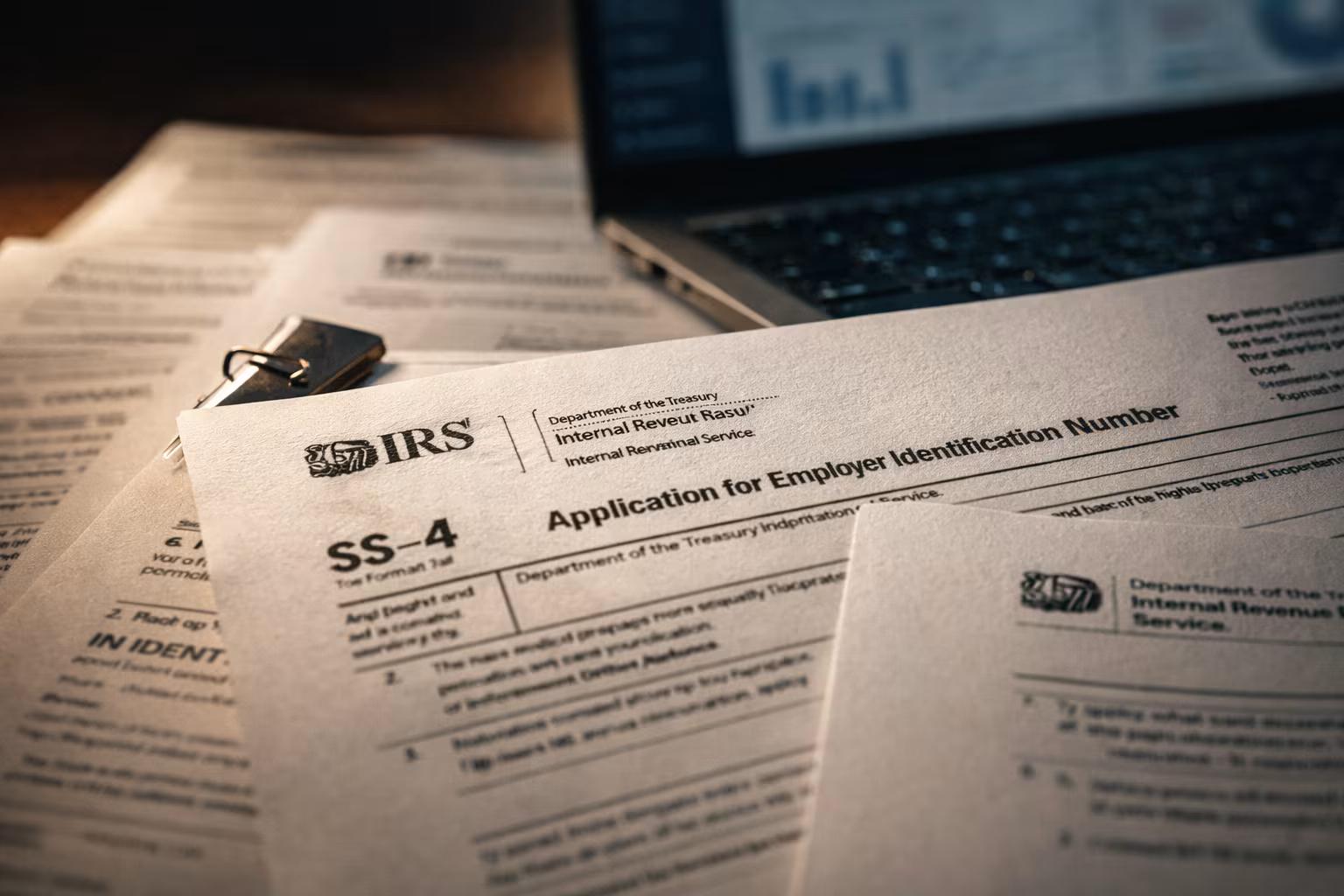
An Employer Identification Number (EIN) is issued by the US Internal Revenue Service (IRS).
A US business may need an EIN for tax administration, banking, payroll, and other business purposes. Non-US residents without a US Social Security Number may have a different EIN application process.
If you are unfamiliar with the process, see our EIN for non-residents guide.
3. Choose a Banking Provider
Not every US financial institution accepts non-US resident business owners.
Before applying, check:
- Whether non-resident founders are eligible
- Whether remote applications are accepted
- Monthly or maintenance fees
- Minimum balance requirements
- Wire transfer fees
- International payment options
- Supported currencies
- Debit card availability
- Transaction limits
- Customer support
- Additional verification requirements
Checking these details before applying can help you avoid unnecessary applications with providers that do not support your situation.
4. Submit the Application
The provider may request your passport, company documents, EIN, business address, residential address, ownership details, and information about your business activities.
Some providers may also request video verification, additional identity documents, or evidence explaining the source of funds.
5. Complete Compliance Checks
Banks and financial institutions may review your identity, ownership structure, business activity, expected transactions, and source of funds.
The review period can vary. Additional documentation may be requested before the account is approved.
Once approved, the account can provide eligible banking services based on the provider's terms.
Why Indian Founders Use US Business Bank Accounts
A US business account can be useful for Indian founders who sell products or services to international customers.
Receive Payments in US Dollars
If your customers are based in the United States, having suitable USD banking infrastructure can simplify the process of receiving business payments.
It can also make it easier to manage US-based revenue separately from other business funds.
Pay US Business Expenses
A suitable account may allow your company to pay eligible US business expenses, including software subscriptions, contractors, professional services, and other operating costs.
The available payment methods depend on the provider.
Separate Business and Personal Finances
Maintaining a dedicated business account helps separate company transactions from personal spending.
This can make bookkeeping, reconciliation, and financial reporting easier.
Build International Payment Infrastructure
For businesses targeting US customers, combining a US company with appropriate banking and payment solutions can create a more streamlined international business setup.
However, maintaining an account in the United States does not automatically change your tax residency or remove tax obligations in India or the US.
US Bank Account Non Resident Fees and Banking Costs
Banking costs vary significantly between providers and account types.
Potential charges may include:
- Monthly account or maintenance fees
- Minimum balance fees
- Incoming wire fees
- Outgoing wire fees
- Foreign exchange charges
- International transfer fees
- Card-related charges
- ATM fees
- Payment processing fees
A provider with no monthly fee may still charge for international transfers or foreign exchange.
Therefore, compare the overall cost of using the account rather than focusing only on the advertised monthly fee.
US Tax and Compliance Considerations
Opening a US business account does not remove tax or reporting obligations.
A non-resident owner of a US LLC may have US filing requirements depending on the company's structure, ownership, income, activities, and other circumstances.
Indian founders should also consider Indian tax rules and foreign-exchange regulations that may apply to their foreign business interests and financial accounts.
These rules can be complex, particularly when a founder operates a US company while living and working in India.
Before establishing the structure, speak with a qualified US tax professional and an Indian tax professional who understands cross-border business. They can help determine which filings and reporting requirements apply to your circumstances.
For related information, see our US LLC tax filing for non-residents guide.
Common Mistakes to Avoid
Applying Without Checking Eligibility
Not every bank accepts applications from non-US residents. Confirm eligibility before preparing your application.
Providing Inconsistent Information
Your passport, company documents, EIN records, address information, and application details should be accurate and consistent.
Ignoring Ongoing Compliance
Opening the account is only the beginning. Your company may have ongoing tax, state, banking, and reporting responsibilities.
Mixing Personal and Business Transactions
Using a company account for personal spending can make accounting and financial reporting more difficult.
Assuming a US Account Changes Tax Residency
Having a US bank account does not automatically make an Indian resident a US tax resident. Tax residency is determined under applicable tax rules and individual circumstances.
Frequently Asked Questions
Can an Indian citizen open a US bank account?
An Indian citizen may be able to open a US business account without being a US resident, depending on the provider's eligibility requirements and compliance procedures.
Do I need a US LLC to open a business account?
Not necessarily. Requirements vary by financial institution. However, non-resident entrepreneurs commonly use a US-registered business when applying for business banking services.
Do I need an EIN?
Many US business banking applications require an EIN or other tax identification information. The exact requirements depend on the provider and business structure.
Can I open the account remotely from India?
Some providers allow eligible non-resident founders to apply remotely. Others may require an in-person visit or additional identity verification.
Can I receive payments from US clients?
A suitable business account may allow an eligible company to receive USD payments from US customers. Available payment methods depend on the provider and account type.
Does a US bank account create US tax residency?
No. A US bank account by itself does not determine an individual's tax residency. Tax residency depends on applicable legal and tax rules.
Final Thoughts
For Indian entrepreneurs serving international customers, a US business banking account can simplify USD collections, eligible business payments, and financial management.
The right setup depends on more than simply opening an account. Founders should consider company formation, EIN registration, banking eligibility, fees, bookkeeping, US tax requirements, and Indian tax and foreign-exchange rules together.
Before applying, check the provider's non-resident eligibility, documentation requirements, fees, transaction features, and compliance policies. A properly planned banking setup can make international business operations easier while helping you stay aware of your obligations in both countries.## How to Open a US Bank Account as a Non-Resident LLC Owner
Opening a US bank account non resident entrepreneurs can use is an important step for Indian founders who serve US or international customers. A US business account can make it easier to receive USD payments, pay eligible business expenses, manage company finances, and build a more efficient international payment setup.

However, opening a US account as a non-US resident is different from opening a traditional account as a US resident. Banks and financial institutions may request company formation documents, an EIN, identification, proof of address, ownership information, and details about the business.
This guide explains how Indian entrepreneurs can approach US business banking, the documents they may need, the application process, common costs, and important compliance considerations.
Can a Non-Resident Open a US Bank Account?
Yes. Non-US residents may be able to open a US bank account, particularly when they own a US-registered business such as an LLC or corporation.
The exact process depends on the bank or financial institution. Some traditional banks require applicants to visit a US branch, while certain online business banking providers may accept eligible non-resident founders remotely.
For Indian entrepreneurs, opening an account in the name of a US company can provide a practical way to manage business transactions separately from personal finances.
However, forming a US company and obtaining an EIN does not guarantee banking approval. Each institution has its own eligibility rules, identity verification procedures, and compliance requirements.
US Bank Account Non Resident Requirements
The requirements vary between providers, but a non-resident applying for a US business account will commonly need several documents.
You may be asked to provide:
- A valid passport or government-issued identification
- US LLC or corporation formation documents
- Articles of Organization or equivalent company documents
- Employer Identification Number (EIN)
- Operating Agreement, where applicable
- Proof of residential address
- Business address information
- Details about company ownership and beneficial owners
- Information about the company's business activities
- Tax identification information
- Additional documents requested during compliance checks
Some providers may also ask about expected transaction volume, customers, source of funds, business revenue, and the countries where the company expects to send or receive payments.
Make sure the information submitted to the bank matches your company records and identification documents. Inconsistent information can result in additional verification or delays.
For founders who are still setting up their company, see our guide on forming a US LLC from India for an overview of the company formation process.
How to Open a US Bank Account as a Non-Resident
The application process generally involves the following steps.
1. Form a US Business
Many non-resident founders establish a US LLC or corporation before applying for a business account.
The appropriate business structure and state depend on factors such as your business model, customers, expected activity, and compliance requirements.
Your company formation documents will usually be part of the banking application.
2. Obtain an EIN
An Employer Identification Number (EIN) is issued by the US Internal Revenue Service (IRS).
A US business may need an EIN for tax administration, banking, payroll, and other business purposes. Non-US residents without a US Social Security Number may have a different EIN application process.
If you are unfamiliar with the process, see our EIN for non-residents guide.
3. Choose a Banking Provider
Not every US financial institution accepts non-US resident business owners.
Before applying, check:
- Whether non-resident founders are eligible
- Whether remote applications are accepted
- Monthly or maintenance fees
- Minimum balance requirements
- Wire transfer fees
- International payment options
- Supported currencies
- Debit card availability
- Transaction limits
- Customer support
- Additional verification requirements
Checking these details before applying can help you avoid unnecessary applications with providers that do not support your situation.
4. Submit the Application
The provider may request your passport, company documents, EIN, business address, residential address, ownership details, and information about your business activities.
Some providers may also request video verification, additional identity documents, or evidence explaining the source of funds.
5. Complete Compliance Checks
Banks and financial institutions may review your identity, ownership structure, business activity, expected transactions, and source of funds.
The review period can vary. Additional documentation may be requested before the account is approved.
Once approved, the account can provide eligible banking services based on the provider's terms.
Why Indian Founders Use US Business Bank Accounts
A US business account can be useful for Indian founders who sell products or services to international customers.
Receive Payments in US Dollars
If your customers are based in the United States, having suitable USD banking infrastructure can simplify the process of receiving business payments.
It can also make it easier to manage US-based revenue separately from other business funds.
Pay US Business Expenses
A suitable account may allow your company to pay eligible US business expenses, including software subscriptions, contractors, professional services, and other operating costs.
The available payment methods depend on the provider.
Separate Business and Personal Finances
Maintaining a dedicated business account helps separate company transactions from personal spending.
This can make bookkeeping, reconciliation, and financial reporting easier.
Build International Payment Infrastructure
For businesses targeting US customers, combining a US company with appropriate banking and payment solutions can create a more streamlined international business setup.
However, maintaining an account in the United States does not automatically change your tax residency or remove tax obligations in India or the US.
US Bank Account Non Resident Fees and Banking Costs
Banking costs vary significantly between providers and account types.
Potential charges may include:
- Monthly account or maintenance fees
- Minimum balance fees
- Incoming wire fees
- Outgoing wire fees
- Foreign exchange charges
- International transfer fees
- Card-related charges
- ATM fees
- Payment processing fees
A provider with no monthly fee may still charge for international transfers or foreign exchange.
Therefore, compare the overall cost of using the account rather than focusing only on the advertised monthly fee.
US Tax and Compliance Considerations
Opening a US business account does not remove tax or reporting obligations.
A non-resident owner of a US LLC may have US filing requirements depending on the company's structure, ownership, income, activities, and other circumstances.
Indian founders should also consider Indian tax rules and foreign-exchange regulations that may apply to their foreign business interests and financial accounts.
These rules can be complex, particularly when a founder operates a US company while living and working in India.
Before establishing the structure, speak with a qualified US tax professional and an Indian tax professional who understands cross-border business. They can help determine which filings and reporting requirements apply to your circumstances.
For related information, see our US LLC tax filing for non-residents guide.
Common Mistakes to Avoid
Applying Without Checking Eligibility
Not every bank accepts applications from non-US residents. Confirm eligibility before preparing your application.
Providing Inconsistent Information
Your passport, company documents, EIN records, address information, and application details should be accurate and consistent.
Ignoring Ongoing Compliance
Opening the account is only the beginning. Your company may have ongoing tax, state, banking, and reporting responsibilities.
Mixing Personal and Business Transactions
Using a company account for personal spending can make accounting and financial reporting more difficult.
Assuming a US Account Changes Tax Residency
Having a US bank account does not automatically make an Indian resident a US tax resident. Tax residency is determined under applicable tax rules and individual circumstances.
Frequently Asked Questions
Can an Indian citizen open a US bank account?
An Indian citizen may be able to open a US business account without being a US resident, depending on the provider's eligibility requirements and compliance procedures.
Do I need a US LLC to open a business account?
Not necessarily. Requirements vary by financial institution. However, non-resident entrepreneurs commonly use a US-registered business when applying for business banking services.
Do I need an EIN?
Many US business banking applications require an EIN or other tax identification information. The exact requirements depend on the provider and business structure.
Can I open the account remotely from India?
Some providers allow eligible non-resident founders to apply remotely. Others may require an in-person visit or additional identity verification.
Can I receive payments from US clients?
A suitable business account may allow an eligible company to receive USD payments from US customers. Available payment methods depend on the provider and account type.
Does a US bank account create US tax residency?
No. A US bank account by itself does not determine an individual's tax residency. Tax residency depends on applicable legal and tax rules.
Final Thoughts
For Indian entrepreneurs serving international customers, a US business banking account can simplify USD collections, eligible business payments, and financial management.
The right setup depends on more than simply opening an account. Founders should consider company formation, EIN registration, banking eligibility, fees, bookkeeping, US tax requirements, and Indian tax and foreign-exchange rules together.
Before applying, check the provider's non-resident eligibility, documentation requirements, fees, transaction features, and compliance policies. A properly planned banking setup can make international business operations easier while helping you stay aware of your obligations in both countries.
This article is for general informational purposes only and does not constitute legal, tax, or financial advice. Tousif Akram and FormLLC are not a law firm or CPA firm. Consult a licensed professional for advice specific to your situation.
Ready to Form Your US LLC?
Free 30-minute consultation with no obligation and no sales pressure.
Book Free Call