How to Start a US LLC From India (2026 Complete Guide)

Tousif Akram
IRS CAA | Founder, FormLLC
US LLC from India: A Practical Guide for Non-Resident Founders
Forming a US LLC from India can help entrepreneurs work with international clients, invoice in USD, access global payment solutions, and establish a familiar business structure for overseas customers. However, forming the company is only the first step. EIN applications, banking, tax filings, state compliance, and Indian tax or foreign-exchange considerations also need to be handled correctly.
This guide explains how non-resident founders can approach a US LLC from India, what they need to prepare, and which compliance issues should not be overlooked.

Why choose a US LLC from India?
A US LLC is commonly used by freelancers, agencies, consultants, ecommerce businesses, software companies, and other international founders who serve customers outside their home country.
A properly established LLC can provide a formal business structure for contracts and invoices. It may also make onboarding with certain banks and payment providers easier, although approval always depends on the provider's requirements and risk policies.
A US LLC does not automatically eliminate tax obligations in the United States or India. Tax treatment depends on factors such as the LLC's ownership, business activity, income, transactions, and the founder's tax residency.
How to start a US LLC from India
The basic formation process is relatively straightforward:
- Choose the state where you want to form the LLC.
- Select and verify an available business name.
- Appoint a registered agent in that state.
- File the Articles of Organization.
- Prepare an operating agreement and maintain ownership records.
- Obtain an EIN from the IRS.
- Set up suitable banking and payment arrangements.
- Establish a system for bookkeeping and ongoing compliance.
The exact requirements and costs vary by state and business circumstances.
Choosing the right state
For many non-resident founders, Wyoming is a popular option because of its relatively simple administration and comparatively low ongoing state costs. If you are comparing Wyoming with other states, see our guide to Wyoming LLC benefits for non-US residents for a more detailed overview.
Delaware is frequently selected by businesses that expect institutional investment or may eventually restructure as a corporation. Its corporate legal framework is particularly familiar to investors.
The cheapest state is not automatically the right state. Consider your business model, where you operate, banking requirements, investor expectations, annual costs, and future plans before choosing a jurisdiction.
US LLC formation basics
To form an LLC, you generally need an available company name, a registered agent in the formation state, and the required state filing.
For example, Wyoming's standard LLC formation filing fee is currently $100, while the annual report/license tax has a $60 minimum. Fees can change, so founders should verify the current amount with the Wyoming Secretary of State before filing.
After formation, keep the Articles of Organization, operating agreement, EIN documentation, registered agent information, and ownership records together. Maintaining these documents from the beginning makes future banking, tax, and compliance work easier.
Getting an EIN without an SSN
A non-US resident can obtain an EIN even without a US Social Security Number in situations where the IRS permits it. For a detailed walkthrough, see our guide on EIN without an SSN for non-residents.
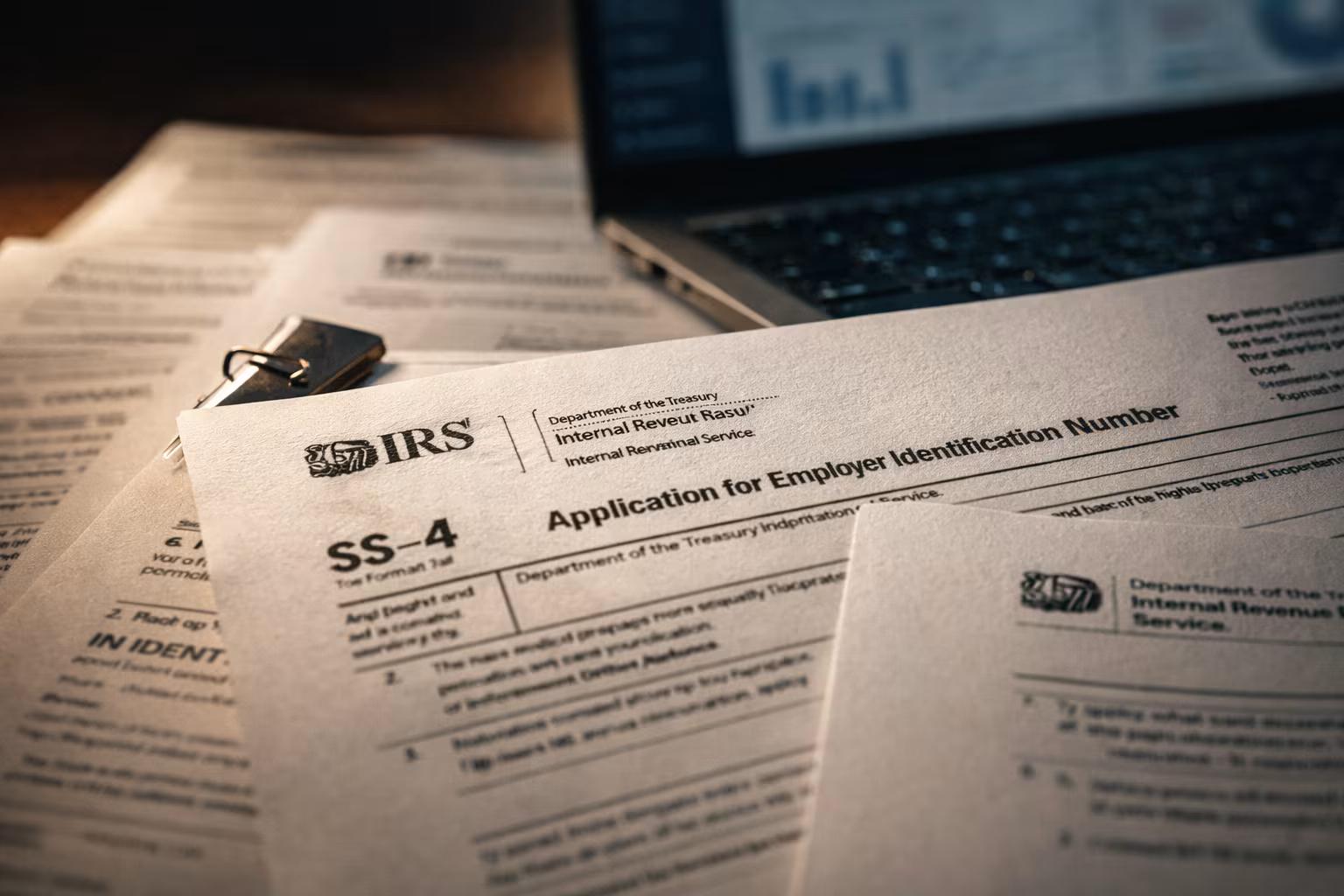
For international applicants, the IRS provides methods including telephone, fax, and mail using Form SS-4. The IRS online EIN application has eligibility requirements and generally isn't available to every foreign applicant.
The EIN is important because it may be required for banking, payment processing, tax reporting, and other business activities.
Founders should use accurate information when completing Form SS-4 and retain the IRS EIN confirmation for their records.
Banking and payment setup
After the LLC and EIN are in place, founders can explore business banking and payment solutions. If you are specifically looking for information about opening a US bank account as a non-resident LLC owner, see our detailed guide.
Approval is always subject to the financial institution or payment provider's requirements. Depending on the provider, you may need:
- Passport or other identity document
- Proof of residential address
- LLC formation documents
- EIN confirmation
- Operating agreement
- Business website
- Description of products or services
- Expected transaction volume
- Information about customers and countries served
A clear explanation of the business is important. Inconsistent information, incomplete documents, or unclear transaction activity can lead to additional verification or rejection.
Keep business and personal funds separate once the company begins operating. This creates cleaner accounting records and makes it easier to document business transactions.
US LLC from India: Tax and compliance considerations
Tax treatment is one of the most important parts of operating a US LLC from India.
A foreign-owned US LLC may have US federal information-reporting requirements even when the business has little or no US-source income. For example, certain foreign-owned single-member LLCs can have annual reporting obligations involving Form 5472 and a pro forma Form 1120 when applicable reportable transactions occur.
The tax position can become more complicated when the business has US operations, US employees, US customers, different ownership structures, or other connections with the United States.
An Indian resident should also consider Indian tax and foreign-exchange rules. The fact that the company is incorporated in the United States does not by itself determine how the owner's income will be treated in India.
Because cross-border tax treatment is highly fact-specific, founders should obtain professional advice before assuming that an LLC has no US or Indian tax obligations.
What about BOI reporting?
Beneficial ownership reporting rules changed significantly in 2025.
Under FinCEN's current rules, entities created in the United States, including domestic LLCs, are generally exempt from federal BOI reporting. Certain foreign entities registered to conduct business in the United States can still fall within the reporting framework.
Because BOI requirements have changed recently, founders should check the latest FinCEN guidance rather than relying on older blog posts, videos, or social media advice.
For a detailed explanation of the changes, see our guide on BOI filing requirements for foreign LLCs.
Annual compliance many founders overlook
Forming the LLC is only the beginning.
Depending on the state and business structure, ongoing responsibilities can include:
- State annual reports or renewal fees
- Registered-agent maintenance
- Federal information returns
- Bookkeeping and transaction records
- Documentation of owner contributions and distributions
- Business bank-account reconciliation
- Ownership and company-record updates
- Applicable Indian tax and foreign-exchange compliance
One common mistake is assuming that a company with little activity has no filing requirements. Some information returns can apply even when the LLC has generated limited revenue.
Set up a compliance calendar immediately after formation so important deadlines are not missed.
How much does a US LLC from India cost?
The total cost depends on the state and the services you use.
Typical expenses can include:
- State formation fee
- Registered-agent fee
- Annual state maintenance fee
- EIN assistance, if you use a service
- Bookkeeping and tax preparation
- Banking or payment-processing costs
- Professional tax or legal advice
For example, Wyoming has a $100 standard LLC formation filing fee and a $60 minimum annual report/license tax. Other states have different fee structures.
Do not choose a state based solely on the initial filing fee. The ongoing annual cost and compliance requirements matter too.
Best way to approach year one
A successful first year starts with treating the LLC as a real operating business rather than simply a document used to open an account.
Form the entity correctly, obtain the EIN through the appropriate IRS process, maintain clean company records, separate personal and business finances, document owner transactions, and track every US and Indian compliance deadline.
For founders in India, the most important step is understanding the complete structure before formation: where the LLC is formed, how it will be taxed, how money will move between India and the US, and what filings will apply each year.
With those pieces planned in advance, a US LLC can provide a practical structure for serving international customers while keeping business administration organized from the start.
This article is for general informational purposes only and does not constitute legal, tax, or financial advice. Tousif Akram and FormLLC are not a law firm or CPA firm. Consult a licensed professional for advice specific to your situation.
Ready to Form Your US LLC?
Free 30-minute consultation with no obligation and no sales pressure.
Book Free Call