What 4,000 Company Formations Have Taught Me About Non-US Founders

Tousif Akram
IRS CAA | Founder, FormLLC
What 4,000 Company Formations Have Taught Me About International Entrepreneurs
When you work with thousands of entrepreneurs from different countries, you start noticing things that spreadsheets and market reports cannot always explain. You begin to understand what motivates people to start businesses, what challenges they face, and what they often misunderstand when entering a new market.
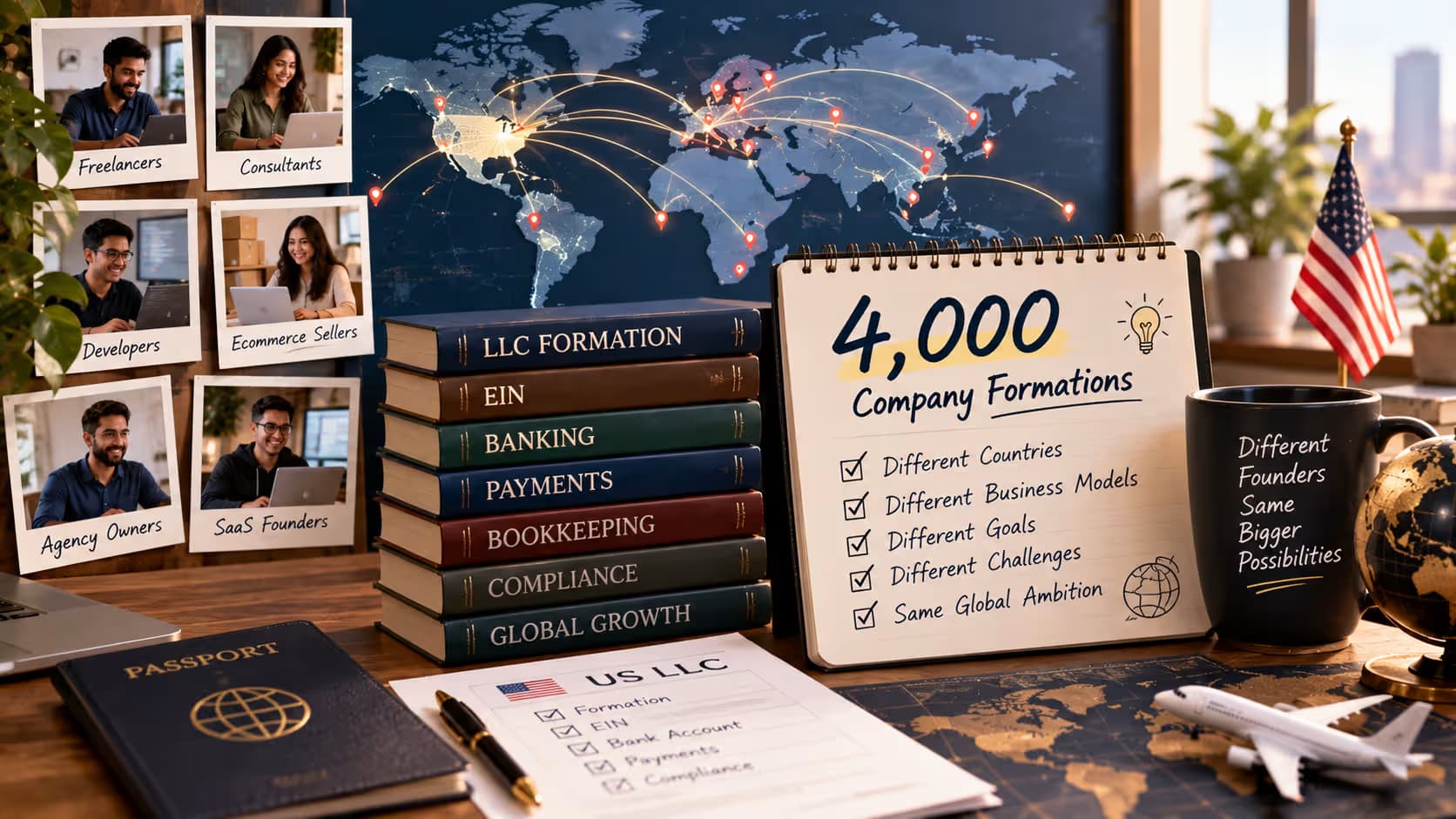
Over the years, through FormLLC, I have been part of approximately 4,000 company formations. I have worked with freelancers, software developers, agency owners, consultants, ecommerce sellers, and SaaS founders who want to build businesses beyond their home markets. Their businesses are different, their starting points are different, and their reasons for choosing a US company are not always the same.
But after so many conversations, I have noticed patterns that have changed how I think about international entrepreneurship. These experiences have also influenced how I help non-US founders establish and operate their US companies.
What 4,000 Company Formations Have Taught Me About Global Ambition
One thing that stands out to me is that a founder does not need to run a large company to think internationally. I have seen people at the very beginning of their journey exploring ways to work with US clients, sell digital products internationally, or build software businesses for customers across different countries.
Many of these entrepreneurs are not trying to build a huge company overnight. They simply want access to opportunities that may not be available through their local business setup. Some are freelancers looking to establish a more structured business, while others are building their first products and exploring international markets.
This has reinforced something I have believed since my early freelancing days: your location should not define the size of the market you can serve. Someone sitting in a small town can still build something for customers on the other side of the world. Global ambition is not limited to people with large teams, offices, or significant resources.
Many Founders Focus on Registration and Forget What Comes Next
A company formation feels like a major achievement, and it absolutely is. However, one pattern I have noticed through thousands of formations is that founders sometimes focus so much on getting their LLC that they overlook what happens afterward.
Once the company is formed, practical questions begin. The founder may need an Employer Identification Number (EIN), a business bank account, payment processing, bookkeeping, and a clear understanding of ongoing compliance responsibilities. Each involves a separate process, and completing one does not automatically guarantee approval for the next.
For example, having a registered US LLC does not automatically mean a bank or payment processor will approve an application. Financial institutions have their own eligibility and verification requirements, particularly for international business owners.
I increasingly see company formation as the beginning of a longer process rather than the final achievement. Receiving formation documents is one milestone. Understanding how to operate the company responsibly is another.
If you are planning to establish a US company, our US LLC guide for non-resident founders explains the broader formation process and the important steps to understand before getting started.

US Company Setup for Every Founder
Another important lesson from working with international customers is that there is no universal company setup. A freelancer receiving payments from overseas clients may have very different requirements from an ecommerce seller managing inventory or a startup planning to raise institutional investment.
Their choice of state, business structure, banking provider, and ongoing services should reflect those differences. A founder running a small consulting business may not need the same structure as someone building a technology company with plans for future investment.
This is why I don't believe in recommending a US LLC to everyone simply because they are interested in establishing an American business. The right setup depends on the business model, ownership, operations, and future plans.
Before spending money, founders should consider where the business will operate, who will own it, where customers are located, and whether employees or physical operations will be needed in the United States.
A good decision at the beginning can prevent unnecessary complexity later.
Why Clear Information Matters More Than Big Promises
International founders often make decisions about a system they do not deal with every day. They may be unfamiliar with US state requirements, IRS terminology, or the difference between company formation and tax compliance. In that situation, unclear pricing, incomplete explanations, and unrealistic promises can create the wrong expectations.
I believe founders deserve to know exactly what a service includes, what it does not include, and which responsibilities remain theirs.
For example, certain foreign-owned US single-member LLCs classified as disregarded entities have Form 5472 reporting obligations and must attach the form to a pro forma Form 1120 when applicable requirements are met. The exact filing position depends on the entity's circumstances and reportable transactions, so it should be checked rather than assumed.
These details may not be the most exciting part of starting a company, but they matter. Founders should understand potential reporting responsibilities before establishing their businesses rather than discovering them after receiving an unexpected notice.
I would rather explain a limitation before a customer makes a decision than leave them surprised later. In my experience, building trust starts with giving people a realistic understanding of what they are getting into.
Our guide on Form 5472 for foreign-owned US LLCs explains these reporting responsibilities in more detail.
Every Company Formation Represents a Person Taking a Risk
Perhaps the biggest lesson from approximately 4,000 company formations is that every registration represents more than a transaction. Behind every application, there is a person making a decision about their future, investing money, and taking a step towards something they want to build.
For one person, forming a US company may be their first step towards becoming an independent entrepreneur. For another, it may be a way to organize a business that already has international customers. Some are testing an idea, while others are preparing for their next stage of growth.
I try to remember this whenever someone approaches us at FormLLC. They are trusting us with an important step in their business journey, and that trust should be treated seriously. The registration itself may involve documents, applications, and government fees, but the decision behind it often carries much greater significance.
The number of formations is something I am grateful for, but the conversations behind that number have taught me much more than the registration process itself.
What International Entrepreneurs Need Beyond Company Registration
These experiences have shown me that talent and ambition exist everywhere. A software developer in India, a consultant in Europe, an agency owner in Africa, or an ecommerce entrepreneur in another part of the world can all have the ambition to serve international customers.
What many of these founders need is clearer access to the infrastructure, information, and support that help them operate across borders. Establishing a US company can be one part of that journey, but founders also need to understand banking, payment processing, tax responsibilities, and the practical requirements of maintaining their businesses.
For example, obtaining an EIN is another important step for many US businesses. International founders without a Social Security Number may need to follow a different application process. Our guide on getting an EIN without an SSN explains this process.
Similarly, understanding financial infrastructure is important before starting operations. A registered company does not automatically guarantee access to a bank account or payment processing services.
Why Helping Founders Matters More Than the Number of Formations
That is the problem I wanted FormLLC to help solve, and it is still the reason I believe this work matters.
After approximately 4,000 company formations, I have become even more convinced that helping someone register a company is only the beginning. What matters just as much is helping them understand what comes next, make informed decisions, and build something that can operate beyond geographical boundaries.
Every founder has a different starting point. Some need help understanding the formation process, while others need clarity about banking, EIN applications, or compliance. Recognizing these differences is important because support should not end when the registration documents arrive.
Every formation represents a founder's ambition. Helping that ambition move forward with the right information and support is what makes this work meaningful to me.
I'm Tousif Akram, founder of FormLLC. Through my experience working with international entrepreneurs, I continue to share practical lessons about establishing US companies, navigating compliance, and building businesses that operate across borders.
This article is for general informational purposes only and does not constitute legal, tax, or financial advice. Tousif Akram and FormLLC are not a law firm or CPA firm. Consult a licensed professional for advice specific to your situation.
Ready to Form Your US LLC?
Free 30-minute consultation with no obligation and no sales pressure.
Book Free Call