Annual Report vs Tax Filing: What US LLC Founders Need to Know

Tousif Akram
IRS CAA | Founder, FormLLC
Annual Report vs Tax Filing: What US LLC Founders Need to Know
Annual report vs tax filing is a distinction I see founders struggle with again and again after forming a US LLC. One of the questions I hear surprisingly often is: “I already filed my annual report, so do I still need to file taxes?” I completely understand why people get confused. When you are forming a US company from outside the United States, there are already so many new terms to understand—LLC, EIN, registered agent, annual report, federal tax return, Form 5472, Form 1120, and more. To a first-time founder, they can sound like different names for the same responsibility. They are not.
Annual Report vs Tax Filing: They Are Different Responsibilities
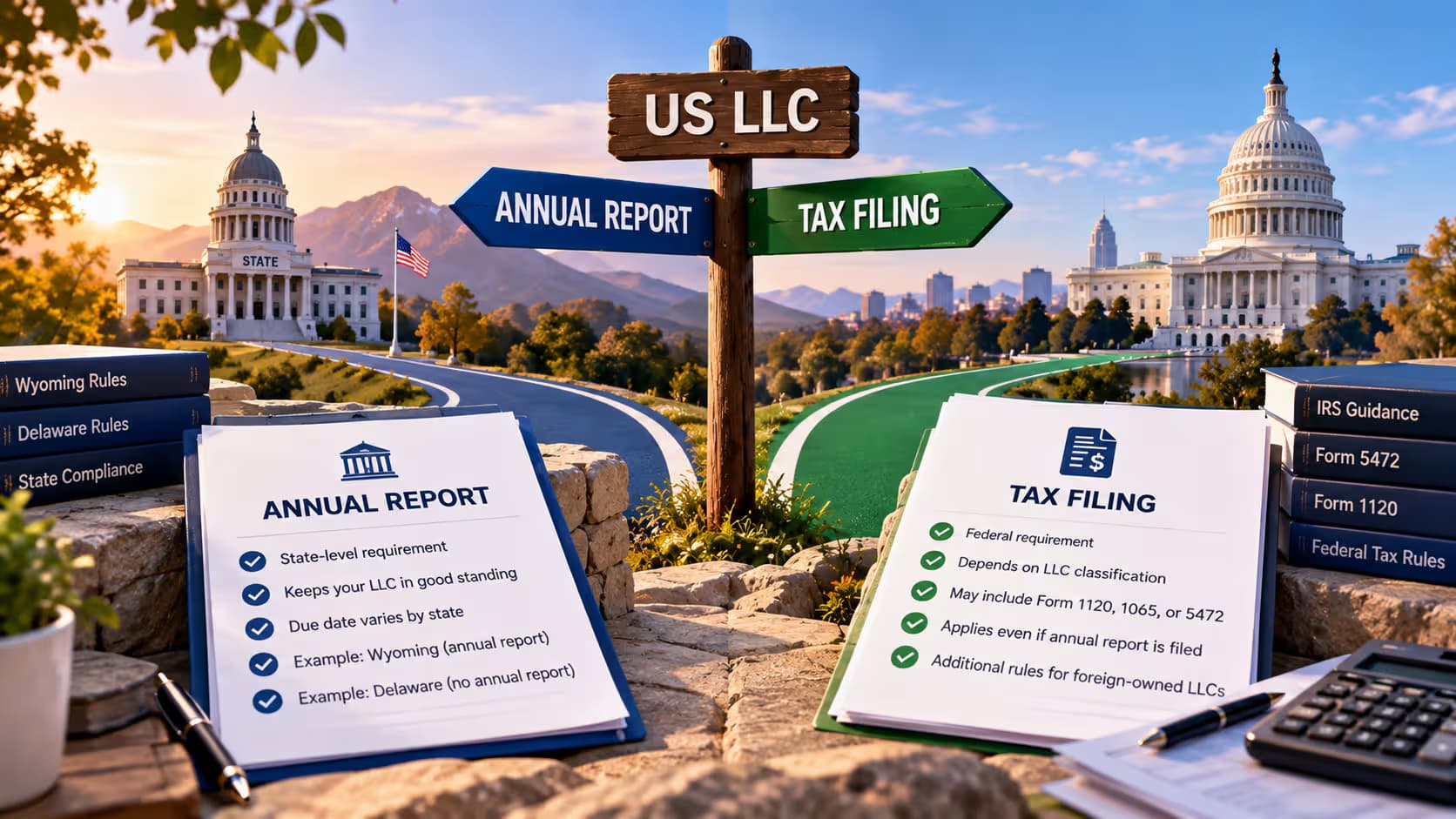
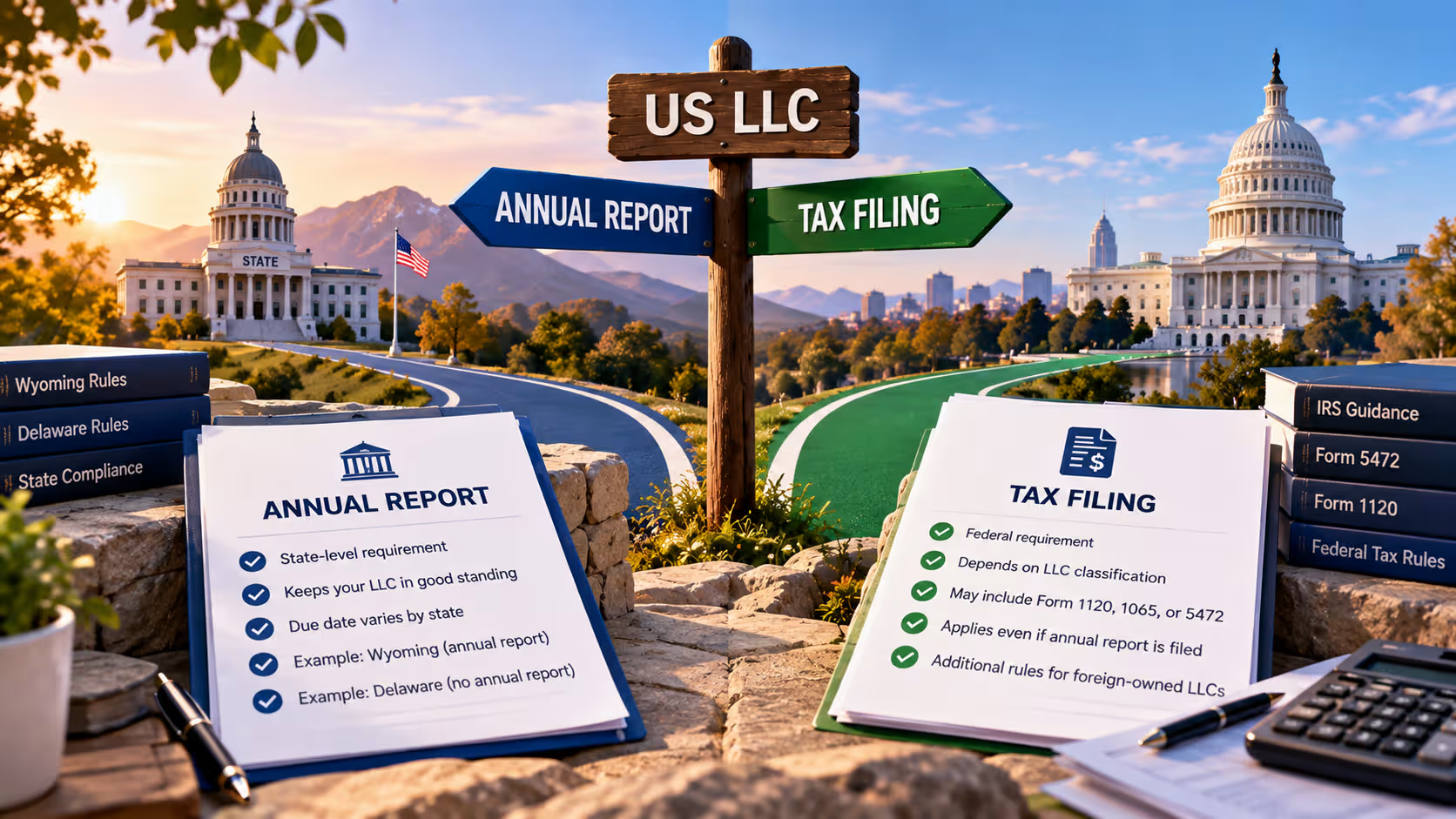
An annual report is generally a state-level filing or compliance requirement used to keep information about an entity current and maintain its status with the state. A tax filing, by contrast, relates to the applicable tax authority and depends on the company's structure, ownership, activities, and tax classification.
That distinction matters because a founder can complete one obligation without automatically completing the other. In some states, an LLC may have an annual report requirement. In others, the LLC may have an annual tax payment without an annual report. Federal tax or information-reporting requirements are a separate layer again.
The exact obligations depend on the company, which is why I would never treat an annual report as a substitute for understanding the company's tax responsibilities.
Wyoming Shows Why the Difference Matters
Wyoming is a useful example because Wyoming LLCs generally have an annual report requirement. The Wyoming Secretary of State says business entities must file an annual report and pay the applicable fee to remain in good standing, with the due date based on the entity's anniversary month. Wyoming law sets a minimum license fee of $60, or a higher amount when the statutory asset-based calculation applies.
But that annual report is not the same thing as a federal tax filing.
A founder might submit the Wyoming annual report, pay the applicable state fee, and successfully maintain the company's state status. That still does not answer whether the company has a federal income tax return, information return, or another federal filing requirement.
This is one of the first distinctions I want international founders to understand after formation.
Delaware Shows the Difference in Another Way
Delaware gives founders another useful example.
A Delaware LLC does not file an annual report with the Delaware Division of Corporations. However, Delaware requires LLCs to pay a $400 annual tax, generally due June 1. The state's current guidance specifically separates the annual tax from the annual-report requirement.
So when a founder says, “My state doesn't require an annual report,” that should not become, “I don't have any annual obligations.”
Those are two completely different statements.
The company may have a state tax payment, federal reporting requirements, tax obligations based on its activities, or other compliance responsibilities even when the state does not require an annual report.
Federal Tax Filing Depends on How the LLC Is Classified
The federal side can be even more confusing because the IRS does not treat every LLC the same way.
The IRS explains that an LLC's federal tax classification depends on factors such as the number of members and elections made by the LLC. Depending on those circumstances, an LLC can be treated as a corporation, partnership, or disregarded entity for federal income tax purposes.
That means simply knowing that you have an “LLC” is not enough to determine which federal filings apply.
You need to understand how the LLC is classified for federal tax purposes and what the company and its owners are actually doing.
This is especially important for international founders because foreign ownership can create additional reporting considerations.
Foreign-Owned LLCs Can Have Additional Reporting Requirements
This is one area where I see founders make assumptions too quickly.
Certain foreign-owned US disregarded entities have specific information-reporting requirements. The IRS explains that a foreign-owned US disregarded entity can be treated as a separate entity for limited purposes under the rules of section 6038A. Where the applicable reporting requirements are triggered, the entity may need to file Form 5472 with a pro forma Form 1120, even though it does not otherwise have a regular US income tax return requirement.
That is an important distinction because a reporting requirement does not automatically mean the company owes US income tax.
If you are a non-US founder, our guide on Form 5472 for foreign-owned US LLCs explains this issue in more detail.
The specific filing requirements depend on the company's circumstances, so founders should not assume that every foreign-owned LLC has exactly the same obligations.
State Compliance and Federal Compliance Are Separate
This is why I tell founders not to think of compliance as one annual task.
There can be state compliance and federal compliance, and they may not be handled through the same filing, on the same website, or with the same deadline.
Your state may require an annual report. It may instead require an annual tax payment. You may also have federal tax or information-reporting requirements. Depending on your circumstances, there can be additional obligations connected to employees, sales, business activities, or other aspects of the company.
The important thing is to know which responsibilities apply to your specific structure.
Forming the Company Is Only Day One
This became much clearer to me after working with international founders for years.
I have seen people who were extremely careful about forming their company but became much less careful afterward. They knew exactly how much their LLC cost to create, which state they chose, and how quickly they received their formation documents.
But six or twelve months later, they were not always sure what they were supposed to do next.
That is the gap founders need to avoid.
Formation gives you the entity. It does not create a calendar of every obligation automatically.
After formation, founders need to understand what must be maintained at the state level, what must be handled federally, which deadlines apply, and who is responsible for each task.
If you are still working through the basics of setting up a US company, our US LLC guide for non-resident founders can help you understand the broader structure before focusing only on annual compliance.
An EIN Does Not Replace Tax Filing
Another misunderstanding I see is treating the EIN as though it completes the federal side of the company.
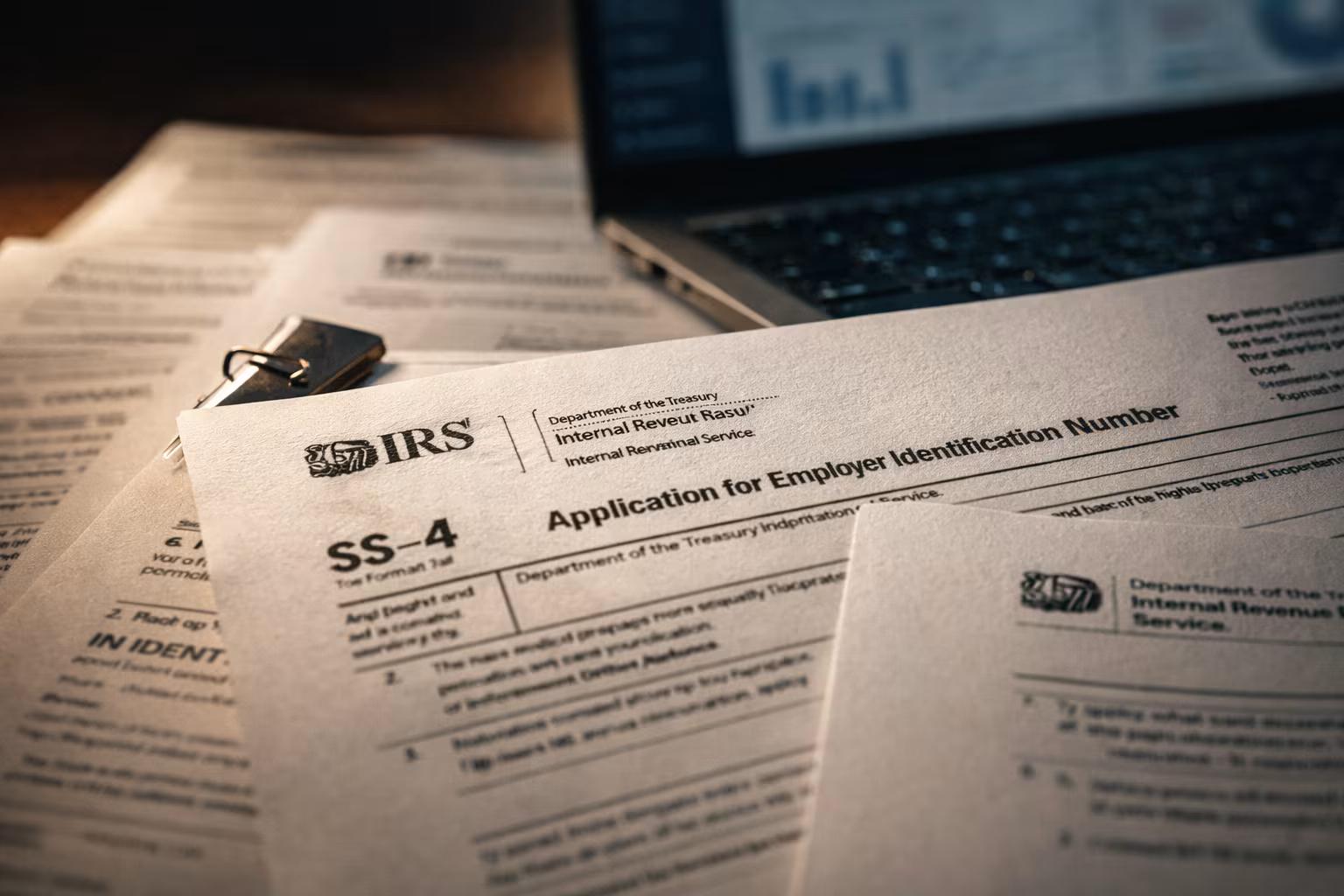
An EIN is an identification number issued by the IRS. It can be necessary for different business and tax purposes, but receiving an EIN does not by itself tell you that all federal filing responsibilities have been completed.
In fact, the IRS specifically provides instructions for foreign-owned US disregarded entities obtaining an EIN for purposes connected with Form 5472 reporting.
So I would think about the EIN as one administrative part of the structure, not as proof that the company's federal compliance is finished.
If you are a non-US founder who needs an EIN, our guide on getting an EIN without an SSN covers that process separately.
Do Not Assume “No Tax” Means “No Filing”
This is another distinction that deserves attention.
A founder may be told that their particular structure does not result in US federal income tax on certain income and then assume there is nothing else to do.
That conclusion can be incorrect.
Tax liability and filing responsibility are not always the same question.
The Form 5472 rules for certain foreign-owned US disregarded entities are a good example. The IRS states that while such an entity may not have a regular income tax return filing requirement, it can still be required to file a pro forma Form 1120 with Form 5472 attached when the applicable reporting rules require it. That is why I prefer to ask, “What filings and reporting requirements apply?” rather than only asking, “Do I owe tax?”
Keep a Compliance Calendar After Formation
One practical habit I recommend is keeping a simple compliance calendar from the moment the company is formed.
Start with the state requirements. When is the annual report due? Is there an annual state tax? When does the registered-agent relationship need to be maintained or renewed?
Then look at the federal side. What tax classification does the LLC have? Does the ownership structure create information-reporting requirements? Are there federal returns or forms that need to be prepared?
Then consider whether the business has additional obligations based on what it actually does.
The exact calendar will vary from one company to another, but the principle is simple: do not wait for a deadline to discover that a filing exists.
Know Who Is Responsible for Each Filing
Another lesson I have learned from customers is that responsibility can become unclear very quickly.
A founder may assume the formation provider handles everything. The accountant may assume the registered agent handles state compliance. The registered agent may only be responsible for receiving official documents. A tax professional may be responsible for federal filings but not state entity maintenance.
These are different roles.
Before the first deadline arrives, I would make sure you know who is responsible for each obligation, what they are preparing, when it is due, and what information they need from you.
That small amount of clarity can prevent a much bigger problem later.
Day 1 Is Formation. Day 2 Is Maintenance.
For me, this is part of what Day 2 really means.
Day 1 is forming the company.
Day 2 is maintaining it properly.
That means understanding that your state filing, state tax obligations, federal tax filings, information returns, bookkeeping, registered-agent responsibilities, and other compliance tasks may all be separate pieces of the business.
They may happen around the same time each year, but they do not necessarily serve the same purpose.
That is why I do not want founders to put their annual report and their tax filing in the same mental box.
The Simple Rule I Want Founders to Remember
If you remember only one thing from this article, remember this:
An annual report is not automatically a tax filing, and a tax filing is not automatically an annual report.
The exact responsibilities depend on the state, entity classification, ownership, business activities, and other facts.
For a Wyoming LLC, there is an annual report requirement and applicable annual license fee. For a Delaware LLC, there is an annual tax but no annual report to the Division of Corporations. And on the federal side, an LLC's filing responsibilities depend on its tax classification and circumstances.
For certain foreign-owned US disregarded entities, additional information reporting can apply through Form 5472 and a pro forma Form 1120.
That is why I tell founders to understand which state filings apply, which federal filings apply, who is responsible for preparing them, and when each deadline occurs.
Forming a company gives you the entity.
Staying on top of your obligations is what helps you keep that company in good standing and operate it responsibly.
This article is for general informational purposes only and does not constitute legal, tax, or financial advice. Tousif Akram and FormLLC are not a law firm or CPA firm. Consult a licensed professional for advice specific to your situation.
Ready to Form Your US LLC?
Free 30-minute consultation with no obligation and no sales pressure.
Book Free Call