Wyoming LLC: Why It Works for Many Non-US Founders

Tousif Akram
IRS CAA | Founder, FormLLC
Why I Think Wyoming Works for Many Non-US Founders — But Not Everyone
If you have spoken to me about forming a US company, there is a good chance you have heard me talk about Wyoming LLCs. Over the years, Wyoming has become a common option among the international founders we work with, particularly those building online businesses from outside the United States. But I want to be careful about how I explain that. I do not believe Wyoming is automatically the best state for every founder. I believe it can work particularly well for many of the types of businesses and founders I see every day, while other businesses may have different requirements.
Why Wyoming LLCs Get Attention From International Founders
A large number of the entrepreneurs who come to us are building online businesses. They may live in India, Bangladesh, Pakistan, Nepal, the Middle East, or another country while serving customers across different markets. They are often running agencies, software businesses, e-commerce companies, consulting businesses, or other internet-based ventures.
For many of these founders, the goal is to have a US business structure that is relatively straightforward to maintain without adding unnecessary state-level complexity. That is one reason Wyoming LLCs get so much attention.
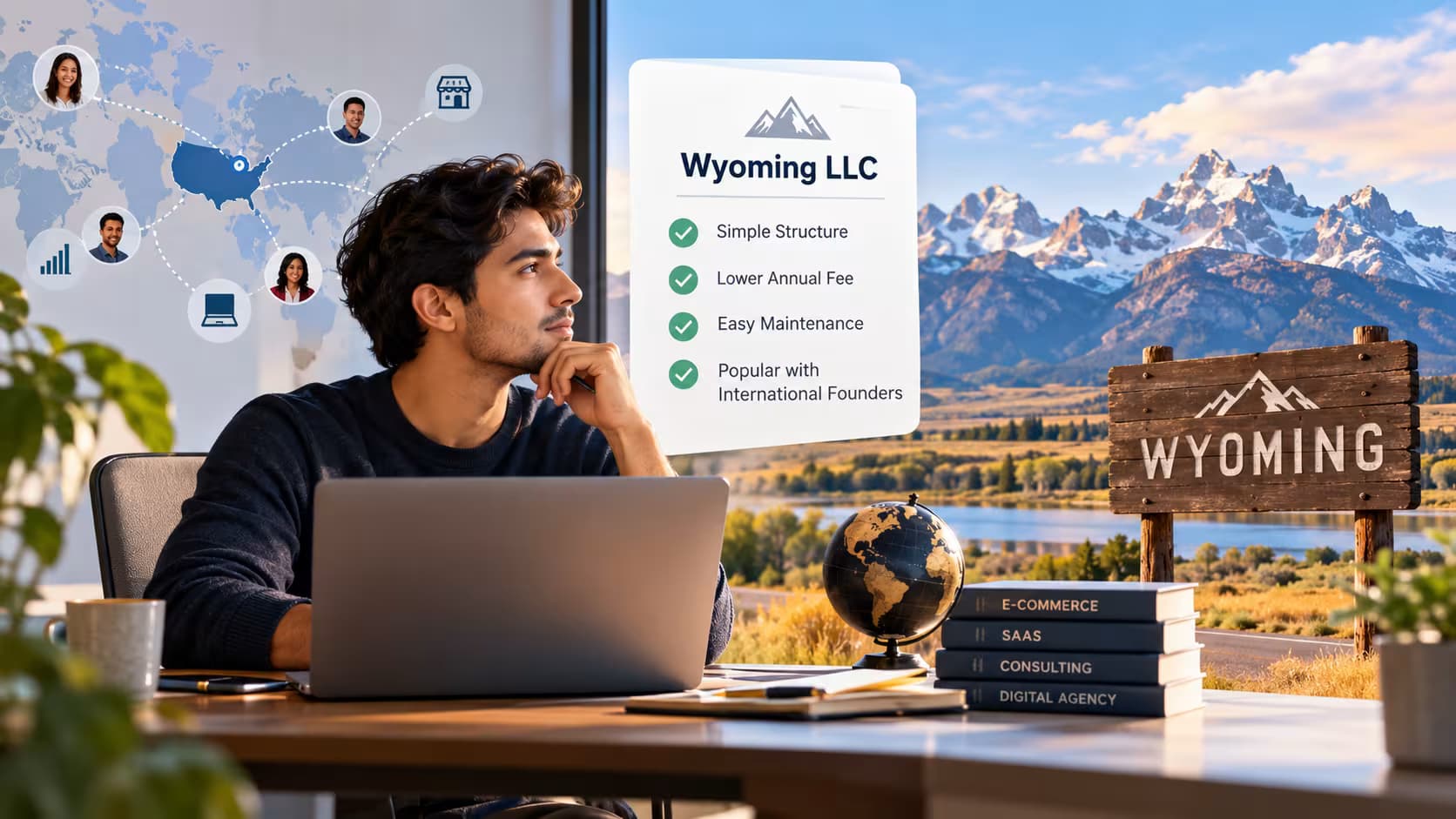
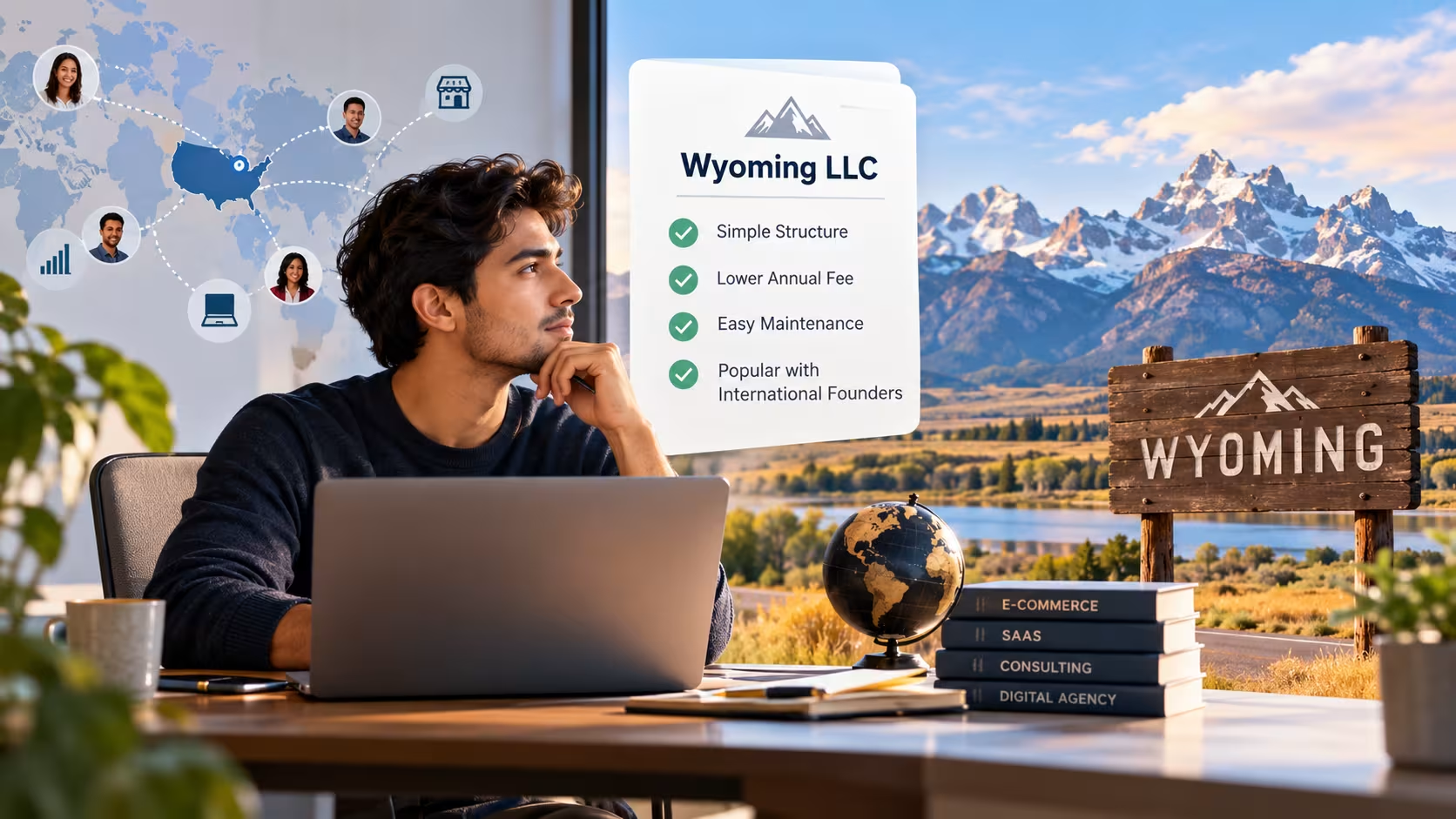
Wyoming requires an LLC to file an annual report, and the annual license tax is currently at least $60. The amount can be higher depending on the company's assets located and employed in Wyoming. The annual report is generally due on the first day of the company's anniversary month.
For the kind of small online businesses many international founders are building, that can make Wyoming an option worth considering. But I think there is a bigger reason founders are attracted to it.
It can be relatively simple to understand.
When you are already trying to understand US company formation, EINs, banking, payments, taxes, and business operations from another country, simplicity has value.
A Wyoming LLC Does Not Eliminate Your Responsibilities
This is where I think founders need to be careful.
Choosing Wyoming does not mean you can ignore the other responsibilities that come with operating a US company. A Wyoming LLC is a business structure, not a shortcut around compliance.
The company may still have federal tax or information-reporting requirements depending on its ownership, tax classification, activities, and other circumstances. The founder may also have obligations in the country where they live or conduct business.
For international founders, the state of formation is therefore only one part of the overall picture.
If you are still learning how the US LLC structure works for non-residents, our US LLC guide for non-resident founders covers some of the questions that should be considered before formation.
Why I Do Not Call Wyoming the Best State for Everyone
I have learned that founders sometimes hear “Wyoming” and immediately think they have found the answer to everything.
That is where I tell them to slow down.
Wyoming does not automatically solve your banking problems. It does not automatically determine your federal tax obligations. It does not mean you can ignore compliance. And it does not replace the need to understand the rules in the country where you personally live and operate.
This is particularly important when someone is choosing a state based entirely on a YouTube video or social-media post claiming that Wyoming is the “best state for foreigners.”
There is no universal answer that applies to every business.
Your Business Model Matters More Than a State Ranking
Before talking about the state, I usually want to understand the business.
What are you selling? Where are your customers? Where do you live? Where will the business actually operate? Are you planning to raise investment? Will you have employees? What do you need from your banking and payment setup?
Those questions tell you much more than a ranking of states on a website.
A founder operating a small online agency may have very different priorities from someone building a venture-backed technology company. Someone planning to bring in institutional investors may have different structural considerations from a solo founder running a profitable consulting business.
The state should fit the business rather than the other way around.
Wyoming Can Be Practical for Many Online Businesses
My experience has simply been that Wyoming fits the needs of many international online founders I encounter.
For a founder who wants a US LLC with a straightforward state-level annual reporting requirement and a relatively low minimum annual state fee, Wyoming can be a practical option to evaluate.
That does not mean every online business should use Wyoming.
It means the state can fit the requirements of certain businesses particularly well.
And there is an important difference between saying “Wyoming works for many founders” and saying “Wyoming is the best state for everyone.”
I believe the first statement is much closer to how founders should think about the decision.
Banking Is a Separate Question From Wyoming Formation
Another misconception I see is that choosing Wyoming will automatically make banking easier.
It does not.
Forming a Wyoming LLC does not guarantee approval for a US bank account or payment platform. Banks and financial providers have their own onboarding requirements and may evaluate the owner's identity, business activity, expected transactions, customers, source of funds, address, and other information.
That means banking should be considered separately from state formation.
If banking is part of your plan, our guide on opening a US bank account as a non-resident LLC owner explains some of the issues founders should consider before relying on a particular banking setup.
Federal Tax and Reporting Still Matter
The state where you form your LLC does not determine every federal tax question.
For international founders, this distinction is particularly important. Depending on the ownership structure and circumstances, a foreign-owned US LLC can have federal reporting requirements even when the founder believes the business does not owe US federal income tax.
For example, certain foreign-owned US disregarded entities may have Form 5472 and pro forma Form 1120 reporting requirements.
That is why I encourage founders to think beyond the state filing itself.
Our guide on Form 5472 for foreign-owned US LLCs explains this reporting issue in more detail.
When Wyoming May Not Fit Your Plans
There are situations where a founder may have reasons to consider a different state or structure.
If you are building a venture-backed startup, planning to bring in institutional investors, operating a business physically in another state, adding multiple owners, hiring employees, or creating a more complicated ownership structure, your requirements may be different from those of a solo international founder running an online business.
That does not automatically mean Wyoming is inappropriate.
It means the business circumstances need to be considered before choosing the state.
I would rather ask a founder a few questions about their plans than tell them that one state is universally superior.
Think About the Next Three Years
One question I increasingly encourage founders to ask is:
“What am I actually building over the next three years?”
Will you raise investment? Will you have partners? Will you hire employees? Where will the business operate? What markets will you serve? What banking and payment infrastructure will you need?
You do not need to predict every detail.
But thinking beyond the formation date can help you avoid choosing a structure simply because it looks attractive today.
A structure that works for a solo founder may need to be reconsidered if the business later introduces investors, partners, employees, or operations in additional locations.
Do Not Keep Changing States Because of Internet Trends
Another lesson I have learned from working with founders is not to change your business structure every time another state sounds better online.
Changing an entity or restructuring a business can create additional administrative work and may have legal or tax consequences depending on the circumstances.
There can be legitimate reasons to change a structure. But changing simply because you saw a post claiming another state is cheaper or better can create unnecessary work.
Your company should support the business you are actually building, not the latest trend on the internet.
Wyoming vs Other States Depends on Your Situation
When founders compare Wyoming with Delaware, New Mexico, or another state, I think the comparison should start with their actual requirements.
Some founders may care most about recurring state costs and straightforward administration. Others may care about investors, ownership structure, operations, or a particular legal and business environment.
That is why I would not tell every international founder to choose Wyoming.
I would explain why Wyoming LLCs can work well for many online businesses, while also making clear where the decision may require a closer look.
The Right Question Is Why Wyoming?
After helping international entrepreneurs for years, my view has become pretty simple.
I do not want founders to choose Wyoming because I told them it is the “best state.” I want them to understand why Wyoming may or may not fit their business.
If the company is a straightforward online business, the founder understands the ongoing requirements, and the overall structure fits their plans, Wyoming may be worth considering.
If the business has investors, employees, physical operations, multiple owners, or other complexities, the founder should evaluate those factors before making the decision.
The goal is not to find a state with the loudest marketing.
The goal is to choose a structure that supports the business.
Wyoming Can Work Well Without Being Right for Everyone
My experience has simply been that Wyoming works for many non-US founders because it can provide a practical and relatively straightforward home for an online US business.
But that does not make Wyoming universally appropriate.
For some founders, Wyoming will make sense. For others, another state or even another business structure may better match their circumstances.
And that is the distinction I want founders to understand.
The right state is not necessarily the state with the strongest marketing. It is the state that fits the business you are actually trying to build.
That is the question I would ask before forming the LLC.
This article is for general informational purposes only and does not constitute legal, tax, or financial advice. Tousif Akram and FormLLC are not a law firm or CPA firm. Consult a licensed professional for advice specific to your situation.
Ready to Form Your US LLC?
Free 30-minute consultation with no obligation and no sales pressure.
Book Free Call