EIN Without SSN for Foreign Entity: 5 Reasons SS-4 Forms Stall for Foreign Founders

Tousif Akram
IRS CAA | Founder, FormLLC
EIN Without SSN for Foreign Entity: 5 Reasons SS-4 Forms Stall for Foreign Founders
When founders ask me how to get an EIN without SSN for a foreign entity, they often expect the process to be straightforward: form a US LLC, complete Form SS-4, and wait for the IRS to issue the number. However, an EIN application can stall when the application method is unsuitable, essential information is incomplete, or the form does not accurately reflect the company and its responsible party.
When I review the common delays and solutions I encounter in this work, one lesson stands out: before assuming the IRS is taking too long, check whether the application was prepared and submitted correctly. Understanding the process of obtaining an EIN without SSN for a foreign entity can help founders identify mistakes before they lead to unnecessary delays. Here are five areas I would review first.
1. Using the Wrong EIN Application Method
One common source of confusion is assuming that every foreign founder can use the IRS online EIN application. The online application is generally unavailable to applicants whose principal business, office, or legal residence is outside the United States and its territories. Foreign founders should therefore check their eligibility before starting the application.
If your company's principal place of business is outside the US, the IRS provides international applicants with telephone, fax, and mail options. The international EIN telephone number is 267-941-1099, and eligible applicants can fax Form SS-4 to 304-707-9471. Mailing is another option for applicants who cannot use the online service.
Before submitting anything, review the official website to confirm which application method applies to your circumstances. Choosing the correct route at the beginning can prevent unnecessary delays and repeated submissions.
For a step-by-step explanation of the application process, read our guide to getting an EIN without an SSN.
2. Entering the Wrong Responsible-Party Information
Form SS-4 asks for the name of the responsible party, generally the individual who ultimately owns or controls the business or exercises effective control over its funds and assets. Listing the wrong person or providing inconsistent information can create problems during processing.
Foreign founders sometimes assume that the formation company, registered agent, or another service provider should automatically be listed as the responsible party. However, the IRS has specific rules defining who qualifies, and a service provider does not automatically meet that definition simply because they helped establish the company.
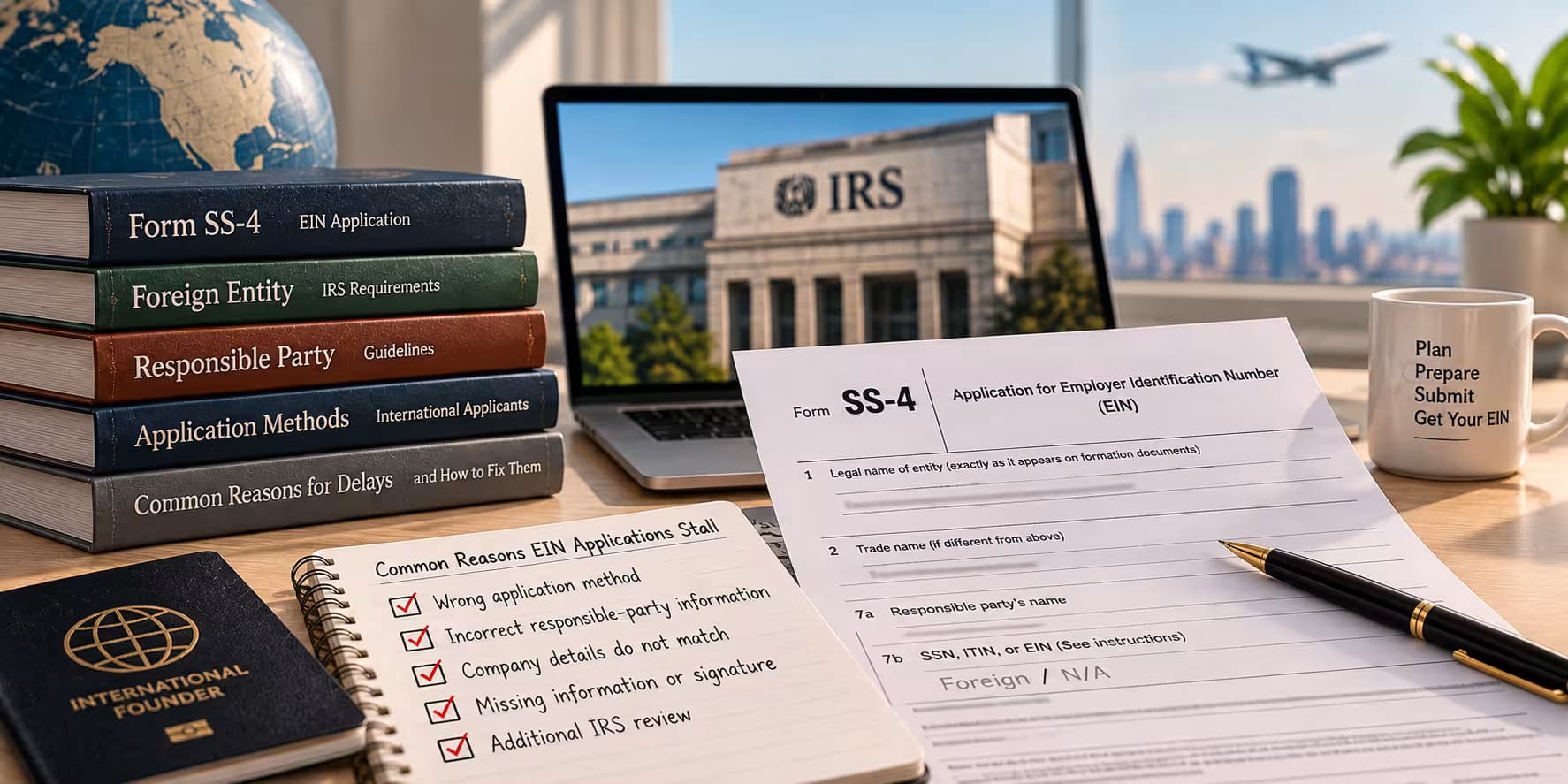
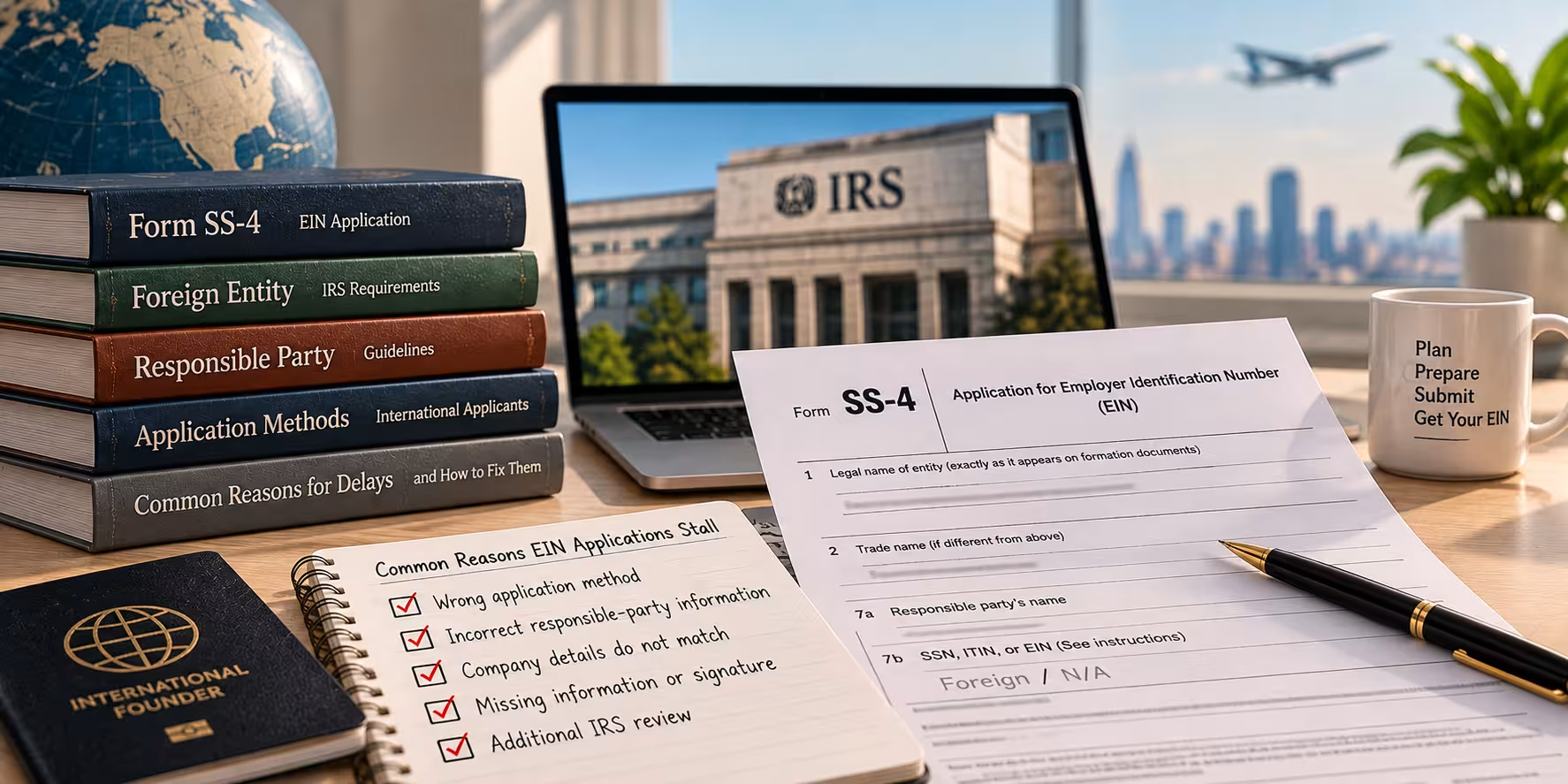
Line 7b is particularly important when applying for an EIN without an SSN. Under the IRS instructions, if the responsible party does not have and is ineligible to obtain an SSN or ITIN, the applicant should follow the instructions for entering “foreign” or “N/A,” as applicable. An ITIN is not automatically required simply because the responsible party is not a US citizen.
Before submitting the form, make sure the responsible party is correctly identified and the information in Line 7b follows the current IRS instructions. Reviewing the US LLC formation guide for non-residents can also help you understand the broader process of establishing a US company from abroad.
3. Company Details That Do Not Match
The legal name, address, formation details, and entity information on Form SS-4 should be checked carefully before submission. Even a small inconsistency can lead to questions, clarification requests, or additional processing time.
For example, I would compare the company name on the application against the official formation documents rather than relying on memory or copying information from an unrelated document. I would also verify the entity type, business address, and reason for applying for an EIN.
This is especially important for foreign founders completing US business paperwork for the first time. A company may already be legally formed, but that does not guarantee that its EIN application contains all the information the IRS needs.
The details should also be consistent with the company's actual structure and circumstances. If you are unsure which entity classification applies, review the official IRS Form SS-4 instructions before submitting the application. Getting your company information right from the beginning can make the EIN application process easier to manage.
4. Missing Information, Signature, or Authorization
A Form SS-4 that looks complete at first glance may still be missing required information. Before sending it, review the applicable fields, signature requirements, and any third-party designee authorization if another person is handling the application.
The IRS may need additional information before processing an incomplete application. This can create avoidable delays, particularly when a foreign founder is relying on a service provider and assumes that every required field has already been reviewed.
My approach is to check the entire form before submission, not just the fields that seem most important. Review the responsible party's information, the entity details, the mailing address, and the relevant application sections. Make sure the form is signed by the appropriate person and that any third-party authorization is completed when required.
If an authorized representative is applying on the company's behalf, verify that the person has the necessary authority. Hiring a formation service does not automatically mean that the service provider can act on every matter related to the company's EIN application.
A careful final review can help prevent unnecessary correspondence and reduce the risk of having to correct information after submission. For foreign founders, preparation is particularly important because resolving an incomplete application from abroad can add another administrative step.
5. Sending Multiple Applications or Expecting Instant Processing
When an EIN does not arrive quickly, the temptation is to submit the same application again through another method. I would avoid doing that without first checking the status of the original submission. The IRS advises applicants to use only one application method for each entity to avoid receiving duplicate EINs.
Processing time also depends on the application method. According to IRS guidance, fax applications can generally receive a response in approximately four business days when the required return fax information is provided. Mailed applications should be sent well in advance and may take around four to five weeks. These are estimates, not guarantees, and actual processing times can vary.
If you have already applied, review your submission records and follow the appropriate IRS contact or status procedure before starting over. Keep a copy of the completed Form SS-4, the fax transmission record or other submission evidence, and any correspondence received from the IRS.
Patience is important, but so is keeping accurate records. Understanding when and how the original application was submitted makes it easier to identify the appropriate next step. Before submitting a second application, confirm that the original submission cannot simply be followed up on.
How to Avoid Delays When Applying for an EIN Without SSN for Foreign Entity
The best way to reduce avoidable EIN application delays is to review the entire application before submission. Confirm that the legal company name and address match the formation documents, the responsible party is correctly identified, and the SSN or ITIN field follows the current IRS instructions.
Next, check that you are using an application method appropriate for your circumstances. Make sure the form is signed, any required authorization is complete, and the submission details are recorded for future reference.
Foreign founders should also avoid assuming that every delay requires a new application or a paid service. A careful review of the original submission and the applicable IRS guidance can help determine what to do next.
What I Check Before Submitting an EIN Application
For a foreign founder who needs an EIN for a US LLC, I would confirm four things before submission: the company's legal details are accurate, the correct responsible party is listed, the SSN or ITIN field is completed according to the current IRS instructions, and the application is being submitted through an appropriate method.
The good news is that a foreign owner does not automatically need to obtain an ITIN before applying for an EIN. The correct treatment of the responsible-party information depends on the individual's circumstances and the current Form SS-4 instructions. Founders should check the applicable requirements rather than assuming that every foreign applicant must follow the same procedure.
It is also worth remembering that the IRS does not charge a fee to issue an EIN. A professional service may charge for helping prepare or submit the application, but the government-issued EIN itself is free.
Getting an EIN is only one part of running a foreign-owned US LLC. Read our Form 5472 filing guide for foreign-owned US LLCs to understand the federal reporting requirements that may apply after formation.
My main advice is simple: when an EIN application gets stuck, do not immediately assume that you need to start again or pay for another service. Review what was submitted, identify what may be missing or inconsistent, and choose the next step based on the applicable IRS guidance.
Frequently Asked Questions
Can a Foreign Founder Get an EIN Without an SSN?
Yes. A foreign founder may be able to obtain an EIN without having a Social Security number. The applicant must follow the IRS procedures that apply to the responsible party and the company's circumstances. If the responsible party does not have and is ineligible to obtain an SSN or ITIN, follow the current Form SS-4 instructions for completing Line 7b.
Does a Foreign-Owned US LLC Need an EIN?
Many foreign-owned US LLCs need an EIN for federal tax administration, banking-related processes, hiring, or other business requirements. Whether an EIN is required and how the LLC should apply depend on its ownership, tax classification, and activities. Check the relevant IRS requirements before applying.
How Long Does It Take to Get an EIN Without an SSN?
Processing times depend on the application method and the circumstances of the application. IRS guidance generally indicates that fax applications may receive a response in approximately four business days when the necessary return fax information is provided, while mailed applications can take around four to five weeks. These timeframes are estimates and should be verified against current IRS guidance.
What Should I Enter in Line 7b of Form SS-4 if I Do Not Have an SSN?
The correct entry depends on whether the responsible party has an SSN or ITIN, or is eligible to obtain one. Under the applicable IRS instructions, an individual who does not have and is ineligible to obtain an SSN or ITIN should enter “foreign” or “N/A,” as instructed. Do not enter information simply because it seems appropriate; check the latest Form SS-4 instructions.
Can I Apply for an EIN Online From Outside the United States?
The IRS online EIN application is generally unavailable when the applicant's principal business, office, or legal residence is outside the United States and its territories. International applicants should review the IRS eligibility rules and use an appropriate telephone, fax, or mail procedure when applicable.
Should I Submit Form SS-4 Again if My EIN Has Not Arrived?
Not immediately. First, check your original submission records and follow the appropriate IRS status or contact procedure. Sending multiple applications through different methods can create duplicate EINs and further complications. Keep copies of the original form, transmission records, and any IRS correspondence.
Does the IRS Charge a Fee for an EIN?
No. The IRS issues EINs free of charge. However, a professional service may charge a fee to help prepare the application, review the information, or submit the form on your behalf.
Can I Use a Registered Agent as the Responsible Party?
Not automatically. A registered agent's role in receiving official documents does not, by itself, make that person the responsible party for EIN purposes. The responsible party must meet the IRS definition, so confirm the correct individual before completing Form SS-4.
This article is for general informational purposes only and does not constitute legal, tax, or financial advice. Tousif Akram and FormLLC are not a law firm or CPA firm. Consult a licensed professional for advice specific to your situation.
Ready to Form Your US LLC?
Free 30-minute consultation with no obligation and no sales pressure.
Book Free Call