Abandon LLC Consequences: What Happens If You Leave It?

Tousif Akram
IRS CAA | Founder, FormLLC
Abandon LLC Consequences: What Happens If You Just Abandon Your US LLC?
One pattern I keep seeing in my work is that founders treat an unused US LLC as a closed business. They stop selling, stop using the bank account, and move on to another project. Months or even years later, a compliance notice, missed filing, or penalty can bring the company back to their attention.
The difficult part is that a business may have stopped operating while its legal and tax responsibilities remain unresolved. Many founders assume that doing nothing is the easiest way to close a company, but inactivity and formal closure are not the same thing.
If you're wondering about abandon LLC consequences, the most important point is this: an inactive LLC is not necessarily a properly closed LLC. Before walking away from a company, check its current status, outstanding filings, and remaining responsibilities so you can make an informed decision.
What Are the Consequences of Abandoning a Wyoming LLC?
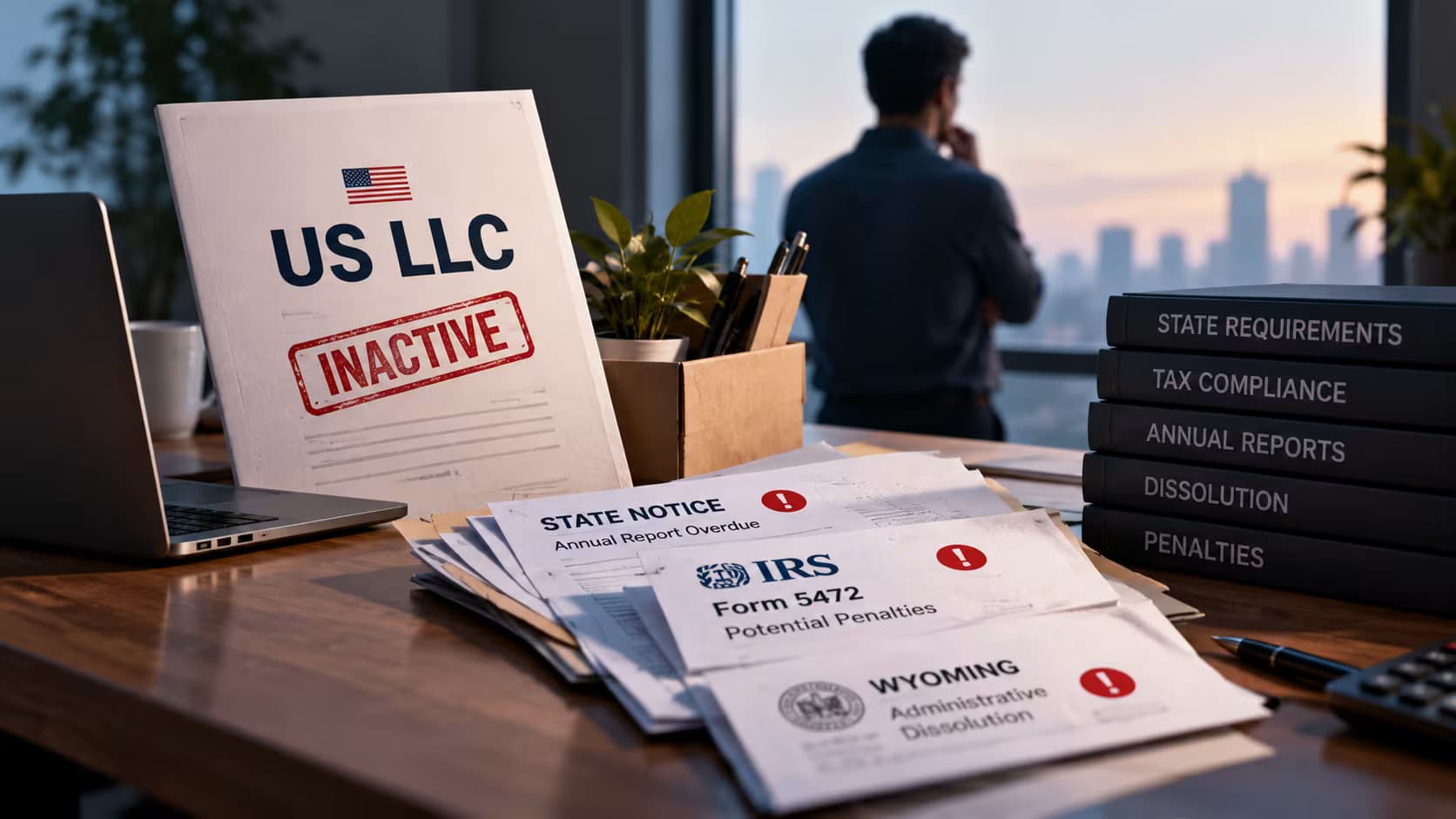
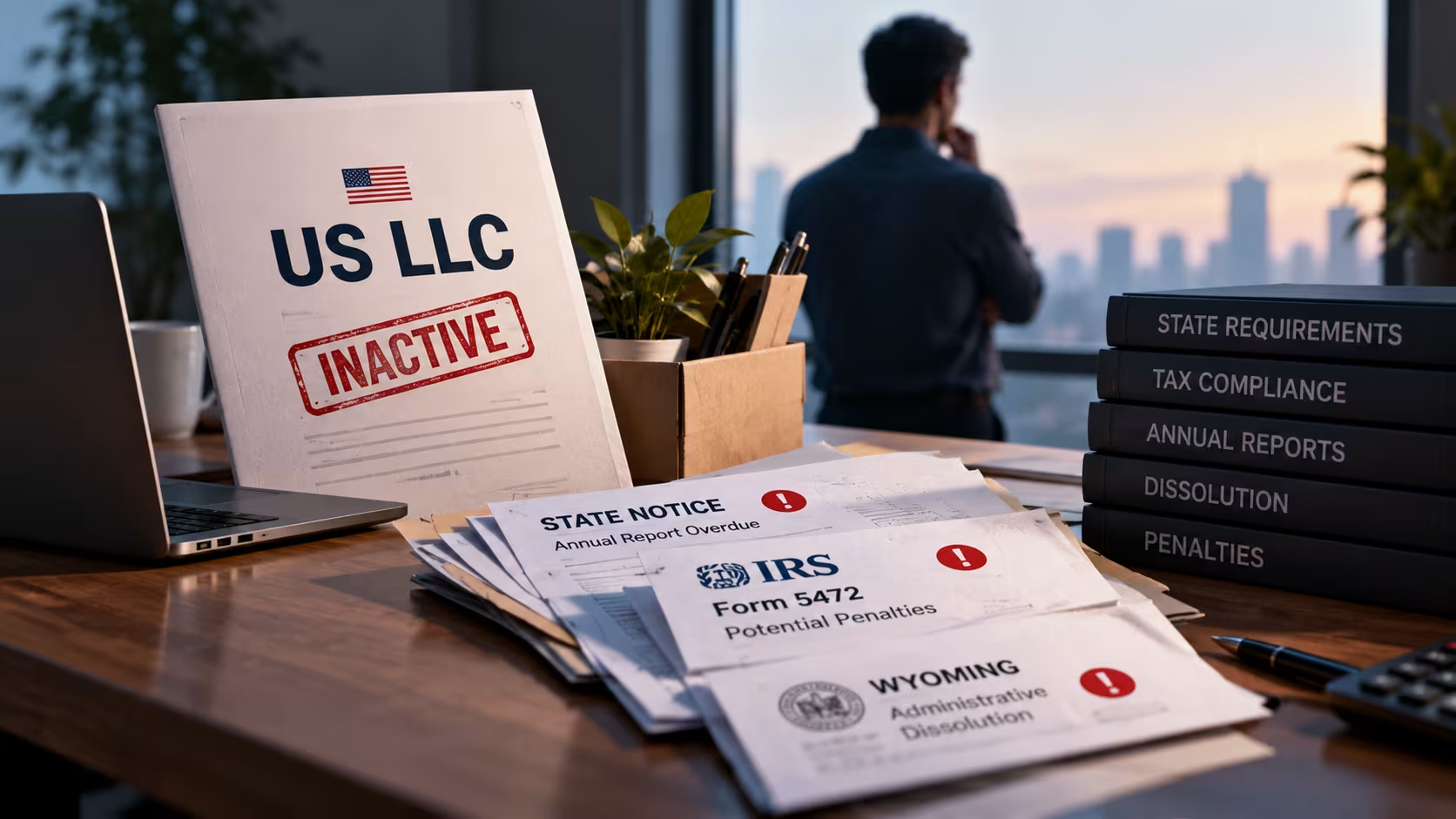
Suppose you formed a Wyoming LLC for an online business, but the project never took off. You stopped using the company and ignored the annual report reminders. Even though the business is inactive, you may still need to address state filing requirements and determine whether the company has been administratively dissolved.
Wyoming LLCs must meet applicable state reporting requirements. Failure to file an annual report can lead to administrative dissolution, and eligible companies may have options to reinstate their status. The exact process depends on the company's current record and the applicable state requirements.
If you're reviewing the costs of keeping a company registered, our guide to Wyoming LLC benefits and costs for non-US residents provides additional context on annual maintenance and state-level responsibilities.
Administrative dissolution should not be confused with completing every step needed to wind up a business. If you no longer need the LLC, check its current status, identify outstanding state requirements, and determine whether formal dissolution or another corrective step is appropriate.
Understanding abandon LLC consequences starts with recognising that an unused company can still have outstanding state requirements. Depending on its status, an abandoned LLC may need overdue annual reports, payment of outstanding fees, or formal dissolution paperwork. Checking the company's official record is the first step toward understanding which obligations remain.
The longer you leave company records unattended, the harder it can become to establish what was filed, what was missed, and what still needs attention. Keep copies of state notices, annual reports, and other company documents so you can understand the LLC's current status before taking further action.
Why an Inactive LLC Can Still Have State Obligations
Stopping business activity does not automatically cancel state requirements. Depending on the company's status, you may need to review annual reports, outstanding fees, registered-agent arrangements, and dissolution or reinstatement requirements.
Do not assume that administrative dissolution has settled every responsibility. Check the company record and keep documentation of the steps you take to resolve the situation.
Can Abandoning an LLC Lead to Federal Tax Penalties?
This is the risk I want foreign founders to take especially seriously. Stopping business activity does not automatically eliminate federal tax or information-reporting obligations.
A foreign-owned, single-member US LLC may have an information-reporting obligation involving Form 5472 and a pro forma Form 1120 when the applicable reporting conditions are met. These requirements depend on the company's tax classification, ownership, transactions, and circumstances. Having little or no revenue does not, by itself, establish that no filing is required.
Certain failures to file a required Form 5472 correctly and on time can result in a $25,000 penalty, with additional penalties potentially applying if the failure continues after IRS notification. Not every abandoned LLC automatically owes this penalty, but ignoring a filing that is actually required can become expensive.
This is why I tell founders not to assume that closing a bank account, stopping invoices, or leaving the LLC unused eliminates federal filing responsibilities. A notice that arrives long after you stopped operating can be particularly stressful if your records are no longer organised.
Review Your Form 5472 and Other Reporting Responsibilities
The correct filing obligations depend on the entity's classification, ownership, transactions, and the relevant tax year. Before deciding that the company has no outstanding responsibilities, review prior filings and identify whether any required returns or information reports remain incomplete.
Our guide to Form 5472 for foreign-owned US LLCs explains why certain foreign-owned businesses may have federal information-reporting responsibilities even when they have little business activity. If you discover a possible filing problem, consider getting advice from a qualified tax professional before deciding how to address it.
Why You Should Close an LLC Properly With the State and IRS
State dissolution and federal tax compliance are separate processes. Filing dissolution paperwork with Wyoming does not automatically satisfy outstanding IRS obligations, and addressing federal tax filings does not automatically close state registrations.
Closing a business may involve filing applicable final returns, paying outstanding taxes, and maintaining records. An EIN is a permanent federal taxpayer identification number; it does not simply disappear when a company closes. The IRS may close the associated business account after the necessary returns have been filed and outstanding taxes have been paid.
For a foreign founder, the correct steps depend on the LLC's circumstances. You may need to review prior Form 5472 filings, final-year reporting, state annual reports, and other registrations or accounts connected to the business.
Check the Company Status and Outstanding Filings
Start by gathering your formation documents, state notices, tax records, and copies of previous filings. Check whether the LLC is active, delinquent, administratively dissolved, or already formally dissolved. Then identify the state and federal requirements that remain outstanding.
If the company is no longer useful, follow the applicable closure process rather than assuming that its inactivity has ended your responsibilities. Keep copies of the paperwork you submit and any confirmations you receive.
What If You Have Already Abandoned Your LLC for Years?
When a founder returns to an old LLC after a year or two, the first task is often figuring out what happened. Was an annual report filed? Did the state administratively dissolve the company? Were federal information returns required? Did the registered agent send notices that were overlooked?
These questions are much easier to answer when formation documents, tax records, state notices, and previous filings are still available. If you have already abandoned an LLC, don't assume the situation is beyond repair. Check the official company record, gather the missing documents, identify outstanding obligations, and get qualified tax or legal help where necessary.
If you receive an IRS penalty notice, pay attention to its deadline and the instructions for responding. Don't ignore it simply because the business is no longer active. Review the notice carefully and seek qualified advice if you are unsure whether the penalty applies or how to respond.
Avoid Making the Problem More Complicated
Do not form another company or submit random filings simply to make the old LLC disappear. First establish its current legal status and determine which obligations remain. Taking a structured approach can help you avoid unnecessary costs and confusion.
Ongoing responsibilities deserve attention even after the initial registration. Our article, Forming an LLC Is Easy. Compliance Is the Hard Part, explains why company formation is only the beginning and why founders need to understand their continuing reporting and recordkeeping responsibilities.
How to Avoid Abandon LLC Consequences
The best way to avoid unnecessary abandon LLC consequences is to make a clear decision about the company's future. If you no longer need the business, review its state status, check any outstanding tax filings, and complete the applicable closure steps. Taking action early can help you avoid confusion and make it easier to keep a clear record of the company's final status.
Before walking away, confirm whether annual reports or other state requirements remain outstanding, review potential federal information-reporting obligations, and keep copies of your company documents. If the LLC has been inactive for years, investigate its current status instead of assuming that the problem has resolved itself.
A useful first step is to create a simple record of the company's current position: state status, overdue filings, outstanding balances, tax returns already submitted, and any notices received. This makes it easier to identify the work that remains and seek professional advice where necessary.
My Advice: Don't Abandon an LLC—Make a Deliberate Decision
I understand why founders walk away from companies that never became successful. They want to focus on their next opportunity rather than spend more money on a business they no longer use.
But there is a difference between deciding to stop operating and completing the steps needed to close the company. Before leaving a US LLC behind, review its state status, annual reports, federal tax filings, and any other obligations that apply to your situation.
If the LLC is no longer useful, close it properly. If you have already ignored it for years, investigate its status and resolve outstanding issues rather than waiting for another notice.
The lesson is simple: an unused LLC can still create work, costs, and compliance problems. A proper exit may take some effort today, but it is better than discovering years later that something important was left unfinished.
This article is for general informational purposes only and does not constitute legal, tax, or financial advice. Tousif Akram and FormLLC are not a law firm or CPA firm. Consult a licensed professional for advice specific to your situation.
Ready to Form Your US LLC?
Free 30-minute consultation with no obligation and no sales pressure.
Book Free Call