Best State for LLC: The Biggest Mistake Founders Make

Tousif Akram
IRS CAA | Founder, FormLLC
Best State for LLC: The Biggest Mistake Founders Make
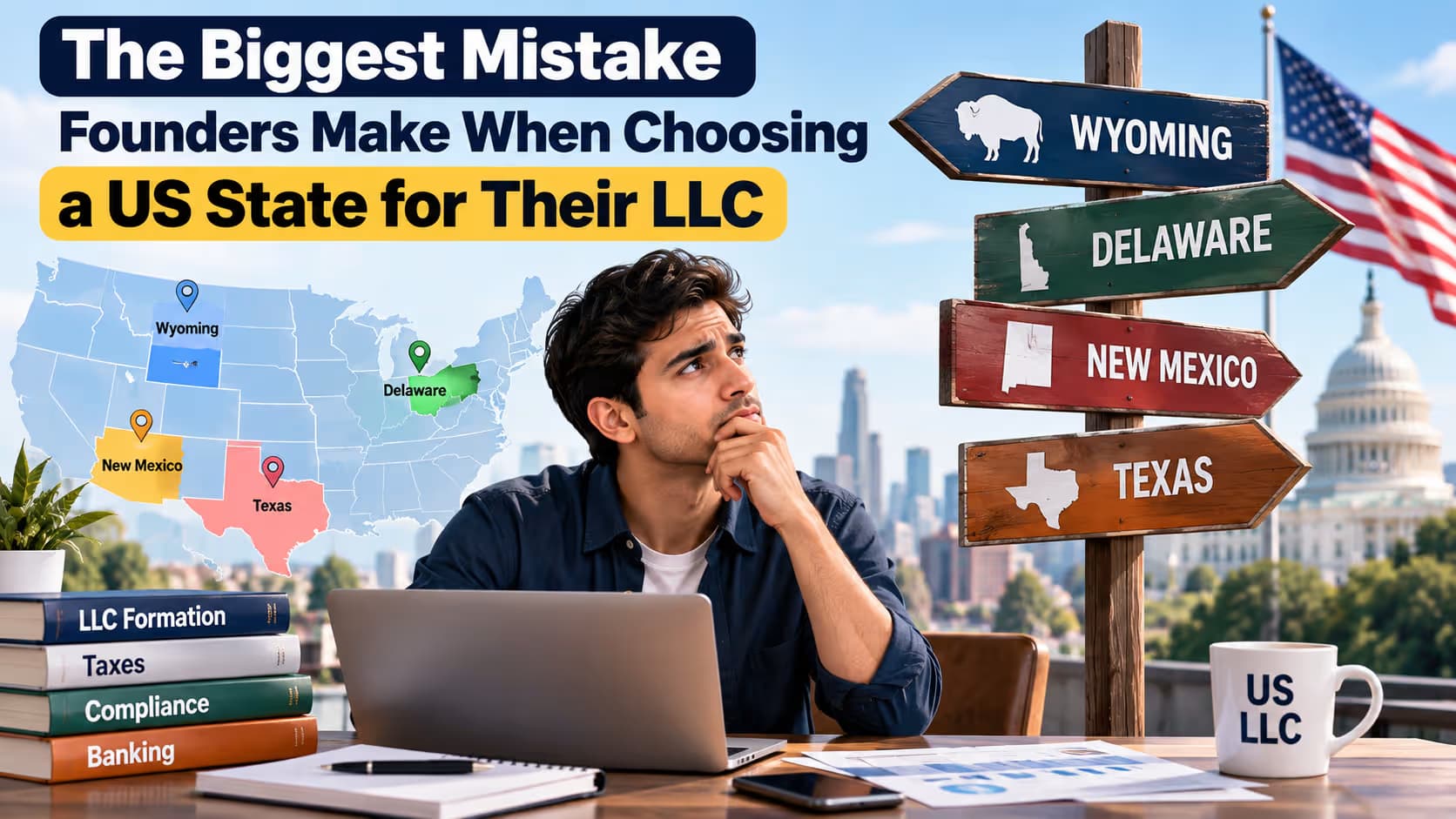
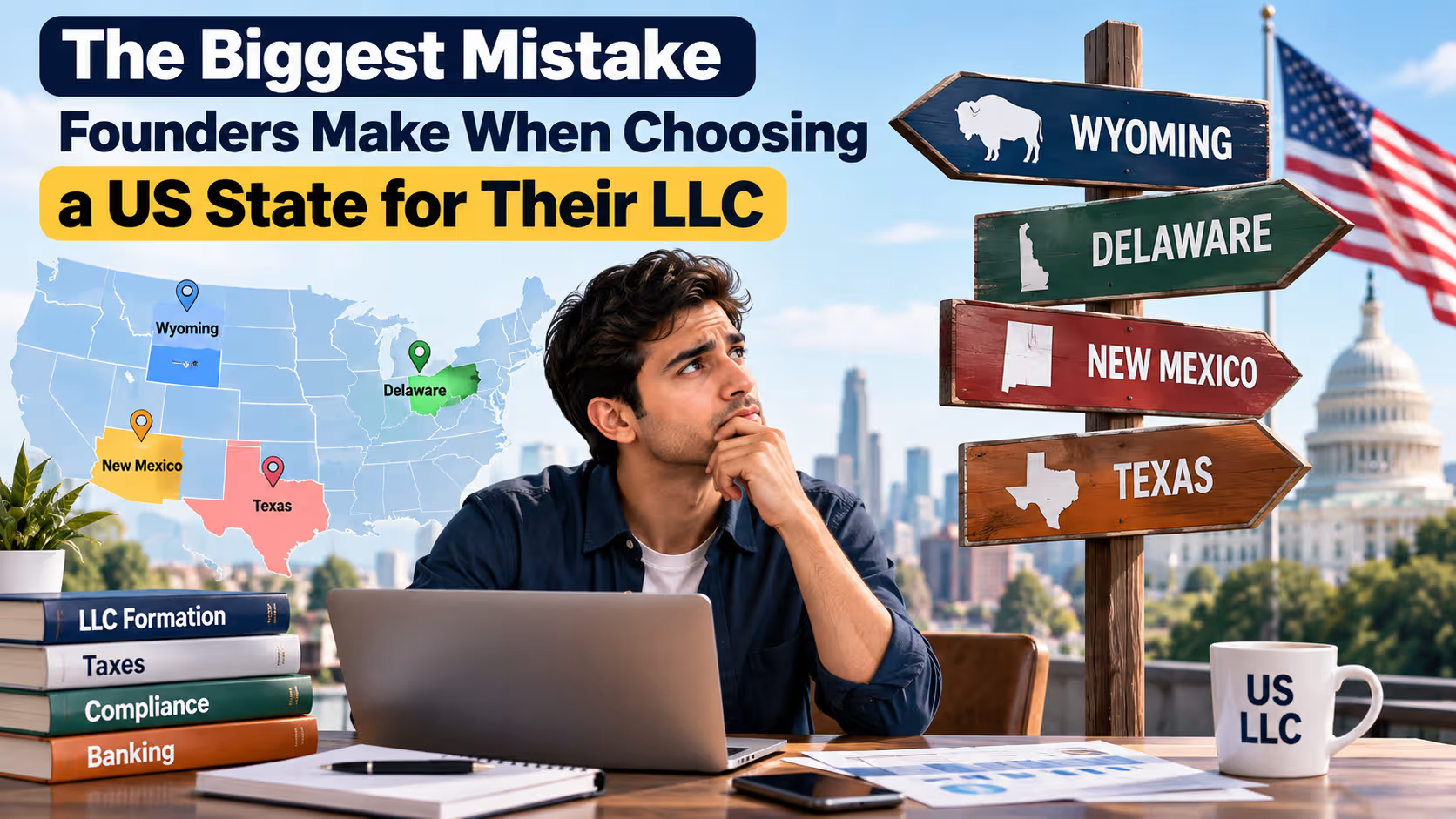
When founders ask me about the best state for LLC formation, I understand why they want a simple answer. They often hear about Wyoming, Delaware, New Mexico, or the state where they live and want to know which one they should choose.
But after helping entrepreneurs from different countries set up US companies, I have learned that the biggest mistake is not necessarily choosing the wrong state. It is choosing a state before understanding the business.
Why the Best State for LLC Formation Depends on the Business
When someone starts a business with a limited budget, I understand why they look at formation fees first. Keeping costs low matters, especially during the early stages.
But formation cost is only one part of the decision. The cheapest state to form an LLC is not automatically the cheapest state for your business overall.
An LLC is a business structure created under state law. Each state has its own rules, fees, taxes, and filing requirements. Your actual business activities can also affect which state requirements apply to you.
That is why I do not believe there is one best state for LLC formation that works for every founder.
The better approach is to understand the business first.
What I Ask Before Choosing an LLC Formation State
If a founder tells me, “I want a US LLC,” my next question should not immediately be, “Why don't you choose Wyoming?”
I want to understand the business first. Where will it operate? Who owns it? Where does the founder live? Are there US operations? Where are the customers? What does the company actually do?
These questions can change the state discussion completely.
For an international founder running an online business from outside the US, the considerations can be very different from those of someone physically operating a business in California, Texas, New York, or another state.
If you are an international founder, our US LLC guide for non-US residents explains the broader formation process and some of the factors you should understand before forming a company.
Where Your Business Actually Operates Matters
One of the most important things founders should understand is that forming an LLC in one state does not necessarily mean you can ignore another state where the business is actually operating.
A company formed in one state may need to register or foreign-qualify in another state when it conducts business there. This can create additional filing requirements, fees, taxes, and compliance obligations.
That means a state that looks inexpensive at formation may not remain inexpensive if your actual business activities require registration somewhere else.
This is one reason the right state cannot be determined without looking at the business itself.
Wyoming and Delaware Are Not Magic Words
I have seen how popular Wyoming has become among online entrepreneurs and international founders. There are understandable reasons people consider it.
But popularity should not replace analysis.
Delaware is another state that gets mentioned frequently. It is often discussed in connection with startups, investors, and established corporate structures.
Both states can be relevant in different situations. But the important question is not simply whether other founders choose them.
The question is whether the state fits your business and its actual requirements.
The point is not that Wyoming is good or bad. The same applies to Delaware, New Mexico, or any other state.
The point is simple: a state is a business decision, not a marketing slogan.
What I Have Learned From Working With Founders
After working with thousands of entrepreneurs, I have noticed that first-time founders can spend too much time searching for the “perfect” state.
At the same time, they may overlook what their company will actually need after formation.
They may focus on saving money on the initial filing. Then they overlook banking, payment processing, accounting, compliance, taxes, registered-agent costs, and the location of their actual business activities.
For international founders, the decision can become even more complicated.
Forming the company is only one part of building a US business.
After formation, you may still need to think about your EIN, banking, taxes, and ongoing compliance. If you need an EIN without a US Social Security Number, read our guide to getting an EIN without an SSN.
Formation Is Only the Beginning
This is where my own thinking about FormLLC changed.
At first, company formation can look like a simple transaction. Choose a state, file the paperwork, and receive the documents.
But founders do not really need a document.
They need a business structure that makes sense for what they are trying to build.
That means the state decision should be connected to the bigger business plan.
So, What Is the Best State for LLC Formation?
There is no single answer that works for every founder.
A US founder operating locally may have very different considerations from a founder in India building a software company with customers around the world.
A venture-backed startup may have different needs from a small consulting business. A company with employees, physical operations, or regulated activities may face different requirements from a remote online business.
That is why I do not like telling founders, “Just form in this state.”
Instead, I would rather help them understand *why* a particular state may fit their situation and what obligations can come with that decision.
The state you choose matters. But the reasoning behind the choice matters more.
For many founders, the right way to approach LLC formation is to start with the business rather than the state.
Start With the Business, Not the State
Before choosing a state, think about the business itself.
Ask where the company will operate. Think about where the owners are located. Consider whether there will be US activities. Look at the type of customers you serve. Think about what the business may look like as it grows.
Then consider the state.
This approach can also help you think about other parts of your setup. If you plan to open a US business bank account, read our US bank account guide for non-resident LLC owners.
The goal is not simply to find the state with the lowest advertised formation cost.
The goal is to understand the total setup and compliance picture before making a decision.
The State Is Only One Part of the Decision
Choosing a state is important, but it should not be viewed in isolation.
You also need to understand the company's ownership structure, tax classification, EIN requirements, banking needs, and ongoing reporting obligations.
For foreign-owned US LLCs, there can also be additional federal reporting considerations. Our Form 5472 guide for foreign-owned LLCs explains one important area that some international founders need to understand.
Your business circumstances should drive the decision.
The Biggest Mistake Is Choosing Too Early
After working with international founders, I have come to believe that the biggest mistake is not choosing Wyoming instead of Delaware, or Delaware instead of another state.
The bigger mistake is choosing a state before understanding what the business actually needs.
Once you understand your business model, ownership, location, operations, and future plans, the state decision becomes easier to evaluate.
The right formation state is not simply the state with the lowest fee or the most popular name. It is the state that makes sense for the circumstances of the business.
And if there is one lesson I would give a founder before forming a US LLC, it is this:
Don't start by asking, “What is the best state for LLC?” Start by asking, “What kind of business am I actually building?”
Once you answer that question, choosing a state becomes much easier.
*This article is for general educational purposes and is not legal or tax advice. State requirements vary based on the business, ownership, activities, and location. Founders should verify current requirements with the relevant state authorities and qualified professionals before making a formation decision.*
This article is for general informational purposes only and does not constitute legal, tax, or financial advice. Tousif Akram and FormLLC are not a law firm or CPA firm. Consult a licensed professional for advice specific to your situation.
Ready to Form Your US LLC?
Free 30-minute consultation with no obligation and no sales pressure.
Book Free Call