The Difference Between Having a US Company and Actually Being Ready to Sell Globally

Tousif Akram
IRS CAA | Founder, FormLLC
The Difference Between Having a US Company and Actually Being Ready to Sell Globally
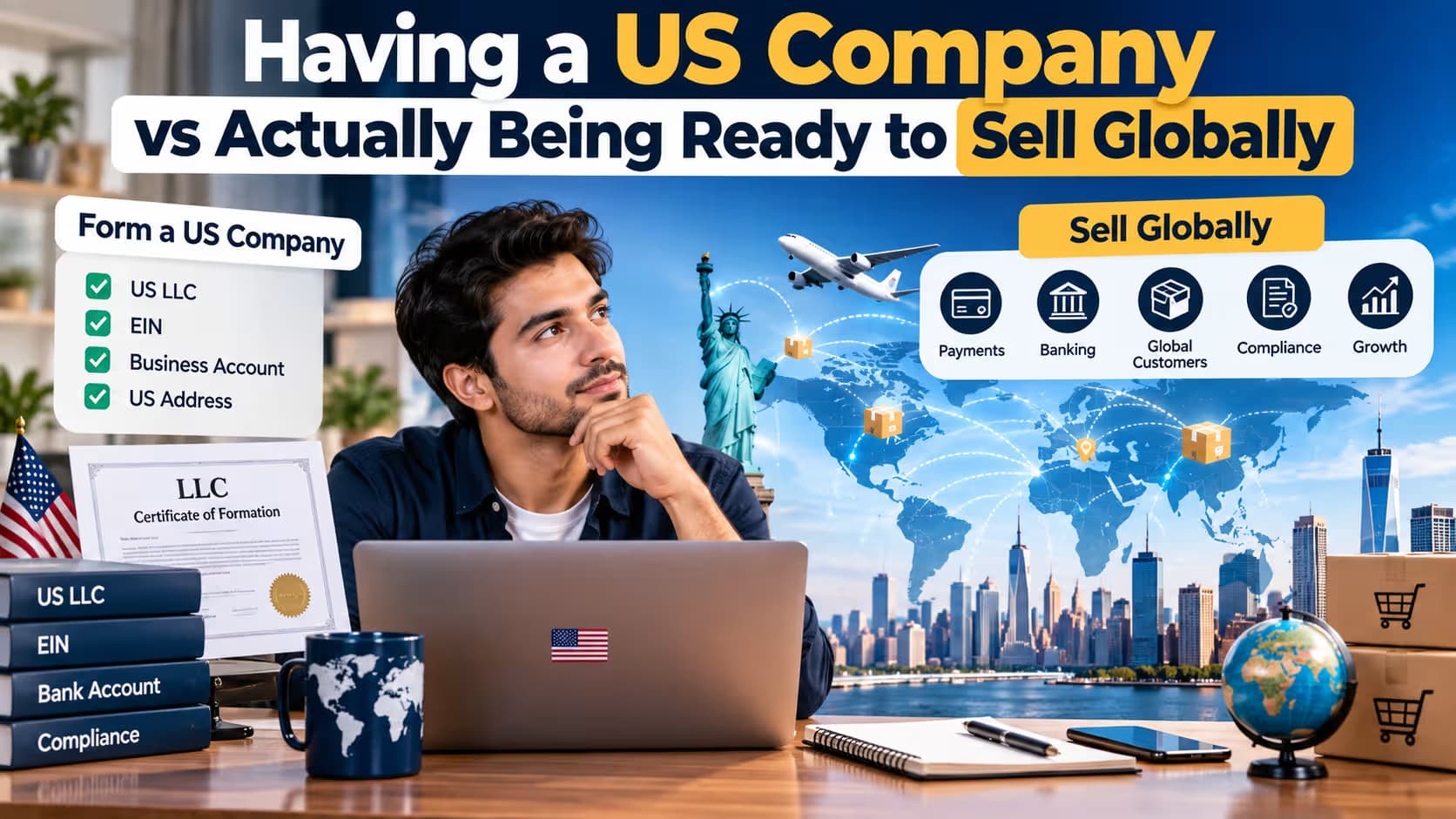
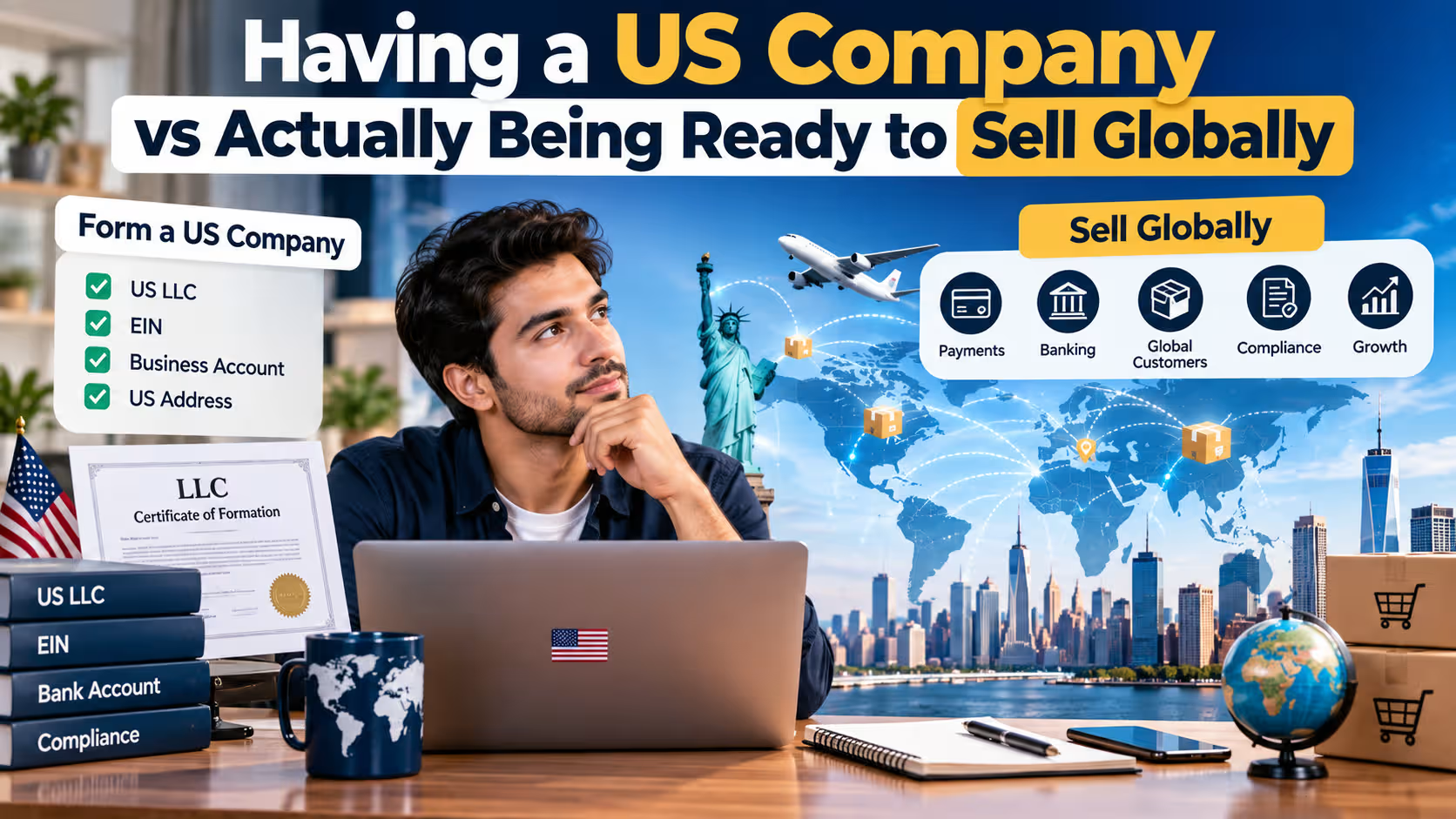
One of the things I have noticed after working with international founders is how quickly a US company can create the feeling that you are ready for the global market. You form the LLC, get the EIN, set up a business account, and put a US address on your website. Suddenly, the business looks international. But there is a big difference between having a US company and being ready to sell globally.
I learned this through conversations with founders more than through any textbook. Many entrepreneurs come to us because they want a US company for their online business. Their customers may be in the United States, Europe, Australia, or somewhere else, while they themselves may be based in India, Bangladesh, Pakistan, Nepal, or another country. The company can be formed in the US in a relatively straightforward way, but the real challenge starts when the first customer arrives.
Having a US Company Is Only the Starting Point
Once the first customer arrives, the practical questions become much more important. How will that customer pay you? Where will the money go? Can your payment processor support your business and location? What happens when you receive your first international payment? How will you handle refunds? What documentation might a bank or payment provider ask for? And what are your tax and reporting responsibilities?
These questions are why I no longer think of company formation as the finish line. A US LLC gives you a legal structure, but it does not automatically give you a complete system for selling internationally.
If you are still considering the formation process, our US LLC guide for non-resident founders explains the broader considerations around forming and operating a US company from outside the United States.
A US LLC Does Not Automatically Make You Global-Ready
For example, payment platforms don't simply look at whether you have an LLC. They may verify the business, its website, ownership, bank account, products or services, and other information during their onboarding process.
That means a global business needs more than a legal entity. It needs a credible operating system.
Your website should clearly explain what you sell. Your pricing should make sense. Your contracts and invoices should match the business. Your payment setup should work for the customers you are targeting. Your banking should be appropriate for the business. And your accounting and compliance should not be an afterthought.
The company is the structure. Your operating systems are what make that structure usable.
Your Website and Business Information Need to Match
One of the simplest things founders can overlook is consistency.
If your website says you provide consulting services, your contracts, invoices, payment descriptions, and business information should make sense for a consulting business. If you operate an ecommerce store, your website should clearly explain what you sell and how customers can purchase it. If you run a SaaS company, customers should be able to understand what the software does and how the subscription works.
This becomes especially important when banks and payment providers review a business.
A US company with a website that doesn't clearly explain its products or services can create unnecessary questions. The same applies when the business description, ownership information, website, payment activity, and expected transactions don't appear to fit together.
Being global-ready means making the business easy to understand, not simply making it look international.
Banking and Payments Are Part of Global Operations
The first international payment can expose gaps that weren't obvious during company formation.
A founder may have an LLC and EIN but still need to determine which banking and payment providers support the business model and the founder's location. They may also need to understand transaction limits, verification requirements, refund procedures, payment disputes, and how business funds will be managed.
If you're a non-US founder, our guide on how to open a US bank account as a non-resident LLC owner can help you understand the banking side of the process.
The same principle applies to payment processors. Having a US LLC doesn't automatically mean every payment platform will approve your business. Providers can have their own eligibility requirements, verification processes, and restrictions.
That is why I encourage founders to think about payments before forming the company rather than discovering the limitations after the first customer is ready to pay.
Global Sales Also Create Compliance Responsibilities
This becomes even more important for non-US founders because having a US LLC does not make obligations in your home country disappear. It also doesn't automatically remove US reporting requirements.
For example, the IRS has specific information-reporting rules that can apply to foreign-owned US disregarded entities, including Form 5472 and a pro forma Form 1120 in relevant circumstances. The exact requirements depend on the company's ownership, tax classification, transactions, and other circumstances.
If your business is foreign-owned, our guide on Form 5472 for foreign-owned US LLCs explains an important area of US information reporting.
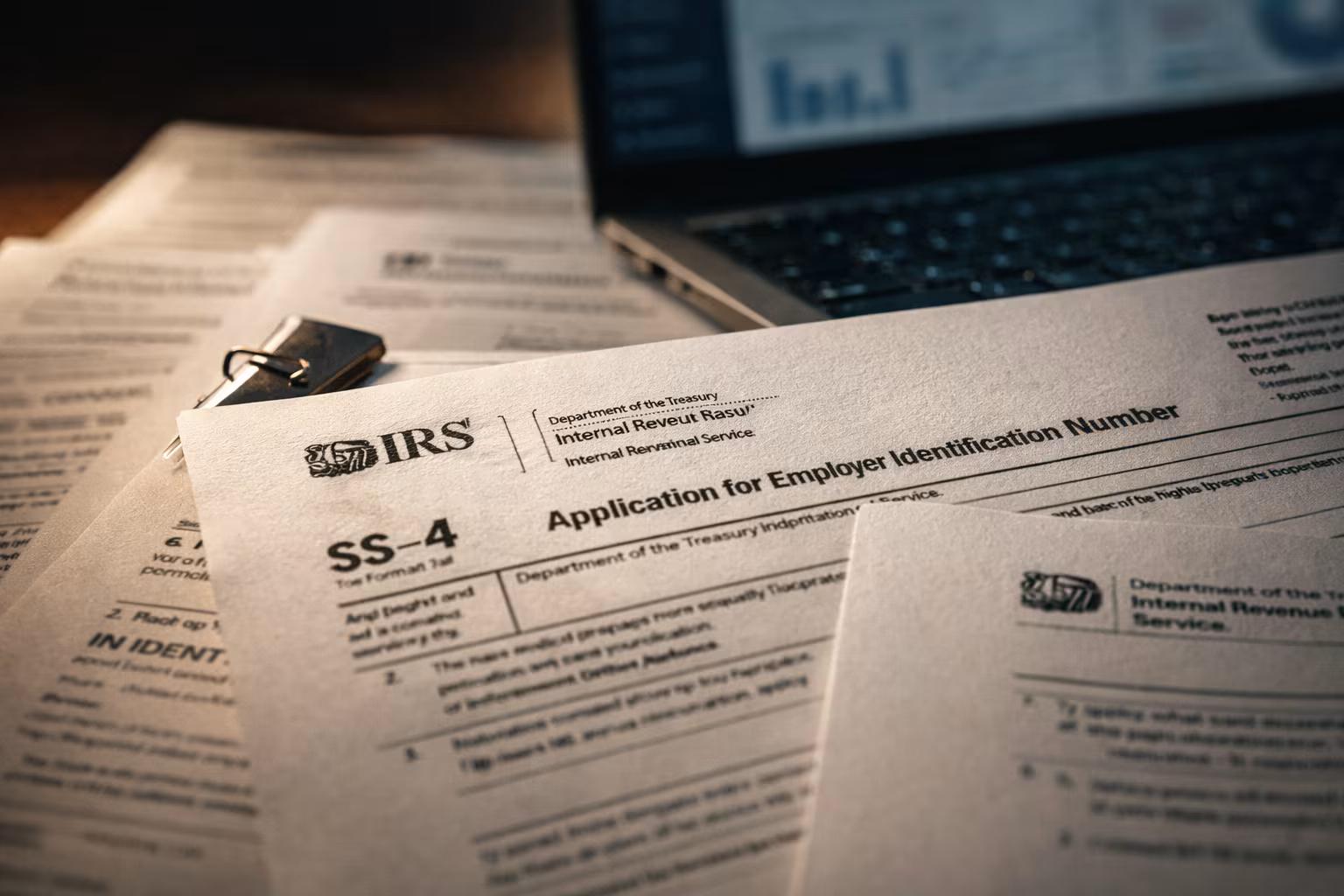
For founders who still need to obtain an EIN, our guide on how to get an EIN without an SSN can help with that part of the setup.
Selling internationally means thinking about compliance as part of the business model, not as something to deal with after revenue arrives.
Don't Build the Company Before Thinking About the Customer
I have seen founders focus so much on getting the US company that they don't spend enough time thinking about what happens once the company starts making real money.
That is where the difference becomes obvious.
A company can be legally formed but operationally unprepared.
A global-ready business is different. It has thought about how customers discover it, how they trust it, how they pay, how the business delivers, how money moves through the company, and how the founder keeps everything organized.
And I don't think being global means having customers in 50 countries from day one. You can start with one customer in another country. What matters is whether the business can handle that opportunity properly.
Ask Business Questions Before Formation Questions
This is something I wish more founders understood before forming a company.
Don't build the US company first and then ask what to do with it. Think about the business first, and use the company as part of the infrastructure that supports it.
That mindset changes the questions you ask.
Instead of asking only, “Which state should I form my LLC in?” you start asking, “Where are my customers?” “How will they pay?” “What will my business need six months from now?” “What compliance responsibilities will I have?” and “Can I actually operate this company from where I live?”
Those are much more useful questions because they connect the legal structure to the actual business.
If you are still deciding whether a US LLC is appropriate for your situation, our guide to starting a US LLC from India provides additional context for international founders.
A Global-Ready Business Needs Systems
Working with international founders has made me believe that geography is becoming less important for entrepreneurship, but infrastructure still matters enormously.
The internet can give a founder access to customers thousands of miles away. A US company can provide useful business infrastructure. But neither one builds the business for you.
A global-ready business needs systems for payments, banking, accounting, contracts, customer support, compliance, delivery, and communication. The exact systems depend on the business, but the underlying principle is the same: your company should be able to support the customers and transactions you want to attract.
This is also why I think founders should look beyond formation price when choosing a company-formation provider. The cheapest formation package may not answer the operational questions that appear after the company is created.
The Company Is the Infrastructure, Not the Business
The difference between having a US company and being ready to sell globally becomes clear once you look beyond the formation documents.
A company can have an LLC certificate, EIN, US address, and bank account and still be unprepared to serve international customers effectively.
Being ready means understanding your customers, building a credible online presence, setting up appropriate payment and banking systems, organizing your records, understanding your compliance responsibilities, and creating processes that allow the business to operate consistently.
Forming the company is the paperwork. Becoming ready to sell globally is the work.
And in my experience, the founders who understand that difference are thinking about the business, not just the LLC.
This article is for general informational purposes only and does not constitute legal, tax, or financial advice. Tousif Akram and FormLLC are not a law firm or CPA firm. Consult a licensed professional for advice specific to your situation.
Ready to Form Your US LLC?
Free 30-minute consultation with no obligation and no sales pressure.
Book Free Call