Global Entrepreneurs: Why the Next Generation Will Build Beyond Borders

Tousif Akram
IRS CAA | Founder, FormLLC
Global entrepreneurs are changing how businesses are built, finding customers, and creating opportunities across borders without being limited by where they live. I grew up in a small village in Bihar, and when I first started teaching students and later working online, I wasn't thinking about building an international business. I was simply trying to create opportunities for myself and find ways to make my skills useful beyond my immediate surroundings.
Then I started freelancing. My first online payment was around $20, and it came from someone who wasn't in my immediate surroundings. That small transaction changed how I looked at the world. I realised that the person who values your work doesn't necessarily have to live in your city, state, or even your country.
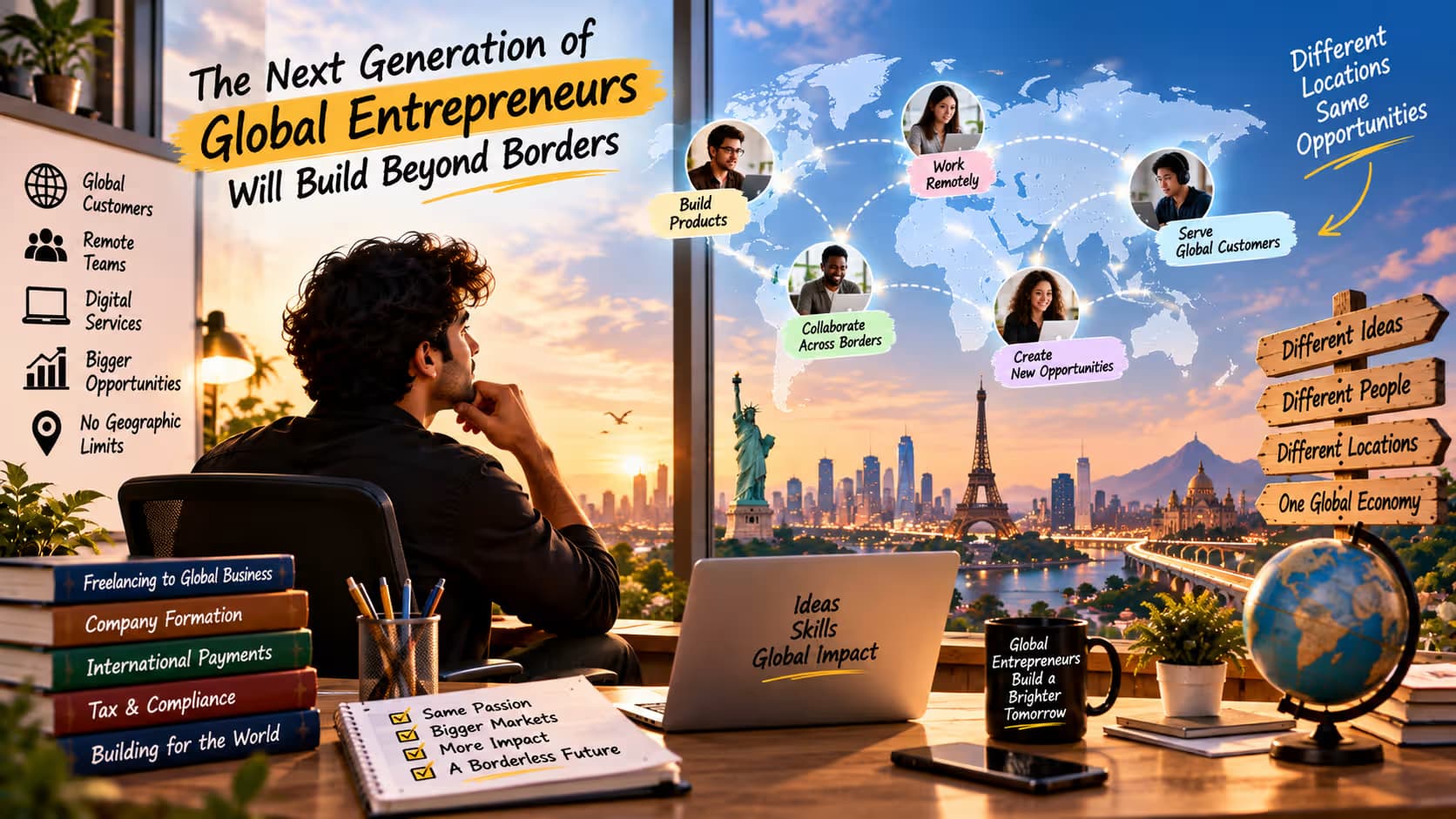
That experience has stayed with me. Today, after working with international clients and building FormLLC, I have developed a long-term belief: the next generation of global entrepreneurs will increasingly build businesses that serve international customers from the beginning, rather than waiting until they become successful locally before expanding internationally.
I believe the next generation of entrepreneurs will look at the world differently. Their opportunities won't necessarily be limited by where they live, but by the problems they can solve, the customers they can reach, and the value they can deliver.
Why Global Entrepreneurs Will Build Beyond Borders
A Business No Longer Needs to Begin in One Market
Think about how a founder can start a business today. They might live in India, work with a designer in another country, use cloud-based tools hosted elsewhere, and sell a digital service to customers across several markets. The business can be built around the problem being solved rather than the founder's physical location.
This represents a significant change in how people can approach entrepreneurship. In the past, starting a business often meant focusing on a local market, building relationships nearby, and gradually exploring opportunities elsewhere. Today, digital tools make it possible for global entrepreneurs to reach international customers much earlier in their journey.
This is not just an idea about the future. The World Trade Organization estimated that global exports of digitally delivered services reached $5.26 trillion in 2025, representing 15.2% of total world exports of goods and services. That tells us something important: services delivered through digital networks are already a significant part of international trade.
For a small founder, this creates possibilities that would have been much harder to access in the past. A specialist can find clients abroad. A software company can serve customers in multiple markets. A small team can build a product for a global audience without opening offices everywhere.
My own journey helped me understand this shift. I didn't need to move to another country before I could start working with international clients. The internet gave me a way to connect my skills with people who needed them. I've shared more about that experience in my journey from Bihar to global entrepreneurship.
Global Customers Can Change How Founders Build Businesses
When entrepreneurs start thinking beyond their immediate markets, they can approach business opportunities differently. Instead of limiting themselves to the customers they can reach locally, they can investigate problems that exist across countries and identify where their products or services can provide value.
This doesn't mean every business should target the entire world from its first day. It means founders can consider international demand when choosing what to build, how to position their services, and which customers they want to serve.
I believe this way of thinking will become increasingly common among global entrepreneurs who build digital products, professional services, software businesses, and specialised online companies. The opportunity is to identify a genuine customer problem and understand whether it exists beyond one geographical market.
Why Global Entrepreneurs Need the Right Business Infrastructure
Finding International Customers Is Only the Beginning
There is one part of this opportunity that I don't think founders should underestimate. Reaching international customers is one challenge; operating an international business is another.
Once a business starts crossing borders, practical questions appear. How will it collect payments? Which business structure makes sense? What local and international rules apply? How will it manage taxes, contracts, customer support, and compliance?
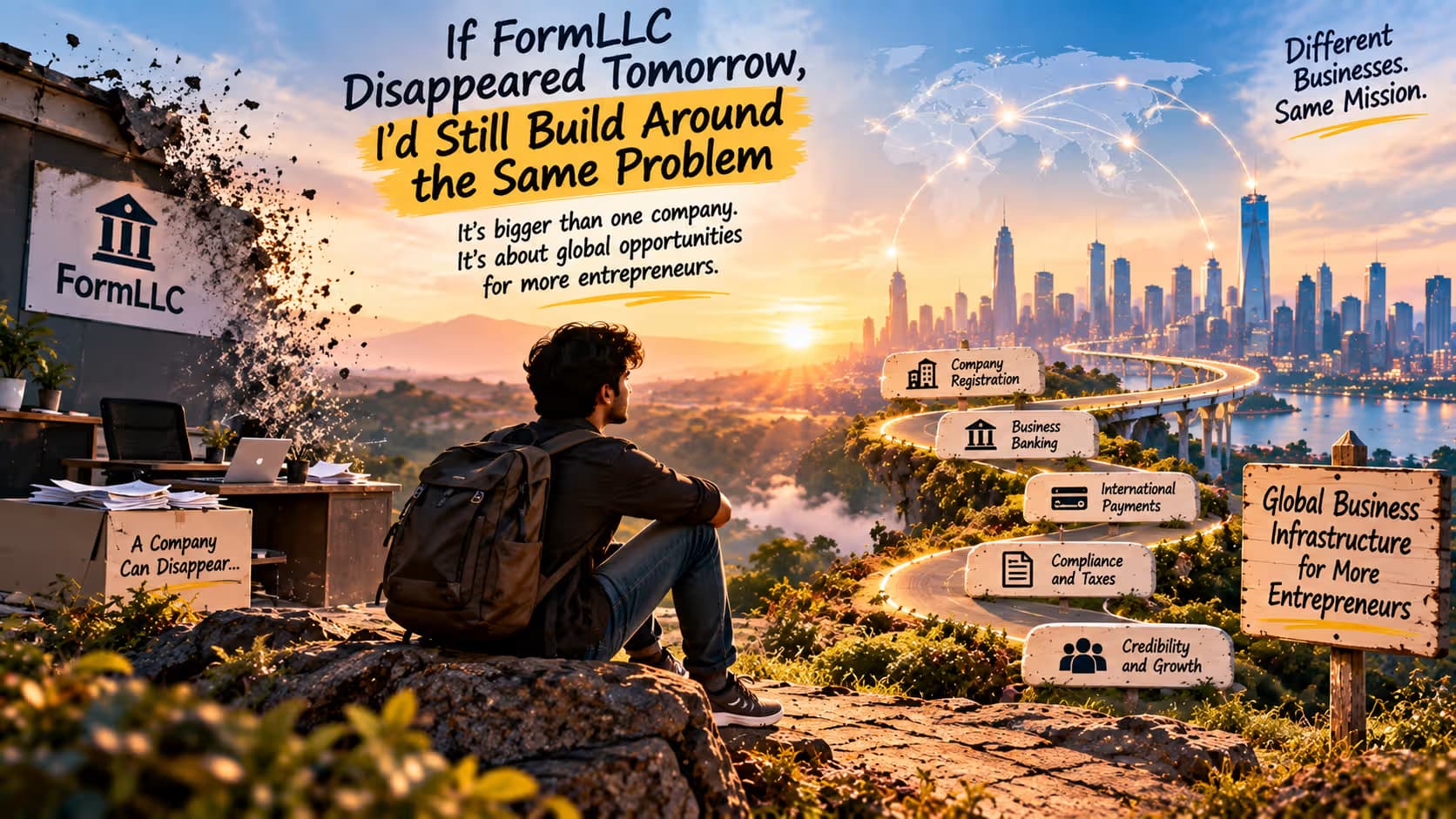
These are some of the problems I have seen through my work with FormLLC. Many entrepreneurs come with a clear business ambition, but they need help understanding the infrastructure around it. Company registration is only one piece of building and operating an international business.
A founder may establish a company and still need to understand banking options, payment provider requirements, ongoing responsibilities, and the rules that apply to their particular situation. These are separate considerations, and the answers can vary depending on where the founder lives and where the business operates.
I've written about this distinction in why customers want more than just a US LLC. The important lesson is that founders should understand the complete business journey rather than treating registration as the final step.
Choosing the Right Structure Matters More Than Following a Trend
I don't believe every founder needs a US company to build globally. The right structure depends on the business, the founder's location, the markets they serve, and the practical requirements of their operations.
A business serving international customers should understand its available options before making structural decisions. It should consider payment access, banking, tax responsibilities, compliance, and the requirements of the countries involved.
For someone exploring a US company, understanding the process and its ongoing responsibilities is an important starting point. My US LLC guide for non-residents discusses some of the considerations involved.
I believe the next generation of global entrepreneurs will need to become better at making these decisions. They won't simply ask how to register a company. They will ask what structure supports their business model and what infrastructure they need to serve customers reliably across borders.
How Global Entrepreneurs Can Think Differently About Growth
Understanding Problems Across Different Markets
I believe future entrepreneurs will have to think differently about where they find customers, where they find talent, and how they deliver value. Instead of asking only, "How do I grow in my city?" they may also ask, "Who has this problem anywhere in the world, and how can I serve them?"
This shift starts with understanding customers. A founder needs to identify a problem, learn how people currently solve it, and determine whether a better solution could serve customers in multiple markets.
Technology will make parts of this easier, but it won't remove the need for trust, quality, communication, and reliable operations. A customer in another country still expects you to understand their problem, deliver what you promised, and support them when something goes wrong.
That is why I think global business is not simply about having an international website or accepting a payment from abroad. It is about building a business that can consistently serve people across different markets.
Building Relationships and Systems That Work Internationally
Serving international customers also requires founders to think about how their businesses operate. Communication, customer support, payment processes, delivery, and compliance all need to work in a way that makes sense for the markets they serve.
A founder doesn't necessarily need a large team or offices in several countries to begin. But they do need to understand which processes are essential and how to deliver a consistent customer experience.
I believe global entrepreneurs who learn to combine digital tools with strong customer relationships and reliable operations will have more ways to explore international opportunities. The objective shouldn't be to look like a multinational company. It should be to build a business that delivers genuine value, regardless of where its customers are located.
Why Building Beyond Borders Matters to Me
When I look back at my journey, I don't see a straight path from a small village to building a company. I see a series of opportunities that became possible because the internet allowed me to work beyond my immediate geography.
That is what I want more entrepreneurs to experience. Someone should be able to build valuable skills, find customers, and create a meaningful business without believing they must first move to a major city or another country.
My experience has also shaped how I think about helping other founders. Through my work helping entrepreneurs start global businesses, I've become increasingly interested in the practical challenges that appear when someone wants to operate internationally. The opportunity isn't just helping someone establish a company. It is helping them understand what they need to build and run a sustainable business.
There will still be differences in infrastructure, regulations, access to capital, and payment systems. The opportunity is not equal everywhere yet. Some founders will face more practical barriers than others, depending on their location and business model. But I believe more of these barriers can be understood, navigated, and gradually reduced.
My long-term bet is that the next generation of global entrepreneurs will not think of international business as a separate stage of growth. They will see the world as a potential market from the very beginning and build the right products, relationships, and infrastructure to serve it.
Your location may shape where your journey starts. I don't believe it should decide how far your business can go.
This article is for general informational purposes only and does not constitute legal, tax, or financial advice. Tousif Akram and FormLLC are not a law firm or CPA firm. Consult a licensed professional for advice specific to your situation.
Ready to Form Your US LLC?
Free 30-minute consultation with no obligation and no sales pressure.
Book Free Call