BOI Report for Foreign-Owned LLCs: What Changed in 2026?

Tousif Akram
IRS CAA | Founder, FormLLC
BOI Report for Foreign-Owned LLCs: What Changed in 2026?
A BOI report for foreign-owned LLC owners can be a source of confusion, especially after the reporting rule changes in 2025. Many founders who formed US companies from outside America are unsure whether they still need to submit Beneficial Ownership Information (BOI) to FinCEN. Others have received filing reminders or paid service providers to prepare reports they may not need. The answer depends on how the company was formed and which reporting rules currently apply. Before filing or paying for a service, it is important to understand the distinction between a US-created LLC and a foreign-formed entity registered to do business in the United States.
The confusion is understandable. Rules and guidance have changed, and older information can still appear in online articles, emails, and compliance reminders. If you own a US LLC from India or another country, check your company's formation details and verify the current requirements before deciding whether a filing is necessary.
BOI Report for Foreign-Owned LLC: Do You Need to File in 2026?
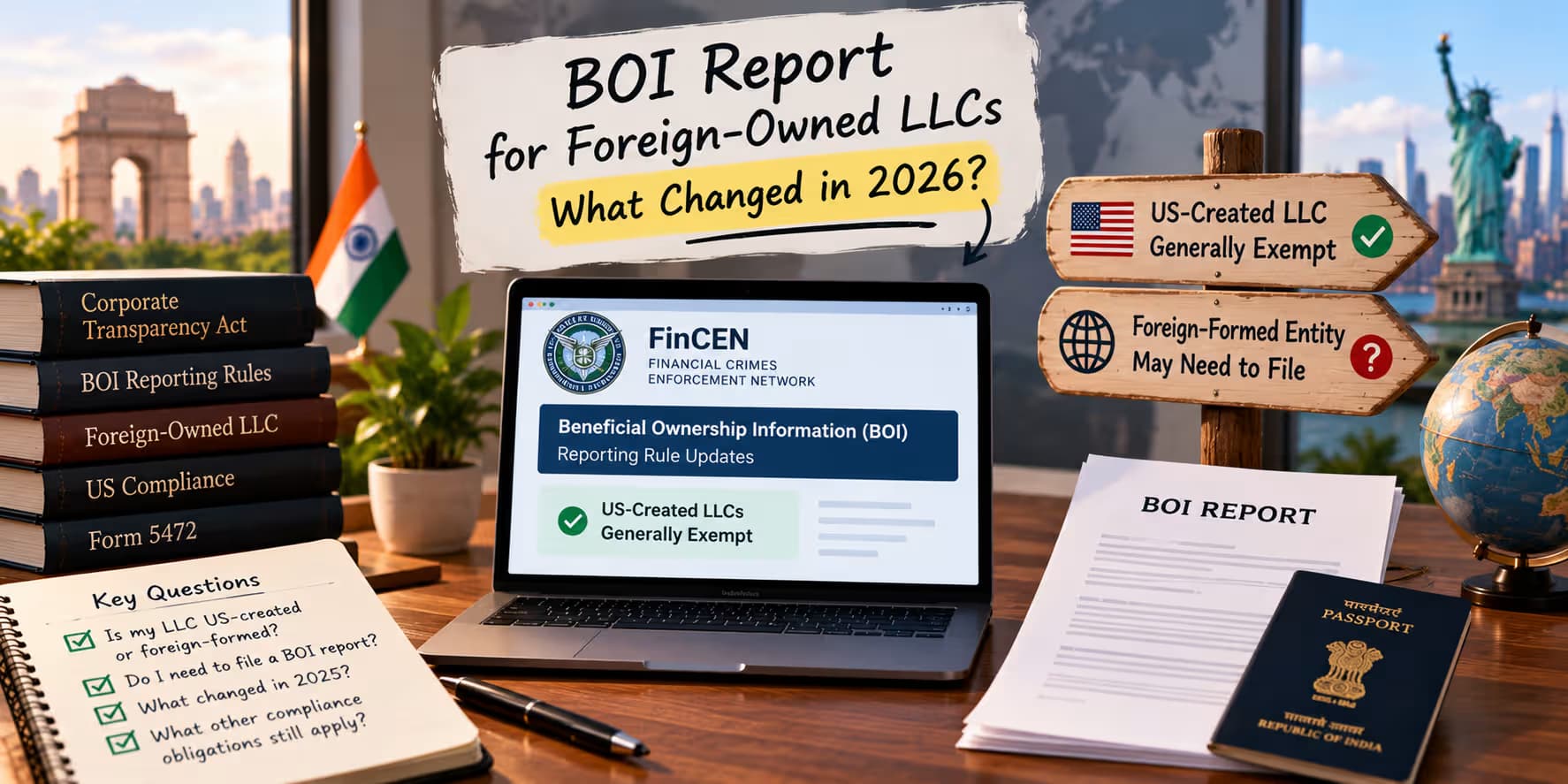
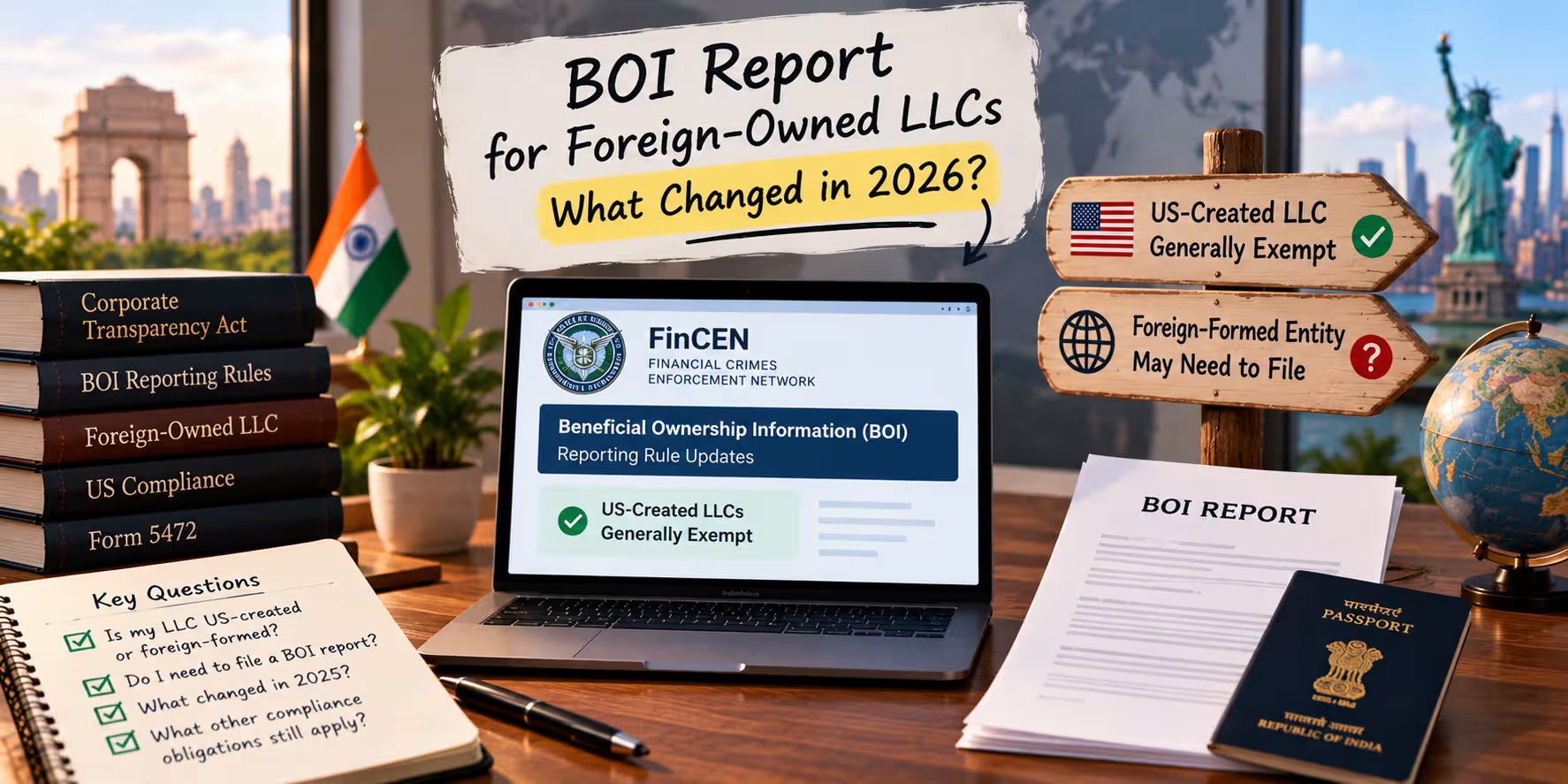
Under the current reporting framework described in this article, US-created LLCs are generally exempt from federal BOI reporting, even when their owners live outside the United States. This can include LLCs formed under the laws of states such as Wyoming or Delaware. The distinction is based on where the company was created, not simply on the nationality or residence of its owner.
A foreign-owned LLC is not necessarily a foreign-formed company. If you live in India and establish an LLC in Wyoming, you are a foreign owner of a US-created legal entity. That is different from a company originally formed under Indian or another foreign country's laws and subsequently registered to do business in the United States.
Before acting on an old compliance checklist, confirm that the current rules and exemptions apply to your particular entity. The fact that an owner lives outside the United States does not, by itself, determine whether a BOI report is required.
Why the Company's Place of Formation Matters
The key question is whether the entity was created under US state or tribal law or formed under foreign-country law. Ownership by a non-US resident does not, by itself, make a US-created LLC a foreign-formed entity.
For example, an Indian resident who forms a new Wyoming LLC should not automatically assume that the company must submit a BOI report simply because the owner lives abroad. The entity's legal formation and the applicable reporting rules determine the analysis.
If you are still learning how a US company is established, read our guide to starting a US LLC from India. Understanding the distinction between ownership, formation, and registration can help you identify the compliance questions that matter for your business.
What Changed in BOI Reporting Rules After 2025?
Before the major changes in 2025, many companies created under US law were potentially subject to beneficial ownership reporting under the Corporate Transparency Act, subject to applicable exemptions and requirements.
In March 2025, FinCEN changed the federal reporting framework and exempted US-created entities from the BOI reporting requirement under its revised rule. This was a significant change for many small-business owners and international founders who had previously been preparing for reporting obligations.
This history matters because an article written in 2024 or early 2025 may describe requirements that no longer apply. Old filing reminders and previously published guidance can continue circulating after a rule changes.
Do not rely on an article's publication date alone. Check whether its explanation reflects the current rules, the type of entity you own, and any relevant exceptions before submitting a report or paying someone to prepare one.
What If Your Company Was Formed Outside the United States?
The exemption for US-created entities should not automatically be applied to every company with foreign ownership.
Certain entities formed under foreign-country law and registered to do business in a US state or tribal jurisdiction may fall within the reporting framework if they meet the applicable definition and do not qualify for another exemption. The rules governing which beneficial owners must be reported can also differ from those that applied before the changes.
For example, an Indian company registering to conduct business in a US state is not the same as an Indian resident forming a new Wyoming LLC. The first situation involves an entity created under foreign law; the second involves an entity created under US law.
If your company was formed outside the United States and later registered in the US, do not assume that the domestic-entity exemption applies. Review the current requirements for your particular entity and seek qualified advice if its reporting status is unclear.
Does the BOI Exemption Remove Other LLC Compliance Obligations?
No. This is one of the most important distinctions for foreign LLC owners to understand.
BOI reporting is a specific federal beneficial ownership reporting requirement. An exemption from that requirement does not automatically eliminate state annual reports, registered-agent obligations, federal tax filings, information returns, or other applicable responsibilities.
For example, certain foreign-owned, single-member US LLCs may have Form 5472 filing obligations alongside a pro forma Form 1120 when the relevant IRS reporting conditions are met. These are separate from BOI reporting, and the requirements depend on the company's tax classification, ownership, and reportable transactions.
For a deeper explanation, read our guide to Form 5472 for foreign-owned US LLCs. It explains why some foreign-owned businesses may have federal information-reporting responsibilities even when their circumstances do not require a conventional corporate income tax return.
Keep State and Federal Requirements Separate
A company may be exempt from federal BOI reporting while remaining responsible for state-level maintenance and applicable federal tax requirements. Depending on the state and business structure, these responsibilities may include annual reports, registered-agent services, recordkeeping, and tax or information filings.
Do not interpret a change to one reporting rule as permission to stop maintaining your LLC. Keep a compliance calendar that distinguishes state requirements, federal tax responsibilities, and beneficial ownership reporting.
Our article on why forming an LLC is easy but compliance is the hard part explains why maintaining a company requires attention beyond the initial registration.
How to Handle BOI Filing Reminders and Solicitations
Some business owners receive emails, letters, or messages warning them about BOI deadlines or offering to prepare reports for a fee. Before paying for a service, check whether the requirement actually applies to your company under the current rules.
Be especially careful with messages that use government-style language, demand urgent payment, or imply that every LLC must file regardless of where it was formed. A filing service cannot make an unnecessary filing mandatory simply by sending a reminder.
I recommend verifying the requirement first and then deciding whether professional assistance is necessary. If your entity is exempt, paying for a filing it is not required to submit may be an avoidable expense. If your entity may still be covered, confirm the relevant deadline, reporting status, and submission procedure before acting.
How to Check Your BOI Reporting Status in 2026
If you own a US LLC from India or another country, begin by identifying how and where the entity was legally created. Next, determine whether it falls within the current exemption or whether its foreign formation and US registration could bring it within the reporting framework.
Do not rely solely on an old BOI checklist, an automated reminder, or a service provider's general statement that all foreign-owned companies must report their beneficial owners. The specific facts of your entity matter more than a generic filing reminder.
A Practical BOI Compliance Checklist
Before making a filing decision, confirm the following details about your company:
business in the United States.
- Identify the country and legal jurisdiction under whose laws the entity was formed.
- Determine whether it is a US-created entity or a foreign-formed entity registered to do
- Review the current reporting rules and any exemptions that apply.
- Check whether the entity has other state, federal tax, or information-reporting responsibilities.
- Verify any filing request or payment demand before engaging a service provider.
- Keep copies of relevant company documents and compliance decisions for your records.
This checklist is a starting point, not a substitute for reviewing the rules that apply to your specific entity.
My Advice to Foreign LLC Owners in 2026
If you own a US LLC from India or another country, do not assume that every foreign-owned business must submit a BOI report. Start with one question: Was the entity created under US law, or was it formed under foreign law and later registered in the United States?
For a typical US-created LLC, the current federal BOI framework provides an exemption even when the owner is a non-US resident. A foreign-formed entity registered to do business in the United States may require a different analysis.
The best compliance approach is to separate BOI reporting from tax filings and state requirements, verify the rules that apply to your entity, and keep your company records organised. BOI requirements have changed significantly, so make sure the advice you follow reflects the rules currently in effect rather than those that applied in an earlier year.
The key takeaway: Determine your company's legal formation, verify the current reporting requirements, and keep up with the separate tax and state obligations that apply to your business. Do not file—or pay someone to file—simply because an outdated reminder says every LLC must report.
This article is for general informational purposes only and does not constitute legal, tax, or financial advice. Tousif Akram and FormLLC are not a law firm or CPA firm. Consult a licensed professional for advice specific to your situation.
Ready to Form Your US LLC?
Free 30-minute consultation with no obligation and no sales pressure.
Book Free Call