Business Leadership: The Day My Business Stopped Being Only About Me

Tousif Akram
IRS CAA | Founder, FormLLC
There was a point in my journey when I realized that business leadership would become one of the most important parts of building a company. When I started FormLLC, the business was very personal. My reputation was the business, my time was the business, and my decisions were the business. If I worked harder, things moved forward. If I answered customers faster, customers were happier. If I made a mistake, I dealt with it myself.
That is a very different way of thinking about a business than the way I think about it today. At some point, I looked around and realized that other people were depending on the company. Not just customers, but employees too. And behind those employees were families, expenses, ambitions, and responsibilities that had nothing to do with my original reason for starting the business.
That changed me. It changed how I thought about leadership, how I thought about hiring, and, more importantly, what I believed a business was supposed to be. For me, building a business team became less about adding employees and more about developing leadership that could support customers, employees, and the company as it grew.
Business Leadership: Where My Journey Started
My entrepreneurial journey didn't begin with a team. It began with me trying to create opportunities for myself. I grew up in Bihar, India, and started teaching students while I was still in Class 11. Later, I ran a small coaching centre and, by around 18, I was already trying to earn enough to manage my own expenses.
Eventually, I discovered freelancing platforms such as Fiverr and started working with clients online. My first international payment was around $20. The amount itself wasn't life-changing, but the idea behind it was. Someone somewhere else in the world was willing to pay me because I could solve a problem for them.
I didn't have a large office, a big team, or a traditional entrepreneurial background. I had a skill, an internet connection, and a customer. At that stage, I wasn't thinking about building an organization. I was thinking about the next customer, then the next one, and then the next one.
That's how many small businesses begin. You don't start by thinking about organizational structure. You start by trying to make something work.
Customers Started Bringing Me Bigger Problems
As I worked with more international customers, I began noticing that their problems went beyond the original service they had purchased. Someone wanted to form a U.S. company, and then they had questions about an EIN. After that came banking, payments, compliance, tax-related questions, and what they needed to do the following year.
I started realizing that entrepreneurs weren't simply buying a company formation service. They were trying to build businesses. That realization eventually became a major part of how I thought about FormLLC.
The company couldn't just be about completing a transaction. It needed to be about helping founders understand what came next. That meant taking customer problems more seriously, but it also meant taking the business itself more seriously because the more customers we helped, the more responsibility came with every decision.
If you're an international founder starting with the U.S. market, our guide on forming a US LLC from India explains the broader formation process and considerations.
Banking is another important part of getting a U.S. business operational, and our guide to US bank accounts for non-residents explains some of the key considerations. Founders who need an EIN can also learn more from our guide to EIN without an SSN.
The First Version of the Business Depended Heavily on Me
When you're a founder doing everything yourself, there is a strange advantage: you can move incredibly fast. There is no meeting required, no approval process, no manager, and no department. If something needs to be done, you do it. A customer has a question, you answer it. A process is broken, you fix it. A customer is unhappy, you handle it. A new idea comes to you at midnight, you can start working on it immediately.
That flexibility helped me build, but eventually it became a limitation. If everything depends on one person, the business cannot grow beyond that person's capacity. That was one of the hardest lessons for me.
I had to stop thinking like the person doing everything and start thinking like the person building something that other people could help operate. It sounds obvious now, but it wasn't obvious to me then.
That was the beginning of building a business team in a meaningful sense. I wasn't simply looking for people to take work off my plate. I was trying to create a structure where other people could contribute to the company's growth. That shift became one of the most important parts of my business leadership journey.
Hiring Changed My Definition of Business
The first time you hire someone, you might think you're simply adding an employee. I eventually realized that's not what you're doing. You're taking responsibility for another person's livelihood.
That person's salary matters. Their growth matters. Their working environment matters. Their ability to learn matters. And, indirectly, their family matters.
That was a major psychological shift for me. Before hiring, if I made a bad business decision, the consequences mostly came back to me. After hiring, the consequences could affect someone else's life.
You start asking different questions. Can the business support this salary six months from now? Is this process stable enough? Are we building something sustainable? What happens if revenue slows down? How do we make sure customers continue receiving a good experience as we grow?
The business stopped being only an expression of my ambition. It became a responsibility. This was one of the moments when I began to understand business leadership as a responsibility rather than simply a position.
A Company Can Change More Than the Founder's Life
Before building a team, I mostly thought about what the business could do for me. Could it give me freedom? Could I build something meaningful? Could I create financial stability? Could I work with international customers? Could I build something bigger than freelancing?
Those questions were natural. But after building a team, I started thinking about another question: what can this business do for the people who work here?
That question changed the meaning of growth. Growth was no longer simply about how much revenue we made. It also became about how many people the business could create opportunities for.
That doesn't mean revenue stopped mattering. Of course it matters. A business that doesn't make money cannot reliably support employees, customers, or its own future. But revenue became a means rather than the entire definition of success.
A Business Becomes Different When Other People Depend on It
When you're alone, you can tolerate a lot of chaos. You can work late, change direction every week, forget a process, make decisions based on instinct, and say, "I'll figure it out." Sometimes that's exactly what entrepreneurship requires.
But once other people depend on the business, chaos becomes expensive. You need systems, documentation, accountability, clear responsibilities, better communication, and a better understanding of the numbers. You need to know what is happening even when you're not personally involved.
A business becomes an organization when you can no longer build everything through your own personal effort.
That was an important lesson for me because it meant that working harder was no longer always the answer. Sometimes the answer was building a better process. In many ways, that is what business leadership became for me: making the organization stronger instead of simply making myself work harder.
Hiring Is Not the Same as Delegating
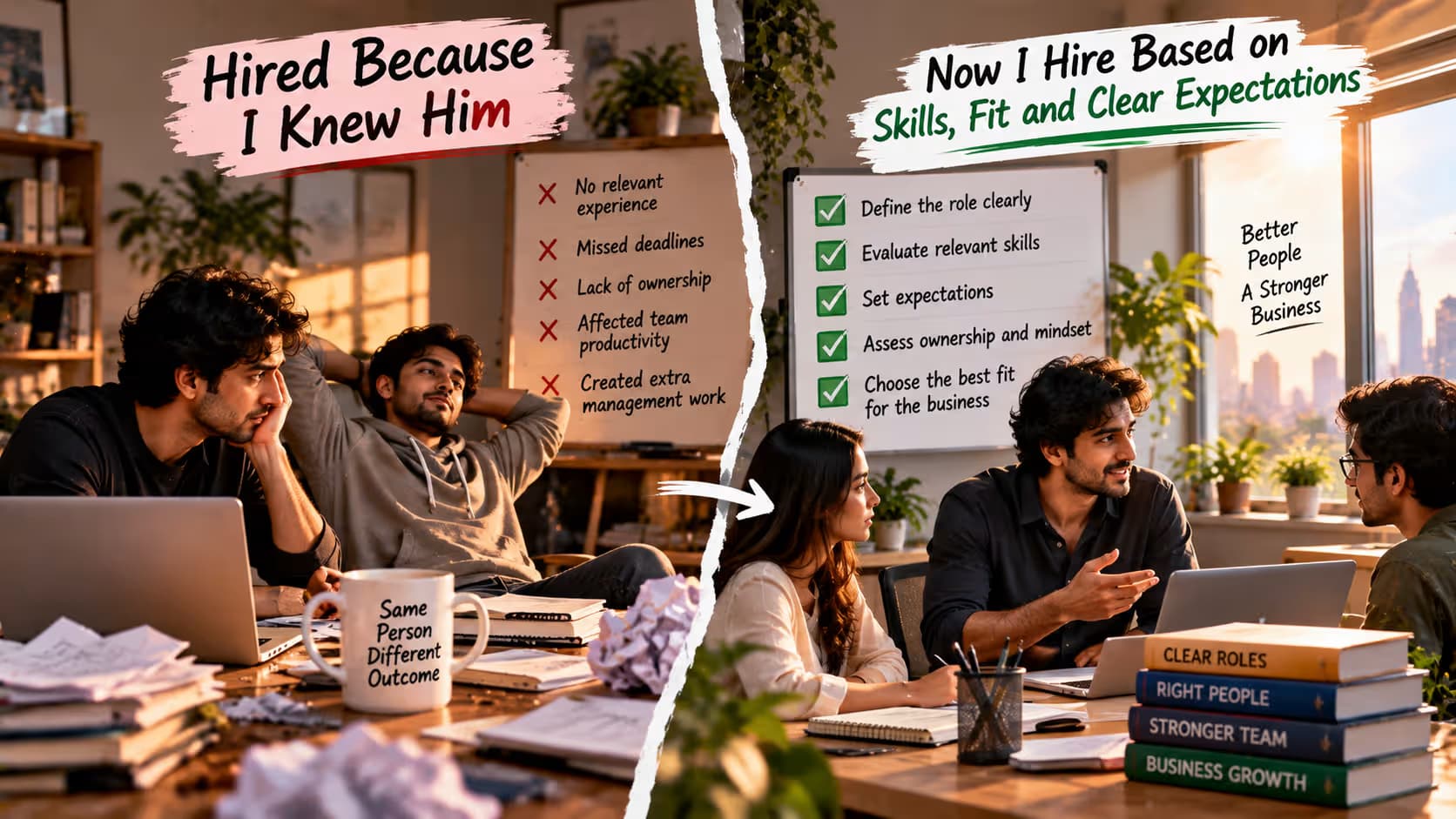
Early founders often make the mistake of hiring someone and immediately giving them a list of tasks: do this, answer this, handle that. But building a team isn't just distributing your workload. It's transferring ownership.
That's much harder. You have to explain why something matters, not just what needs to be done. You have to give people enough context to make decisions. You also have to accept that someone else may solve a problem differently from how you would solve it.
Sometimes they will make mistakes. When you've built something yourself, you can become attached to your way of doing things. But if every decision still has to go through the founder, you haven't really built a team. You've built assistants.
There's a difference.
One of the Hardest Things I Learned Was Letting Go
There were things I could do faster than a new employee. There were things I understood better because I'd been doing them for years. There were customer situations where my instinct was to jump in and solve the problem myself.
Sometimes that was necessary. Sometimes it wasn't.
I had to learn to ask, "Does this actually need me?" That's a surprisingly difficult question for a founder because when you've been the person who solves everything, being needed can become part of your identity.
But the goal of building a company cannot be to make yourself permanently necessary. The goal should be to build something that works better because you are leading it, not because every small decision requires you.
Learning to let go was one of the hardest parts of my business leadership development.
Growth Also Exposed Mistakes I Couldn't See When I Was Alone
Building a team didn't magically make me a better businessperson. It exposed some of my weaknesses.
I've made mistakes. I spent too much money on Google and Meta advertising before the business had enough sales capacity to properly handle the demand. I built tools that customers didn't really need. I hired someone I knew personally and later regretted that decision. I tried to package too many things together.
I also sometimes treated client relationships too informally and learned the hard way that business still needs boundaries.
Those mistakes taught me something important: when a business grows, your mistakes become more expensive. A bad decision that costs you a few hundred dollars personally is one thing. A bad decision that affects employees, customers, cash flow, and the future of the company is something else.
That's why growth needs discipline.
I Started Caring More About the Promises We Make
One of the strongest values I've developed through building FormLLC is simple: do what you promise.
The company-formation industry has taught me this repeatedly. Founders want speed, certainty, and simple answers. Sometimes businesses are tempted to give customers the answer they want to hear.
"Your EIN will definitely arrive tomorrow." "Your bank account is guaranteed." "You'll have no tax obligations." "Everything is handled."
Those statements may make a sale easier, but they can create much bigger problems later.
I've become increasingly convinced that responsible entrepreneurship means being willing to say, "I don't know," "That depends," "We can't guarantee that," "You should speak with a CPA," "You should speak with an attorney," or even "You may not actually need this."
For foreign-owned U.S. businesses, founders should also understand applicable reporting requirements such as Form 5472.
That's not bad sales. That's honest business. Good business leadership requires knowing where your responsibility ends and when a customer needs a qualified specialist.
The Team Made Me Think Differently About Customers
When I was doing everything myself, one unhappy customer affected me personally. When you have a team, customer experience becomes a system.
That's both good and dangerous. Good because a team can serve more people than one founder ever could. Dangerous because a customer can now have a completely different experience depending on which part of the system they encounter.
That's why processes matter.
A founder shouldn't receive excellent service simply because they happened to speak directly to the CEO. They should receive excellent service because the company has built a system capable of delivering it.
That's the standard I want for FormLLC. Not, "Tousif will fix it," but, "FormLLC knows how to handle it."
That is a much more scalable company.
The Business Became Bigger Than My Personal Reputation
In the beginning, customers trusted me. My name was on the work. My Fiverr profile mattered, my reviews mattered, and my communication mattered.
But eventually, I wanted customers to trust the organization too.
That's harder. A personal reputation can be built one relationship at a time. An organization has to build trust through consistent processes, clear communication, reliable delivery, transparent pricing, documented systems, qualified people, responsible claims, customer support, and accountability.
My public positioning today reflects that evolution. FormLLC is a business formation service rather than a law firm or CPA firm, and the team has grown beyond a one-person operation.
That's important to me because I don't want FormLLC to depend forever on the idea that one person will personally solve everything.
Employees Are Not Simply Resources
This sounds like a small distinction, but it isn't.
When you're reading business books, employees can easily become numbers on a spreadsheet: ten employees, twenty employees, fifty employees.
But every number represents a person.
And every person has their own life outside the company. They have parents, children, rent, goals, problems, plans, and dreams.
That changed how I thought about management.
People aren't costs to minimize. At the same time, a founder can't run a company purely on emotion. The business has to be financially healthy. People need clarity. Performance matters. Accountability matters.
The best version of business leadership, in my view, is somewhere between those two extremes: treat people like human beings while running the company like a business.
I'm still learning how to do that well.
Building a Business Team Forced Me to Confront My Own Limitations
When you're a solo founder, you can convince yourself that you're good at everything. You're the salesperson, customer support, product, operations, marketing, finance, strategy, and hiring. You're probably also the person fixing the Wi-Fi.
It's easy to think, "I can handle it."
Then the company grows, and suddenly you realize that you are not the best person for every job.
That realization is healthy. It means the company can start finding people who are better than you at specific things.
A good founder doesn't need to be the best marketer, accountant, salesperson, developer, and operator in the company. The founder needs to build an environment where good people can do those things well.
That is a completely different skill.
The Business Started Creating Opportunities for People I Had Never Met
This is perhaps the most rewarding part.
When a company creates a job, the impact doesn't stop at the employee. That salary enters a household. That person may support their parents, pay for education, move into a better home, or develop a skill that eventually helps them start something of their own.
They may become the person who gives someone else an opportunity years later.
You don't always get to see the full chain reaction, but it's there.
That's when I started seeing entrepreneurship differently. A business is not only an economic machine. It can also be an opportunity machine.
That doesn't mean every business has to become huge. It means that even a relatively small company can have an impact beyond its founder.
From a Village in Bihar to Building a Business Team
Sometimes I think about how strange the journey is.
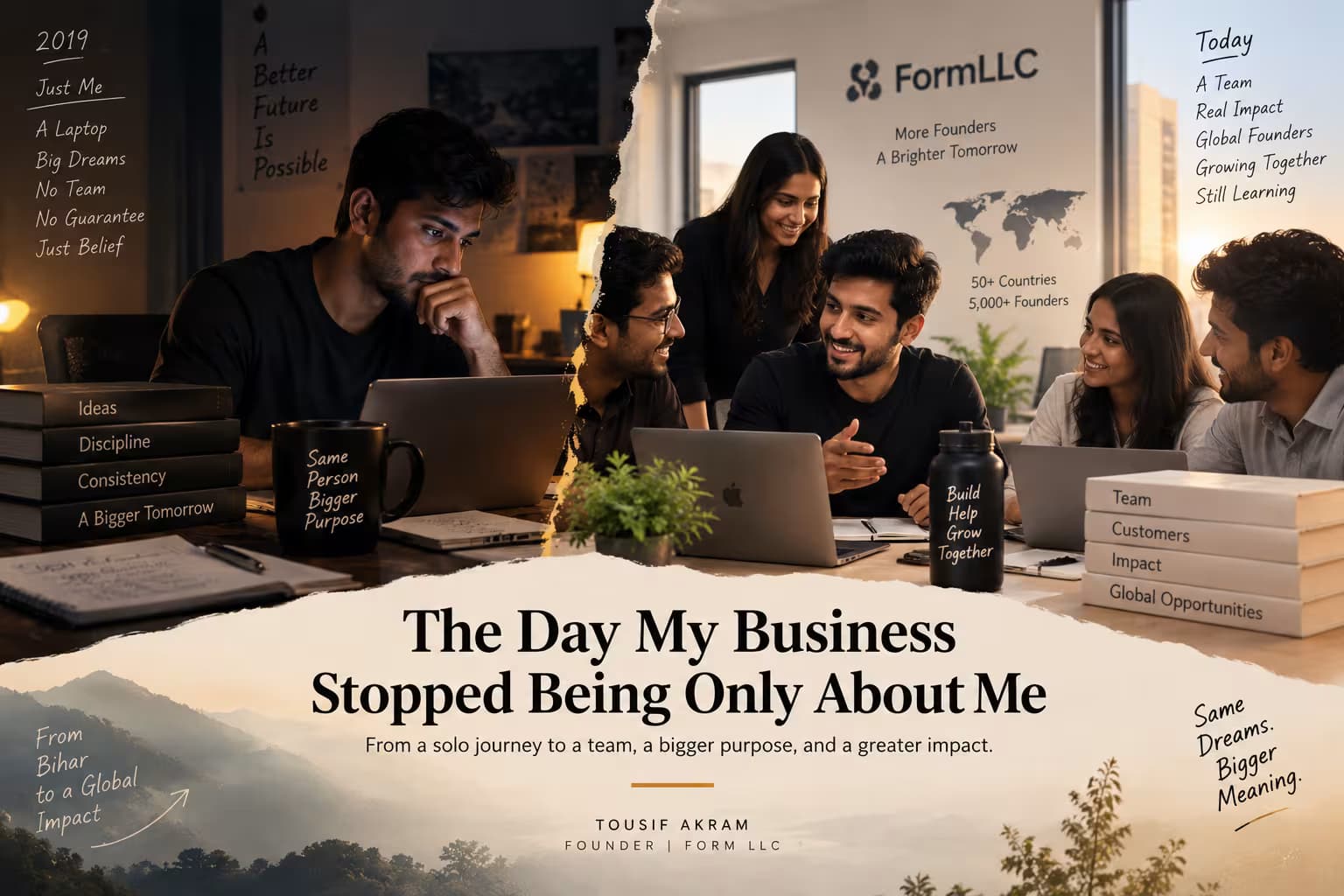
I started by teaching students. Then I started freelancing. Then I received that first international payment. Then I started helping more clients. Then came FormLLC, followed by more customers, systems, employees, and eventually a larger organization.
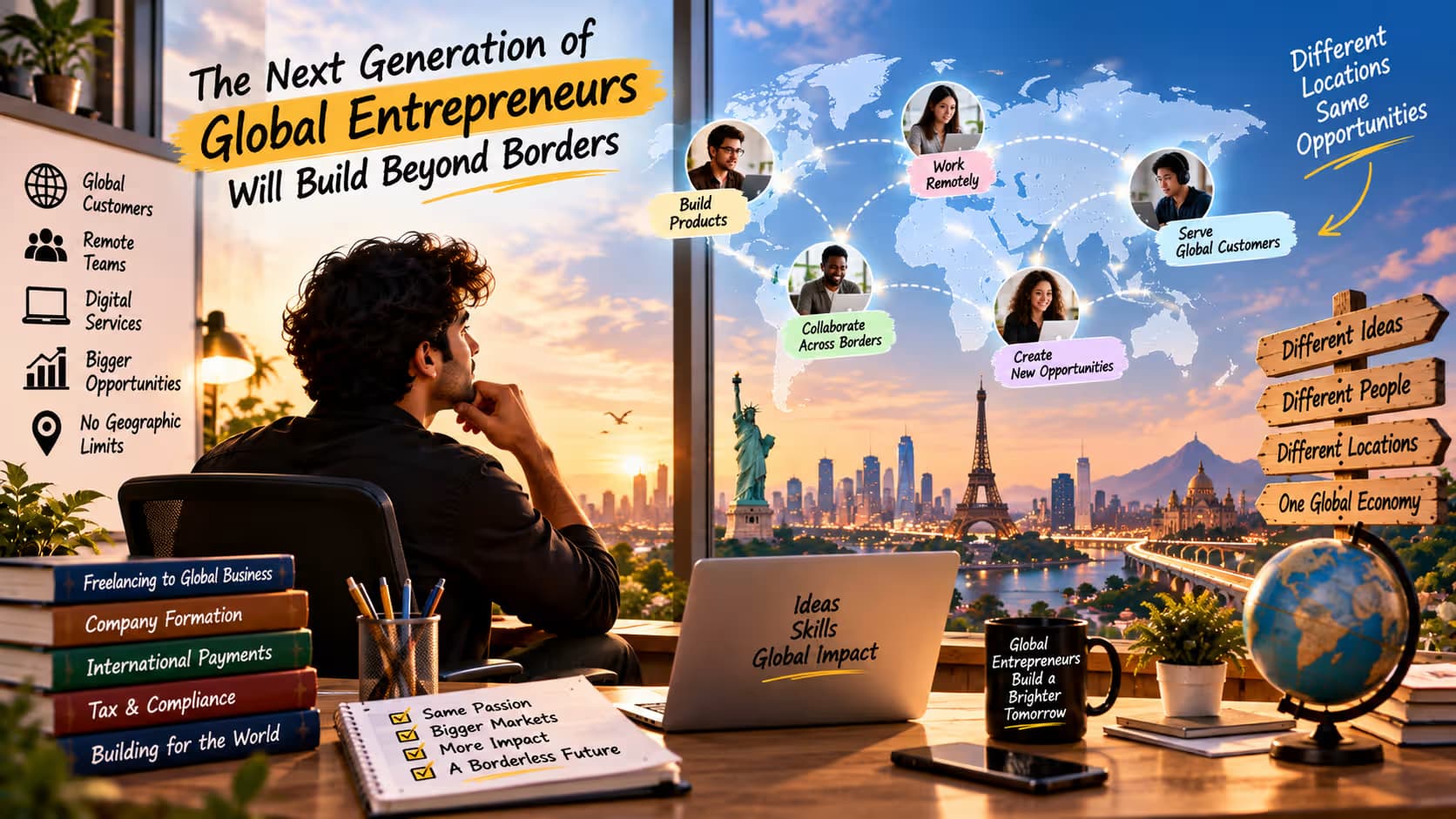
Today, FormLLC serves founders from more than 50 countries, and the broader operation has grown into a team rather than remaining a one-person business.
I don't say that because I think building a team automatically makes someone successful. It doesn't.
I say it because it changed what success meant to me.
In the beginning, success was, "Can I make this work?"
Later, it became, "Can we make this work?"
And eventually, "Can we build something that continues to work even when I'm not personally involved in everything?"
Those are very different questions.
I Don't Think Founders Should Build Teams Too Early
There is another lesson here that is important.
My story shouldn't be interpreted as, "Start a company and immediately hire people." I don't believe that.
If you don't have a real problem, real customers, or a sustainable business model, hiring people can simply increase your expenses.
In the early stages, doing things yourself can be one of the best ways to understand your customers. You learn their questions, where they get confused, what they value, what they don't care about, and which tasks actually need to exist.
Only then can you start deciding what should be delegated, automated, or turned into a process.
Don't build a team to look like a bigger company. Build a team because the business genuinely needs one.
The Founder's Job Changes as the Company Grows
I think this is one of the least discussed parts of entrepreneurship.
At the beginning, your job is often to do. Then it becomes to solve. Then to delegate. Then to build systems. Then to hire and develop people. Eventually, it becomes about making decisions regarding where the company should go.
If you keep doing the original job forever, the company eventually becomes constrained by you.
I've had to learn that my value isn't only in how many customer questions I can personally answer.
My value is increasingly in deciding what the company should stand for, which customers we should serve, which problems we should solve, what we should refuse to do, who we should hire, which systems need improvement, where we should invest, what we should stop doing, and how we maintain trust as we grow.
Those questions are harder than answering an email, but they're also the questions that determine what the company becomes.
Business Leadership: What Building a Team Taught Me
I don't consider myself a finished leader. Far from it. I'm still learning.
But some principles have become clearer to me through the process. Business leadership isn't about having every answer. It is about creating an environment where people understand the goal, have enough context to make decisions, and take responsibility for the work they own.
Don't hire simply because you're busy. Hire when there is a repeatable need the business genuinely needs help solving. Hire for responsibility, not just tasks. Someone who understands the outcome can make better decisions than someone who only follows instructions.
Give people context. People perform better when they understand why something matters. Let people make decisions. If every decision comes back to the founder, the team cannot really grow.
Build systems before problems become emergencies. A process written down today can save hours of confusion later. Don't hide mistakes. A mistake that is discussed early can often be fixed, while a mistake that everyone is afraid to report can become much larger.
Keep the company's values simple. For me, transparency, responsible guidance, customer focus, and keeping promises matter more than complicated corporate language. Remember that people have lives outside the company. Employees aren't characters in the founder's story. They are building their own lives too.
The Biggest Change Was Changing My Definition of Responsibility
When the business was only about me, I could measure the consequences of my decisions through my own life.
After building a team, I had to think beyond myself.
What happens to the person who joined us because they trusted the company? What happens to their family if we make irresponsible financial decisions? What happens to customers if we grow faster than our ability to serve them?
What happens to our reputation if we promise something we cannot deliver? What happens if we build something that looks impressive from the outside but isn't healthy underneath?
Those questions made entrepreneurship more serious for me.
But they also made it more meaningful.
The Day My Business Stopped Being Only About Me
If I had to identify the real turning point, it wasn't when we reached a particular revenue number. It wasn't when we helped a certain number of customers. It wasn't when the website looked professional. It wasn't even when the team reached a certain size.
The turning point was when I realized that other people were building their lives around the company I had started.
That thought changed how I looked at everything.
The business was no longer simply my experiment. It was no longer just my source of income. It was no longer just my personal ambition.
It had become an organization with customers who trusted us and people who depended on us.
And that meant I had to become a different kind of founder.
I Still Want to Build
I haven't reached the end of that journey.
There are still mistakes I make. There are still decisions I get wrong. There are still things I need to learn about leadership, hiring, operations, and building a sustainable company.
But I think that's part of the point.
Entrepreneurship changes as the business changes. The person who starts the company cannot be exactly the same person who leads it five years later.
The skills that get you from zero to one are not necessarily the skills that get you from one to ten.
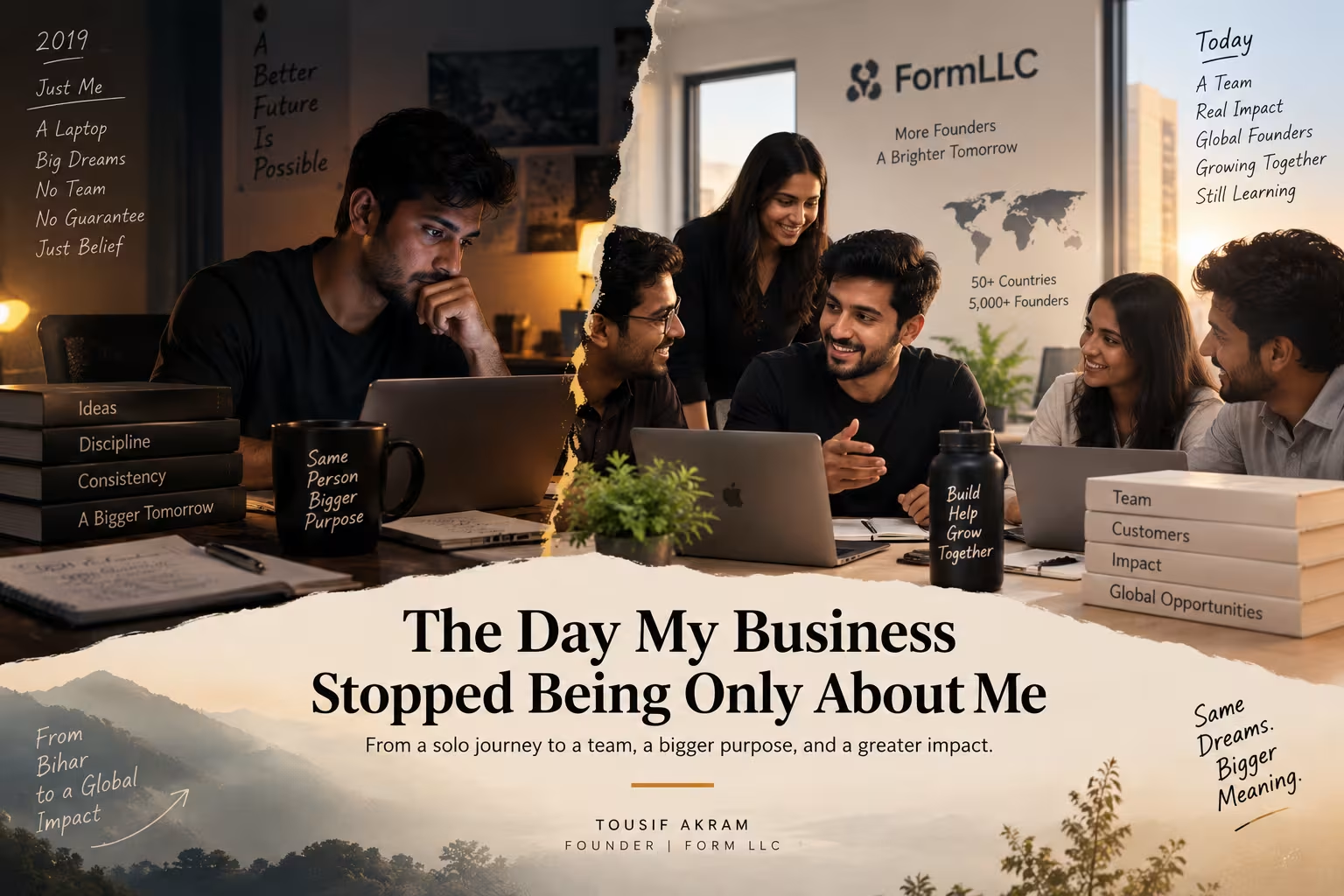
Perhaps the most important lesson I've learned is this: a business may start with one person's ambition, but it becomes meaningful when that ambition creates opportunities for other people.
That's what happened to me.
I started by trying to create an opportunity for myself. Today, I'm trying to build something that creates opportunities for other people too.
And that is the day my business stopped being only about me.
About Tousif Akram
I'm Tousif Akram, founder of FormLLC.
I started my entrepreneurial journey in Bihar, India, first through teaching and freelancing before building a business serving entrepreneurs around the world.
Since 2020, FormLLC has helped more than 5,000 founders across 50+ countries establish their U.S. business presence. Today, I'm focused on building the team, systems, and infrastructure required to serve those founders responsibly at a larger scale.
I write about entrepreneurship, global business, U.S. company formation, compliance, leadership, and the lessons I learn while building a company from India for founders around the world.
This is my personal experience, not a universal formula for building a business. I'm still learning.
Disclaimer: This article reflects my personal experience and opinions as a founder. It is not legal, tax, accounting, employment, or financial advice. Business and employment requirements vary by jurisdiction and individual circumstances. Consult appropriately licensed professionals when you need advice specific to your situation.
This article is for general informational purposes only and does not constitute legal, tax, or financial advice. Tousif Akram and FormLLC are not a law firm or CPA firm. Consult a licensed professional for advice specific to your situation.
Ready to Form Your US LLC?
Free 30-minute consultation with no obligation and no sales pressure.
Book Free Call