EIN for Non Residents: How to Get an EIN Without an SSN

Tousif Akram
IRS CAA | Founder, FormLLC
EIN for Non Residents: He Had His LLC. Then He Called Me With One Question
One of the most common moments I see with international founders happens after the company has already been formed. They have their LLC, the formation documents, and a registered agent, and they are excited because they finally have a US company. Then comes the next question: "How do I get my EIN?"
It sounds like a small question, but it isn't always. For a founder living outside the United States, getting an EIN can become confusing very quickly, especially when they don't have an SSN or ITIN. I've had conversations with founders who thought the LLC formation automatically came with an EIN. Others believed they needed to travel to the United States, while some were told they couldn't get one without an SSN. The reality is more nuanced.
EIN for Non Residents: What Is an EIN Actually For?
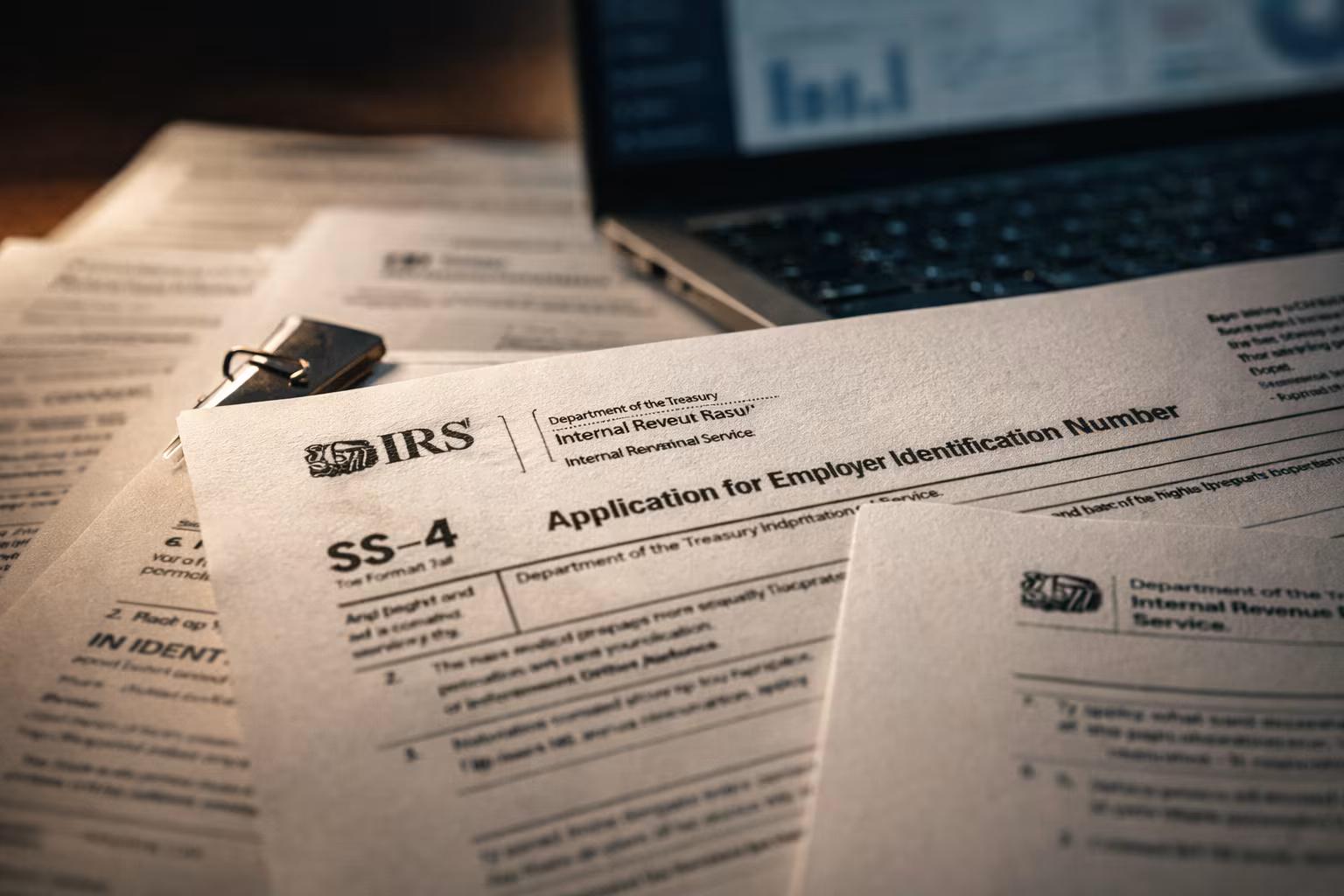
An EIN, or Employer Identification Number, is a nine-digit number issued by the IRS for federal tax and reporting purposes. It identifies a business or other entity for situations where an EIN is required. Think of it as the business's federal tax identification number.
But it is important to understand what an EIN is not. It isn't an LLC, it isn't a bank account, and it isn't a tax exemption. Getting an EIN does not automatically mean that every other part of your US business is complete.
That distinction is especially important for an EIN for non residents. A founder may be living in India, Pakistan, Nigeria, the UAE, the UK, or somewhere else and still have a US business that needs an EIN. The founder's location doesn't automatically answer the EIN question. The company's structure and circumstances matter.
Why International Founders Ask About an EIN Without an SSN
The first thing many international founders ask me is, "But I don't have an SSN. Can I still get an EIN?" This is where things get interesting.
The IRS's Form SS-4 instructions contemplate situations where the responsible party doesn't have and isn't eligible to obtain an SSN or ITIN. In those circumstances, the instructions provide for entering "foreign" or "N/A" on the relevant line of Form SS-4.
So the idea that every foreign founder must have an American Social Security number before applying for an EIN is too broad. That is why searches for EIN without SSN are so common.
The important qualification is that the IRS has different application procedures depending on where the applicant is located and whether they have a US residence, principal place of business, or office. For applicants who do not have a US legal residence, principal place of business, or principal office or agency, the online EIN application is not available.
If you are dealing with this situation, my guide to getting an EIN without an SSN explains the issue in more detail.
EIN Without an ITIN: Do You Need One First?
The same confusion happens with ITINs. Founders often ask whether they need to get an ITIN first and then apply for an EIN. Not necessarily.
The IRS instructions specifically contemplate situations where a responsible party does not have and is not eligible to obtain an SSN or ITIN, and provide instructions for entering "foreign" or "N/A." That is why EIN without ITIN is an important distinction.
An EIN identifies a business or entity for federal tax and reporting purposes. An ITIN identifies an individual for certain federal tax purposes when that individual isn't eligible for an SSN. They are not interchangeable, and one should not be obtained simply because somebody told you that every foreign founder needs both.
Foreign-Owned LLCs Need Extra Attention
This becomes even more important when we're talking about an EIN for foreign owned LLC. A US LLC can be owned by a person who lives outside the United States, but the tax classification and reporting requirements depend on the structure.
For example, a domestic LLC can generally be treated as a partnership, corporation, or disregarded entity for federal tax purposes depending on its ownership and elections. A single-member LLC can therefore have very different federal reporting considerations from a multi-member LLC.
Certain foreign-owned US disregarded entities can also have information-reporting obligations, including Form 5472 in applicable circumstances. The IRS's Form SS-4 instructions specifically address foreign-owned US disregarded entities and their reporting considerations.
This is one reason I tell founders: getting the EIN right is important, but understanding what happens after you get it is even more important.
If your company is foreign-owned and you want to understand the reporting side more clearly, my Form 5472 guide for foreign-owned US LLCs explains why this requirement deserves attention.
EIN for Foreigners Is Not a Special Type of EIN
There isn't a separate magical category of EIN that makes a business "international." When people search for EIN for foreigners, they are usually trying to understand how a person who lives outside the US can obtain an EIN for a US entity.
The answer depends on the circumstances of the applicant and the entity. The IRS provides specific application methods for international applicants who do not have a US legal residence, principal place of business, or office. The available routes can include telephone, fax, and mail rather than the standard online application.
This is a much better way to think about it than believing that a foreign founder is automatically blocked. Being outside the United States does not, by itself, answer whether you can obtain an EIN.
What I Ask International Founders Before the EIN Application
When someone asks me about an EIN for international founders, I usually want to know what happened before the EIN question. Did you already form the LLC? Is it single-member or multi-member? Who is the responsible party? Where do you live? Where is the business operating? Why does the company need the EIN? What will the company actually do?
Those details matter. The IRS defines the responsible party as the individual who ultimately owns or controls the entity, or who exercises ultimate effective control over it. The IRS also warns against using nominees in place of the actual responsible party on an EIN application.
That last point is particularly important. The person who formed the company isn't necessarily the person who should be listed simply because they handled the paperwork. The application should identify the actual responsible party.
The Indian Founder Who Asks Me About an EIN
I see this question frequently in the context of an EIN for Indian LLC owner. A founder in India may have formed a US LLC because their customers are in America or because they are building a global business. Then they discover that the EIN process has its own requirements.
The founder may not have an SSN. They may not have an ITIN. They may not have any physical presence in America. That does not automatically mean the process is impossible. But it does mean they need to understand the correct IRS application route instead of simply trying the online application repeatedly.
For international applicants with no US legal residence, principal place of business, or principal office or agency, the IRS specifically says the online application is unavailable. That single detail can save a founder a lot of frustration.
How to Get an EIN Without an SSN
So, how to get EIN without SSN? The answer starts with determining whether you are actually eligible for the online application.
If you are an international applicant with no US legal residence, principal place of business, or principal office or agency, the IRS says you cannot use the online EIN application. Instead, the IRS provides international telephone, fax, and mail options.
For telephone applications, the IRS provides an international number and requires the person calling to be authorized to receive the EIN and answer questions about Form SS-4. For fax applications, the IRS provides a fax option for eligible applicants, with the IRS generally returning the EIN by fax within the stated processing period. For mail applications, international applicants should expect a longer processing time.
The important thing is not to confuse the different methods or assume that a third party can simply bypass the IRS process. The correct application route depends on your circumstances.
An EIN for a Non Resident LLC Is Only One Step
This is where my view has changed after working with international entrepreneurs. When founders first come to us, they often think company formation is the complicated part. Then they encounter the EIN. Then banking. Then payment providers. Then tax filings. Then annual compliance. Then questions about transactions between themselves and their company.
This is why I often describe company formation as Day 1. An EIN for non resident LLC is part of the next stage of the company's infrastructure. It matters, but it is not the entire business.
Once the EIN is obtained, the founder may still need to think about banking and payment infrastructure. My guide on opening a US bank account as a non-resident LLC owner explains why having an LLC and EIN does not automatically guarantee financial-account approval.
Don't Chase an EIN Just Because Someone Promised It Fast
One of the things I have always disliked in this industry is overpromising. "EIN guaranteed." "EIN in 24 hours." "No SSN? No problem." These statements can sound attractive because founders want certainty.
But the responsible approach is to explain the actual process. The IRS states that EIN issuance is limited to one per responsible party per day, and it provides different application routes depending on the applicant's circumstances.
There is no reason to create unnecessary promises around something controlled by the IRS. If a founder needs a US EIN for non residents, what they really need is a correctly prepared application and a clear understanding of what happens afterward.
Accuracy is more valuable than a promise that sounds fast.
The EIN Is the Beginning of the Next Conversation
Getting the EIN can feel like the final step. It isn't. For many international founders, it is actually the moment when the next set of questions begins.
How do I open a business account? How do I receive payments? What filings do I need? Does my LLC have information-reporting requirements? What happens if I put money into my company? What happens if the company sends money back to me? Do I have tax obligations in the US? Do I have obligations in my home country?
Those questions are much more important than simply having a nine-digit number. That is why an EIN application for foreign person should never be treated as an isolated piece of paperwork. The application is connected to the structure of the business, and the structure is connected to what you are actually doing.
The Question Behind the Question
When that founder called me and asked, "How do I get my EIN?", the question sounded simple. But what he really needed wasn't just a number.
He needed to understand what he had formed.
That is the bigger lesson I have learned from working with international entrepreneurs. Forming a US LLC can be relatively straightforward. Understanding what to do after the formation is where the real work begins.
So if you're a founder living outside the United States and searching for an EIN for non residents, don't start by looking for the fastest promise. Start by understanding your entity, your ownership, your responsible party, and the correct IRS application route.
Because getting the EIN is important.
But getting the business right is what matters.
— Tousif Akram *Founder, FormLLC*
This article is for general informational purposes only and does not constitute legal, tax, or financial advice. Tousif Akram and FormLLC are not a law firm or CPA firm. Consult a licensed professional for advice specific to your situation.
Ready to Form Your US LLC?
Free 30-minute consultation with no obligation and no sales pressure.
Book Free Call