My Entrepreneurship Journey: From Teaching to Building

Tousif Akram
IRS CAA | Founder, FormLLC
My Entrepreneurship Journey: From Teaching to Building

My entrepreneurship journey did not begin with a business plan, a company, or a clear idea of becoming a founder. It started much earlier, with teaching students while I was still in Class 11. Growing up in a small village in Bihar, India, I initially thought success meant studying hard, finding a stable job, and building a comfortable life.
But over time, a series of small decisions, experiments, failures, and opportunities changed the way I looked at work and life. I eventually discovered freelancing, worked with international customers, built teams, and started companies. Looking back, I realize that entrepreneurship was not one big decision. It was a series of steps that gradually showed me the kind of work I wanted to build.
My First Experience of Building Something
My first experience of earning on my own started much earlier than I realized. While I was still in Class 11, I started teaching students. Eventually, I was running a small coaching centre.
At that age, I wasn't thinking about business models, entrepreneurship, or building a company. I simply saw a need and tried to solve it. Students needed someone to teach them, and I could help. People were willing to pay for that help.
Without realizing it, I was learning one of the most important lessons of my entrepreneurship journey: if you can solve a real problem for someone, you can create value.
Learning to Create Value
That experience stayed with me. Later, I explored different types of work, including employment and freelancing. Then I discovered something that completely changed my understanding of what was possible.
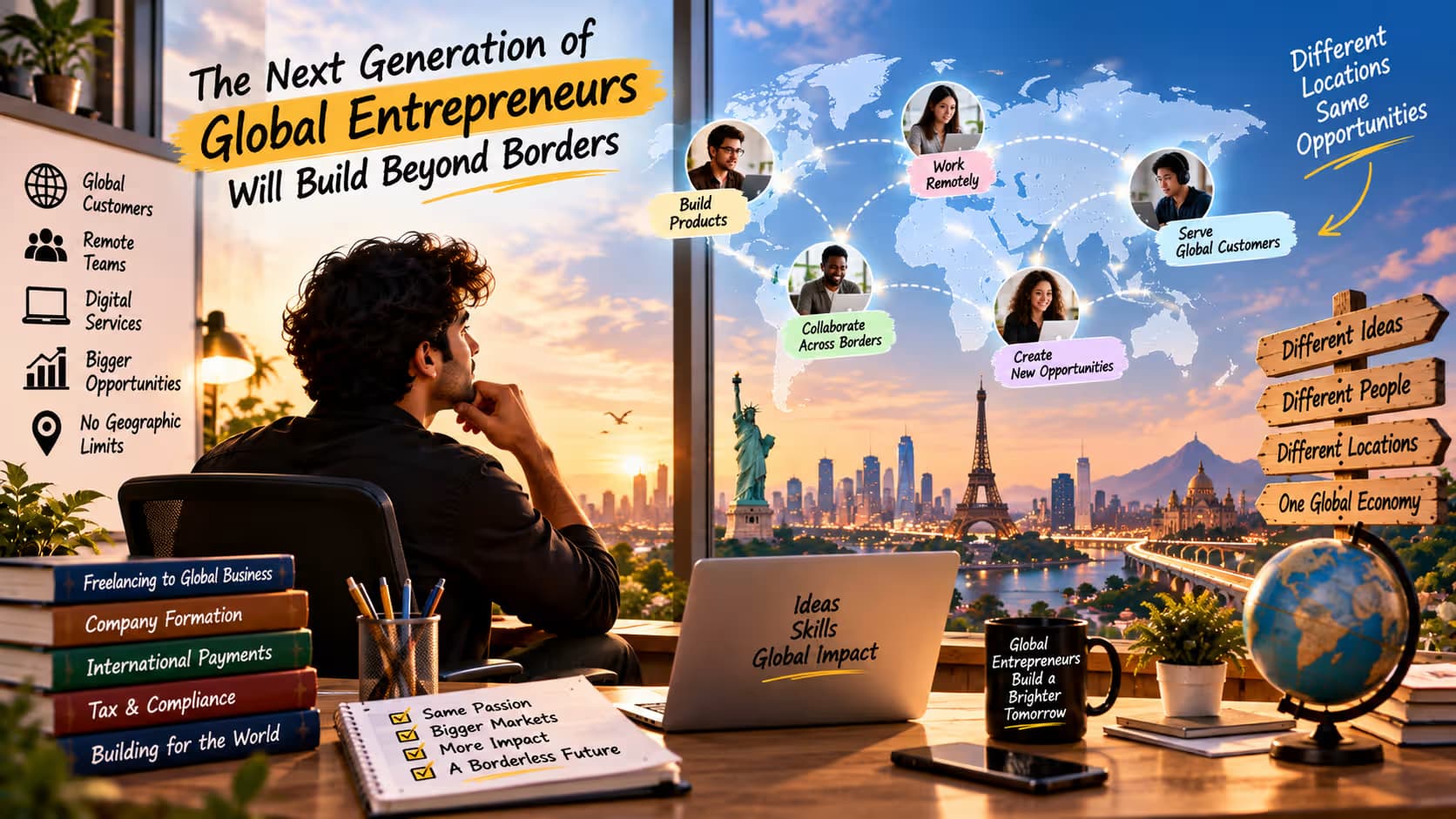
The internet allowed me to work with people I had never met and who lived thousands of kilometres away. That experience opened my mind to a much larger market.
I began to understand that the value I could create did not necessarily have to be limited by the place where I lived. A skill that could help someone locally could potentially help someone on the other side of the world.
The $20 Payment That Changed My Thinking
One of the moments I still remember is receiving my first online payment of around $20 through Fiverr. It wasn't a huge amount of money, but for me, it represented something much bigger.
Someone somewhere in the world had found my work useful enough to pay me for it. I was sitting in India, but my customer didn't have to be in my city, my state, or even my country.
That small payment changed the way I looked at opportunity.
Until then, opportunity felt much more connected to geography. You went to a particular place to find a job. You met people through your local network. Your opportunities were largely determined by the environment around you.
The internet challenged that idea for me. I started thinking: if I can find one customer online, why can't I find ten? If I can work with one international customer, why can't I work with customers from different parts of the world?
That question eventually became much bigger than freelancing.
What Freelancing Taught Me About Business
Freelancing became my real-world business education. I had to learn how to find customers, understand what they actually needed, communicate clearly, deliver work, handle feedback, and take responsibility when something didn't go according to plan.
One thing I learned very quickly was that customers don't simply pay for a service. They pay for a solution to a problem.
Solving the Bigger Problem
Sometimes a customer would come to me with one requirement, but while working on it, I would notice another problem that could affect the result. I often found myself going beyond the exact scope of the work because I wanted to solve the bigger problem rather than simply finish the task.
That way of thinking became important later when I started building companies.
Freelancing also taught me about reputation. When you're working online, trust becomes extremely important. A customer may know nothing about where you come from, your background, or your personal story. They judge you through your communication, your work, your reliability, and the experience you create for them.
Those lessons stayed with me long after I moved beyond freelancing. They also influenced how I thought about working with international customers and eventually building businesses designed to serve them.
If you're a freelancer considering an international business structure, you can also read our guide on forming a US LLC from India to understand another part of that journey.
Why I Eventually Wanted to Build a Company
There came a point when I realized I didn't want my income and impact to depend entirely on the number of hours I could personally work. I wanted to build something bigger than myself.
That meant moving from being a freelancer to becoming a builder. Instead of only delivering work myself, I started thinking about teams, systems, processes, customers, technology, marketing, and long-term growth.
It was a completely different challenge.
As a freelancer, if something went wrong, I could often fix it myself. As a founder, the problems became interconnected. A decision about hiring could affect operations. A marketing decision could affect cash flow. A product decision could affect customer satisfaction.
Learning From Business Mistakes
I also learned that building a business is not as glamorous as it sometimes looks from the outside.
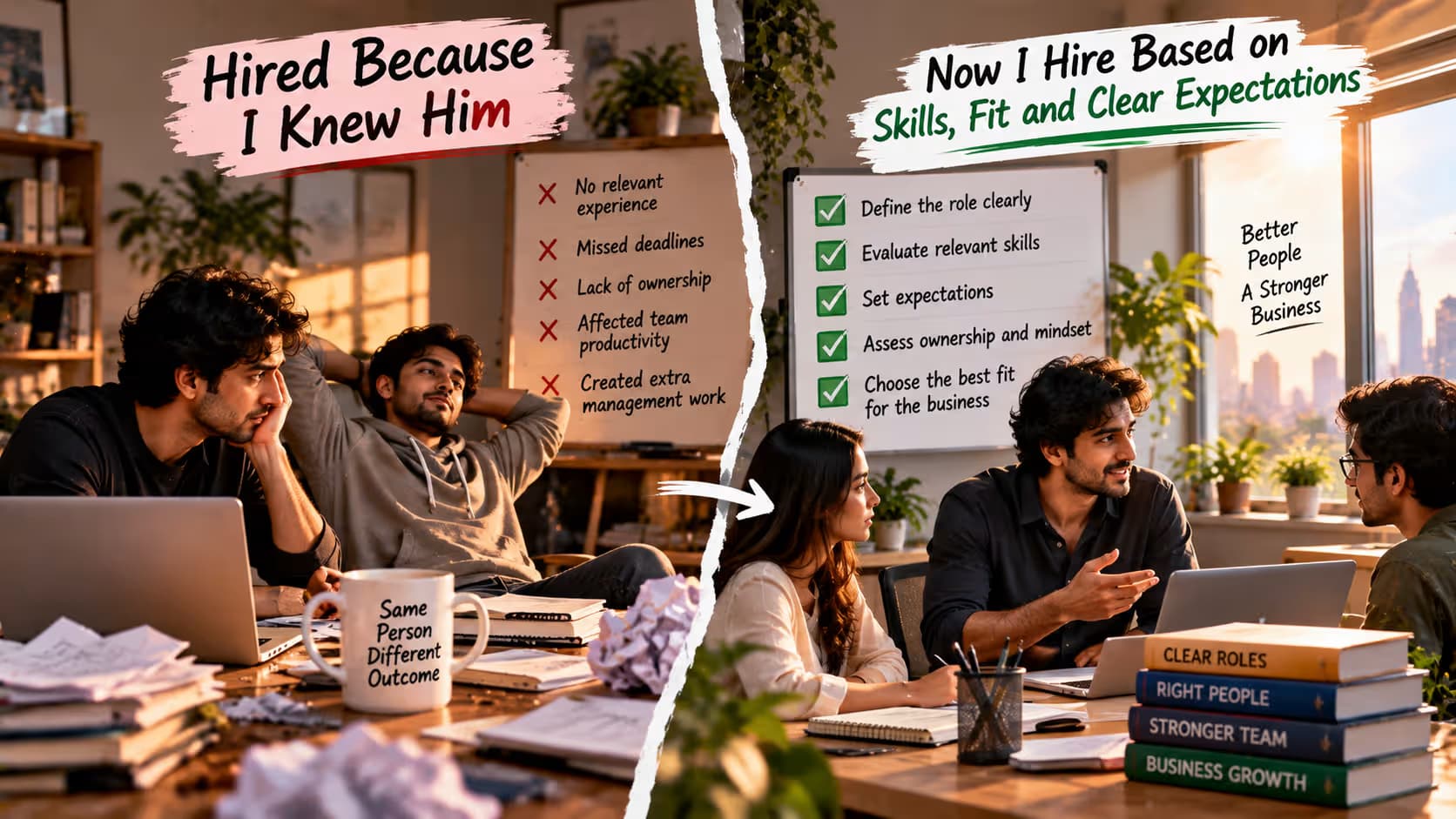
There were experiments that didn't work. I spent money on marketing channels without getting the results I expected. We built tools that customers didn't use as much as we thought they would. I made hiring decisions that I later regretted.
I also learned that being too informal with business relationships can create problems.
Every mistake forced me to become a better operator. Building a company taught me that progress often comes from understanding what did not work, not just celebrating what did.
Those experiences changed how I approached decisions. Instead of expecting every idea to succeed, I became more comfortable testing ideas, learning from the results, and improving the next version.
From Building for Myself to Building for Other People
One of the biggest changes in my thinking happened when I started building a team.
Earlier, success was mostly personal. If I earned more, learned more, or achieved something myself, that felt like progress.
But hiring people changed that definition. Suddenly, my decisions were not affecting only me. There were other people depending on the business. Their income, responsibilities, families, and future were connected to whether we could build something sustainable.
That made entrepreneurship feel different.
I started seeing a company not simply as a way to make money, but as something that could create opportunities for other people too.
That is one of the reasons I became much more interested in building systems that could continue working without everything depending on one person.

Building a team also forced me to think differently about leadership. When you're working alone, you can often solve a problem immediately. When you're responsible for other people, you have to think about communication, processes, expectations, and long-term sustainability.
The transition from working primarily for myself to building something with and for other people became one of the most important stages of my entrepreneurial journey.
What Led Me to FormLLC
As I worked with more international entrepreneurs, I began noticing another problem.
Many people wanted to build businesses that could operate globally, but the infrastructure around starting a company was confusing. Someone might know how to build software, run an ecommerce store, provide marketing services, or freelance for international customers, but they didn't necessarily know how to establish and maintain a US business.
And forming the company was only the beginning.
Entrepreneurs also had questions about banking, payment platforms, compliance, taxes, websites, credibility, and what they needed to do after the company was created.
For example, entrepreneurs based in India may need to understand the broader process involved in establishing and operating a US business. Our guide on forming a US LLC from India covers that topic in more detail.
The more entrepreneurs I helped, the more I understood that the real problem wasn't simply, "How do I register an LLC?"
The bigger question was, "How do I build a business that is actually ready to operate internationally?"
That distinction became very important to me.
Building Beyond Company Formation
A company is only one part of building an international business.
Entrepreneurs may also need to think about banking, payment infrastructure, compliance, and ongoing administration. Our guide to US bank accounts for non-residents covers another part of that journey.
This broader perspective eventually became part of why I wanted to build link text.
I began to see that entrepreneurs don't necessarily need another company-registration website. They need practical information and infrastructure that can help them understand what comes before, during, and after forming a business.
That understanding shaped the direction I wanted to take.
How My Entrepreneurship Journey Shaped My Path
Choosing entrepreneurship doesn't mean I believe everyone should leave their job and start a company. I don't.
A traditional career can be the right choice for many people. Employment can provide stability, learning, mentorship, and opportunities that are extremely valuable.
My decision was personal.
I realized that I enjoyed uncertainty more than I expected. I enjoyed solving problems. I enjoyed talking to customers and understanding what they were struggling with. I enjoyed taking an idea and trying to turn it into something real.
Most importantly, I enjoyed building.
The traditional path wasn't necessarily wrong for me. It simply wasn't the path I wanted to follow forever.
I think that distinction is important. Entrepreneurship does not have to be about proving that one career path is better than another. For me, it was about discovering the type of work that I wanted to spend my time doing.
What I Would Tell Someone Thinking About Entrepreneurship
If you're considering leaving a traditional career path to start something of your own, I don't think you need to make the decision dramatically.
You don't have to quit everything tomorrow.
Start by solving a small problem.
Start Small and Learn
Teach someone. Freelance. Build a simple product. Sell a service. Help a business. Create something people are willing to pay for.
The goal in the beginning isn't to look like an entrepreneur. The goal is to learn what it actually means to create value.
That's what happened to me.
I started by teaching students. Then I discovered freelancing. Then I worked with international customers. Then I started building teams and businesses.
Each step created the next opportunity.
I didn't have a complete roadmap at the beginning. I simply kept moving toward problems I found interesting and opportunities I believed were worth pursuing.
For entrepreneurs interested in creating an international business, learning about the practical requirements can also help. Our guide on starting a US company without visiting the US explains another part of the remote entrepreneurship journey.
From a Small Village to Global Customers
When I look back, one of the biggest changes in my thinking was my understanding of geography.
Growing up in a small village in Bihar, my immediate environment naturally shaped what I believed was possible.
Teaching students showed me that I could create value locally. Freelancing showed me that I could create value online. Working with international customers showed me that geography did not have to determine the size of my market.
Building teams showed me that my work could create opportunities for other people. Building companies showed me that solving one problem can eventually lead to solving a much larger one.
Each stage expanded my understanding of what was possible.
That is why I believe entrepreneurship is often less about having one brilliant idea and more about staying curious enough to keep exploring.
I Didn't Leave the Traditional Path to Prove It Was Wrong
When I look back at my journey today, I don't describe it as rejecting the traditional path.
I describe it as discovering my own path.
Growing up in a small village in Bihar, I could not have predicted that one day I would be working with entrepreneurs from different parts of the world. I couldn't have predicted that a small $20 online payment would change how I thought about geography and opportunity. And I certainly couldn't have predicted that freelancing would eventually lead me toward building a company.
But that's the interesting part about entrepreneurship.
You don't always see the entire road before you start. Sometimes you just see the next step.
For me, the first step was teaching. Then it was freelancing. Then it was working with international customers. Then it was building a team. Eventually, it became building companies and creating infrastructure that could help other entrepreneurs build their own businesses.
That's why I chose to build my own path.
Not because the traditional path was bad, but because I discovered that I wanted to create, experiment, take responsibility, and solve problems in my own way.
And if my entrepreneurship journey has taught me anything, it is that your starting point doesn't have to define your destination.
You can start from a small place. You can start without a perfect plan. You can start with something as small as a $20 payment.
What matters is that you start building.
This article is for general informational purposes only and does not constitute legal, tax, or financial advice. Tousif Akram and FormLLC are not a law firm or CPA firm. Consult a licensed professional for advice specific to your situation.
Ready to Form Your US LLC?
Free 30-minute consultation with no obligation and no sales pressure.
Book Free Call