Why Most First-Time Founders Worry About the Wrong Things

Tousif Akram
IRS CAA | Founder, FormLLC
Why First-Time Founders Often Worry About the Wrong Things
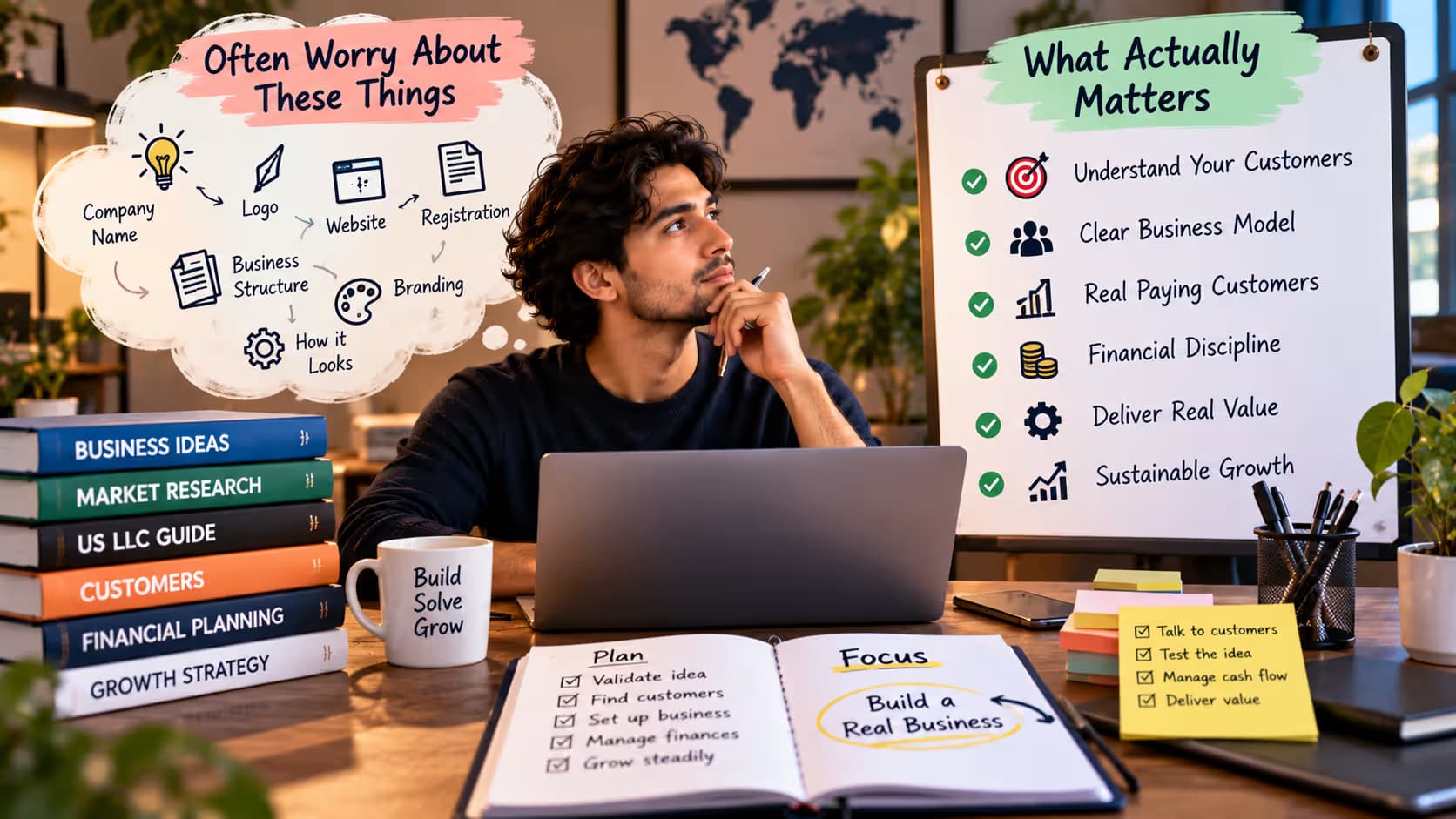
When someone decides to start a business for the first time, there is usually a long list of things they want to get right. They think about the company name, logo, website, registration, business structure, and how everything will look to the outside world. Every decision feels important because they want to make a good first impression and avoid mistakes.
I understand that feeling. Starting a business is exciting, but it also brings uncertainty. You want to look professional, make the right decisions, and ensure everything is properly organized before moving forward.
Through my experience building FormLLC and working with entrepreneurs from different countries, I have noticed a common pattern. Many first-time founders spend too much time worrying about things that make a business look ready and not enough time thinking about what will actually make it work.
I don't mean that registration, branding, or legal structure are unimportant. They absolutely matter. But they are only part of the bigger picture. A business also needs customers, a clear offer, financial discipline, and the ability to deliver real value. Without these things, even the most professional-looking company can struggle.
First-Time Founders Often Focus on Looking Professional Before Finding Customers
A polished website, a good logo, and a professional company name can create confidence. But none of these things can tell you whether someone is actually willing to pay for what you offer.
I have seen how much attention new entrepreneurs give to setting up the appearance of a business. Sometimes, the effort that goes into choosing the perfect name or designing a website is greater than the effort spent understanding potential customers.
My view is simple: before investing heavily in how your business looks, make sure you understand who you are serving and what problem you are solving. Talk to potential customers, understand their challenges, and find out whether your proposed solution is something they genuinely need.
For example, a freelancer starting an agency does not necessarily need an elaborate website or a large portfolio before approaching potential clients. What matters initially is having a clear service, understanding customer needs, and being able to deliver what has been promised.
A small business with a clear offer and a few paying customers has something important that a beautiful website alone cannot provide: evidence that someone values what it does.

Understanding the Business Model Should Come Before Company Registration
Because I work in company formation, I regularly see people researching how to register a company, which state to choose, and how quickly they can receive their formation documents. These are reasonable questions, especially for someone planning to establish a business in the United States.
However, I always believe founders should first understand why they need a company and how they plan to use it. Will they sell services, software, or physical products? Who will their customers be? How will revenue come in? What costs will they have? What responsibilities will they need to manage?
These questions help establish the foundation of a business before choosing its legal structure. A company structure should support the business, not become a substitute for planning it.
Registering a US LLC, for example, does not automatically bring customers, guarantee a business bank account, or resolve every tax and compliance question. The registration process is one decision in a much larger entrepreneurial journey.
For international entrepreneurs considering a US company, our US LLC guide for non-resident founders explains the formation process and the important considerations before getting started.
Spending Money Before Understanding What Is Actually Working
This is a lesson I have learned from building a business myself. It is tempting to spend money on advertising, software, tools, and people because these things make growth feel possible. But spending money does not automatically create a working business.
I have made decisions where I invested in things before fully understanding whether they were solving the right problem. One lesson that stayed with me was that attracting leads is not enough if your sales process is not ready to handle them properly.
For a first-time founder, this matters even more because every expense has an opportunity cost. Before increasing advertising or adding another tool, understand what is already bringing customers, where people are dropping off, and whether the business can deliver what it promises.
For example, if potential customers are visiting your website but not making enquiries, spending more on advertising may not solve the underlying problem. It may be more useful to improve your offer, explain your services more clearly, or make the enquiry process easier.
Sometimes the next step is not spending more. It is understanding what is preventing interested people from becoming paying customers and fixing that part of the business.
Ignoring Cash Flow While Thinking About Business Growth
Revenue is exciting, but revenue alone does not tell you whether your business is healthy. A founder can have orders coming in and still struggle if payments arrive late, expenses are too high, or there is not enough working capital to keep operations moving.
I believe first-time founders should become comfortable understanding their basic numbers early. They should know what it costs to deliver a service, how much they actually keep, when customers pay, and what their regular expenses look like.
You do not need a complicated financial model on day one. But you do need a realistic view of the money moving in and out of your business. Understanding these numbers can help you decide when to invest, when to control expenses, and whether the business can support its next stage of growth.
A simple habit I would recommend is reviewing income, expenses, outstanding payments, and upcoming obligations regularly. This gives you a clearer understanding of what the business can afford and where adjustments may be necessary.
A business can generate revenue and still face financial pressure. Understanding cash flow helps founders make decisions based on their actual financial position rather than assumptions about growth.

Trying to Build Everything at Once Can Slow Down Progress
Another common trap among first-time founders is believing that a serious business must have everything from the beginning: a large team, multiple services, advanced systems, and a complete product.
In reality, doing too much too early can make it harder to understand what customers actually need. It can also increase expenses and create unnecessary complexity before the business has established a clear direction.
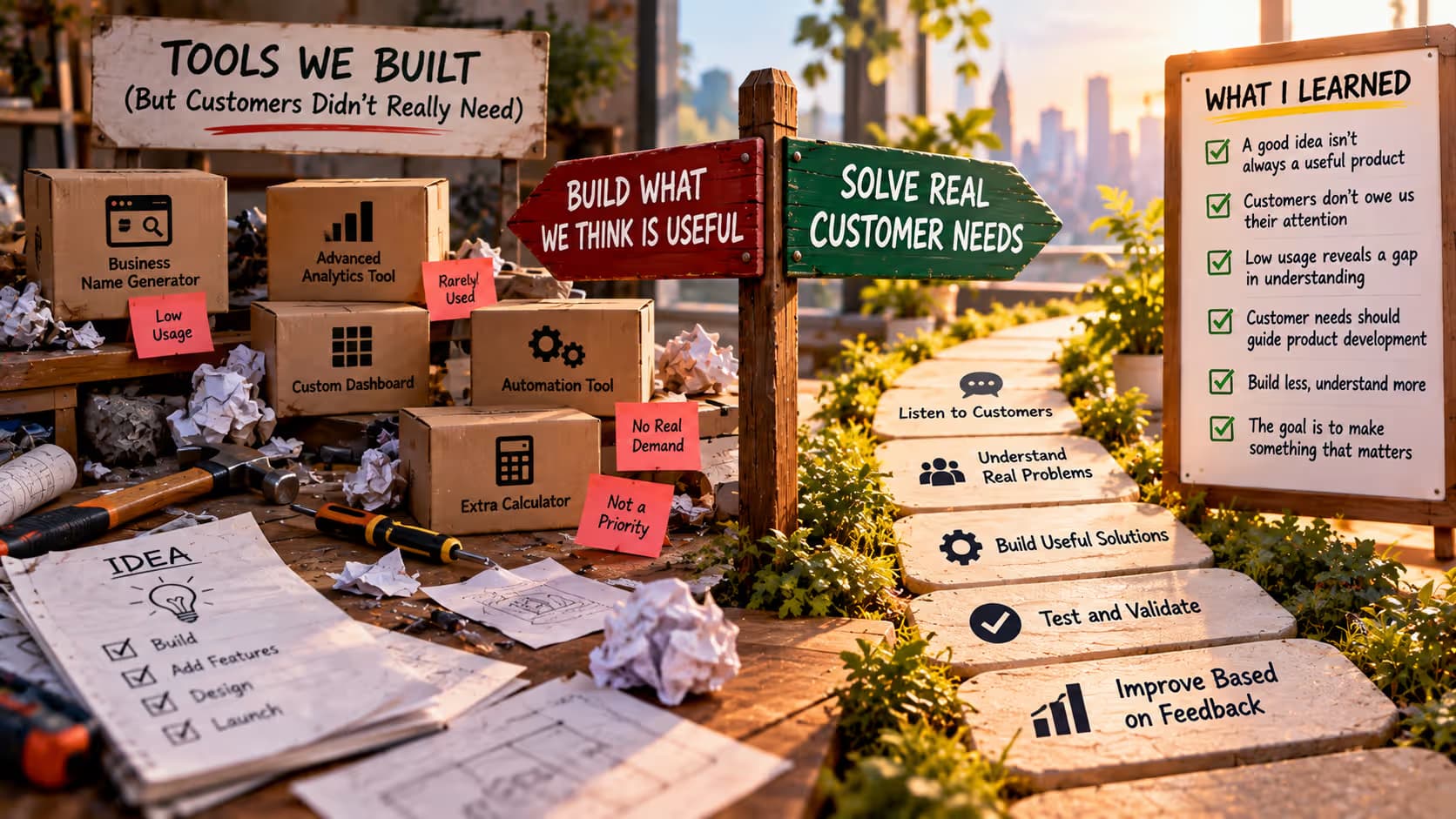
I have learned that building something useful requires listening. It is easy to become attached to an idea, a feature, or a tool because you believe it will help. But the real test is whether customers use it and find value in it.
Consider someone launching a software product. Instead of spending months building every feature they can imagine, they can begin by identifying the main problem their target customers face. They can then focus on solving that problem, gather feedback, and improve the product based on actual usage.
The same principle applies to service businesses. You do not need to offer ten different services immediately. Start with the problem you understand best, build around that, and expand when there is a clear reason to do so.
What I Would Tell Someone Starting a Business Today
If I were speaking to a first-time founder today, I would not tell them to ignore paperwork, branding, or planning. I would tell them to put these things in the right order.
Understand the customer, be clear about the problem, work out how the business will make money, and keep expenses under control. Focus on delivering something people genuinely value before investing heavily in additional tools, services, or systems. Then build the legal structure and operational processes needed to support the business properly.
You do not need to make every decision perfectly before you begin. You need to make important decisions with enough information, stay close to your customers, and remain willing to adjust when reality teaches you something new.
For founders planning to establish a US business, this also means understanding the responsibilities that come after registration. Obtaining an EIN, arranging business banking, and managing ongoing compliance are separate considerations. Our guides on getting an EIN without an SSN and Form 5472 for foreign-owned US LLCs explain two important parts of that process.
Starting a Company and Building a Business Are Two Different Achievements
After working with thousands of entrepreneurs, one thing I keep coming back to is this: starting a company and building a business are two very different achievements. The first gives you a starting point. The second requires customers, execution, financial discipline, and consistent learning.
I have seen how much energy founders put into getting everything ready before they begin. Some preparation is necessary, but preparation should not become a reason to delay the actual work of building something useful.
You do not need the perfect logo, the most expensive website, or a complicated business structure to start learning what your customers need. You need a clear problem to solve, a willingness to take action, and the discipline to improve as you go.
That is something I have come to appreciate through my own entrepreneurial journey and my work with FormLLC. The founders who understand the difference between looking like a business and actually operating one can approach their early decisions with greater clarity.
Don't spend so much time preparing to look like a founder that you forget to do the actual work of building a business.
I'm Tousif Akram, founder of FormLLC. I share practical lessons from working with entrepreneurs, establishing US companies, navigating compliance, and building businesses that operate across borders.
This article is for general informational purposes only and does not constitute legal, tax, or financial advice. Tousif Akram and FormLLC are not a law firm or CPA firm. Consult a licensed professional for advice specific to your situation.
Ready to Form Your US LLC?
Free 30-minute consultation with no obligation and no sales pressure.
Book Free Call