Form 5472 Penalty Abatement: How We Got My Client's $25,000 IRS Penalty Removed

Tousif Akram
IRS CAA | Founder, FormLLC
My Client Got a Form 5472 Penalty Letter. Here's How We Got It Abated
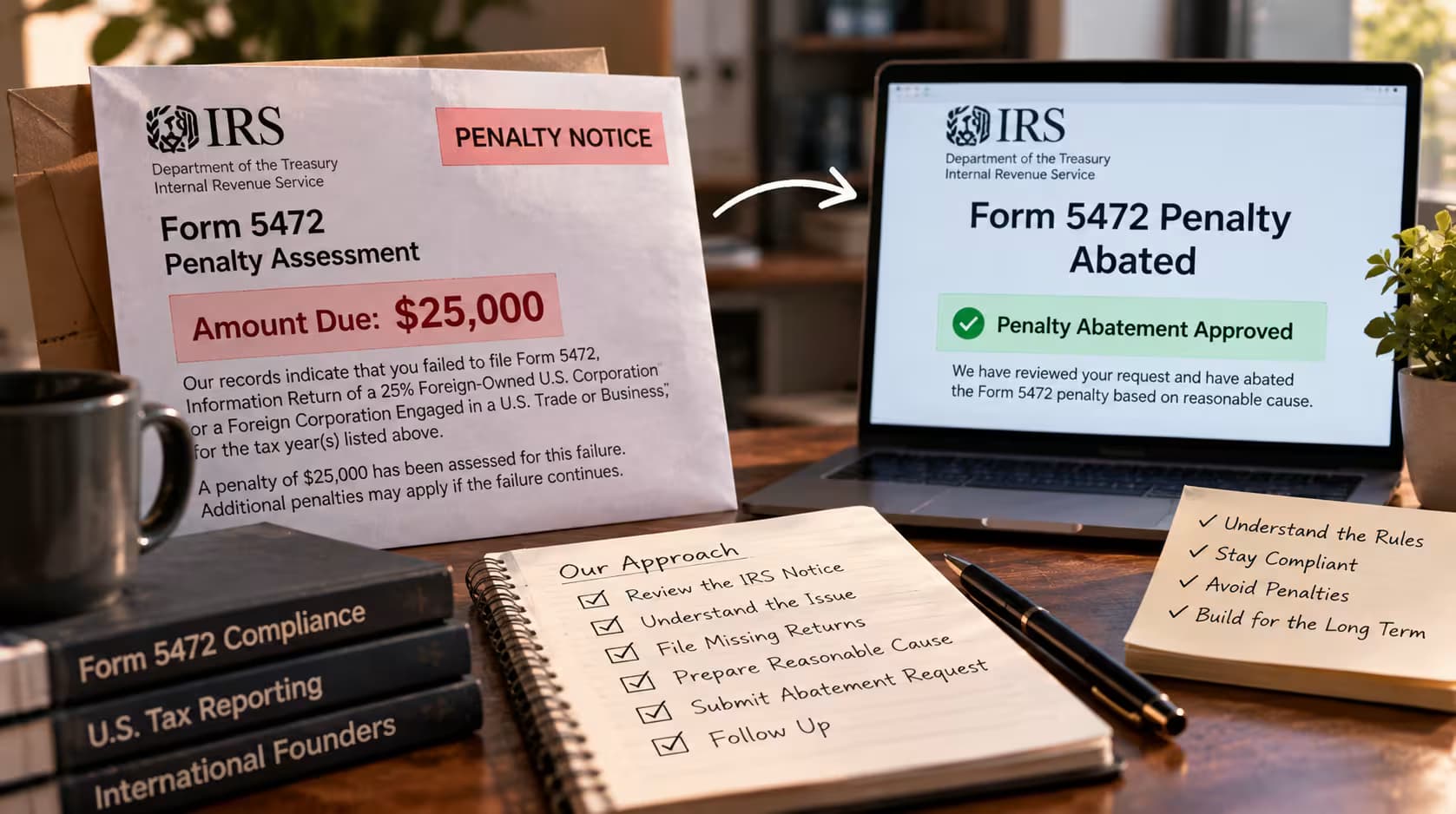
Form 5472 penalty abatement can make a significant difference for foreign founders facing a $25,000 IRS penalty notice. I saw this firsthand when one of our clients received a Form 5472 penalty letter after establishing a US company. The notice was frightening, and we needed to understand the circumstances, review the available options, and determine whether the client could qualify for relief. The experience changed how I think about US company formation and the importance of ongoing tax compliance.
At that moment, I realized something many new entrepreneurs don't understand: forming a US LLC is only the beginning. Understanding and meeting its ongoing tax and reporting obligations is just as important. Company formation helps establish the business, but staying compliant requires understanding the responsibilities that come with operating it.
How a Form 5472 Penalty Became a Serious Problem
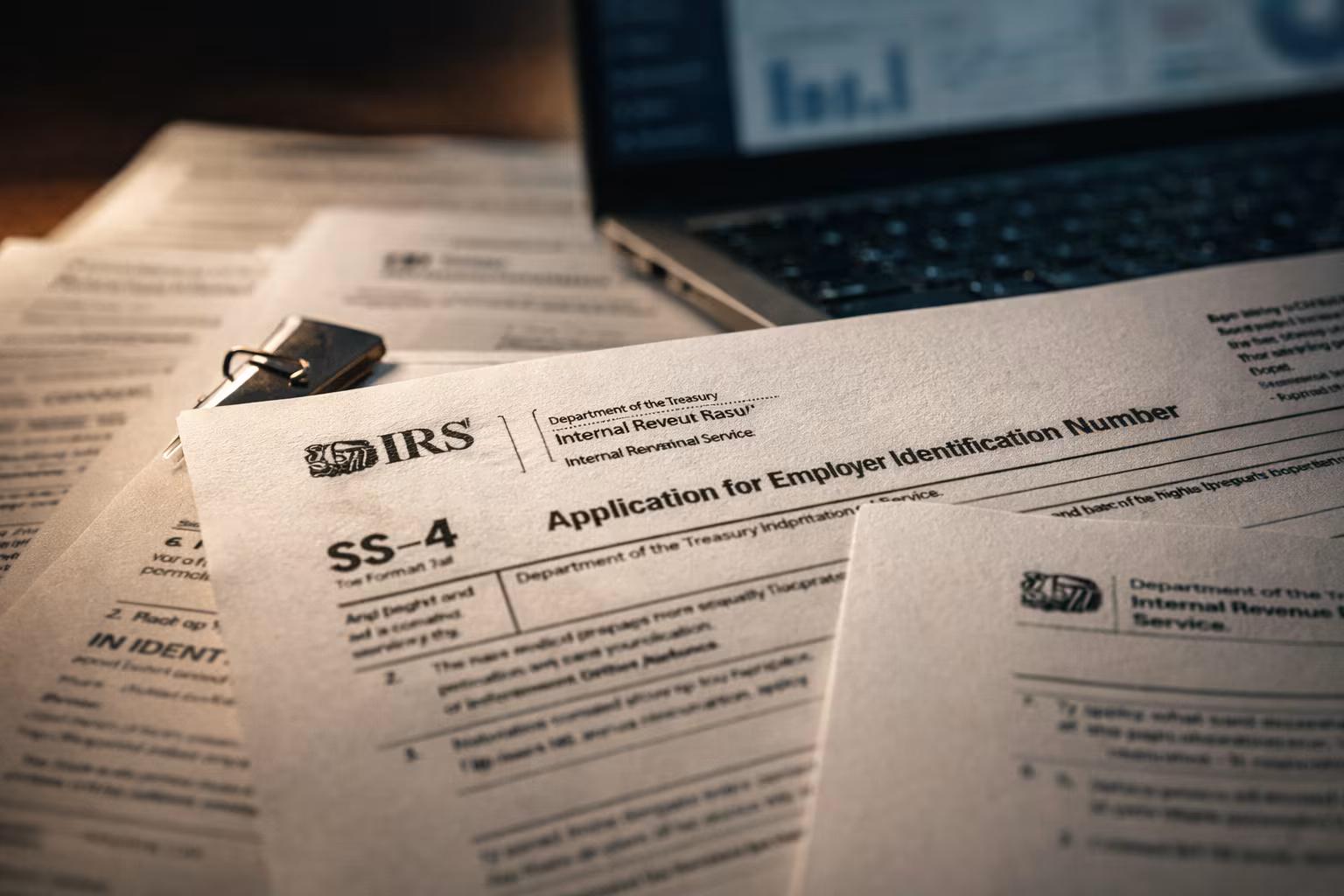
Form 5472 is an IRS information return used by certain US corporations to report transactions with related parties. It can also apply to certain foreign-owned US single-member LLCs that are treated as disregarded entities for US federal tax purposes. In those cases, the LLC may need to file a pro forma Form 1120 with Form 5472 when the applicable reporting requirements are met.
The problem is that many founders focus on getting their company registered, obtaining an Employer Identification Number (EIN), and preparing to receive payments. They may not realize that their company can have federal reporting obligations even when it has little activity or has not generated significant revenue.
In our client's case, the situation became serious when a penalty notice arrived. The potential financial impact was substantial, and we knew we needed to understand the facts and respond carefully. I spent hours working through the issue and exploring the available options because I didn't want the client to face a major financial consequence without first understanding whether relief was possible.
Why Foreign-Owned US Businesses Need to Understand Their Filing Obligations
For international founders, US tax reporting can be unfamiliar and confusing. A company may have obligations that are separate from its state registration, annual state filings, or other administrative requirements. Depending on its ownership, tax classification, and transactions, a foreign-owned LLC may need to meet specific federal information-reporting requirements.
Understanding these responsibilities early can help business owners avoid preventable problems. If you're planning to establish a company in the United States, our US LLC formation guide for non-residents is a useful starting point for learning about the broader formation process.
Understanding Form 5472 Penalty Abatement
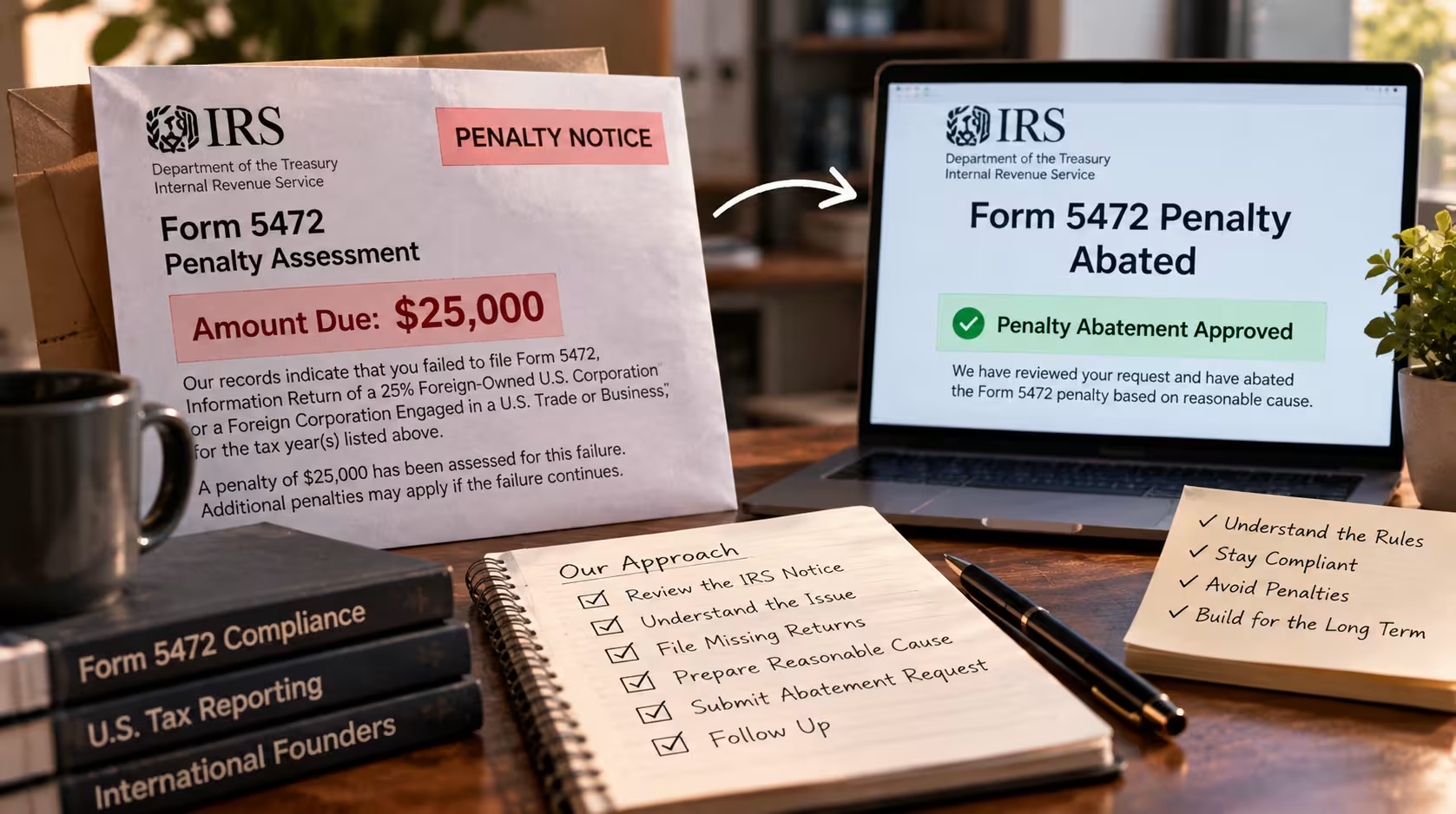
The IRS generally imposes an initial penalty of $25,000 for failing to file Form 5472 when required. Additional penalties may apply if the failure continues after the IRS provides the required notification.
However, receiving a penalty notice does not necessarily mean there is no possibility of relief. Under Internal Revenue Code Section 6038A(d)(3) and the applicable regulations, a penalty may be waived when the failure was due to reasonable cause and not willful neglect.
This is where Form 5472 penalty abatement becomes important. Reasonable cause is evaluated based on the specific facts and circumstances of the case. The taxpayer generally needs to explain what happened, why the filing requirement was not met, what actions were taken to correct the issue, and why the circumstances support relief.
The IRS requires an appropriate written explanation supported by the applicable rules and circumstances. The submission should accurately describe the facts and include the required declaration under penalties of perjury where applicable.
Simply saying, "I didn't know about the requirement," may not be enough. A reasonable-cause explanation should reflect the actual circumstances and be supported by relevant evidence. The appropriate response depends on the notice, the filing history, and the taxpayer's specific situation.
How We Approached the Form 5472 Penalty Abatement Case
When we worked through our client's situation, our priority was to understand the underlying filing issue rather than rush into sending a generic response. We needed to examine the notice, identify the reporting obligation involved, and understand the facts surrounding the original failure.
Step 1: Review the IRS Notice and Filing History
The first step in a Form 5472 penalty case is to read the IRS notice carefully. The notice provides important information about the tax year, the stated reason for the penalty, the amount assessed, and the instructions or deadlines for responding.
We also needed to understand the client's filing history and determine which reporting obligations applied. A careful review helps establish what went wrong and what needs to be addressed before requesting relief.
Step 2: Identify and Address the Underlying Compliance Issue
A penalty abatement request should not be treated as a substitute for filing required returns or correcting missing information. The outstanding filing obligations need to be reviewed and addressed appropriately.
For certain foreign-owned US single-member LLCs, this may involve reviewing whether Form 5472 and the accompanying pro forma Form 1120 were required for the relevant tax year. The exact requirements depend on the entity's tax classification, ownership, reportable transactions, and other applicable rules.
Step 3: Prepare a Fact-Specific Reasonable-Cause Explanation
The next step was to consider the reasonable-cause argument. The explanation needed to reflect the client's actual circumstances, not a copied template or an excuse that could not be supported.
The timing of the discovery, the steps taken to correct the issue, the compliance history, and any relevant supporting evidence can all matter when presenting the facts. The objective is to explain clearly why the failure occurred and why the circumstances may justify relief under the applicable rules.
Step 4: Respond Carefully and Evaluate the Available Relief
Finally, we worked through the response process and the available relief options. In our client's case, the experience reinforced why it is important to examine a penalty carefully instead of assuming that the amount shown on the notice is necessarily the final outcome.
The key lesson is that Form 5472 penalty abatement requires a fact-specific approach. There is no universal letter that guarantees the IRS will remove a penalty. Any request should follow the instructions applicable to the notice and accurately represent the taxpayer's circumstances.
What I Learned From This Form 5472 Penalty Experience
The experience changed the way I think about company formation services. When someone asks to register a US LLC, it is tempting to focus entirely on the formation process: choosing a state, submitting documents, and obtaining the company's registration.
But the founder's real journey continues after the company is formed. They may need to understand federal tax reporting, maintain appropriate records, monitor filing deadlines, and determine whether Form 5472 applies to their particular business structure and transactions.
For foreign founders, these requirements can be especially confusing because the rules may differ from the obligations they are familiar with in their home countries. A company can be properly registered at the state level and still have separate federal reporting responsibilities.
I believe service providers have a responsibility to explain these obligations clearly instead of allowing customers to assume that registration alone takes care of everything.
This is also why I encourage founders to review their compliance responsibilities early. It is generally better to understand your filing requirements before receiving an IRS notice than to try to resolve a penalty under pressure.
Company Formation Is Only the First Step
A successful international business needs more than registration documents. Depending on its circumstances, it may need appropriate tax reporting, bookkeeping, banking arrangements, and ongoing compliance procedures.
Founders should also understand their EIN and federal filing responsibilities rather than assuming that obtaining an EIN completes every tax-related requirement. You can learn more in our guide to getting a US EIN as a non-resident without an SSN.
What Should You Do If You Receive a Form 5472 Penalty Letter?
If you receive a Form 5472 penalty notice, start by reading it carefully. Identify the tax year, the stated reason for the penalty, the response deadline, and any instructions provided by the IRS. Keep the notice and related records together so you can review the case systematically.
Next, review the relevant filing history and determine whether any required Form 5472 or accompanying pro forma Form 1120 remains outstanding. If you believe reasonable cause applies, prepare a factual, documented explanation and follow the instructions relevant to your notice.
Given the potential size of the penalty, consider consulting a qualified US tax professional experienced in international tax matters. They can help assess the filing requirements, evaluate the facts, identify appropriate response options, and determine whether a reasonable-cause argument is supportable.
Do not ignore the notice, assume that first-time penalty relief automatically applies, or rely on a generic letter that does not reflect your circumstances. Form 5472 penalties have specific rules, and relief is not guaranteed.
How to Reduce the Risk of Future Form 5472 Problems
The best way to approach compliance is to understand your obligations before a filing deadline arrives. Founders should determine their company's tax classification, identify applicable information-reporting requirements, maintain accurate records of relevant transactions, and establish a process for tracking filing deadlines.
It is also important to review compliance requirements when the business changes. New ownership arrangements, related-party transactions, changes in operations, or changes in tax classification can affect which reporting obligations apply.
If you're establishing a US company from abroad, consider the formation process and ongoing responsibilities together. Our US LLC guide for non-residents can help you understand the broader setup, while a qualified tax professional can advise on the specific reporting requirements that apply to your business.
My Biggest Takeaway: Company Formation Is Only Day One
This experience reinforced one of my core beliefs about building businesses internationally: registering a company is not the same as being ready to operate it responsibly.
A founder needs to understand what comes next, including tax reporting, recordkeeping, banking requirements, and ongoing compliance. These responsibilities are part of running a business, not administrative details to think about only when a problem appears.
At FormLLC, I want entrepreneurs to have a clearer understanding of that journey. My goal is not simply to help someone obtain a US company, but to help them understand the responsibilities that come with it.
Because the real value of forming a company is not the document itself. It is having a suitable structure that supports your business while you meet the obligations that apply to you.
Build the company, understand the responsibilities, and make compliance part of the plan from the beginning.
This article is for general informational purposes only and does not constitute legal, tax, or financial advice. Tousif Akram and FormLLC are not a law firm or CPA firm. Consult a licensed professional for advice specific to your situation.
Ready to Form Your US LLC?
Free 30-minute consultation with no obligation and no sales pressure.
Book Free Call