Form 5472 With Pro Forma 1120: 2026 Filing Guide for Foreign-Owned LLCs

Tousif Akram
IRS CAA | Founder, FormLLC
Form 5472 With Pro Forma 1120: 2026 Filing Guide for Foreign-Owned LLCs
Form 5472 with pro forma 1120 is an important US tax reporting requirement for certain foreign-owned LLCs. When I speak with entrepreneurs from outside the United States, I often find that they focus on company registration, obtaining an EIN, and opening a business bank account. These are important steps, but federal tax reporting matters too.
Some founders assume they have nothing to file if their LLC has no employees, little revenue, or no profit. That assumption can create serious problems. Through my work with international entrepreneurs, I've learned that understanding compliance early is much easier than fixing a missed filing later.
What Is Form 5472 With Pro Forma 1120?
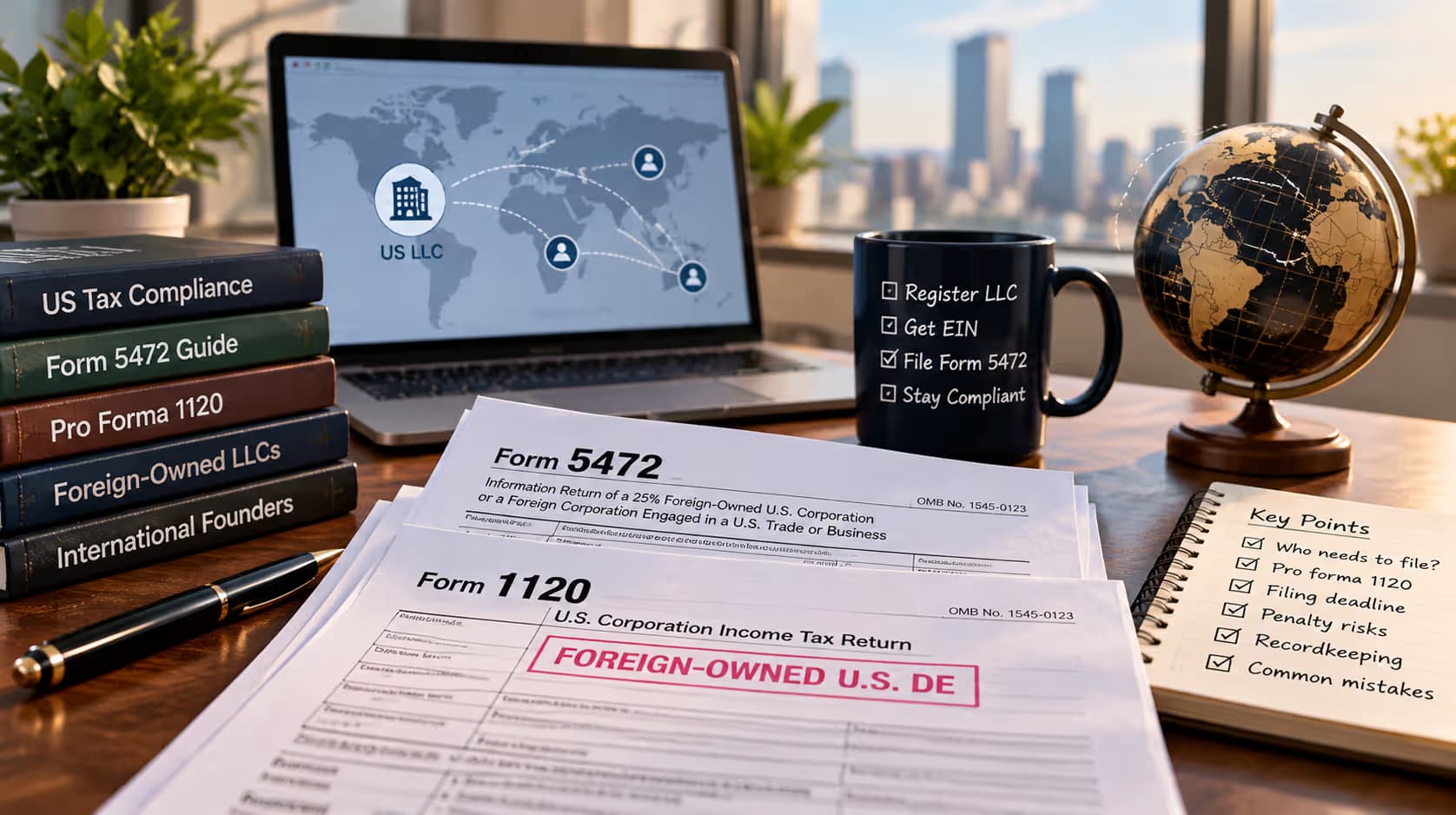
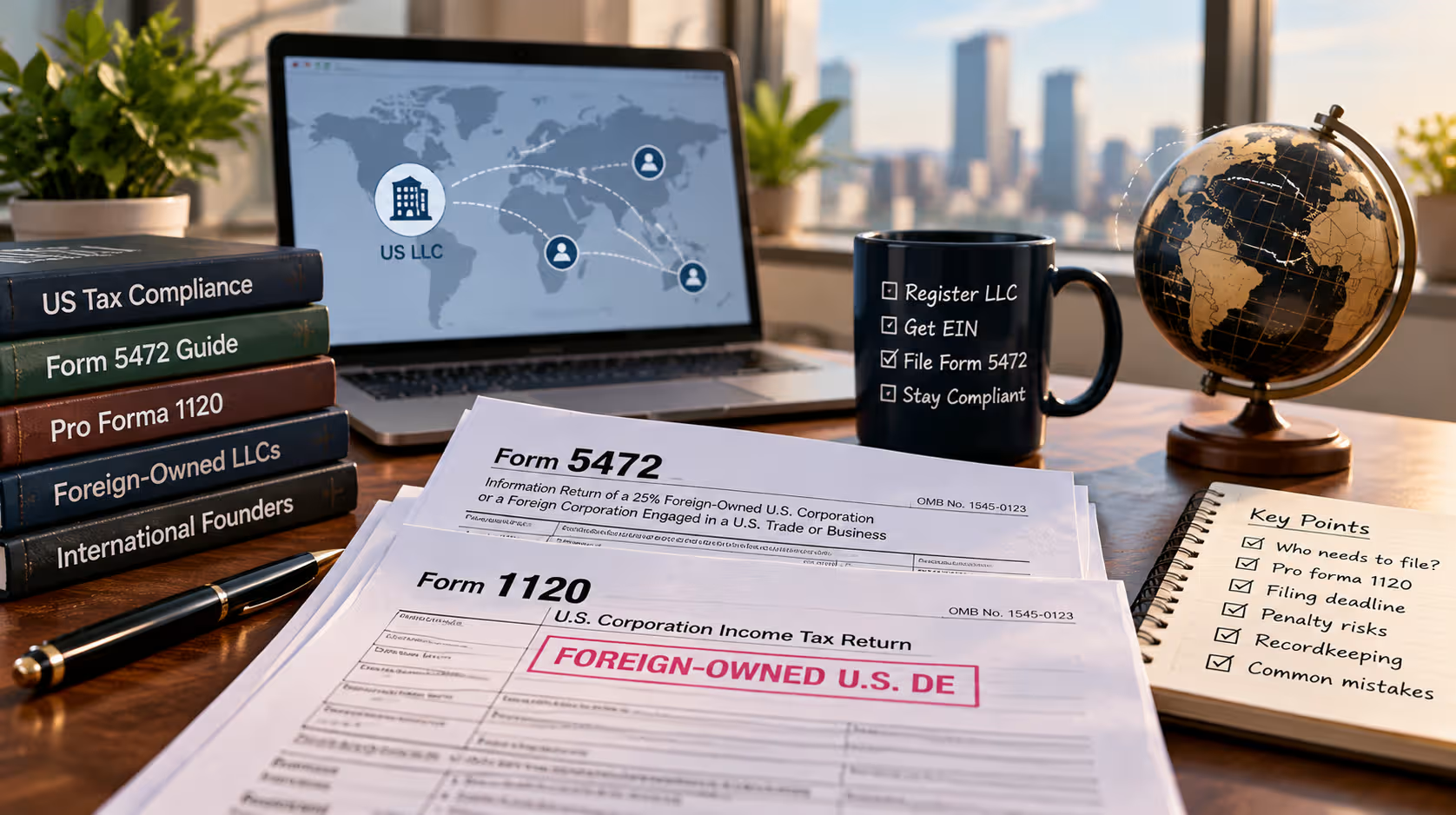
Form 5472 is an IRS information return. Certain US corporations use it to report transactions with related parties. It can also apply to certain foreign-owned, single-member US LLCs treated as disregarded entities for federal tax purposes.
When the relevant reporting requirements apply, the LLC generally attaches Form 5472 to a pro forma Form 1120. This accompanying form does not automatically mean the LLC has elected to be taxed as a regular corporation.
The filing requirements depend on the company's tax classification, ownership, and transactions.
Why Foreign-Owned Single-Member LLCs Need Attention
A business does not necessarily avoid reporting obligations just because it has little revenue or no profit. The relevant rules may depend on reportable transactions and the LLC's federal tax classification.
Founders should identify their filing responsibilities before tax season. If you're still planning your company, read our US LLC formation guide for non-residents to understand the broader setup process.
How I Approach Form 5472 With Pro Forma 1120
My first step is to understand the LLC's ownership, tax classification, and activity during the tax year. I look beyond sales and profit. I also review transactions between the company and its foreign owner or other related parties.
Certain contributions, distributions, and other transactions may affect the reporting requirements. The details matter, so I avoid assuming that every LLC has the same obligations.
Next, I prepare the forms as a complete filing package. For a foreign-owned US disregarded entity that meets the applicable requirements, Form 5472 is attached to a pro forma Form 1120.
The IRS instructions specify what information belongs on the pro forma return. They also require the words "Foreign-owned U.S. DE" across the top of Form 1120 for this type of filing. Always follow the instructions for the relevant tax year.
Keep Accurate Records Throughout the Year
Good recordkeeping makes tax reporting easier. I encourage founders to keep records of owner contributions, company expenses paid personally by the owner, transfers, and other relevant transactions.
Don't wait until the deadline to reconstruct a year's activity. Missing details or a substantially incomplete Form 5472 can be treated as a failure to file.
Form 5472 Filing Deadline and Submission
For many foreign-owned LLCs with a calendar tax year, the filing deadline is connected to April 15 of the following year. However, the actual due date depends on the applicable filing requirements and circumstances.
An eligible entity may request an extension by filing Form 7004 on time. Check the relevant IRS instructions to confirm whether the extension rules apply to your particular filing.
Verify the Filing Method Before Submission
Submission methods can differ from those used for an ordinary corporate return. Under the special IRS rules for foreign-owned US disregarded entities, Form 5472 generally cannot be electronically filed using the usual corporate e-filing process.
The filing package may need to be sent using a designated fax number or mailing address. Verify the current IRS instructions before submitting your forms. Don't rely on an old address, an outdated deadline, or general corporate filing guidance.
Why I Take Form 5472 Compliance Seriously
The consequences of missing a required filing can be expensive. The IRS generally imposes an initial $25,000 penalty for failing to file Form 5472 correctly and on time. Additional penalties may apply if the failure continues after the required IRS notification.
For me, this reinforces an important lesson: company formation is only one part of helping someone build a business in the United States. Founders also need to understand tax reporting, filing deadlines, recordkeeping, and the difference between state compliance and federal tax requirements.
If you're a non-US entrepreneur with a US LLC, don't assume that no revenue means no filing requirement. Confirm how your LLC is classified, identify any reportable transactions, and determine whether Form 5472 with a pro forma Form 1120 is required.
If you're unsure, consult a qualified US tax professional experienced in foreign-owned LLCs and international tax reporting.
Common Form 5472 Filing Mistakes to Avoid
One common mistake is assuming that an LLC with little or no revenue has no reporting obligations. Another is overlooking transactions between the company and its foreign owner, including relevant contributions or payments made on the company's behalf.
Founders can also run into problems when they miss deadlines, submit incomplete information, or use the wrong submission method. These issues are easier to prevent when records are maintained throughout the year.
Understand your filing obligations early instead of waiting for an IRS notice.
How to Prepare Your LLC for Ongoing Compliance
Start by identifying your company's tax classification and reviewing the reporting rules that apply to it. Maintain organized records, track filing deadlines, and review your obligations whenever ownership or business activity changes.
Obtaining an EIN does not automatically complete every federal tax reporting requirement. If you need help understanding the EIN process, see our guide to getting a US EIN as a non-resident without an SSN.
You can also revisit our US LLC formation guide for non-residents to review the wider responsibilities involved in establishing a US business from abroad.
My Advice to Foreign Founders: Make Compliance Part of Day One
My advice is simple: make compliance part of your business setup from the beginning. Registering a company, obtaining an EIN, and opening a bank account are important milestones, but they do not automatically complete your federal reporting responsibilities.
A well-organized business understands its ownership structure, recordkeeping practices, filing requirements, and deadlines. These responsibilities should be part of the operating plan, not something addressed only when a problem appears.
Through my work with international founders, I've learned that helping someone establish a company should also mean helping them understand the responsibilities that come with it.
Build the company, understand the obligations, and make compliance part of the plan from day one.
Frequently Asked Questions
Does Every Foreign-Owned US LLC Need Form 5472?
No. The requirement depends on the LLC's federal tax classification, ownership, and reportable transactions. Certain foreign-owned, single-member LLCs treated as disregarded entities have specific reporting requirements. Review the applicable IRS instructions or consult a qualified tax professional.
Does a Foreign-Owned LLC Need to File Form 1120?
Certain foreign-owned US disregarded entities must attach Form 5472 to a pro forma Form 1120 when the applicable requirements are met. This does not automatically mean the LLC is taxed as a regular corporation.
What Is the Penalty for Not Filing Form 5472?
The initial penalty is generally $25,000 for a failure to file as required. Additional penalties may apply in certain circumstances. The specific consequences depend on the facts and applicable rules.
Can I E-File Form 5472 for a Foreign-Owned Disregarded Entity?
Special submission rules apply to foreign-owned US disregarded entities. Check the current IRS instructions to confirm the permitted submission method for your filing.
What Records Should I Keep?
Maintain records of owner contributions, related-party transactions, company expenses paid by the owner, transfers, and other potentially reportable activity. Accurate records help you and your tax professional determine which requirements apply.
*Disclaimer: This article provides general educational information and reflects a founder's perspective. It is not legal or tax advice. Form 5472 requirements, deadlines, submission procedures, and penalties depend on the facts of each case and the applicable tax year. Consult a qualified US tax professional about your circumstances.*
This article is for general informational purposes only and does not constitute legal, tax, or financial advice. Tousif Akram and FormLLC are not a law firm or CPA firm. Consult a licensed professional for advice specific to your situation.
Ready to Form Your US LLC?
Free 30-minute consultation with no obligation and no sales pressure.
Book Free Call