LLC Annual Report Filing: The Calendar I Built After Clients Missed Deadlines

Tousif Akram
IRS CAA | Founder, FormLLC
One thing I learned while helping founders maintain their US companies is that forming an LLC is often the easy part. LLC annual report filing is where many owners run into problems because they forget what needs to be submitted months after forming their companies. I kept seeing the same pattern: a founder would form a Wyoming or Delaware LLC, focus on running the business, and overlook an upcoming state filing or payment. Sometimes, the first reminder came from a registered agent or a state notice. By then, the founder was already worried about late fees or losing good standing.
That is why I started thinking about compliance as a calendar problem, not just a filing problem. A reliable compliance calendar helps owners track state requirements, plan ahead, and reduce the risk of missing important deadlines.
Why Annual Report Deadlines Vary by State
The first thing I tell founders is that US LLC compliance depends on the state. The filing name, deadline, fee, and even whether an annual report is required can vary depending on where the company was formed or registered. Understanding your state's filing requirements is essential before creating a compliance calendar.
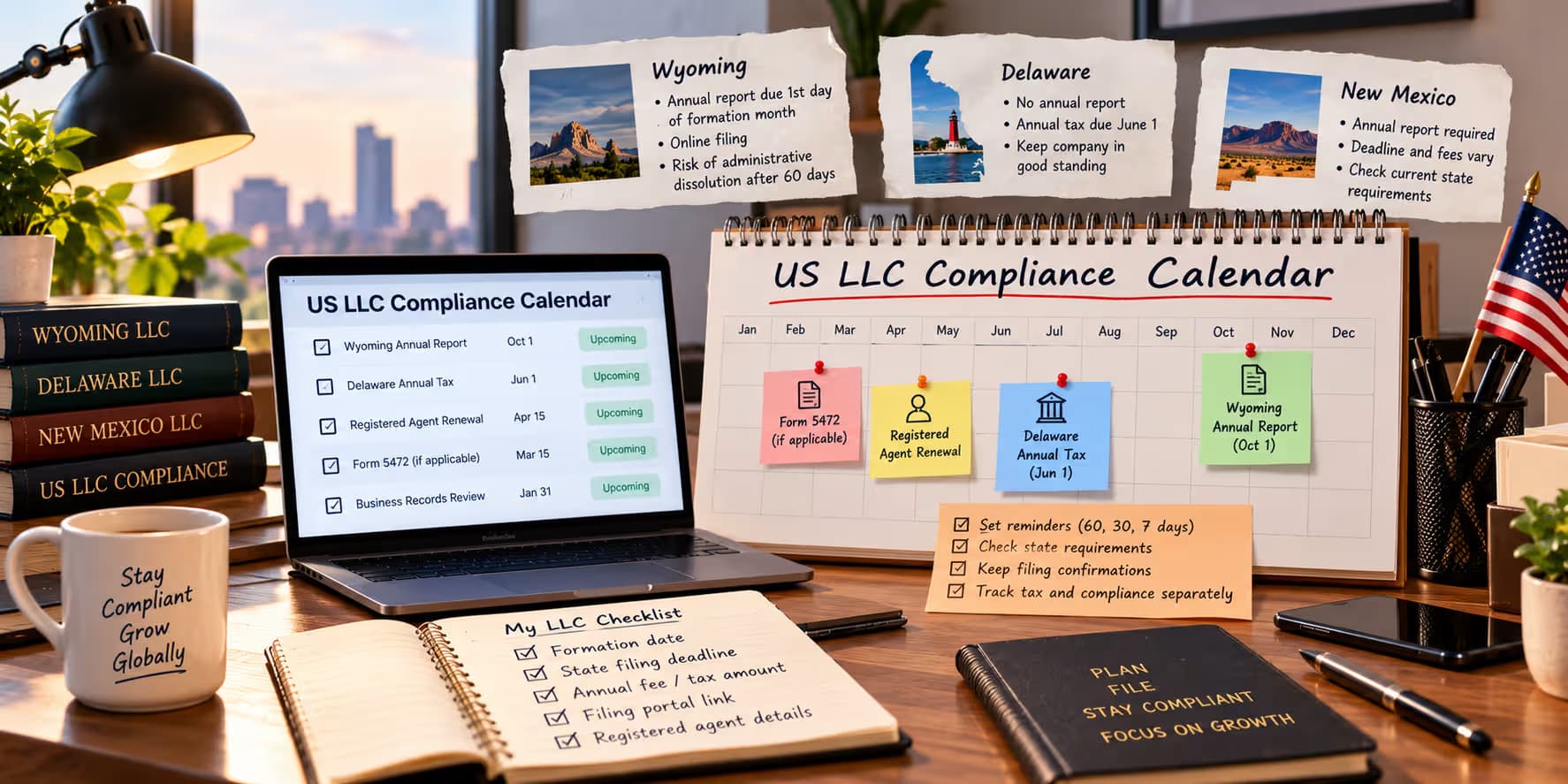
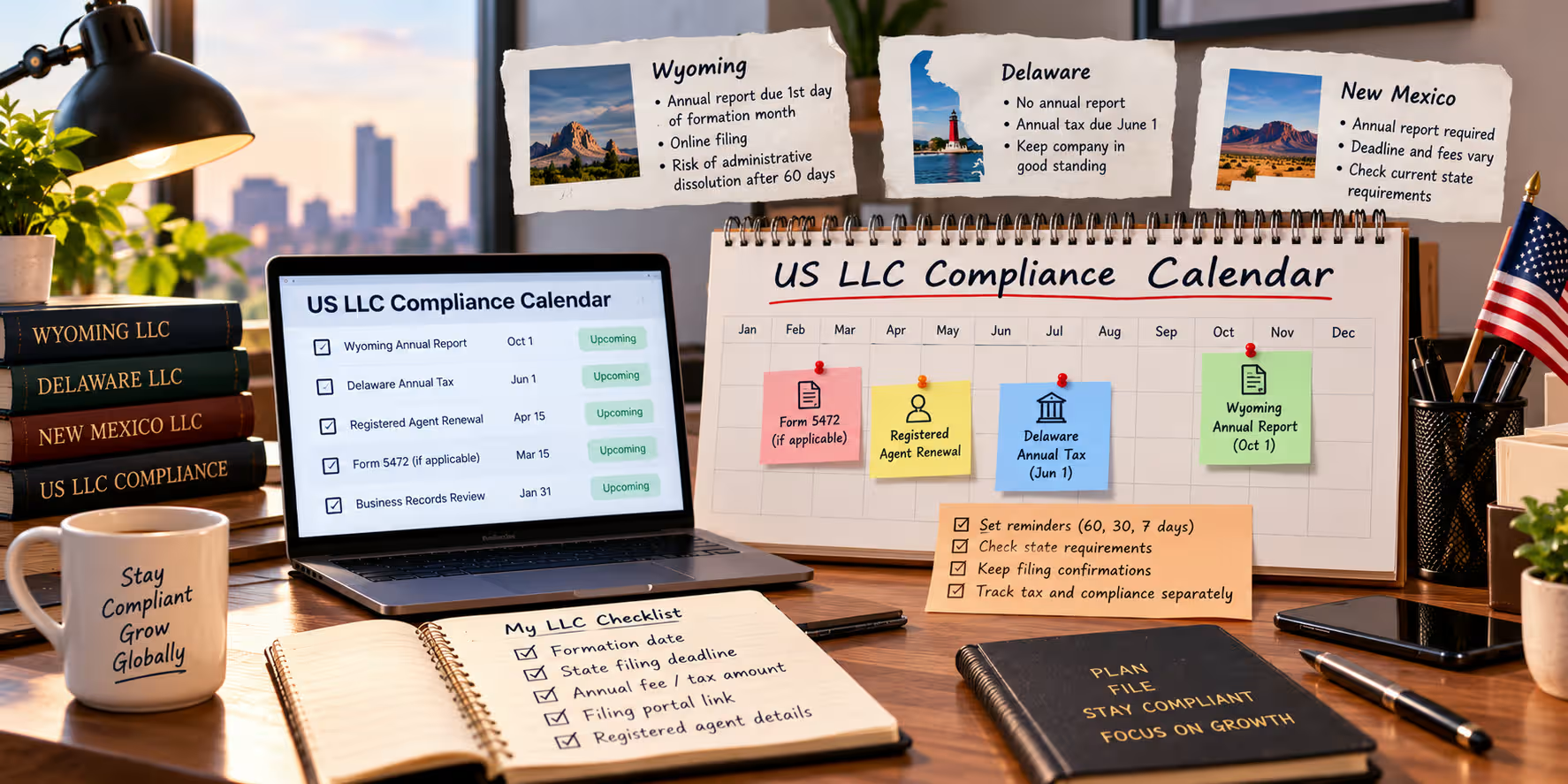
For example, Wyoming LLC annual reports are generally due on the first day of the month in which the company was originally formed. If your Wyoming LLC was formed on October 18, its annual report is generally due on October 1 each year. Wyoming allows online filing, and an entity can face administrative dissolution if its report remains unfiled for 60 days after the due date. Verify current requirements before relying on these deadlines.
Delaware works differently. Delaware LLCs generally do not file an annual report with the Division of Corporations. However, they must pay the state's annual LLC tax by June 1.
These examples illustrate why copying another founder's compliance calendar is risky. Your deadlines depend on your company's state and legal structure. If you are comparing formation states, our guide to New Mexico, Wyoming, and Delaware LLCs explains some of the differences founders should consider.
The Annual Report Compliance Calendar I Recommend
I approach LLC compliance by recording each requirement as soon as the company is formed. I do not wait for the first reminder to arrive. For every LLC, I recommend recording the state of formation, the formation date, the annual report or renewal deadline, the filing fee or annual tax, the official filing portal, and the registered-agent details. Add the date the filing is completed so you have a clear record of compliance.
A good compliance calendar should make the next required action clear. It should also distinguish state filing deadlines from tax obligations and registered-agent renewals, so you can manage each responsibility separately.
Set Reminders Before the Deadline
My preferred approach is to set reminders around 60, 30, and 7 days before each deadline. These are planning reminders, not official due dates. Adjust them according to state requirements and the type of filing.
The purpose is to give yourself enough time to resolve payment problems, update company information, or gather missing documents. You should not have to start preparing on the day a filing is due.
Separate State Reports From Federal Tax Filings
Your calendar should distinguish state annual reports from federal tax filings. Completing an annual report or paying a state renewal fee does not replace a required IRS return or information filing.
Foreign-owned LLCs may have separate federal reporting obligations. Record those deadlines independently and confirm which requirements apply to your company's tax classification, ownership, and transactions. For founders managing a company from abroad, our guide to starting a US LLC from India provides additional context on the ongoing responsibilities that can come with owning a US business.
What Happens If You Miss a Filing Deadline?
The consequences depend on the state and the type of filing. You may face late fees, interest on unpaid state taxes, delinquent status, or eventual administrative dissolution. Losing good standing can also create complications when you need a certificate of good standing or want to complete another business transaction.
State requirements can change over time. Pennsylvania, for example, introduced annual reporting requirements for many business entities beginning in 2025, with different deadlines depending on the entity type. This is a useful reminder that founders should review current rules rather than rely entirely on what they remember from formation.
If you miss a deadline, do not assume that paying the original fee later will automatically resolve the problem. Check the company's official state record, identify any outstanding filings or penalties, and follow the state's current instructions for restoring compliance.
What to Do After Missing a Deadline
Start by checking the LLC's status through the relevant state business registry. Then identify the missed report, unpaid fee, or other outstanding requirement.
Follow the state's instructions and save copies of submitted filings, payment confirmations, and any notices you receive. If the LLC has already been administratively dissolved, check whether reinstatement is available and what additional steps may be required.
Use State-Specific LLC Filing Guidance
I want state-specific LLC guides to be useful beyond the day someone forms a company. Founders should be able to return to the relevant guide and understand what to check next, including annual reports, renewal requirements, and filing procedures.
If your LLC is registered in Wyoming, check Wyoming's current business records and filing requirements. If it is registered in Delaware, use Delaware's current rules. If your company is formed or registered elsewhere, check that state's requirements rather than assuming Wyoming's calendar applies.
Always verify deadlines and fees with the relevant state authority. A reminder from a registered agent can be helpful, but you should understand the actual requirement and keep your own records.
Keep Your Registered-Agent Details Up to Date
Your registered agent can help receive important legal documents and state notices, but you should not rely on the agent as your only compliance reminder. Make sure your contact details are current and that you can access important company notices.
If you change providers, update the state record as required and keep confirmation of the change. Our guide on how to change a registered agent for a US LLC explains the steps and records to check when making that change.
A reliable calendar should include registered-agent renewals as well as annual reports and tax deadlines. That way, you can manage these obligations together without confusing one with another.
My Advice: Put the Deadline on the Calendar Before You Forget It
An LLC annual report is easy to overlook because it usually is not part of your daily business activity. You may be busy finding customers, managing payments, or building a product. A state filing that is months away can feel unimportant until the deadline approaches.
But compliance is easier when it becomes a system rather than a last-minute task. Record the deadline when the LLC is formed, set advance reminders, use the appropriate state filing process, and save proof of every completed filing or payment. Treat annual reporting as a recurring responsibility to make it easier to stay organised throughout the year.
That is the thinking behind the calendar I built after seeing founders miss deadlines. The goal is not to make compliance complicated. It is to make the next required action visible before it becomes a problem.
The key lesson is simple: do not rely on memory alone. A clear calendar, early reminders, and organised records can help you manage your LLC's ongoing obligations and reduce the risk of missed deadlines.
Frequently Asked Questions
Is an annual report required for every US LLC?
No. Requirements depend on the state. Some states require an annual or periodic report, while others use different renewal or tax-payment systems. Check the rules for the state where your LLC is formed or registered.
When should I start preparing for an LLC annual report?
A practical approach is to set reminders 60, 30, and 7 days before the applicable deadline. These are planning reminders, not official deadlines, and should be adjusted to suit your filing requirements.
What happens if I miss my LLC annual report deadline?
Depending on the state, consequences can include late fees, delinquent status, loss of good standing, or administrative dissolution. Check the official state registry and follow the current process for resolving the missed filing.
Is a state annual report the same as a federal tax return?
No. A state report or renewal requirement is separate from applicable federal tax returns and information filings. An LLC may have obligations at both levels, depending on its circumstances.
Does a registered agent manage all LLC compliance deadlines?
Not necessarily. A registered agent generally receives specified legal documents and official notices, but LLC owners should maintain their own compliance calendar and verify their filing responsibilities.
How can I organise my LLC's filing deadlines?
Record the formation state, formation date, filing deadline, applicable fee, filing portal, and registered-agent details. Set advance reminders and save confirmations after each filing or payment.
This article is for general informational purposes only and does not constitute legal, tax, or financial advice. Tousif Akram and FormLLC are not a law firm or CPA firm. Consult a licensed professional for advice specific to your situation.
Ready to Form Your US LLC?
Free 30-minute consultation with no obligation and no sales pressure.
Book Free Call