Why I Think a US Company Can Change the Way a Small Founder Thinks About the World

Tousif Akram
IRS CAA | Founder, FormLLC
Why I Think a US Company Can Change the Way a Small Founder Thinks About the World
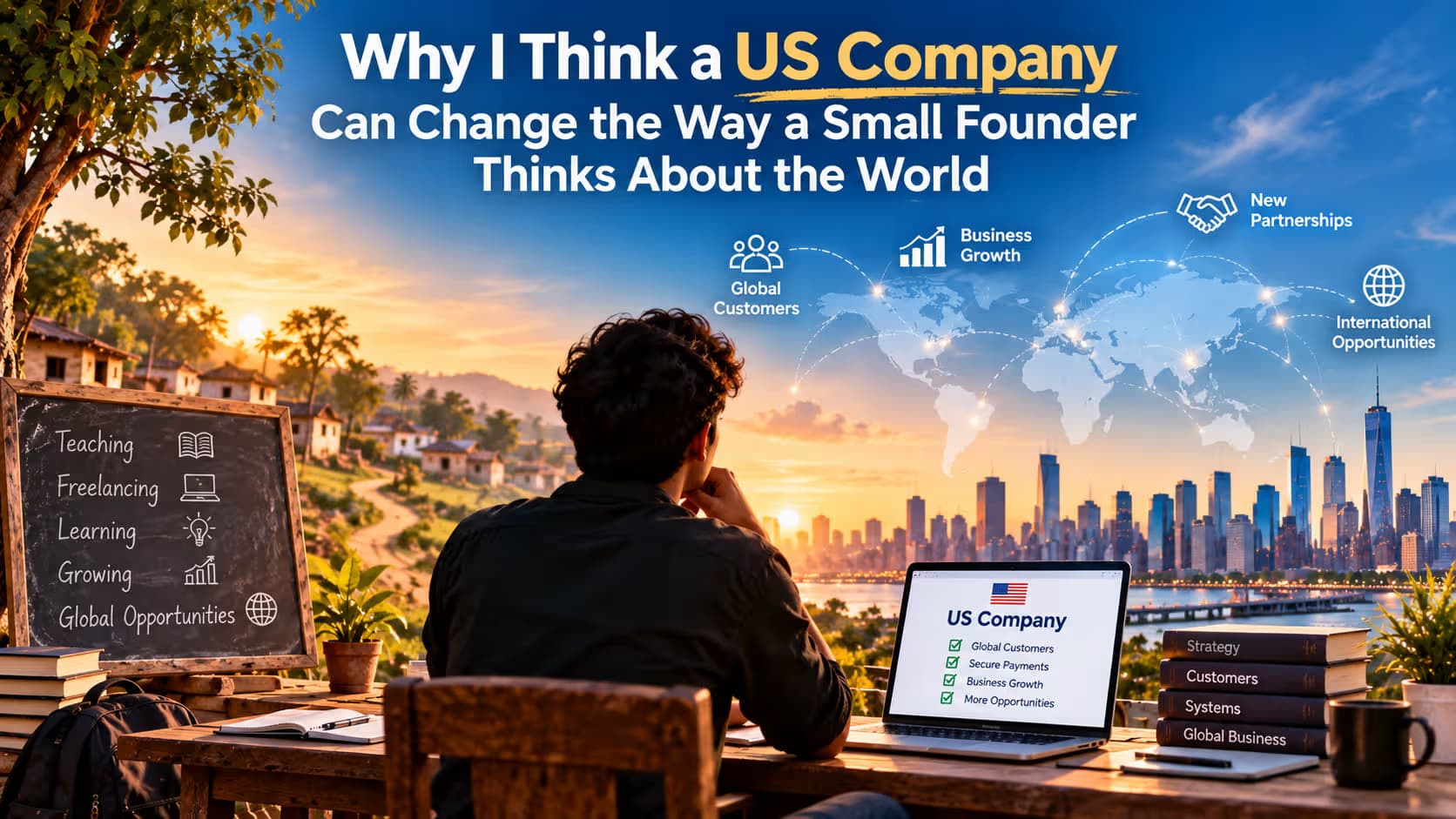
I didn't grow up thinking that I would one day help entrepreneurs build companies in the United States. I grew up in a small village in Bihar, India, where my early experience with work was much more local. I taught students, tried different ways of earning, and eventually discovered freelancing and the possibility of working with people outside my immediate surroundings.
Then something changed. I realized that a person sitting in a small town or village could build something for a customer thousands of kilometres away. That realization stayed with me. Over time, as I started working with more international clients and eventually built FormLLC, I began noticing something interesting: sometimes the infrastructure around a business can change the way the founder thinks about the business itself.
That is why I think a US company can sometimes be much more than a legal registration for a small international founder.
How a US Company Can Change a Founder's Perspective
When you're building from a smaller city, village, or developing market, it is easy to unconsciously define your business around your immediate surroundings. You think about the customers you can reach, the payment methods available to you, the companies around you, the people you know, and the opportunities you can see.
I experienced some of that myself. My first international freelance payment was only around $20, but it changed something in my thinking. I suddenly had proof that someone on the other side of the world could become my customer. The internet had made geography less important than I previously believed.
A US company can create a similar psychological shift for some founders. Instead of thinking, "I'm a person from India trying to sell something internationally," the founder can start thinking, "I'm building a business that serves an international market."
That may sound like a small difference in language, but I don't think it is. The way you describe your business often influences the way you think about building it. Once the market in your mind becomes larger, the questions you ask about your business can become larger too.
From Local Opportunities to Global Possibilities
The shift doesn't necessarily happen because the company itself is magical or because a particular country automatically creates success. It happens because the founder may begin looking at their business through a different lens.
A freelancer who previously thought about finding the next local customer may start thinking about building a service for customers in multiple countries. A software founder may start thinking about international users rather than only customers in their home market. An agency owner may begin considering how to build systems that can support clients across different markets.
The company structure is only one part of that process, but for some founders it can become a visible representation of a larger ambition.
A US Company Doesn't Magically Make a Business Global
I want to make one distinction very clear. I don't believe forming a US company automatically makes someone international.
A US LLC is a legal structure created under state law, and the federal tax treatment of an LLC depends on factors such as its ownership and elections. Foreign ownership can also involve specific tax and reporting considerations.
Having a US company doesn't automatically give you customers. It doesn't guarantee a bank account. It doesn't guarantee payment-processor approval. It doesn't remove your tax obligations in your home country. And it certainly doesn't replace a good product.
What it can do, when appropriate for the founder and business, is provide a piece of business infrastructure that may make certain international operations easier to structure.
That's where I think the real value begins.
Company Formation Is Only One Piece of the Business
A founder can register a company and still have many important questions to answer. How will customers pay? Which banking options are available? What compliance requirements apply? What records need to be maintained? What tax obligations need to be considered? How will the company actually operate?
For entrepreneurs in India, understanding the wider process can be especially important. Our guide on forming a US LLC from India covers the company-formation side of that journey, while the broader business setup may require additional planning.
The important point is that company formation should support the business rather than become a substitute for building the business.
The Interesting Part Happens After Incorporation
One thing I've learned from working with international founders is that company registration is rarely the end goal. It is usually a step toward something else.
The founder wants to sell software, run an ecommerce business, work with US customers, build an agency, accept international payments, create a recognizable business, raise capital, build a team, or simply make their business feel more established.
The company is infrastructure underneath those goals.
And this is one reason I became increasingly interested in what happens after incorporation. A founder might spend a relatively small amount of money registering a company and then discover that the questions have only started.
How does the business handle banking? What tax and compliance obligations apply? Does the founder need an EIN? Which state requirements matter? What records need to be maintained? How does the company present itself professionally?
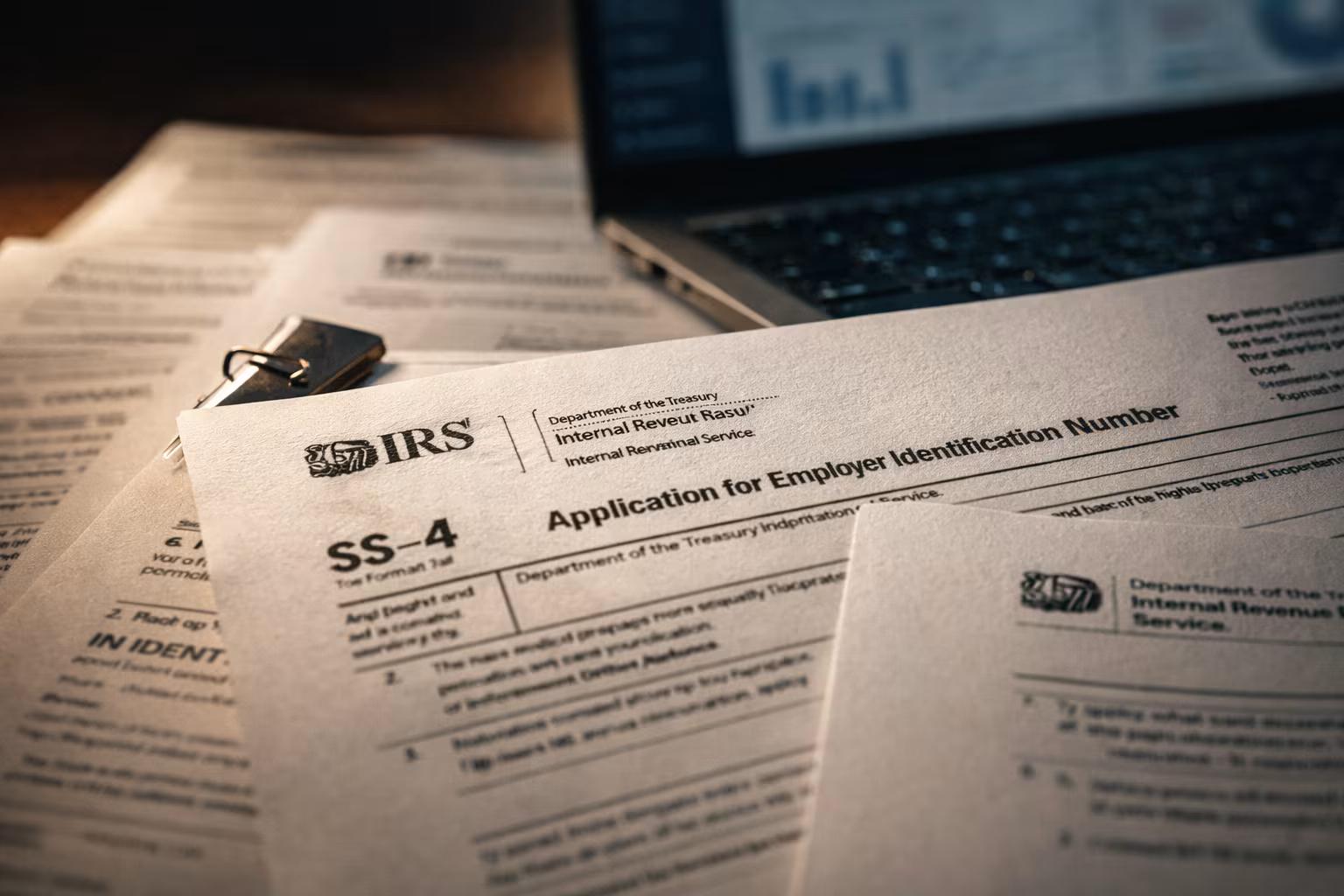
The IRS itself makes clear that an EIN and other federal requirements depend on the circumstances of the business, while foreign-owned structures can have additional reporting considerations. That is why I don't think the right question is simply, "How cheaply can I form a US company?"
A better question is, "What infrastructure does my business actually need to operate properly?"
Thinking Beyond the Registration Certificate
This is also why I believe founders should think about the business they want to build before becoming overly focused on the formation process.
If banking will be important to the business, understand the banking requirements. If international payments matter, understand how those payments will work. If the company will have employees or contractors, understand the operational responsibilities involved.
For founders who need business banking information, our guide on US bank accounts for non-residents covers another important part of the process.
The objective isn't simply to own a US company. The objective is to build a functioning business.
I've Seen the Mindset Change in Founders
This is probably the part that interests me most.
Someone comes to you initially thinking about registration. Then, once the company exists, their questions become bigger. They start thinking about customers instead of just paperwork. They think about branding. They think about payment infrastructure. They think about hiring. They think about compliance. They think about building systems.
They start asking, "How do I build this properly?"
That change is important because entrepreneurship is partly about expanding the size of the problem you're willing to solve.
When I was teaching students, my world was relatively small. When I started freelancing, the world of potential customers became larger. When I started working with international entrepreneurs, my understanding of business became larger again.
Today, when I look at the founders we work with, I see the same process happening. The company structure is sometimes the first visible sign that the founder is beginning to think beyond their immediate market.
Bigger Questions Lead to Bigger Business Thinking
The questions a founder asks can reveal how their thinking is changing.
At the beginning, the question might be, "How do I register an LLC?" Later, it can become, "How do I build a business that can serve customers in different countries?"
That doesn't mean every founder needs a US company. It means that the business structure can become part of a broader conversation about customers, operations, payments, compliance, and growth.
For me, that broader conversation is much more interesting than incorporation by itself.
A Small Founder Doesn't Mean Small Ambition
This is something I wish more people understood.
A founder doesn't need to come from Silicon Valley, Mumbai, Dubai, London, or another major business centre to build something internationally relevant. You can start from a small town. You can start from a bedroom. You can start with one client. You can start with a laptop and a skill that someone somewhere else needs.
I know this because that is much closer to my own journey than the traditional startup story.
My first international opportunity wasn't backed by a large investment round. It was a small freelance project. The first payment was around $20. But the opportunity changed the way I looked at the world.
That's why I don't see international company formation only as a legal-services category. I see it as one piece of a much larger shift.
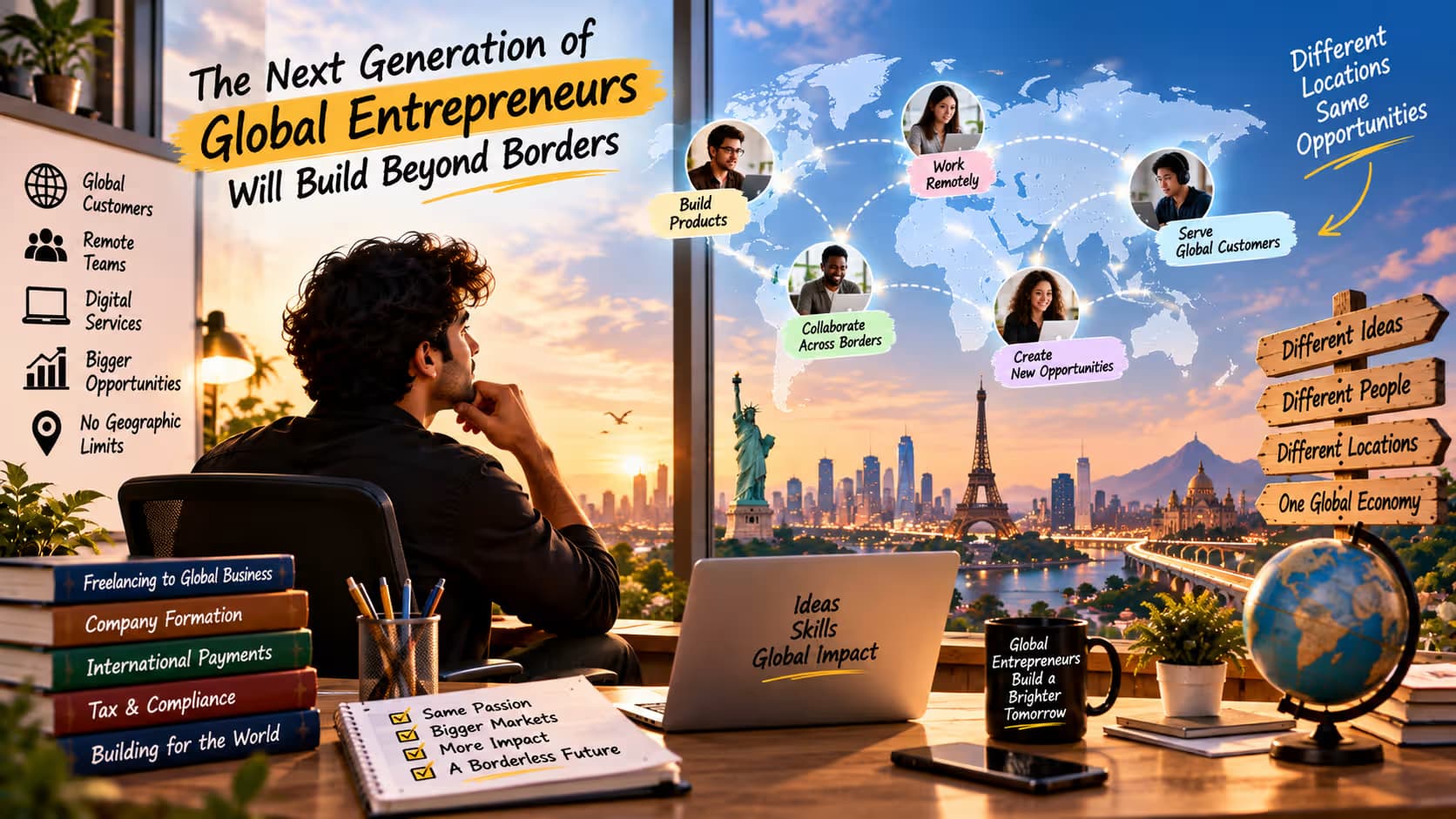
People who once had to move to where the opportunity was can increasingly build businesses that reach the opportunity from where they are.
Building From Where You Are
The internet has made it possible for a person to communicate with customers, deliver services, sell products, collaborate with teams, and build relationships across borders without necessarily relocating.
That doesn't remove the challenges of international business. It doesn't eliminate competition or guarantee success. But it can change what is possible for someone who previously believed that their location determined the size of their opportunity.
That idea is closely connected to my own entrepreneurship journey. My first international payment didn't make me a global entrepreneur overnight. It simply showed me that the boundaries I had assumed were fixed were not necessarily as fixed as I thought.
Infrastructure Should Follow the Business, Not the Other Way Around
There is also a lesson here that I think is important.
Don't form a US company simply because somebody on YouTube told you that every entrepreneur needs one. Don't choose Wyoming, Delaware, or another state simply because someone said it is "the best." Don't assume that having an American company means you have solved banking, taxation, payments, or compliance.
Start with your business. Understand your customers. Understand where you operate. Understand your responsibilities. Then choose the structure that makes sense for your actual situation.
That's the approach I believe in today because I've seen what happens when founders focus too much on the registration and not enough on the business they are trying to build.
Build the Business First
The right structure depends on the actual circumstances of the business. A founder selling software may have different needs from a freelancer, ecommerce operator, consultant, or agency.
That is why I think company formation should be treated as part of a larger business-building process.
If you're considering forming a US company remotely, you can also read Can I Start a US Company Without Visiting the US? to explore another part of the process.
The goal isn't to follow a trend. The goal is to create a structure that supports what you're actually trying to accomplish.
What I Really Want FormLLC to Help Change
When I started working with international founders, I wasn't thinking about building some grand global infrastructure company. I was solving problems one at a time.
But after working with thousands of entrepreneurs, I've started seeing the bigger picture.
There are talented people everywhere. The problem is that access to business infrastructure is not distributed equally. Someone in one country can have an easier path to payments, banking, incorporation, professional services, and international customers than someone with exactly the same talent somewhere else.
I don't think that's a permanent condition.
Technology is already changing it. The internet changed who could find customers. Remote work changed where teams could operate. Online payments changed how money could move. And accessible company infrastructure can change how founders think about the markets they can serve.
That's the opportunity I see.
Not "everyone needs a US company."
Rather, more people should have the ability to build for a global market if their business genuinely supports it.
Making International Business More Accessible
This is one of the ideas behind FormLLC.
The goal isn't simply to help someone obtain a company registration. It is to make the broader process of understanding international business infrastructure easier to navigate.
For a founder, that can mean learning about company formation, banking, compliance, payments, and the practical responsibilities that come with operating internationally.
The more clearly founders understand those pieces, the more confidently they can decide what actually fits their business.
The Biggest Change May Happen Inside the Founder
When I look back at that young person teaching students in Bihar, I don't think the biggest change was that I eventually learned how to build companies.
The bigger change was learning to think beyond the environment I started in.
That is what international business taught me.
You don't have to abandon where you come from. You don't have to pretend to be someone from Silicon Valley. You don't need a fancy office to have a global ambition.
You can build from wherever you are.
But sometimes, the right infrastructure helps you see that possibility more clearly.
For some entrepreneurs, a US company can be part of that infrastructure. For others, it may not be the right answer at all. The important thing is understanding why you're building it.
The Real Transformation Is in the Way You Think
Because the real transformation isn't the certificate you receive after incorporation.
It's the moment you stop thinking of yourself as a small founder serving a small market and start thinking about the size of the problem you can actually solve.
That is the change I care about.
And in many ways, it goes all the way back to that first $20 payment.
A small transaction showed me that someone thousands of kilometres away could become a customer. That experience changed how I thought about geography, opportunity, and what I could build.
Years later, I see a similar possibility for other founders.
They may start with a small idea, one customer, one skill, or one business problem. The important thing is not where they start. It is whether they can build the infrastructure, systems, and mindset needed to serve the opportunity they see.
Related Guides for International Founders
If you're exploring whether a US company makes sense for your business, you can start with our guide on forming a US LLC from India. If you've already formed a company and are researching business banking, our guide to US bank accounts for non-residents covers another important part of the journey.
For founders who want to understand whether the process can be completed remotely, read Can I Start a US Company Without Visiting the US?. These resources can help you look beyond incorporation itself and think about the wider infrastructure your international business may need.
This article is for general informational purposes only and does not constitute legal, tax, or financial advice. Tousif Akram and FormLLC are not a law firm or CPA firm. Consult a licensed professional for advice specific to your situation.
Ready to Form Your US LLC?
Free 30-minute consultation with no obligation and no sales pressure.
Book Free Call