Building a Business Without a Business Background: What I Learned

Tousif Akram
IRS CAA | Founder, FormLLC
Building a Business Without a Business Background: What I Learned
I didn't begin my entrepreneurial journey with a detailed business plan, a management team, or years of experience running a company. My understanding of business developed gradually through the work I was doing, the people I served, and the problems I had to solve. Looking back, I realise that building a business without a business background taught me lessons I might not have understood if I had started with theory alone.
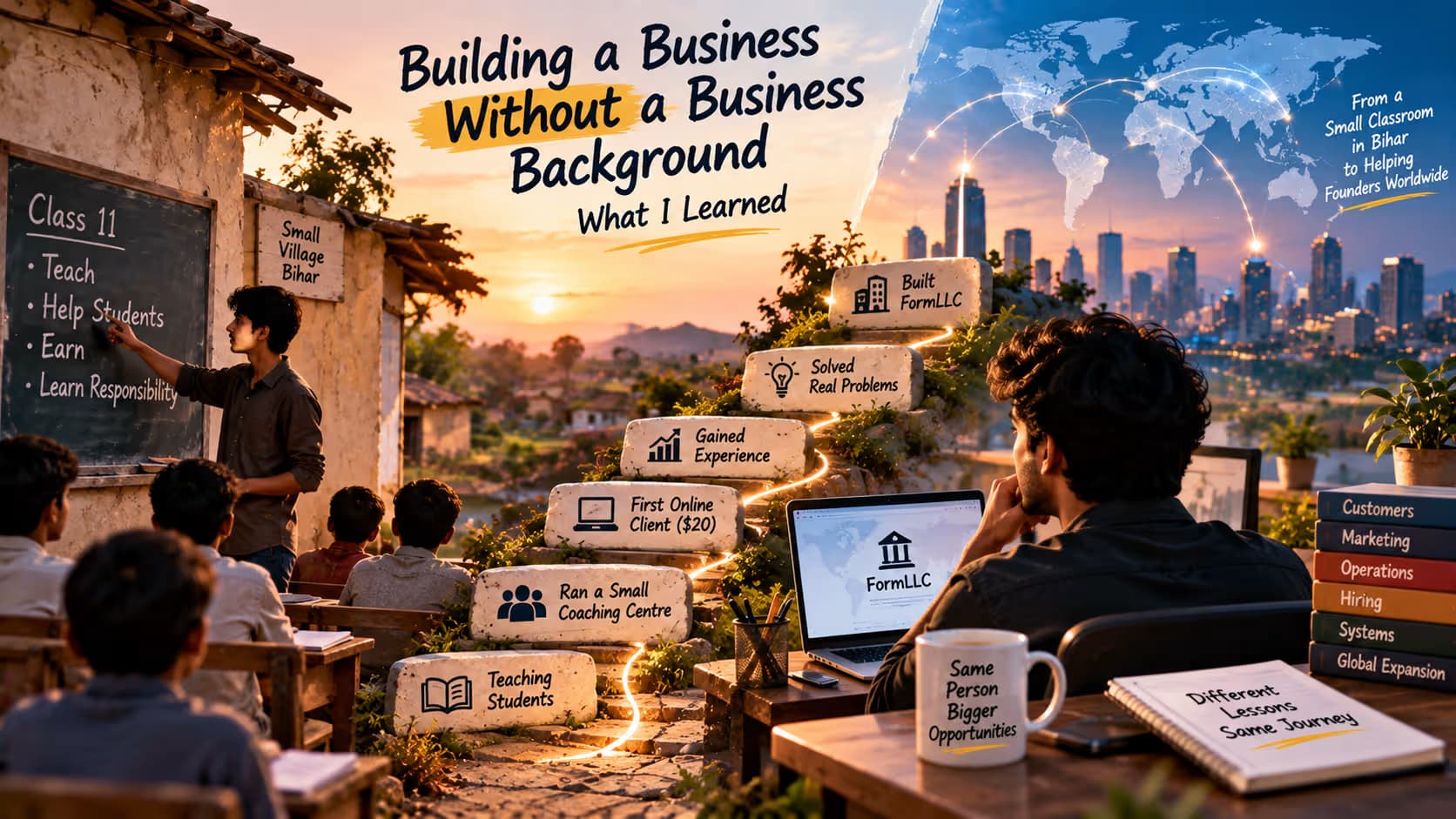
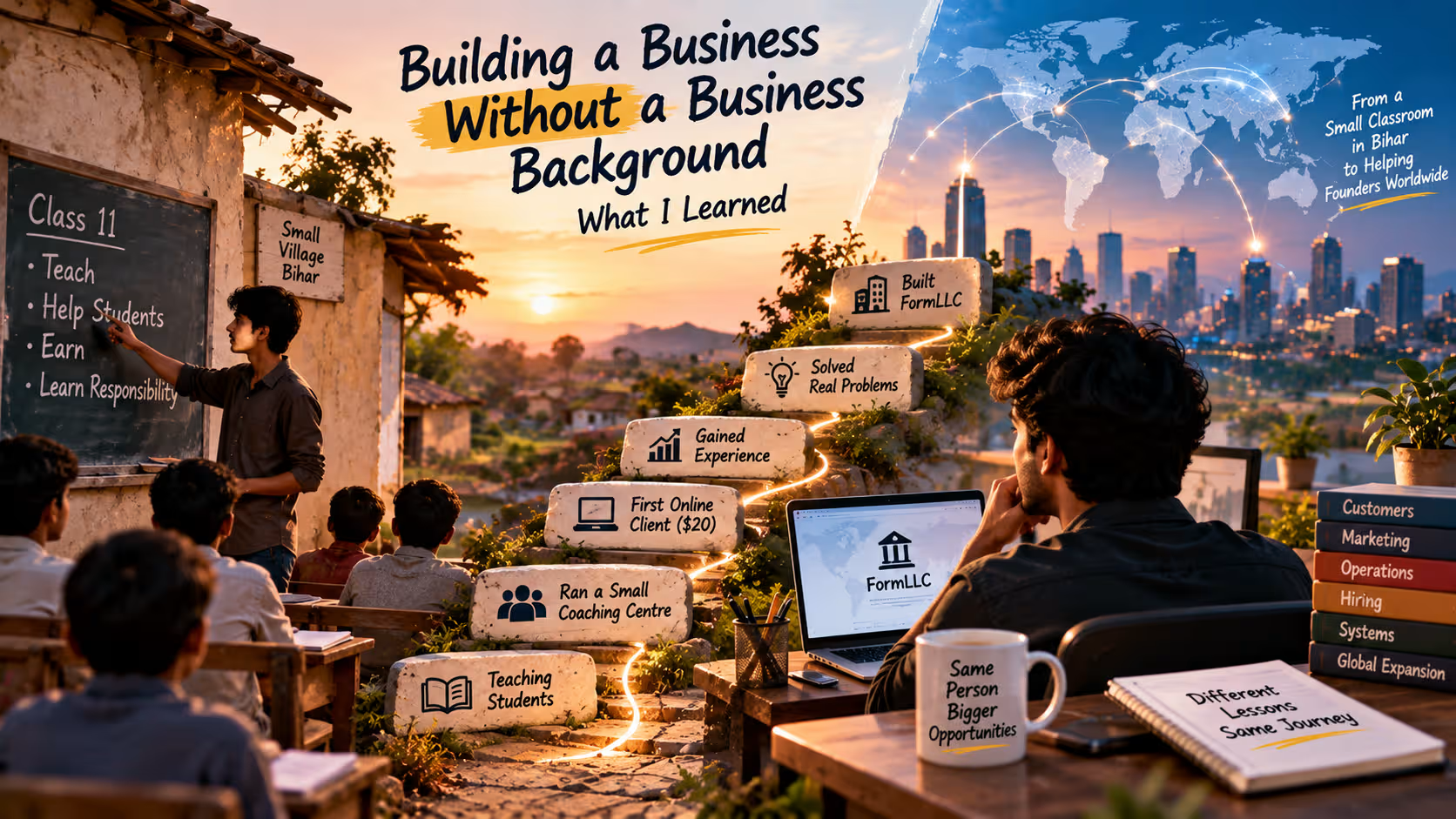
I grew up in a small village in Bihar. I started teaching students while I was in Class 11 and eventually ran a small coaching centre. At that stage, I wasn't thinking about building a company. I was learning how to take responsibility, serve people, manage expenses, and earn through my own efforts.
Those early experiences became an unexpected foundation for my entrepreneurial journey. Later, when I started working with international clients online and eventually built FormLLC, I realised that many important business lessons don't arrive in a classroom. You learn them when real people depend on your work.
My First Business Lessons Came From Teaching
Teaching gave me an early understanding of something that remains important in business: people don't all need the same kind of help. Every student has a different way of understanding something. You have to listen, explain clearly, recognise where someone is struggling, and adjust your approach. I didn't think of these as business skills at the time, but they helped me understand how to communicate with people and respond to their needs.
Learning Responsibility Through a Small Coaching Centre
Running a small coaching centre also introduced me to responsibility. When you manage something of your own, even on a small scale, you begin to think about expenses, commitments, and the people who rely on you. You cannot simply focus on the work you enjoy; you also have to handle the practical responsibilities that keep everything running.
Looking back, I can see that my entrepreneurial journey didn't start when I built an online business. It started much earlier, with small responsibilities that taught me how to create value. Those experiences gave me a practical foundation for understanding customers and managing a business.
The Internet Introduced Me to a Different Kind of Business
My perspective changed when I started working with clients online. My first payment through Fiverr was around $20, but the amount wasn't the most important part. It showed me that someone in another part of the world could pay for work I delivered remotely.
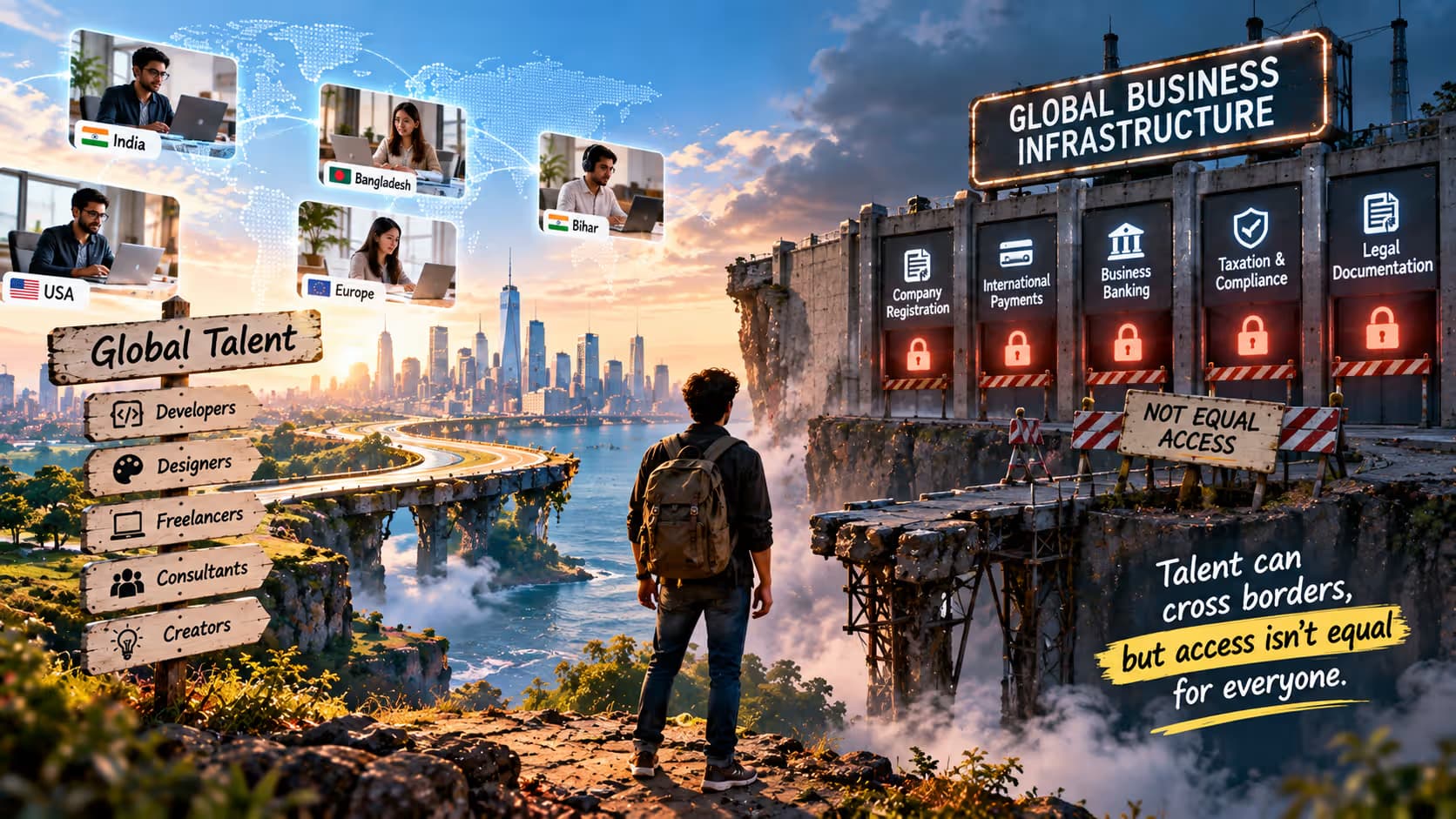
That experience made the world feel much bigger. I began to understand that I didn't have to limit my opportunities to the people or businesses around me. The internet allowed me to work with people across borders and introduced me to a different way of building a business.
As I worked with more clients, I learned about communication, expectations, deadlines, and the importance of delivering what I promised. These were practical lessons, and each project gave me a better understanding of how an online business actually operates.
I have shared more about that turning point in The $20 Payment That Changed How I Thought About Global Business.
I Learned Business by Solving Problems, Not by Knowing Everything
When I started building a business, I quickly realised that being good at delivering a service was only one part of the job. You also have to understand how customers find you, how to explain your offering, how to price it, how to manage expenses, and how to organise the work behind the scenes. As the business grows, hiring, delegation, processes, and decision-making become important too.
I didn't know all of this from the beginning. I learned through experience, including mistakes. There were times when I spent too much on advertising before properly fixing what happened after a lead arrived. There were also times when we built tools that customers didn't really need.
Those experiences taught me to question my assumptions. Just because an idea sounds useful to me doesn't mean customers will value it. I need to understand the actual problem before deciding what to build or invest in. This is also why I believe understanding what customers actually want matters more than simply creating something that looks impressive.
Understanding the Work Behind the Service
As the business developed, I began to appreciate that delivering the main service is only one part of the customer experience. The processes, communication, follow-up, and guidance around that service also matter. I had to learn how to build systems that could support customers consistently rather than depending on individual effort every time.
That lesson became particularly important as FormLLC grew. I realised that forming an LLC is only the easy part; helping customers understand what comes next requires preparation, knowledge, and clear communication.
Customer Conversations Became My Business Education
Working with customers taught me things I could not have learned by focusing only on the product. When we started helping entrepreneurs establish US companies through FormLLC, I saw that customers often had questions beyond registration. They wanted to understand EIN applications, banking, payment gateways, and the responsibilities that came after formation.
Listening to those questions helped me understand the broader problem founders were trying to solve. It also showed me where our service and communication needed to improve. Over time, I learned to pay attention to repeated questions, common misunderstandings, and the points where customers needed more guidance. These conversations helped shape how I thought about the business.
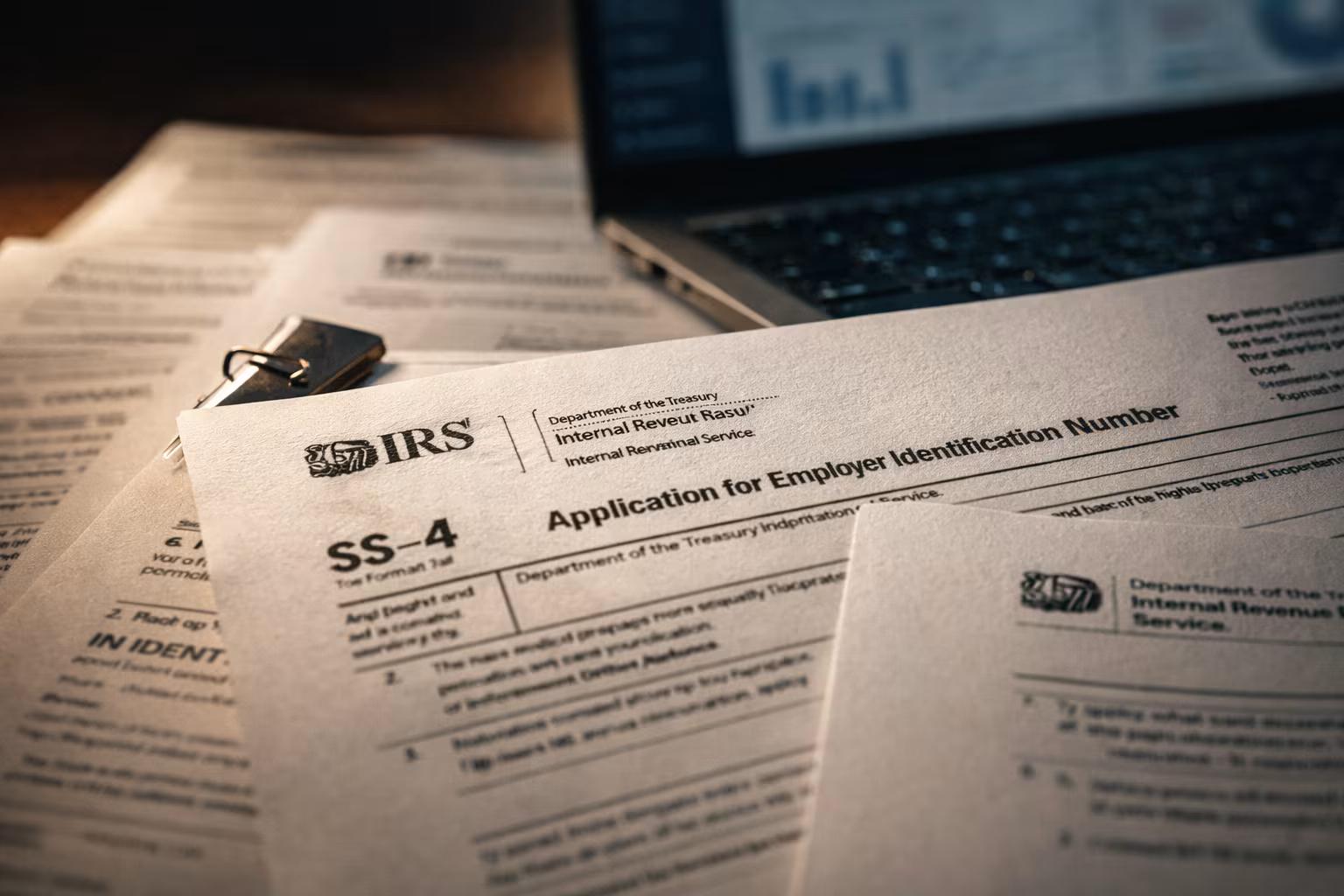
For example, helping international founders understand the EIN process made me realise how important it is to explain each step clearly. Many non-US founders have questions about applying without a Social Security Number, which is why we created resources such as our guide to getting an EIN without an SSN as a non-resident.
Learning From Real Customer Problems
Customer questions also showed me that completing a transaction doesn't necessarily mean someone understands their responsibilities. For foreign-owned US single-member LLCs, for example, understanding ongoing reporting requirements can be just as important as completing the initial formation process. That's one reason we explain topics such as Form 5472 for foreign-owned LLCs.
Research into entrepreneurship education also recognises the value of practical experience. A systematic review published in *Teaching and Teacher Education* examined experiential learning and its role in developing entrepreneurial skills and competencies. That reflects something I experienced personally: applying knowledge to real problems can teach lessons that are difficult to absorb through theory alone.
Experience Does Not Replace Learning
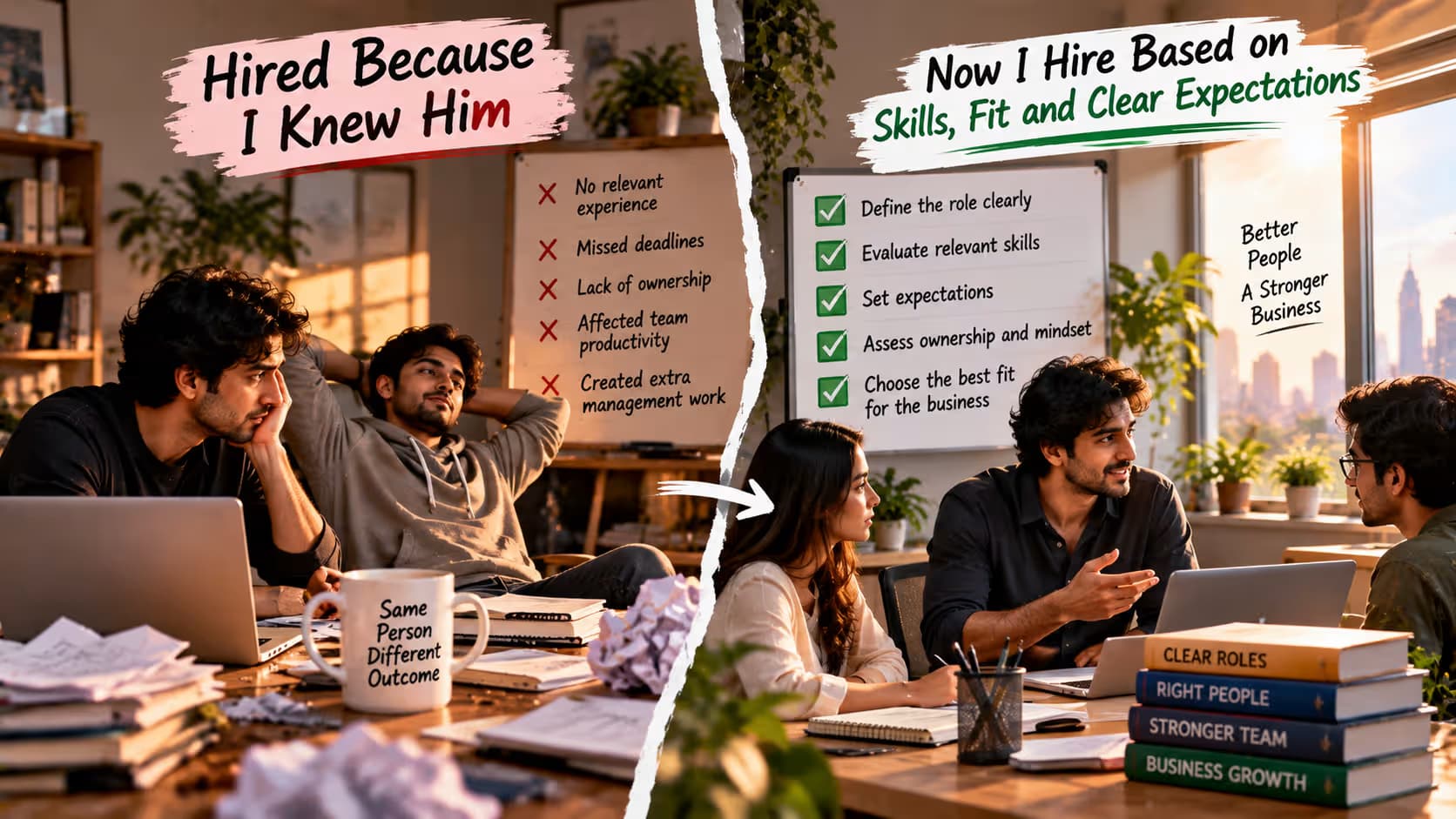
One thing I don't want people to misunderstand is that building a business without a traditional business background doesn't mean you should avoid learning the fundamentals. I still need to understand numbers, marketing, operations, customer behaviour, and the responsibilities that come with running a company. Experience helps me recognise which questions to ask, but I still have to find the right answers.
For me, building a business without a business background has been a continuous learning process. Every new responsibility has pushed me to understand something different, whether it is managing finances, improving customer communication, or making better operational decisions.
In fact, one of the biggest changes in my thinking has been becoming more comfortable admitting what I don't know. Earlier, it was easy to focus on getting things done. As the business grew, I understood the importance of studying a problem, listening to people with relevant expertise, and making decisions with better information.
Learning to Ask for the Right Guidance
A founder doesn't need to know everything, but a founder does need to take learning seriously. Sometimes that means researching a topic independently. At other times, it means asking someone with relevant experience or improving a process after recognising that the existing approach isn't working.
I have learned that experience and structured learning should support each other. Experience helps you understand the practical challenges, while continued learning helps you make more informed decisions when those challenges become more complex.
What Building a Business Without a Business Background Taught Me
When I look back at my journey from teaching in Bihar to building FormLLC, I don't see a straight path. I see a series of small experiences that gradually prepared me for bigger responsibilities. Teaching helped me communicate. Working online helped me understand global opportunities. Serving customers taught me to listen. Building a company taught me about systems, people, money, and the consequences of decisions.
My biggest lesson is that you don't have to wait until you feel like a complete business expert before you begin. Start with something you can do, understand the people you serve, and stay willing to learn as the responsibility grows. You won't get every decision right. I certainly didn't. But if you pay attention to what each experience teaches you, your understanding can grow alongside your business.
I didn't start with a traditional business background. I built my understanding of business by doing the work, learning from people, and taking responsibility for what I was building.
This article is for general informational purposes only and does not constitute legal, tax, or financial advice. Tousif Akram and FormLLC are not a law firm or CPA firm. Consult a licensed professional for advice specific to your situation.
Ready to Form Your US LLC?
Free 30-minute consultation with no obligation and no sales pressure.
Book Free Call