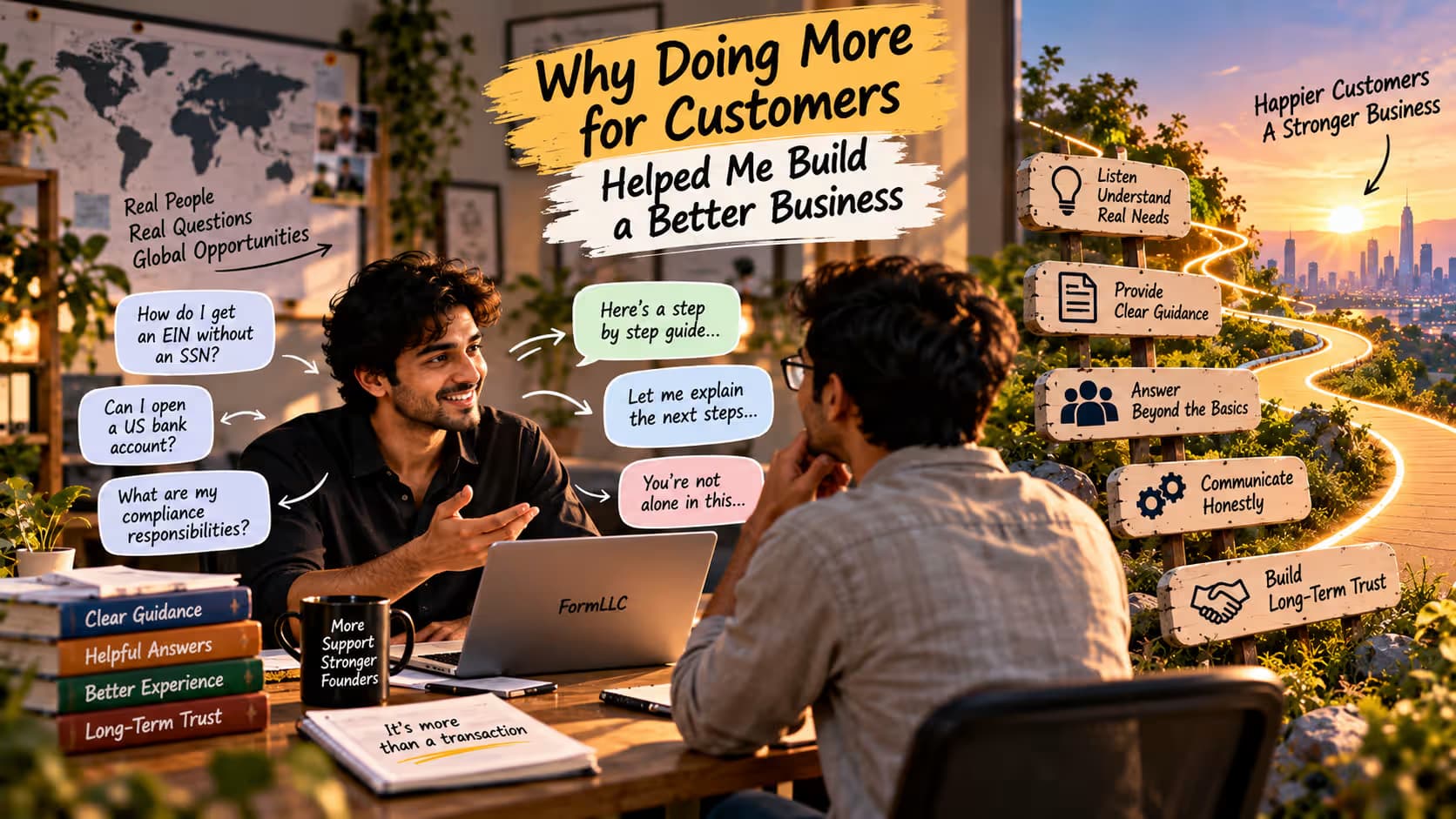
Doing More for Customers Without Losing Business Boundaries

Tousif Akram
IRS CAA | Founder, FormLLC
Why Doing More for Customers Helped Me Build a Better Business
When I started working with clients, I never wanted my responsibility to end at simply completing the task they had paid for. I enjoyed understanding what people needed, helping them solve problems, and making sure they had a good experience. Doing more for customers felt natural to me. If I could make someone's experience better with a little additional effort, I usually wanted to do it.
That mindset started during my early days of working with people and continued when I began serving international clients. Over time, it became part of how I approached business. But building FormLLC taught me something important: going the extra mile can be one of the most valuable things a business does, provided it understands where that extra mile should end.
I still believe customers deserve attention beyond the basic service they purchase. However, I've also learned that good customer service needs more than personal effort. It needs clear communication, realistic expectations, and processes that allow a business to deliver a consistently positive experience.
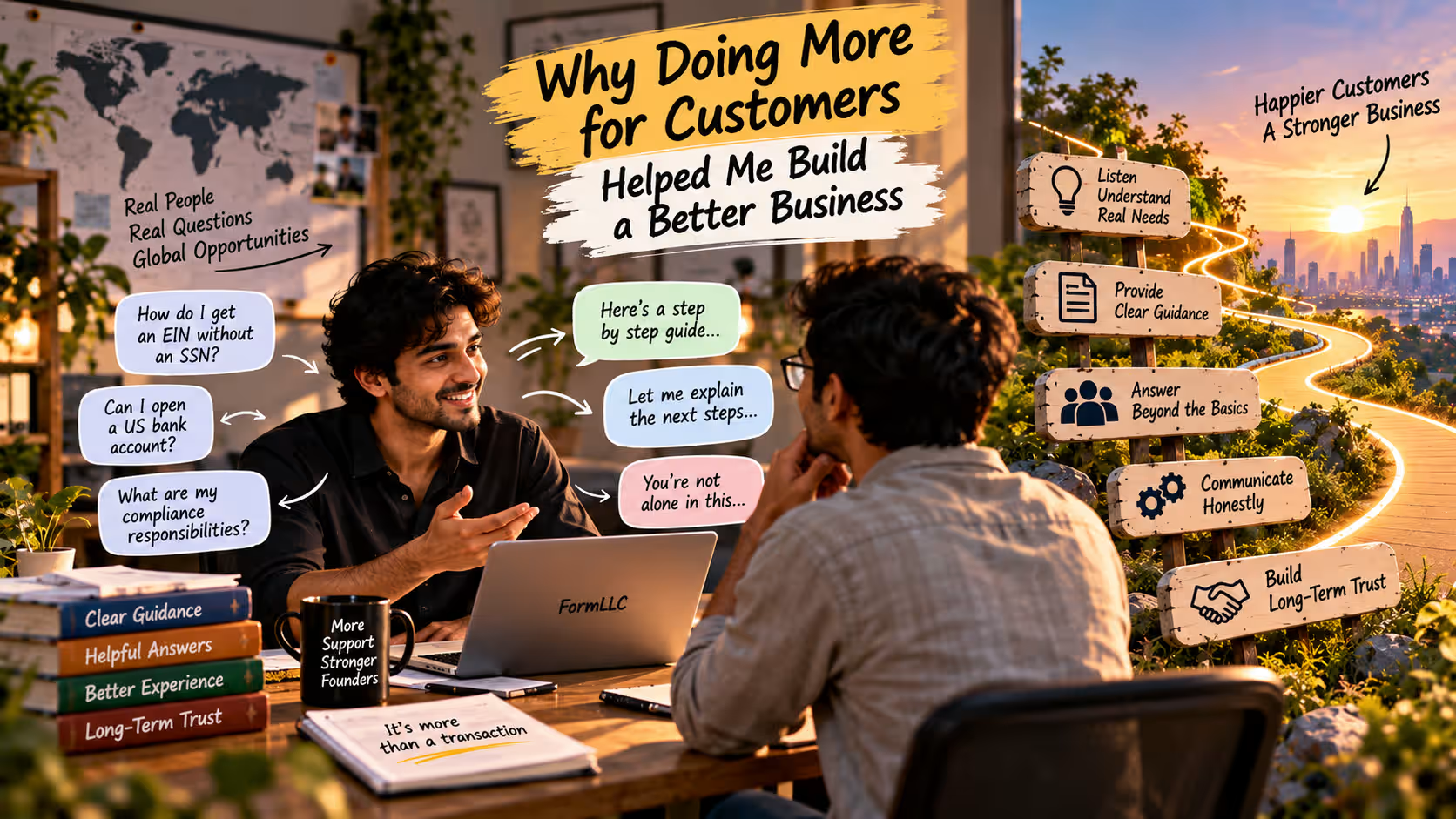
Why I Believe in Doing More for Customers
I have always felt that customers remember how you make them feel, not just the service they purchased. A task can be completed exactly as promised, but the experience around it can make the relationship very different.
Sometimes, a customer needs a little more explanation. Sometimes, they have a question that wasn't part of the original conversation. Sometimes, they are confused about what to do next and simply need someone to point them in the right direction. Taking a moment to understand the situation can make the service feel much more valuable.
I don't think every interaction should be treated like a transaction with a strict start and finish. If you understand the customer's actual problem, you can often help in ways that improve their overall experience.
This is especially relevant in the kind of business we operate. Someone approaching FormLLC to establish a US company may not fully understand everything that comes after registration. They may have questions about obtaining an EIN without an SSN, opening a business bank account, using payment platforms, or understanding ongoing compliance responsibilities. Simply completing the formation process doesn't mean every question in their mind has disappeared.
I believe taking the time to explain the next steps can make a real difference. Customers should feel that they understand what happens next rather than being left to figure everything out on their own. For international founders, this can also mean explaining ongoing responsibilities, such as the Form 5472 filing requirements for foreign-owned LLCs, when relevant to their situation.
Understanding the Customer's Actual Needs
Going beyond expectations starts with listening. Before offering additional help, I believe it's important to understand what the customer is trying to achieve. Sometimes the immediate question is only one part of a larger concern.
For example, an international founder may be focused on registering a US LLC but may also need to understand the formation process, banking options, and responsibilities that follow. Explaining the relevant next steps can help the customer make more informed decisions and avoid unnecessary confusion.
This is one reason I believe businesses should look beyond the immediate transaction. As I explain in why customers want more than just a US LLC, people often come to a business with a larger goal than the specific service they initially ask for. Understanding that goal helps us provide more useful guidance.
The Small Extra Efforts Customers Remember
Going the extra mile doesn't always mean doing a large amount of additional work. Often, it is about paying attention to details that other businesses might overlook. It can mean explaining something instead of sending a generic response, checking whether a customer understands an important step, or communicating honestly when something is taking longer than expected rather than leaving someone wondering what is happening.
During my earlier freelancing days, I enjoyed putting additional effort into client projects. I wanted people to feel that I cared about the outcome, not just the payment. That approach helped me understand the importance of communication, reliability, and the small details that shape a customer's experience.
As I moved from freelancing to building a company, I carried that thinking with me. I wanted customers dealing with FormLLC to feel that there were real people behind the service, people who understood that starting a business in another country can be confusing.
Why Clear Communication Matters
Customers don't always expect everything to happen instantly, but they do need to know what is happening. A clear update, an honest explanation, or a simple answer to an important question can prevent unnecessary frustration.
I have found that these small efforts help create a more comfortable working relationship. They show customers that their concerns are being taken seriously, even when the answer isn't exactly what they hoped to hear.
How Extra Effort Builds Trust Over Time
I don't believe customer trust comes from one impressive interaction. It develops through repeated experiences. When you communicate clearly, deliver what you promise, and make a genuine effort to help when something is unclear, customers gradually become more comfortable working with you. They know what to expect, and that consistency matters.
It can also influence whether they return, recommend your business, or share their experience with someone else. I have seen how appreciation, positive reviews, and referrals can become part of a business's growth.
But I don't think the purpose of helping a customer should be to get a review or referral. Those things are outcomes, not the reason to provide good service. The reason should be much simpler: someone trusted your business with a problem, and you should take that responsibility seriously.
Trust Comes From Consistency, Not Just Promises
Making an impressive promise is easy. Delivering on that promise consistently is much harder. Customers build confidence when the experience they receive matches what the business communicated from the beginning.
This is why I believe reliability matters just as much as friendliness. A business should be willing to help, but it should also be honest about what it can deliver and when customers can expect it.
Working with international customers has reinforced this lesson for me. As I shared in what helping 5,000 entrepreneurs taught me about starting a global business, trust becomes especially important when customers are dealing with a business across borders. Clear communication and realistic expectations can make a significant difference.
When Doing More Starts Hurting the Business
There is another side to this that I learned as the number of projects and customer interactions increased. When you personally handle most things, it can feel easy to make an exception whenever someone asks for help. But once a business grows and a team becomes involved, every additional commitment has an impact on time, resources, and priorities.
If you keep adding work without considering its impact, you may eventually struggle to deliver the same quality consistently. Your team can become overloaded, important tasks can get delayed, and the business may become dependent on people constantly doing more than they realistically can.
I realised that a business cannot build its entire customer experience around unlimited personal effort. It needs processes that make good service repeatable. That doesn't mean becoming less helpful. It means understanding which extra efforts genuinely improve the customer experience and which ones create expectations the business cannot maintain.
The Difference Between Being Helpful and Having No Boundaries
Being helpful doesn't mean agreeing to every request. Some questions can be answered with a simple explanation, while others may require additional work, a separate service, or support from a specialist.
I believe customers deserve an honest response in each situation. If something falls outside the original service, it is better to explain that clearly than to make an informal commitment that the business may struggle to fulfil.
Clear boundaries also help teams understand their responsibilities. When everyone knows what is included, what requires additional support, and how requests should be handled, the business can maintain a more consistent customer experience.
Making Extra Effort Part of a Better Customer Experience
Today, I think about customer service in terms of both personal attention and reliable systems. I still want customers to feel comfortable asking questions and explaining their concerns. But I also want the team to have clear processes so that customers receive consistent support.
For example, when a customer has a question about something outside the original service, we should try to understand what they need before responding. Sometimes a clear explanation is enough. Sometimes we can guide them towards the next step. And sometimes the request requires a separate service or specialist support.
I don't believe that every request needs to become an additional commitment. What matters is giving the customer an honest and useful response.
This is also why I think businesses should be careful about the promises they make. If you promise more than your team can deliver, you may create a good first impression but a disappointing experience later. I'd rather set realistic expectations and deliver consistently than make attractive promises that are difficult to keep.
When customers need more context about the process, directing them to a relevant resource, such as our guide to forming a US LLC from India, can also help them understand the next steps without creating unnecessary confusion.
Build Processes That Support Good Service
As a business grows, customer service should not depend entirely on one person's memory, availability, or willingness to work extra hours. Important information, common questions, and customer support responsibilities should be organised into clear processes.
This makes it easier for different team members to provide accurate and consistent help. It also allows the founder to focus on improving the business rather than personally handling every small issue.
For me, the goal is not to remove the human side of customer service. It is to build a system that allows that human attention to continue as the business grows.
What I Would Tell Someone Building a Service Business
If you are starting a service business, I would encourage you to care about the details of your customer's experience. Don't focus only on completing the checklist. Understand why the customer came to you and what they are trying to achieve.
But build a business that can sustain that level of care. Be clear about what is included, communicate when something changes, and give your team the structure they need to deliver consistently. You don't have to charge for every small gesture, and you don't have to turn every interaction into a formal transaction. Sometimes doing something extra simply because it is the right thing to do is worth it.
The important thing is to make that choice consciously rather than allowing it to become an unlimited obligation.
I still believe that doing more than expected is a valuable way to build a business. It has been part of how I approach customers since my early working days, and I don't want to lose that mindset as FormLLC grows. But I have also learned that the goal isn't to do everything for everyone. It is to make a genuine difference, keep your promises, and create an experience that your business can deliver again and again.
Go the extra mile because you care about the customer, not because your business has no boundaries.
This article is for general informational purposes only and does not constitute legal, tax, or financial advice. Tousif Akram and FormLLC are not a law firm or CPA firm. Consult a licensed professional for advice specific to your situation.
Ready to Form Your US LLC?
Free 30-minute consultation with no obligation and no sales pressure.
Book Free Call