Foreign-Owned Single-Member LLC: Tax Rules & IRS Filing Guide

Tousif Akram
IRS CAA | Founder, FormLLC
Foreign-Owned Single-Member LLC: The Rules That Apply Only to You
Many international founders follow advice written for US residents. This can create confusion for business owners who live abroad. Although the LLC structure may look the same, the owner's tax residency can change which rules apply.
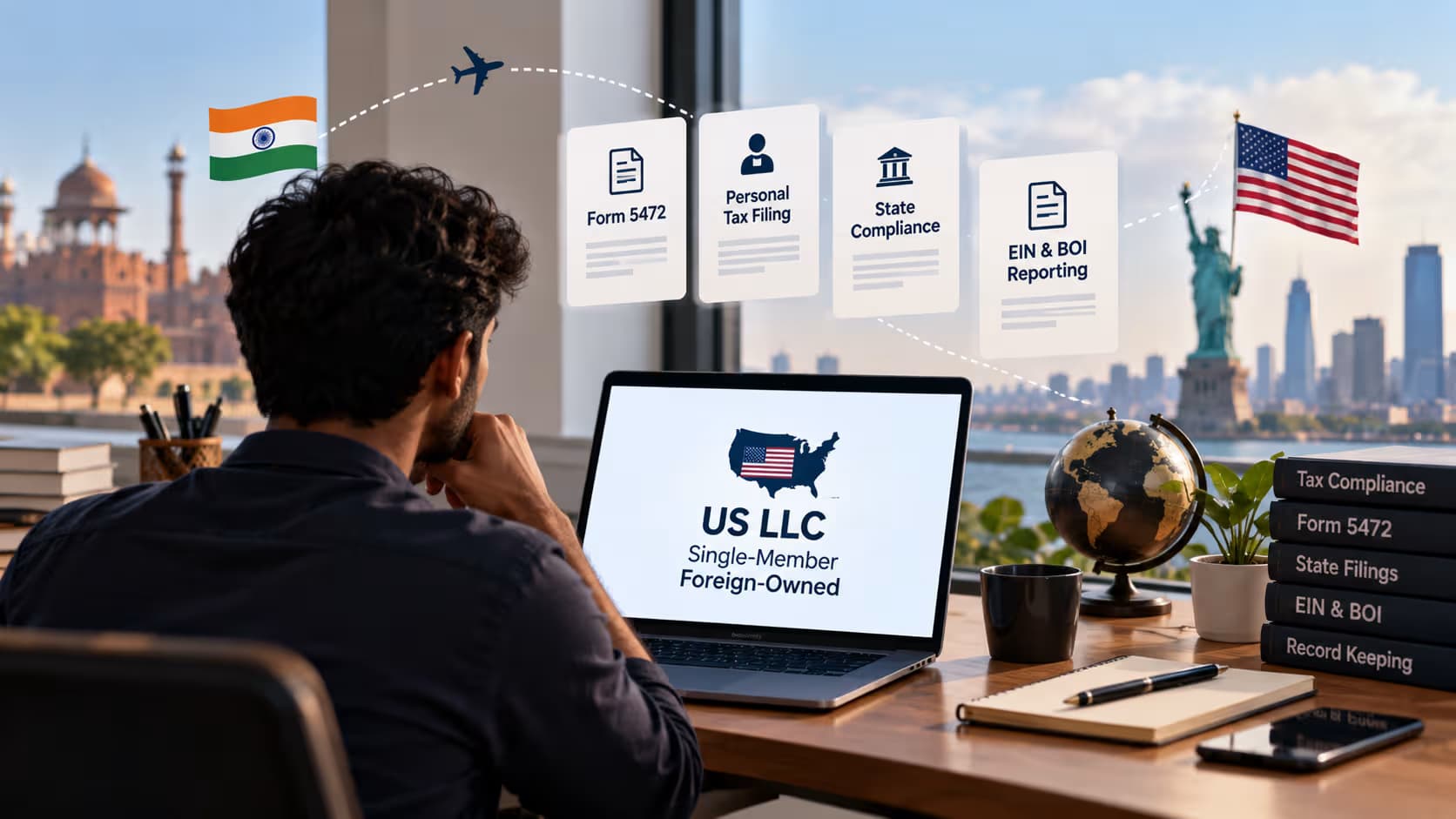
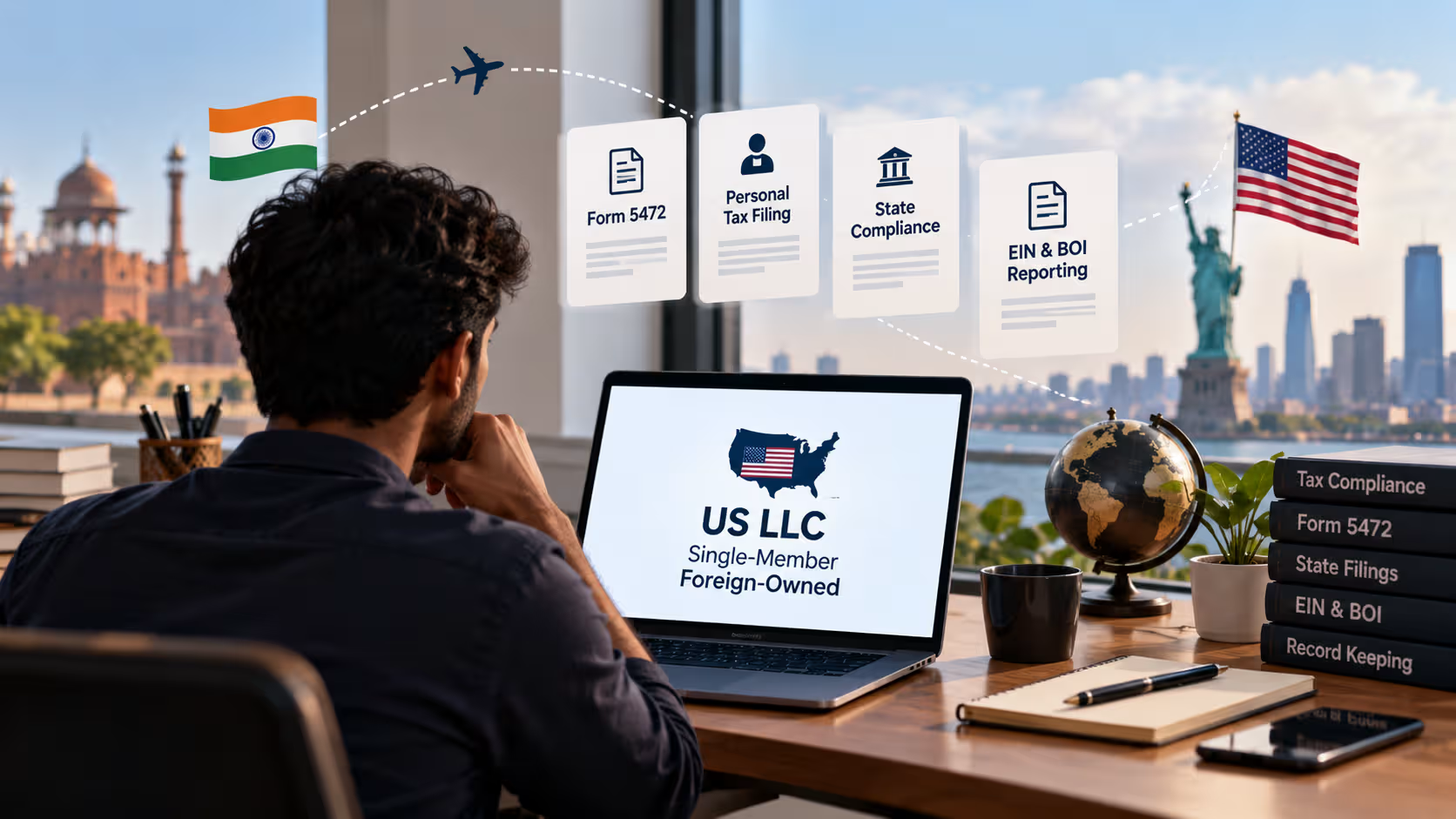
If you own a foreign-owned single-member LLC from India or another country, you need to understand more than formation. You must know how the IRS classifies your company, which information returns may be required, and whether you have personal US tax filing obligations.
A single-member LLC does not follow the same filing process in every situation. Your ownership, tax classification, transactions, and residency all matter.
1. Your LLC May Be Disregarded for Tax Purposes—but It Is Not Invisible
By default, a US LLC with one owner is generally treated as a disregarded entity for federal income tax purposes. This applies unless the LLC elects corporate tax treatment. The IRS generally looks through the LLC when determining how its business income is treated.
However, disregarded does not mean ignored for every tax purpose. Certain information-reporting rules apply specifically to foreign-owned US disregarded entities. These rules matter to founders who establish an LLC in Wyoming or Delaware while living abroad.
Your LLC's default tax classification does not automatically remove its reporting responsibilities.
Why Your LLC's Tax Classification Matters
An LLC's legal structure and federal tax classification are different things. State law establishes the LLC, while federal tax rules determine how it is treated for tax purposes.
Before deciding which forms to file, confirm your company's tax classification. This can affect which returns and information reports you may need to submit.
2. Form 5472 Is One of the Most Important Filings to Understand
A foreign-owned US disregarded entity may need to file Form 5472 with a pro forma Form 1120. This depends on the applicable reporting requirements and the company's transactions with its foreign owner.
Many non-US founders assume that no filing is needed if the LLC has no employees, earns little revenue, or owes no federal income tax. That assumption can be costly. Income tax liability and information-reporting obligations are separate issues.
Certain transactions involving the owner may need to be reviewed. These can include contributions, distributions, and some formation-related expenses. Keep records of money moving into and out of the company instead of reconstructing transactions at filing time.
The initial penalty for failing to file a required Form 5472 correctly and on time can be $25,000. Additional penalties may apply in certain circumstances. This penalty does not automatically apply to every foreign-owned LLC.
Does an LLC With No Revenue Still Have Reporting Responsibilities?
Possibly. An LLC may have no customer revenue but still receive money from its owner or pay business expenses. Depending on the circumstances, these transactions may affect its reporting requirements.
Review the company's tax classification and actual transactions. Do not use revenue alone to decide whether a filing is necessary.
Review Your Form 5472 and Other Reporting Responsibilities
Before deciding that your company has no outstanding responsibilities, review its tax classification, transactions, and prior filings. Our guide to Form 5472 for foreign-owned US LLCs explains the filing requirements and potential penalties.
If you discover a possible filing problem, consider consulting a qualified tax professional before deciding how to address it.
3. Do Not Automatically Follow a US Resident's Personal Tax Checklist
Many US-focused guides explain how a single-member LLC's income is reported on its owner's Form 1040, often through Schedule C. That approach may suit certain US taxpayers, but it should not automatically be applied to a nonresident owner.
If you are a nonresident alien for US tax purposes, you may need to file Form 1040-NR. The answer depends on your circumstances, including whether you conduct a US trade or business or have income that triggers a filing requirement.
For example, an Indian founder may perform services from India for overseas clients. The founder must consider where the work takes place, the type of income earned, and any relevant US business activities.
Owning a US LLC does not, by itself, determine whether you owe US income tax or must file a personal US tax return.
Separate Company Reporting From Personal Tax Duties
First, review the LLC's tax classification and information-reporting requirements. Then assess whether your personal circumstances create a separate US tax filing obligation.
Do not assume that filing the company's forms resolves every issue relating to your personal tax status. Review both sets of responsibilities separately.
4. Your EIN, State Filings, and BOI Reporting Are Separate Questions
An Employer Identification Number (EIN) identifies your business for federal tax administration. However, obtaining an EIN does not complete every tax or reporting requirement.
You must still determine which federal filings apply. You should also maintain your state registration and meet any applicable annual-report and registered-agent requirements.
If you are applying for an EIN without a Social Security number, our guide to getting an EIN without an SSN as a non-resident explains this part of the process.
Beneficial Ownership Information (BOI) reporting is a separate issue. Under FinCEN's current rule, US-created entities are exempt from federal BOI reporting, including entities owned by people who live abroad. This exemption does not remove IRS filing obligations.
A BOI reporting exemption does not automatically exempt your LLC from Form 5472. An EIN also does not prove that every compliance requirement has been met.
Why State Compliance Still Matters
Your LLC may have state-level responsibilities even if you live abroad and the business has little or no activity. Depending on the formation state, you may need to review annual reports, fees, registered-agent arrangements, and other administrative requirements.
Keep records of these responsibilities alongside your federal tax documents. This makes it easier to identify outstanding requirements and avoid confusing one type of filing with another.
5. Your Operating Agreement and Company Records Still Matter
A foreign-owned single-member LLC should maintain clear records of its ownership and management. An operating agreement can document the sole owner's authority and the company's internal arrangements.
The agreement does not replace tax filings or determine every federal tax obligation. However, it can help keep your company records organised.
Our guide to the US LLC operating agreement for non-residents explains why this document can be useful for international founders.
Keep Records of Owner Contributions and Distributions
Record the money you contribute to the LLC and the money you withdraw. Also document expenses you pay personally on the company's behalf.
Where relevant, retain supporting documents showing the date, amount, purpose, and parties involved. These records can help you review reporting requirements and prepare accurate filings.
Keep your formation documents, EIN confirmation, bank statements, invoices, and previous tax filings organised. Having these records available makes it easier to review your company's compliance position.
6. What I Recommend to Foreign LLC Owners
If you own a single-member LLC from India or another country, start by confirming its federal tax classification. Then review transactions involving the owner and determine whether Form 5472 and a pro forma Form 1120 are required.
Next, consider whether your personal circumstances create a separate US income tax filing obligation. These questions should be reviewed independently.
If you are still planning your business structure, our guide to starting a US LLC from India provides additional context for non-resident founders. Remember that formation is only the beginning. You also need to understand the company's ongoing reporting and maintenance responsibilities.
I have found that the biggest source of confusion is not always the form itself. It is applying advice written for a different taxpayer to a business with different ownership and residency circumstances.
A foreign-owned single-member LLC can be a useful structure. However, it needs an appropriate compliance plan from the beginning. Understand the rules that apply to your ownership and residency—not just the rules that apply to LLCs in general.
This article is for general informational purposes only and does not constitute legal, tax, or financial advice. Tousif Akram and FormLLC are not a law firm or CPA firm. Consult a licensed professional for advice specific to your situation.
Ready to Form Your US LLC?
Free 30-minute consultation with no obligation and no sales pressure.
Book Free Call