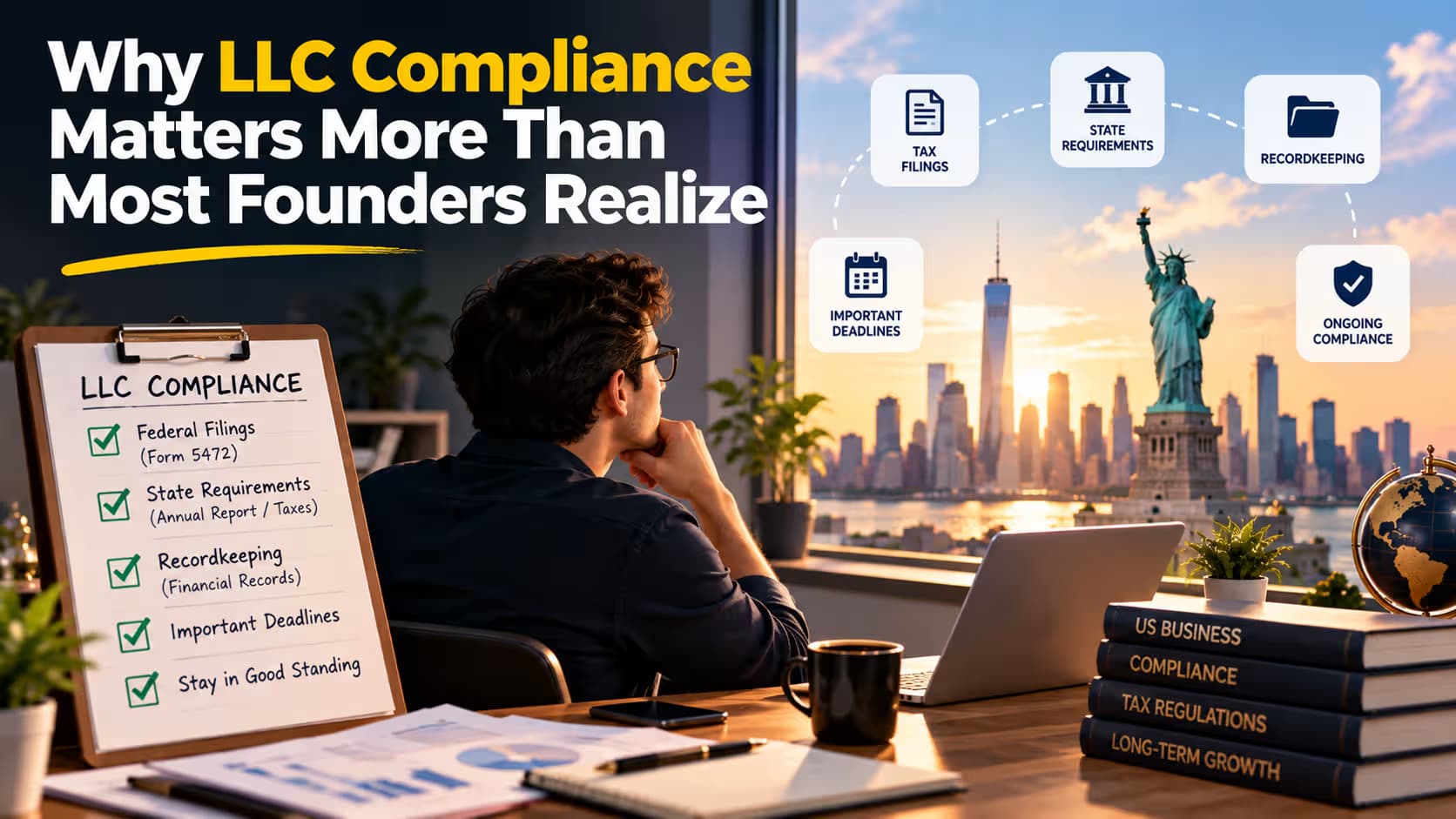
Why LLC Compliance Matters More Than Most Founders Realize

Tousif Akram
IRS CAA | Founder, FormLLC
Why LLC Compliance Matters More Than Most Founders Realize
When someone starts a business, LLC compliance is rarely the exciting part. Founders want to think about customers, sales, products, websites, and growth. Nobody starts a company because they are excited about annual reports, tax filings, recordkeeping, or filing deadlines. I understand that because I felt the same way when I was starting out. But after working with international founders for years, I have changed the way I think about LLC compliance. Today, I believe it is something a founder should understand before forming a US company, not something to remember only when a deadline arrives.
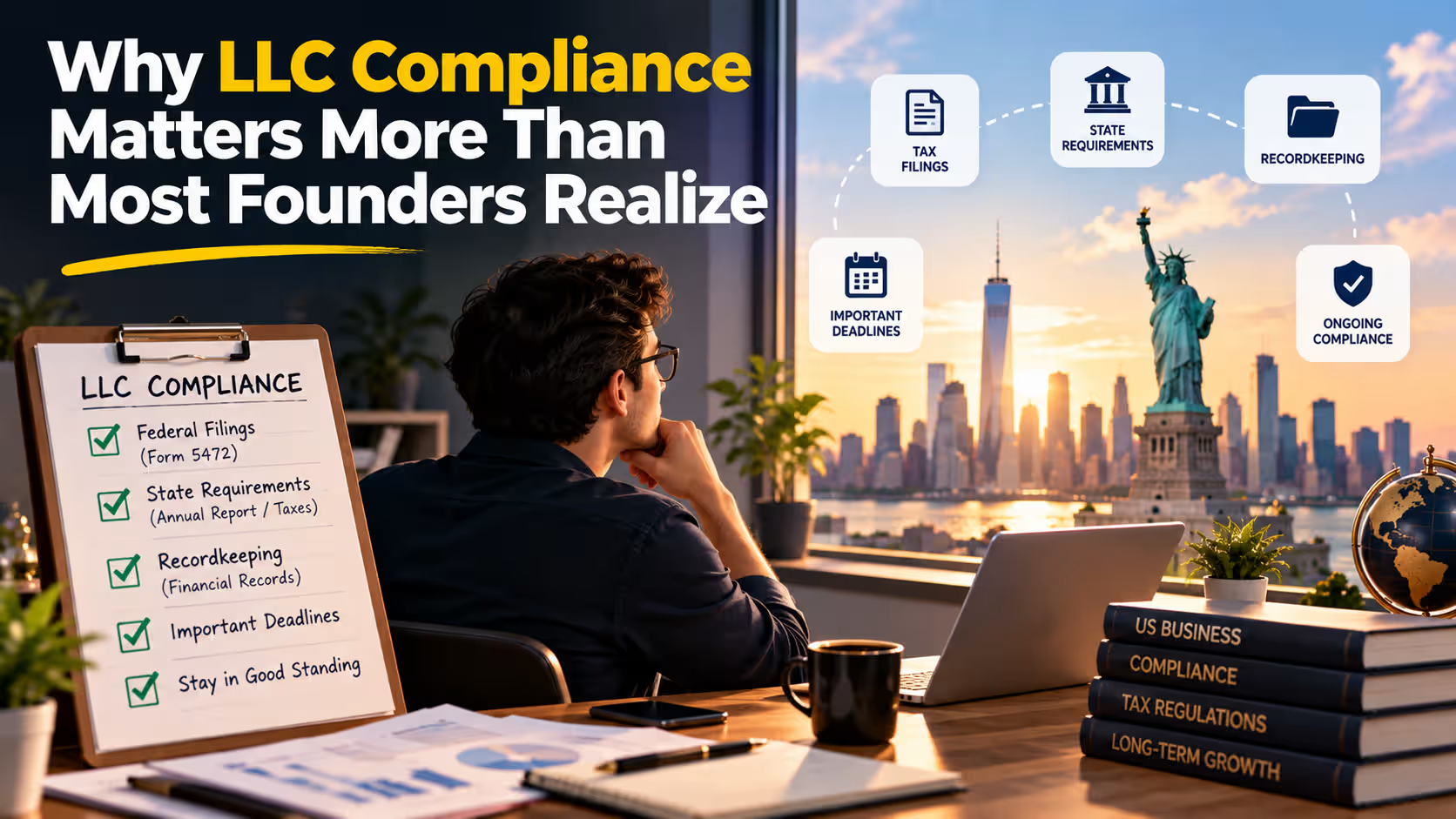
Why LLC Compliance Should Be Part of Company Formation
One experience in particular changed my perspective. A customer came to us after facing a penalty of around $25,000. I spent a significant amount of time trying to understand what had happened, communicating around the issue, and looking at possible ways forward. I don't want to suggest that every foreign-owned LLC has this particular obligation because the rules depend on the entity, ownership, transactions, and other circumstances. But the experience stayed with me.
The lesson was much bigger than that one customer. The expensive part of running a company is sometimes not starting it. It is failing to understand what happens after you start.
This is why I encourage founders to think about LLC compliance alongside formation rather than treating it as a completely separate issue. If you are still deciding whether a US company is appropriate for your situation, our US LLC guide for non-resident founders provides a broader overview of formation, banking, and ongoing responsibilities.
Federal LLC Compliance Can Continue After Formation
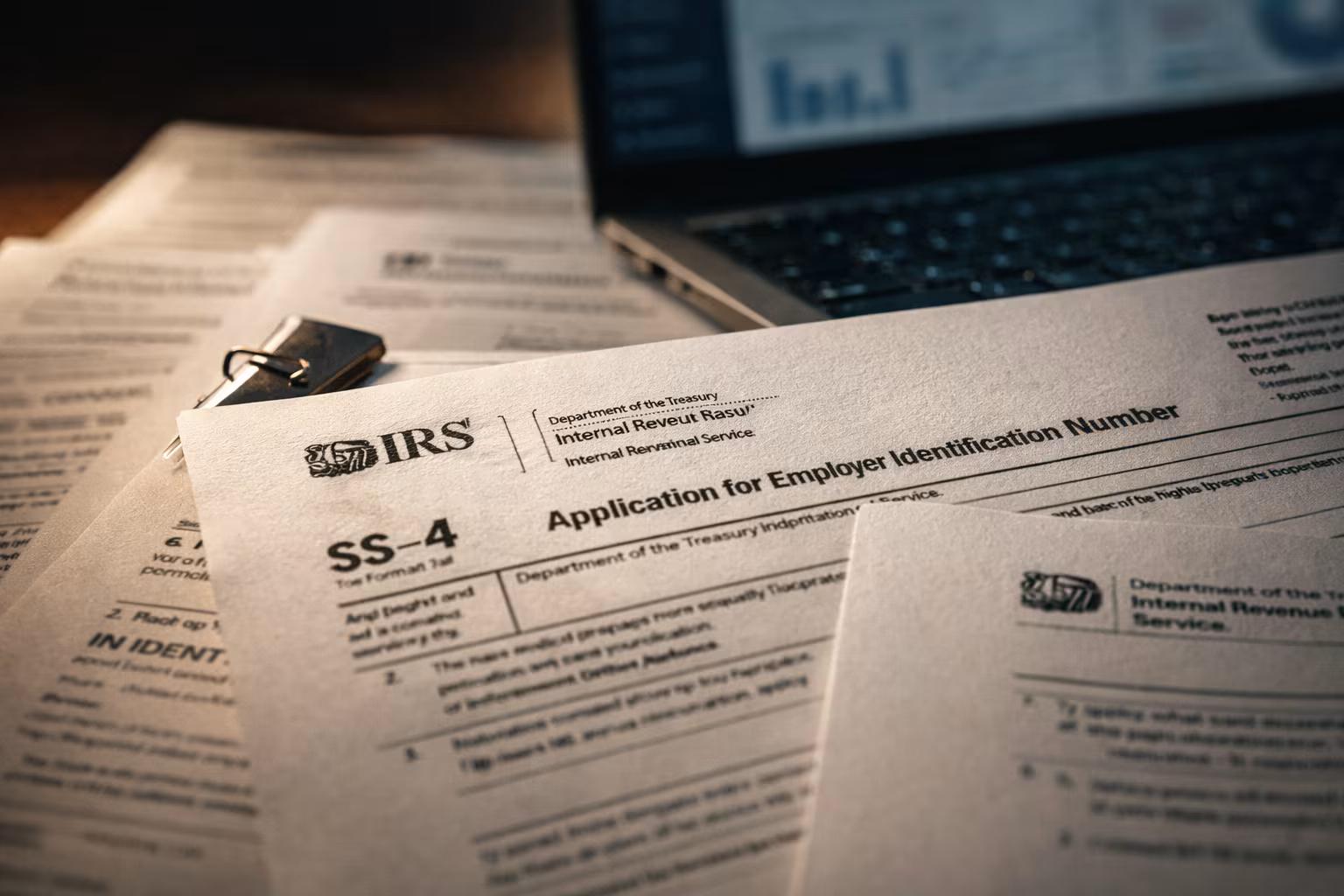
For foreign-owned US businesses, there can be federal information-reporting requirements that are easy for a first-time founder to overlook. For example, certain foreign-owned US disregarded entities can have Form 5472 and pro forma Form 1120 filing requirements when applicable. The specific requirements depend on the company's structure, ownership, transactions, and circumstances.
The potential consequences of missing a required filing can also be significant. The IRS states that failure to file Form 5472 when required can result in a $25,000 penalty, with additional penalties possible if the failure continues after IRS notification.
That does not mean every foreign-owned LLC has the same filing requirement. It means founders should understand their actual tax and information-reporting responsibilities instead of assuming that forming an LLC and obtaining an EIN is the end of the process.
If you are a foreign owner of a US LLC, our guide on Form 5472 for foreign-owned US LLCs can help you understand why this area deserves attention.
State LLC Compliance Matters Too
Federal requirements are only part of the picture. State LLC compliance also matters, and the requirements can vary significantly depending on where your company is formed.
A Wyoming business entity, for example, generally has an annual report requirement tied to its anniversary month. Delaware LLCs do not file an annual report with the Division of Corporations, but they are subject to an annual tax with a stated due date.
These details may sound small when you are starting a business. They don't feel small when you miss them.
This is one reason I don't think founders should choose a state simply because someone online says it is the best place to form an LLC. The ongoing requirements, costs, tax considerations, business activities, and the founder's circumstances all deserve attention.
If you're comparing formation states, you can also review our US LLC guide for non-residents before making a decision.
An LLC Is Not a One-Day Project
This is why I don't like the way some founders think about company formation as a one-time purchase. You pay the formation fee, receive the documents, and assume the relationship is finished.
A company is not a one-day project.
Once it exists, you have responsibilities. Those responsibilities can include state filings, federal information reporting, registered-agent requirements, bookkeeping, tax preparation, recordkeeping, and other administrative tasks depending on the company and its circumstances.
That doesn't mean every founder needs to become a tax expert or learn every regulation themselves. In fact, I think founders should know when to bring in a qualified accountant, tax professional, or attorney.
But you should understand what responsibilities exist and who is responsible for handling them. That distinction matters because effective LLC compliance is not about knowing every rule yourself. It is about knowing which obligations apply to your company and making sure they are handled correctly.
The Cheapest LLC Is Not Always the Cheapest to Maintain
Over the years, I have seen founders spend hours comparing whether an LLC formation package costs $50, $100, or $200 less while paying almost no attention to what happens during the next twelve months.
I now think that is the wrong comparison.
The better question is: What will this company cost me to operate correctly?
That calculation can include state requirements, federal filings that apply to your situation, registered-agent requirements, bookkeeping, tax preparation, and other compliance obligations. The exact list depends on the business, entity structure, ownership, state, and where the founder operates.
This is also why I think founders should look beyond the initial formation price when comparing providers. A low-cost formation service may be perfectly legitimate, but the founder still needs to understand what is included, what happens after formation, and which responsibilities remain with the company owner.
Our guide on US LLC operating agreements for non-residents is another useful resource for founders who want to keep their company documentation organized.
LLC Compliance Is About Knowing Who Is Responsible
One of the biggest misconceptions I see is that hiring a formation company means the founder no longer needs to think about LLC compliance.
That isn't necessarily how it works.
A formation provider may handle specific services, such as preparing or filing formation documents or providing registered-agent services. Another provider may offer reminders or additional compliance support. But the exact scope depends on the service agreement.
That is why I believe founders should ask simple questions before choosing a provider: What exactly is included? What deadlines will I be responsible for? What will the provider handle? What isn't included? When should I speak with a tax professional or attorney?
Those questions may not be as exciting as choosing a company name, but they can be much more important over the life of the business.
Transparency Matters in Company Formation
This is also why I believe transparency matters so much in the company-formation industry.
If a founder asks me, “Can I just form the LLC and forget about it?” I don't think telling them what they want to hear is responsible.
The easy answer is to say, “Sure, we'll get your company formed.”
The more useful answer is to explain that formation is Day 1. LLC compliance is what helps keep the company properly maintained after Day 1.
That doesn't mean compliance needs to be complicated or frightening. It means founders should know what they are responsible for and have a system for handling those responsibilities.
For international founders, this can be particularly important because the US company may have US obligations while the founder may also have tax or reporting responsibilities in the country where they personally live or operate.
Don't Be Afraid of LLC Compliance
I have learned this through customers, mistakes, and years of seeing what happens after the formation documents are delivered.
Today, my view is simple:
Don't be afraid of LLC compliance. Be afraid of ignoring it.
You don't need to know everything yourself. You do need to know what you are responsible for, which deadlines matter, what your provider actually handles, and when professional advice is necessary.
A good LLC compliance process can be as simple as keeping your company records organized, tracking important deadlines, maintaining proper financial records, and getting professional advice when an issue goes beyond your knowledge.
The important thing is not to wait until there is a problem before thinking about it.
Building a Company Means Taking Care of What You Create
When founders think about starting a company, they naturally focus on the exciting parts: finding customers, creating products, making sales, building a brand, and growing revenue.
Those things matter.
But building a company also means taking care of what you created.
The formation certificate gives you a legal entity. It doesn't automatically give you a system for maintaining that entity. That system has to be built through proper records, timely filings, financial organization, and an understanding of the responsibilities that apply to your specific situation.
My biggest lesson from working with international founders is that LLC compliance shouldn't be treated as an annoying task that comes after the real work.
LLC compliance is part of the real work.
Because forming a company is about creating something.
Keeping it properly maintained is about taking responsibility for what you created.
This article is for general informational purposes only and does not constitute legal, tax, or financial advice. Tousif Akram and FormLLC are not a law firm or CPA firm. Consult a licensed professional for advice specific to your situation.
Ready to Form Your US LLC?
Free 30-minute consultation with no obligation and no sales pressure.
Book Free Call