Non Resident LLC US Disadvantages: The Honest List Nobody Advertises

Tousif Akram
IRS CAA | Founder, FormLLC
Non Resident LLC US Disadvantages: The Honest List Nobody Advertises
When I help founders explore setting up a US company, I don't believe everyone who asks for an LLC should automatically get one. Sometimes, the best advice is to slow down, understand the business model, and decide whether a US LLC actually solves the founder's problem.
That is the side of company formation you rarely see in advertisements. Most pages focus on quick registration, low state fees, and international business opportunities. But the non resident LLC US disadvantages deserve just as much attention as the benefits, especially if you live in India and plan to operate the business from there.
A US LLC can be useful for international business, but formation is only the first step. You must also consider tax obligations, annual compliance, banking eligibility, cross-border rules, and future financing needs.
Choosing the right entity from the beginning matters. Read how to choose the right US business structure before registering your company.
Before paying for formation, understand the responsibilities involved. Here are seven important disadvantages and limitations to consider before forming a US LLC as a non-resident.

1. Non Resident LLC US Disadvantages Include Ongoing Compliance
A US LLC is not a one-time registration that you can forget about after receiving your formation documents. Depending on the state, you may need to file annual reports, pay state fees, renew your registered agent, and maintain company records.
Foreign-owned LLCs may also have federal reporting obligations. For example, certain foreign-owned single-member LLCs treated as disregarded entities must file Form 5472 with a pro forma Form 1120 when applicable reporting rules require it. Failure to file Form 5472 when required can result in a significant IRS penalty. The exact requirements depend on the company's circumstances.
These obligations make compliance an important part of the total cost of ownership. You need to track deadlines, maintain records, and confirm which filings apply to your particular LLC.
Do not assume that having no taxable profit means you have no filing responsibilities. Income tax returns and information returns serve different purposes. Your obligations depend on the company's tax classification, transactions, and circumstances.
Before registering, understand the ongoing US LLC compliance responsibilities that may continue after formation, including state filings, recordkeeping, and recurring obligations.
2. A US LLC Does Not Automatically Mean Zero US Tax
One of the most misleading claims in the company-formation market is that a non-resident can open a US LLC and automatically pay no US tax.
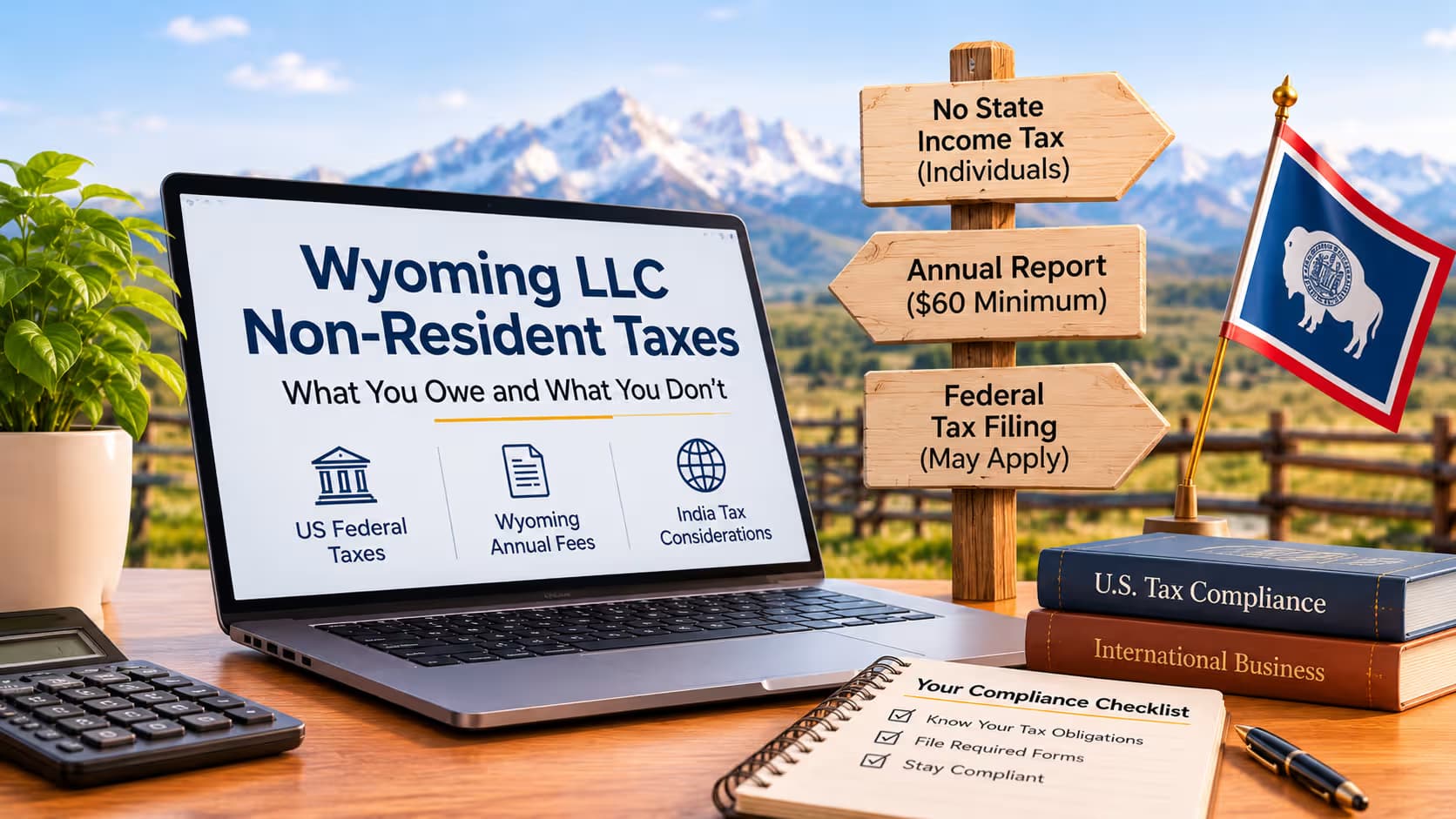
The reality is more complicated. Your LLC's tax classification, income, business activities, and applicable tax rules all affect the outcome. A non-resident individual may need to file a US tax return if they are engaged in a US trade or business and meet the relevant filing requirements. Certain US-source income may also be subject to withholding.
Having US customers alone does not determine your entire tax position. The actual nature of your activities and income matters.
You should also understand the difference between federal tax, state tax, and information-reporting obligations. Depending on the business and its activities, more than one set of rules may apply.
Instead of asking only whether you will owe US tax, ask two questions: Which tax rules apply to my situation? And which tax returns or information forms must I file, even if I owe no income tax?
Getting professional advice before formation can help you understand these obligations and budget for the ongoing cost of compliance.
3. Indian Tax and Compliance Obligations Still Matter
For an Indian founder, opening a US LLC creates a cross-border business arrangement. The Indian side should not be treated as an afterthought.
Your Indian tax residency, ownership structure, business activities, and the nature of your income may affect your obligations. Depending on the arrangement, foreign-asset reporting, overseas-investment rules, and foreign-exchange requirements may also need consideration.
You should clarify how the investment is funded, who legally owns the US entity, and whether the proposed arrangement falls within applicable Indian overseas-investment rules. Ask how income, distributions, and any future sale of the business may be treated.
I would not advise every Indian founder to form a US LLC first and consult a chartered accountant later. Review your ownership and funding plans with professionals who understand Indian tax and overseas investment before proceeding.
The important point is to assess both sides of the arrangement before committing. Setting up a company in the United States does not automatically resolve your obligations in India.
4. Banking and Payment Processor Approval Is Not Guaranteed
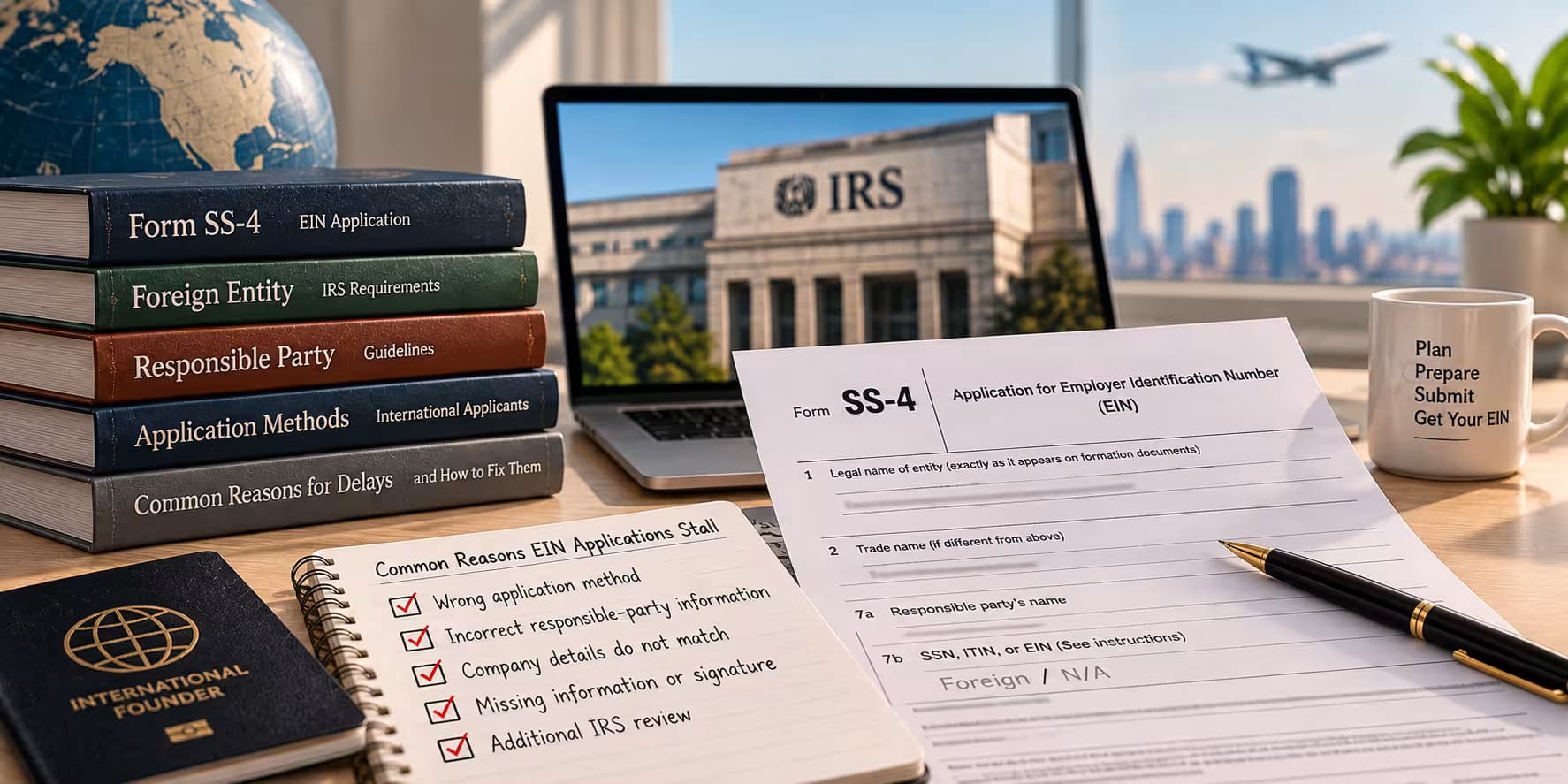
Some founders assume that obtaining a US LLC and an Employer Identification Number (EIN) will automatically make it easy to open a business bank account or activate a payment processor. That is not always the case.
Financial providers apply their own eligibility criteria, identity checks, documentation requirements, and business-activity restrictions. A company may qualify for formation but still be ineligible for a particular bank account or payment service.
You may be asked to provide identity documents, proof of address, formation records, an EIN, information about the company's beneficial owners, and details about its business activities. The exact requirements differ between providers.
Before forming an LLC, check whether the providers you intend to use accept your country of residence, ownership structure, business model, and expected transactions.
This is especially important if accessing a particular payment service is your main reason for creating a US company. Verify eligibility before spending money on registration and ongoing administration. Also consider what you will do if your preferred provider declines the application.
For more practical guidance, read about opening a US bank account as a non-resident LLC owner. Check the provider's eligibility rules before relying on a particular account for your business.
5. An LLC May Not Suit Your Fundraising Plans
An LLC can work well for consulting businesses, agencies, and other founder-owned operations. However, if you plan to raise institutional venture capital, issue preferred shares, or introduce employee stock options, a C corporation may be a better fit.
Fundraising through an LLC is possible, so it would be inaccurate to say that an LLC cannot raise investment. The issue is whether the structure suits your intended investors and financing arrangements.
Converting or restructuring later can require legal and tax advice, ownership adjustments, additional documentation, and extra expense. Existing membership interests, agreements, and liabilities may also need review.
If you already expect to raise venture capital, consider that possibility when choosing your initial business structure. Ask potential investors or a startup lawyer about their expectations before committing to a structure that may need to change.
6. The Total Cost Can Be Higher Than You Expect
The state registration fee is only one part of the cost of operating a US LLC. You may also need to budget for registered-agent services, state renewals, tax preparation, information returns, bookkeeping, and professional advice.
Your actual costs depend on the state, company activities, tax situation, and complexity of your business. Foreign ownership can introduce additional reporting considerations, so the cheapest formation package may not reflect the full cost of maintaining the company.
It helps to separate one-time expenses from recurring expenses. Formation fees are usually paid during setup, while registered-agent services, state fees, accounting, and tax preparation may recur.
You should also budget for unexpected work, such as correcting records, responding to a compliance notice, or obtaining specialist advice about a cross-border transaction.
Before registering, estimate both the initial setup cost and the recurring annual expenses. This will help you decide whether the LLC provides enough practical value for your business.
7. Managing a US Company From Abroad Requires Planning
Running a US LLC while living in another country can involve more administration than founders initially expect. You may need to coordinate with US service providers, maintain financial records, meet filing deadlines, and manage documents across different time zones.
You must also understand which responsibilities belong to you as the owner and which can be handled by an accountant, registered agent, or other service provider. Hiring help can make administration easier, but it does not remove your responsibility to understand the company's obligations.
Distance can also make it harder to resolve issues quickly. If a financial provider requests additional documentation or a filing deadline approaches, you need a reliable process for responding promptly.
A workable plan should cover recordkeeping, compliance reminders, access to financial services, and professional support. Without that plan, even a straightforward LLC can become difficult to manage.
When I Would Tell a Founder to Pause Before Forming an LLC
There are situations where I would recommend reconsidering the plan before paying for company formation.
If your only reason for creating a US LLC is a promise of zero tax, first verify the actual tax rules. If you have not checked whether your preferred bank or payment processor accepts your business, confirm eligibility before registering. If you have no plan for annual compliance, calculate the likely costs and responsibilities first.
I would also pause if your business does not genuinely need a US entity or if the cross-border administration outweighs the benefits. Another business structure—or professional advice before registration—may be the more sensible option.
Ask yourself these questions before proceeding:
- Does my business genuinely need a US entity?
- Have I checked my US tax and reporting responsibilities?
- Have I reviewed the Indian tax and regulatory implications?
- Can I access the banking and payment services my business needs?
- Have I estimated the recurring cost of compliance?
- Does an LLC fit my long-term fundraising plans?
If you cannot answer these questions confidently, pause and get appropriate advice before paying for formation.
That is not an argument against US LLCs. It is an argument for choosing them for the right reasons.
How to Reduce the Disadvantages of a Non-Resident US LLC
The disadvantages of a non-resident US LLC do not automatically make it the wrong choice. Many problems can be reduced by planning ahead and understanding the obligations before registration.
First, choose the state and entity structure based on your actual business needs, rather than relying only on advertised formation prices. Consider where the company will operate, what services it needs, and whether future investors may require a different structure.
Second, identify your filing obligations early. Ask a qualified US tax professional which federal and state returns may apply, including any information returns related to foreign ownership. Keep a calendar of relevant deadlines and maintain complete financial records.
Third, review the Indian side before funding the company or changing ownership. A professional familiar with cross-border tax and overseas investment can help assess the requirements relevant to your circumstances.
Fourth, confirm access to banking and payment services before assuming the company will be able to use them. Check eligibility directly with the provider and prepare the necessary documents.
Finally, compare the full cost and administrative workload with the benefits the LLC provides. This makes the decision more practical and helps prevent avoidable surprises after formation.
My Advice Before You Form a US LLC
The biggest disadvantage is not any single fee or form. It is choosing a business structure without understanding the responsibilities that come with it.
A US LLC can provide a useful structure for an international founder, but it does not guarantee tax savings, banking approval, or freedom from Indian compliance obligations. Before committing, review your customers, financial-provider requirements, US filing responsibilities, Indian obligations, and future fundraising plans.
My rule is simple: don't form a US LLC just because someone says it is easy. Form it because it fits the business you are actually building.
Frequently Asked Questions
What Are the Main Non Resident LLC US Disadvantages?
The main disadvantages include ongoing compliance costs, possible US tax and reporting obligations, Indian cross-border considerations, banking eligibility limits, and potential restructuring costs if your business later needs a different entity type. The impact of each issue depends on your circumstances.
Does a Non-Resident US LLC Always Pay Zero Tax?
No. A non-resident-owned LLC does not automatically eliminate US tax obligations. Tax treatment depends on the entity's classification, income, business activities, and applicable rules. Reporting obligations may also apply even when no income tax is due.
Does an Indian Founder Need to Consider Indian Regulations?
Yes. Indian tax residency, ownership, funding arrangements, and applicable overseas-investment and foreign-exchange rules may affect the structure. Seek qualified advice before investing in or restructuring a US entity.
Can a Non-Resident Open a US Business Bank Account?
Possibly, but approval is not guaranteed. Financial providers apply their own eligibility, identity-verification, and documentation requirements. Check the provider's current rules before forming a company solely to access a particular account or payment service.
Is a US LLC Suitable for Raising Venture Capital?
It can raise investment, but it may not be the preferred structure for every institutional investor. A C corporation may be better suited to certain financing arrangements, preferred shares, and employee equity plans. Discuss your fundraising plans with a startup lawyer before choosing your entity.
How Much Does It Cost to Maintain a US LLC as a Non-Resident?
The total cost depends on the state, registered-agent fees, annual filings, tax preparation, bookkeeping, and professional advice. Foreign ownership may create additional reporting work. Estimate recurring costs before forming the company rather than considering only the initial registration fee.
Should I Form a US LLC Before Checking Tax Requirements?
It is better to review the relevant tax and compliance requirements first. Understanding the US and Indian implications can help you choose a suitable structure, estimate ongoing costs, and avoid preventable problems after formation.
This article is for general informational purposes only and does not constitute legal, tax, or financial advice. Tousif Akram and FormLLC are not a law firm or CPA firm. Consult a licensed professional for advice specific to your situation.
Ready to Form Your US LLC?
Free 30-minute consultation with no obligation and no sales pressure.
Book Free Call