Getting USD From US Clients Into India: Stripe Transaction Fees USA to India

Tousif Akram
IRS CAA | Founder, FormLLC
Getting USD From US Clients Into India: Stripe Transaction Fees USA to India
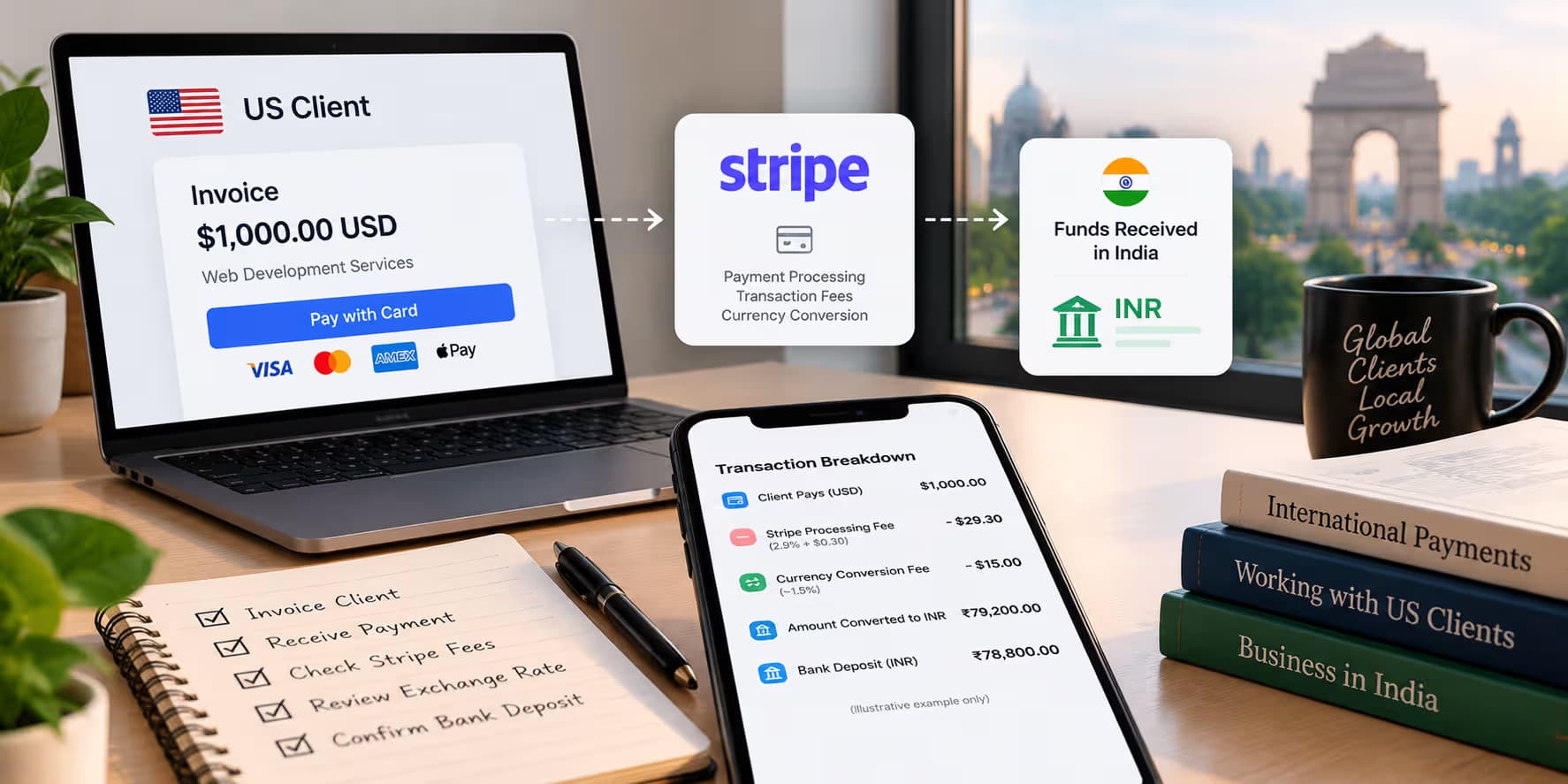
When a founder asks me how to receive money from a US client in India, I don’t look at the transfer fee alone. I look at the entire money path: how the client pays, what the payment processor deducts, how USD gets converted into INR, and what finally reaches the Indian bank account.
Understanding Stripe transaction fees USA to India is especially important for Indian freelancers, consultants, SaaS founders, and service businesses working with US customers. The cheapest-looking payment option is not always the cheapest once processing fees, foreign exchange charges, and bank fees are included.
Before choosing a provider, I recommend understanding your business structure and how you plan to collect payments. The right payment method depends on how your business is registered, where your payment account is held, and which bank account receives the funds.
What Happens When a US Client Pays You?
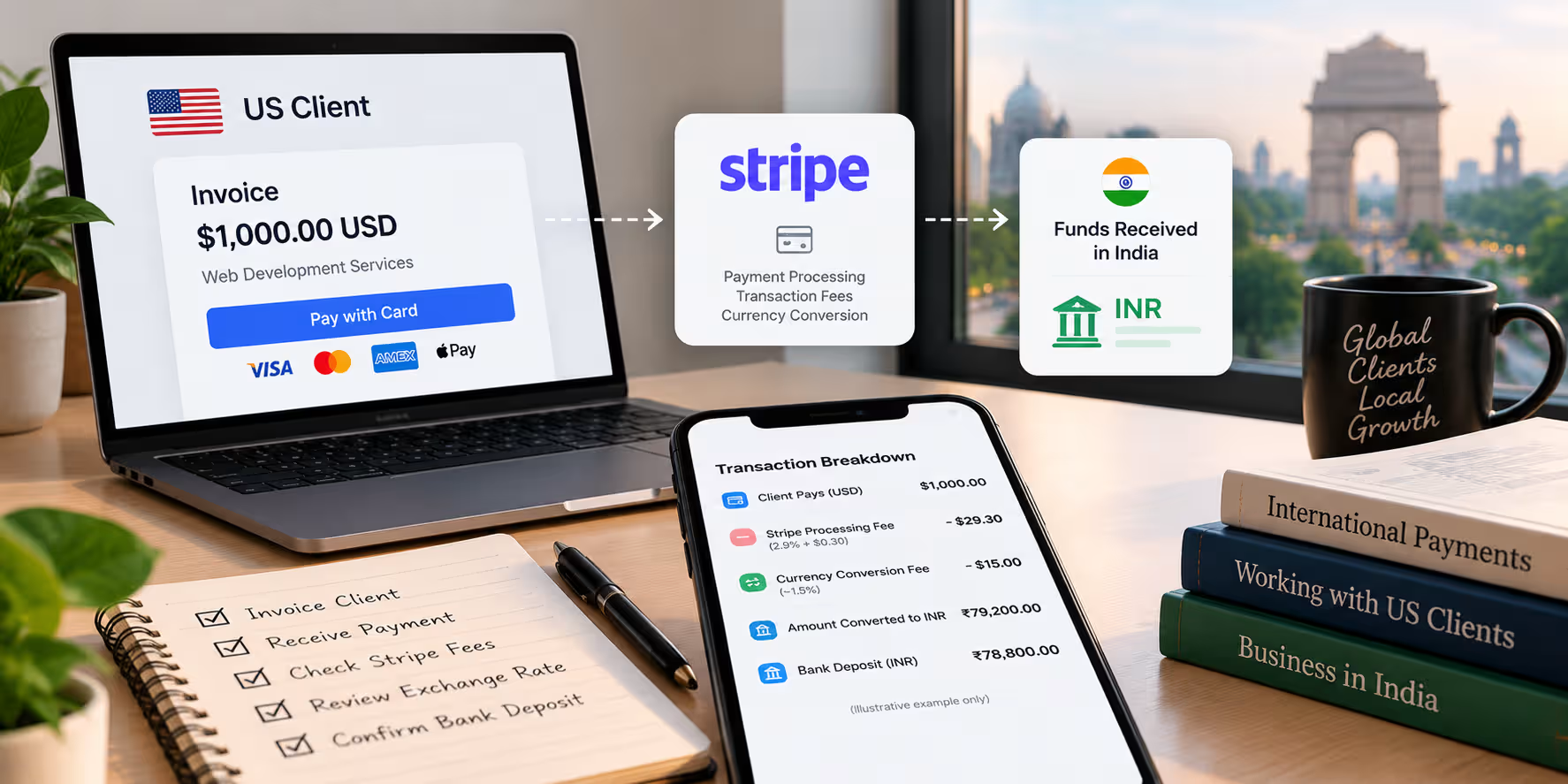
Imagine you send a US customer an invoice and they pay by card. The amount you ultimately receive depends on the payment processor's pricing, whether currency conversion is required, the exchange rate used for settlement, and any other applicable charges.
For an eligible Indian Stripe account, international card processing and currency conversion may involve separate fees. The exact charges depend on your account's pricing and the transaction. Always check your current account pricing before calculating your expected payout.
The key point I want founders to understand is that the amount invoiced is not necessarily the amount that reaches their Indian bank account. Processing fees, currency conversion, and settlement rates can all affect the final INR amount. Calculate the expected net settlement rather than relying only on an advertised processing percentage.
Stripe, International Bank Transfers, or Wise?
For online businesses that need card payments, subscriptions, or a checkout page, Stripe can make the payment experience easier for customers. Its applicable fees should be checked against your account's actual pricing before you calculate margins. Depending on the account and transaction, cross-border payments can also involve documentation and payment-purpose information.
For a consultant or agency sending invoices directly to US clients, a bank transfer may be worth comparing. The total cost depends on the sending bank, intermediary banks, the receiving bank, and the exchange rate offered. Ask whether the client pays a wire fee, whether intermediary charges can be deducted, and what exchange rate will be used when the money arrives in India.
Wise Business is another option for eligible Indian businesses receiving international payments. Available services may include supported foreign-currency account details, conversion of incoming payments into INR, and electronic Foreign Inward Remittance Certificates (eFIRCs) for eligible transfers. Its conversion fees depend on the currency and transaction, so check the current quote rather than assuming every transfer costs the same.
These options serve different needs. Stripe is designed for collecting online payments; bank transfers can suit direct invoicing; and Wise Business may be useful for eligible businesses that want an international receiving and settlement workflow. Your business type and account eligibility matter, so do not assume every route is available to every founder.
When Stripe May Make Sense
I would consider Stripe when customers pay through a website, need a familiar card checkout, or subscribe to a service. Before choosing it, review the pricing that applies to your account, including international card processing and any currency conversion charges. Also confirm the payout currency and settlement requirements for your specific business structure.
When a Bank Transfer May Be Worth Comparing
A direct bank transfer may suit businesses that issue invoices for consulting, professional services, or larger projects. However, the sender's bank, intermediary banks, receiving bank, and exchange rate can all affect the final amount. Ask for an estimate of the complete cost and confirm which party is responsible for transfer charges.
When Wise Business May Be an Option
Wise Business may suit eligible businesses looking for international payment details and a way to convert supported currencies. Before relying on it, check whether your business and account setup qualify, what fees apply to the specific transaction, and what remittance documentation is available for your transfer.
The Money Path I Recommend
When I help founders think through receiving international payments, I start with how they get paid—not with a particular platform's brand name.
If customers pay through a website or need subscriptions, I would evaluate a card processor such as Stripe and calculate the full fee for the account's country and pricing plan. If customers pay invoices directly, I would compare a bank transfer with an eligible business receiving service. Then I would compare the actual INR settlement amount, expected arrival time, documentation, and any charges outside the provider's own fee.
If you are still deciding whether a US company fits your business, my guide to starting a US LLC from India explains the formation process and important considerations for Indian entrepreneurs.
Keep Payment Records and Remittance Documentation Organized
I would keep the invoice and payment records together. For Indian businesses receiving export proceeds, ask your bank or payment provider what remittance documentation applies to your transaction. Some providers offer electronic remittance certificates for eligible incoming transfers. The appropriate documentation depends on the transaction and applicable rules; receiving money is not, by itself, proof that every compliance requirement has been met.
For each payment, keep the invoice, transaction confirmation, fee breakdown, conversion details, and bank settlement record. These documents can help you reconcile the amount billed to the client with the amount received and give your accountant a clearer record of the transaction.
Check Your Business Structure Before Choosing a Payment Route
One important distinction is that a US LLC receiving money and an Indian business receiving export proceeds are not automatically the same setup. The country where your payment account is registered, the entity named on the invoice, and the bank account receiving the funds can change which fees and compliance requirements apply.
If you operate a US LLC from India, confirm that the payment provider supports your specific structure before routing customer payments through it. Make sure the account holder, invoicing entity, and receiving bank arrangements are consistent with the provider's requirements.
If your US LLC is foreign-owned, you should also understand which reporting obligations may apply to the company. My guide to Form 5472 for foreign-owned US LLCs explains an important area of federal information reporting.
Your banking setup matters, too. Read my guide on opening a US bank account as a non-resident LLC owner to understand the documentation and business information banks may request.
How to Compare the Total Cost of Receiving USD
When comparing payment options, look at the processing fee, currency conversion cost, transfer charges, exchange rate, settlement time, and documentation. Calculate the net amount in INR using the provider's current quote. This gives you a more useful comparison than choosing a platform simply because it advertises low fees.
I would use the same checklist when comparing providers so the decision is based on consistent assumptions.
Calculate the Net Amount, Not Just the Processing Fee
Start with the amount invoiced, subtract the processing fee and any applicable conversion or transfer charges, and then apply the exchange rate used for settlement. If a provider quotes a fee in INR or uses a different pricing structure, include that cost in the comparison. Do not assume that two providers offering similar percentage fees will deliver the same final amount.
Consider Settlement Time and Documentation
Fees are only one part of the decision. Consider how long the funds may take to arrive, whether the provider supports your account structure, what payment records are available, and what documentation your bank or accountant may require. A slightly lower fee may not be worthwhile if the payment workflow creates delays or administrative difficulties.
Recheck Pricing as Your Business Grows
Your best payment route may change as your transaction volume, average invoice size, customer preferences, and business structure change. Review actual settlement statements periodically and compare them with current provider pricing. This helps you understand your real collection costs and avoid building your pricing around outdated assumptions.
Common Mistakes When Receiving USD From US Clients
Comparing Providers Using Different Assumptions
One provider's quoted price may include conversion costs while another's may not. Compare providers using the same payment method, currency, and settlement assumptions. Otherwise, one option may appear cheaper even when the full costs tell a different story.
Ignoring Exchange Rate Costs
The processing fee does not tell you the whole story. The exchange rate used to convert USD into INR can affect the amount that reaches your bank account. Compare the final quoted INR amount wherever possible, rather than looking only at the fee percentage.
Assuming Every Indian Founder Has the Same Eligibility
The payment options available to an Indian freelancer, an Indian registered business, and a founder operating through a US LLC may differ. Check the provider's eligibility criteria and confirm that your particular business arrangement is supported before setting up recurring customer payments.
Forgetting to Reconcile Payments
When fees, conversions, and transfer charges are deducted, the amount received may not match the invoice total. Reconcile each payment against the original invoice and retain the supporting records. This makes it easier to understand your revenue, track collection costs, and prepare accurate business accounts.
My Recommendation for Indian Founders
Choose your payment method based on the complete money path, not the lowest advertised fee. For online card payments and subscriptions, evaluate a suitable payment processor. For direct invoices, compare bank transfers and eligible international receiving services. In every case, calculate the expected INR settlement, confirm eligibility, and understand the documentation requirements before choosing a route.
My rule is straightforward: choose the payment route that fits your business and leaves you with a predictable, documented settlement—not just the lowest headline percentage. A few minutes spent comparing the complete money path can make a meaningful difference when you receive international payments every month.
Frequently Asked Questions
What Are Stripe Transaction Fees USA to India?
The fees depend on your Stripe account's country, pricing plan, payment method, and whether currency conversion is required. Check the current pricing that applies to your account before calculating your expected payout.
How Much Will I Receive if a US Client Pays Me Through Stripe?
The amount depends on the payment processing fee, any applicable currency conversion charges, the settlement exchange rate, and other applicable costs. Review the transaction's fee breakdown and calculate the expected INR settlement before relying on a particular amount.
Is Stripe Better Than a Bank Transfer for Receiving USD?
It depends on how your customers pay. Stripe may be suitable for website checkout, card payments, and subscriptions. A bank transfer may suit direct invoices, but sending, intermediary, and receiving bank fees can apply. Compare the complete cost and the amount expected to reach your account.
Can Indian Businesses Use Wise Business to Receive International Payments?
Wise Business offers international receiving services for eligible businesses and supported currencies. Availability, account details, fees, conversion options, and documentation depend on the specific business and transaction. Confirm eligibility and obtain a current quote before using it.
Will I Receive USD Directly Into My Indian Bank Account Through Stripe?
Indian Stripe accounts generally settle payouts in INR under the account setup described in this article. Confirm the settlement currency and payout requirements for your own account before accepting payments.
What Documents Should I Keep When Receiving International Payments?
Keep invoices, payment confirmations, fee breakdowns, conversion records, bank settlement statements, and any relevant remittance documentation. Ask your bank or payment provider which documents apply to your specific transaction.
Final Thoughts
Getting paid by US clients is not just about choosing a platform. It is about understanding the full journey from the client's payment to the amount that reaches your Indian bank account. Processing fees, currency conversion, transfer charges, settlement timing, and documentation all affect the overall experience.
Compare providers using the same assumptions, confirm that your business structure is supported, and retain clear records for every transaction. A transparent, predictable payment process makes it easier to manage costs and build a more reliable international business.
*This article is for general educational purposes. Fees, eligibility, settlement methods, and documentation requirements can change. Confirm current provider pricing and the requirements that apply to your business before accepting a payment.*
This article is for general informational purposes only and does not constitute legal, tax, or financial advice. Tousif Akram and FormLLC are not a law firm or CPA firm. Consult a licensed professional for advice specific to your situation.
Ready to Form Your US LLC?
Free 30-minute consultation with no obligation and no sales pressure.
Book Free Call