US LLC From Nigeria: He Was Running His Business From Lagos

Tousif Akram
IRS CAA | Founder, FormLLC
US LLC From Nigeria: He Was Running His Business From Lagos. Then American Customers Started Finding Him.
There is a moment that changes how a founder thinks about their business. It might be the first customer from another country, the first international payment, or the first time someone in a completely different time zone trusts you enough to pay for your work. For a founder sitting in Lagos, that moment can be especially powerful.
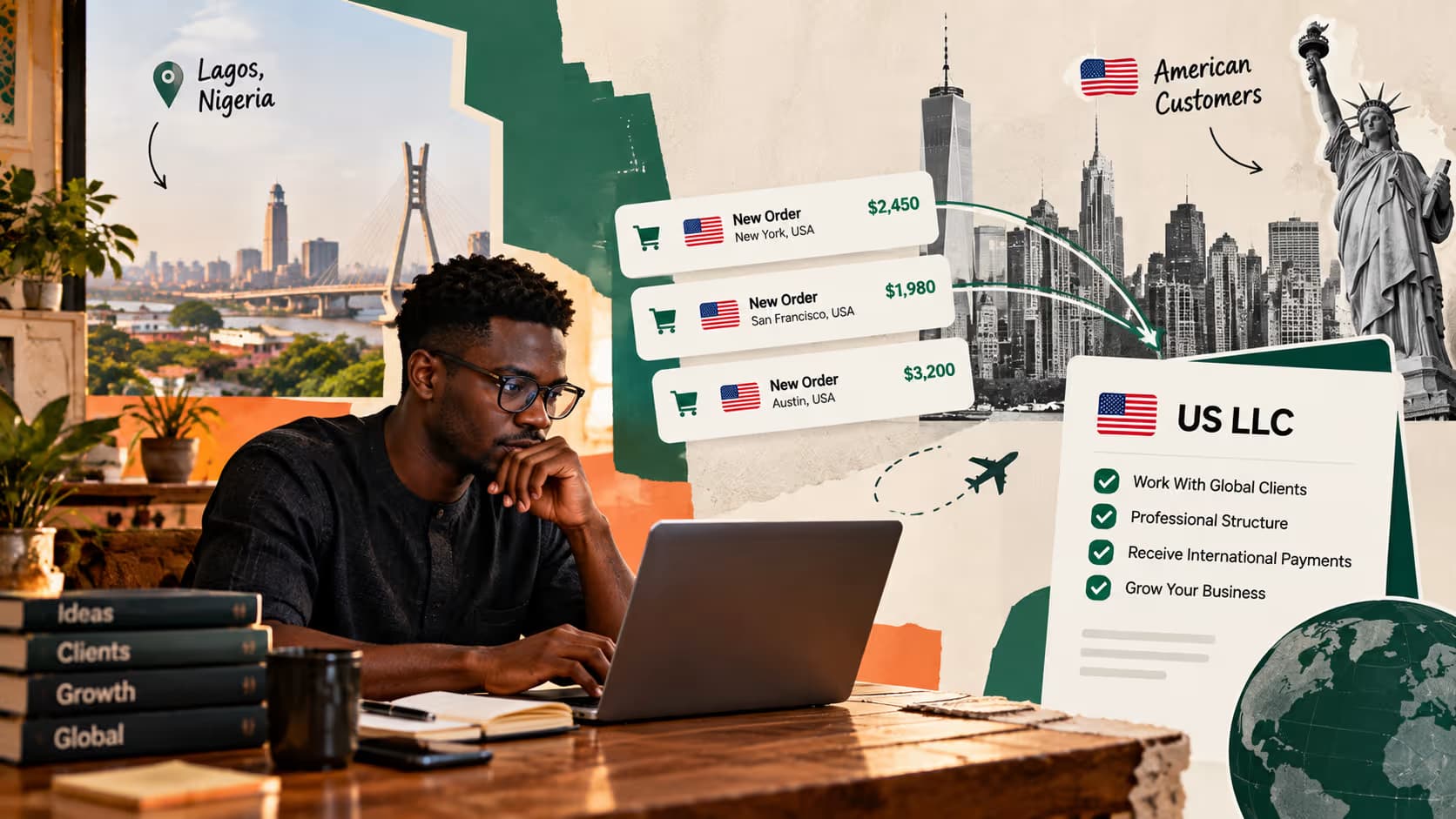
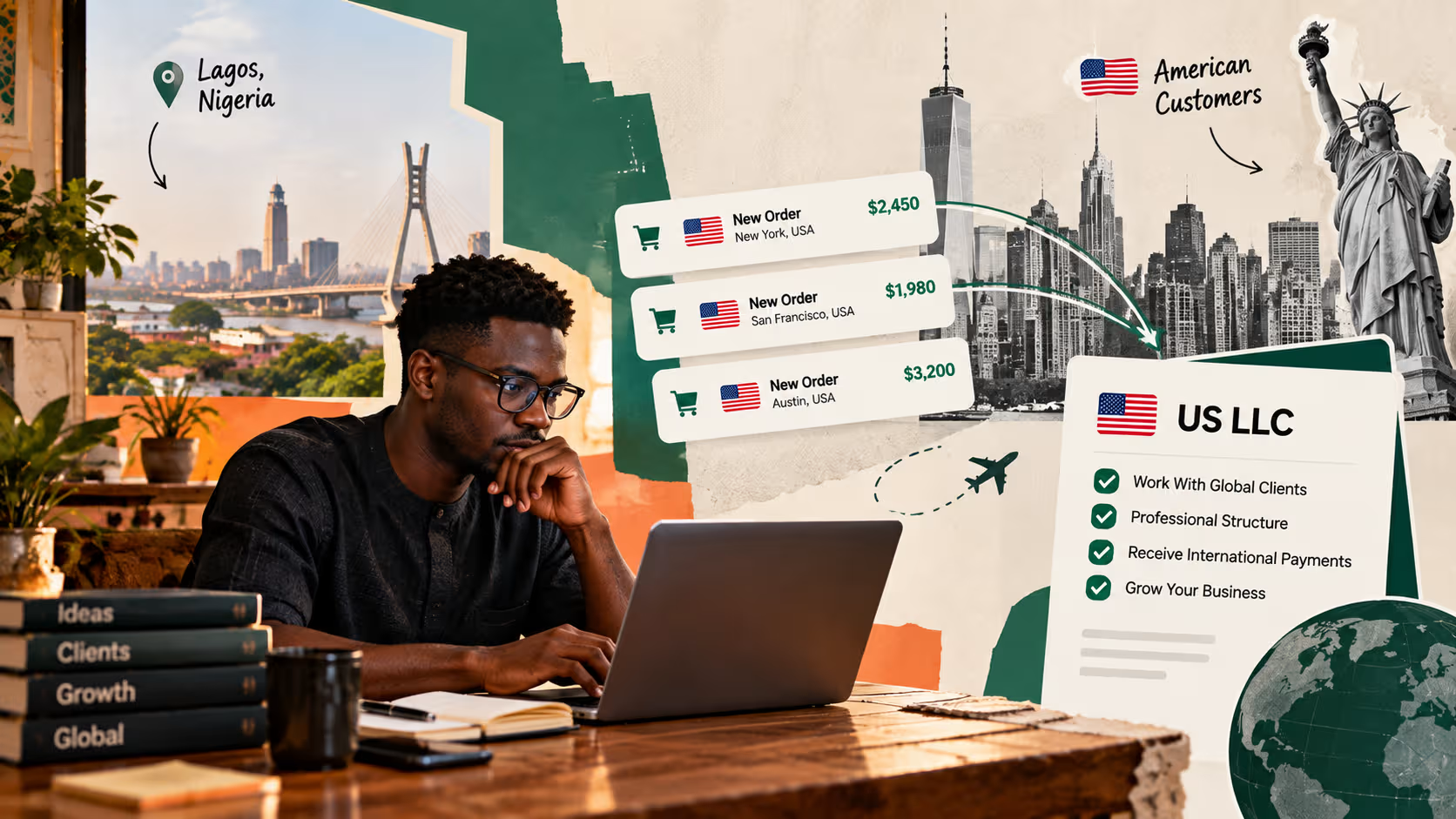
You may have started with a laptop, a small team, local connections, and a service you knew you could deliver well. Then, somehow, your customers started coming from America. Suddenly, the business you were building in Nigeria was no longer just a Nigerian business. This is one of the reasons I see increasing interest in a US LLC from Nigeria.
US LLC From Nigeria: Your Business Can Be in Lagos While Your Customers Are in America
The internet has changed the geography of entrepreneurship. A Nigerian developer can build software for a company in California. A designer in Lagos can work with a marketing agency in New York. A consultant in Abuja can serve clients across the United States without moving to America.
The opportunity is enormous, but once international customers become a meaningful part of the business, founders naturally start asking whether their current business structure is still the right one. That is where searches for a US company from Nigeria, US business from Nigeria, and US LLC for Nigerians start appearing.
I don't think the right answer is simply, "Everyone should form a US LLC." The right question is: What is your business trying to become?
Geography can influence how a business operates, but it does not necessarily determine where its customers can be. I explored this idea in Geography and Opportunity, because international entrepreneurship increasingly depends on the market a founder can reach rather than simply the city where they live.
When a US LLC Becomes a Business Question
Imagine a founder who has been working from Lagos for several years. At first, everything is simple. Clients contact them, they deliver the work, and they get paid.
Then the business grows.
There are more customers, larger contracts, international vendors, a team, software subscriptions, advertising, and perhaps plans to turn a freelance operation into an agency or build a product company. At that point, the founder may start thinking about a US LLC for Nigerian entrepreneurs.
That can be a reasonable conversation, but incorporation should come after understanding the business. What are you selling? Who owns the business? Where is the work actually performed? Who are your customers? How do you receive payments? What happens if you hire employees? What happens when your revenue doubles?
Those questions matter much more than simply choosing an LLC package.
A company structure should support the business you are building. It should not become a distraction from the business itself.
From Nigerian Freelancer to Global Business
I have seen this progression repeatedly with online entrepreneurs. Someone starts as a freelancer because it is the easiest way to get their first customer. Then they become a specialist. Then they start working with bigger companies. Eventually, they realize they aren't really "just freelancing" anymore.
They are building a business.
That is where a US company for Nigerian freelancers can become something worth evaluating. The same applies to founders searching for a US business for Nigerian entrepreneurs. The company can potentially become part of a broader international structure for contracts, operations, payments, and future growth.
But a US company doesn't replace the underlying Nigerian business reality.
You still have to understand where you live, where you work, where your income is generated, and what obligations apply to you. A US company is a business structure—not a magic button that moves your entire business to America.
Can You Start a US Business From Nigeria?
In many cases, founders can establish US entities while living outside the United States. That is why start US business from Nigeria is a much more interesting search than it might have been years ago.
The technology makes cross-border business possible, but the paperwork is only the beginning.
A US LLC can have different federal tax classifications depending on factors such as its ownership and elections. For example, a domestic LLC with two or more members generally has a different default federal tax classification from a single-member LLC. Those distinctions can become particularly important when the owners are non-US residents.
This is why I prefer founders to understand the structure before deciding that an LLC is automatically the right answer.
If you are comparing formation with everything that comes afterward, the US LLC guide for non-residents provides a broader look at the process involved in building a US company as an international founder.
The EIN Is Important, But It Is Not the Whole Story
Another question I regularly see is about an EIN for Nigerian entrepreneurs. An EIN is the federal employer identification number issued by the IRS, and the requirements can depend on the entity and the reason the EIN is being requested.
For foreign founders, the EIN process can involve additional considerations, particularly when the business is foreign-owned. That is one area where I strongly believe founders should be careful with promises.
If someone says, "Your EIN is guaranteed tomorrow," that may sound convenient, but the better question is whether the application is being handled correctly.
Getting an EIN is not the same thing as having a business that is ready for international operations.
The identification number is one piece of the infrastructure. You still need appropriate records, banking arrangements, contracts, accounting processes, and an understanding of the obligations connected with your business.
Banking Is Often the Part Founders Think About Too Late
Banking is another example. A founder may successfully form a company and obtain an EIN and then immediately start looking for a US financial account.
But company formation and financial-account approval are different processes.
If you're building a US LLC from Nigeria, don't build your entire plan around someone promising you a bank account. Banks and financial platforms have their own eligibility and verification requirements. Your business model, ownership, documentation, expected transactions, website, customers, and other information can all matter.
The goal should be to build a legitimate business profile that a financial institution can understand and verify—not to find somebody willing to make an unrealistic guarantee.
This distinction becomes increasingly important as a business grows. A founder who starts with a few international payments may eventually need more sophisticated financial processes as revenue, customers, vendors, and employees increase.
A US LLC for Non-Residents Still Has Responsibilities
One of the biggest misconceptions I come across in the international business space is that a foreign founder can simply create a US company and then forget about US compliance.
It doesn't work that way.
A US LLC for non-residents can have reporting and tax considerations that depend on its ownership, classification, activities, and income. Foreign-owned structures can also have specific information-reporting requirements, and partnerships with foreign partners can involve additional reporting or withholding rules when the relevant conditions apply.
That is why I don't like the phrase "just form an LLC."
Forming the company is one step. Understanding what you have created is the more important step.
For example, foreign-owned US businesses may need to pay attention to information reporting that does not apply in exactly the same way to every domestic business. If your LLC has foreign ownership and reportable transactions, understanding the relevant requirements early can help prevent avoidable problems later.
Foreign-Owned LLC Compliance Should Be Part of the Plan
Compliance is not something I would leave until the end of the year.
If a founder in Lagos creates a US LLC and begins working with American customers, the company may have ongoing federal, state, banking, accounting, and reporting considerations. The exact obligations depend on the company's structure and circumstances.
This is especially important when founders hear broad claims such as "foreign-owned LLCs don't pay tax."
A statement like that can be dangerously incomplete.
There is a difference between income tax liability, information reporting, withholding, state-level obligations, and other compliance requirements. A business may have an obligation to file a form even when the founder believes there is no US income tax to pay.
For example, foreign-owned LLCs can have specific reporting requirements depending on their classification and transactions. If that applies to your company, the compliance obligation does not disappear simply because the owner lives outside the United States.
Understanding these requirements early is part of responsible international business ownership. My article on Form 5472 for foreign-owned US LLCs goes deeper into one of the important reporting areas that foreign founders should understand.
What About a US Company for Foreigners?
The bigger trend behind all of this is simple.
The US company is increasingly becoming part of the conversation for entrepreneurs who sell internationally, even when the founders themselves don't live in America. That is why people search for a US company for foreigners.
But I would never tell a founder that being foreign automatically means a US company is the right answer.
Your existing country, your customers, your business model, your tax position, your partners, and your plans for the next few years should all be part of the decision.
And when taxes are involved, don't rely on a one-line claim you saw online. Tax treatment for foreign persons can depend on the relevant facts, the type of income, applicable rules, and potentially any tax treaty provisions that apply.
International business requires more than knowing where to register a company. It requires understanding how the company fits into your overall situation.
The Real Opportunity Is Bigger Than the LLC
What interests me most isn't the LLC itself.
It is what the LLC represents.
A founder in Lagos no longer has to think of Lagos as the boundary of their market. They can build from Nigeria and sell to America. They can hire globally. They can work with customers they may never meet in person. They can turn a freelance skill into an agency, a product, or a larger international company.
That is the real shift.
When American customers started finding him, the founder's location didn't suddenly change.
His market did.
And that is the point at which a founder should start thinking differently—not just about how to register a company, but about how to build a business that can operate across borders responsibly.
Build the Business First, Then Choose the Structure
I believe the strongest international businesses usually begin with a simple question: What problem can I solve for customers, and where are those customers?
The company structure comes after that.
If you are sitting in Lagos and already serving American customers, you have something more valuable than an LLC idea. You have evidence that your skills, product, or service can cross a border.
That is worth building on.
The next stage might involve improving contracts, separating personal and business finances, establishing better payment processes, hiring a team, protecting intellectual property, or creating a more formal company structure.
A US LLC may become part of that journey. But it should serve a clear business purpose.
A US LLC Should Support the Business You Want to Build
The story of a founder working from Lagos while American customers begin finding him is ultimately not a story about incorporation.
It is a story about access to opportunity.
A founder can start in Nigeria and build for customers in the United States. They can begin with a laptop, a small team, and one international customer. Over time, that can become an agency, software company, consulting business, ecommerce company, or another type of international business.
The important thing is to recognize when the business has outgrown its original setup.
That's when questions about a US LLC from Nigeria, banking, EINs, contracts, taxes, reporting, and international operations become more meaningful.
A founder can start in Lagos.
The customer can be in California.
And the business can be built for both.
The opportunity is global, but the responsibility is real.
— Tousif Akram *Founder, FormLLC*
This article is for general informational purposes only and does not constitute legal, tax, or financial advice. Tousif Akram and FormLLC are not a law firm or CPA firm. Consult a licensed professional for advice specific to your situation.
Ready to Form Your US LLC?
Free 30-minute consultation with no obligation and no sales pressure.
Book Free Call