US LLC Owned by Indian Resident: FEMA and ODI Compliance

Tousif Akram
IRS CAA | Founder, FormLLC
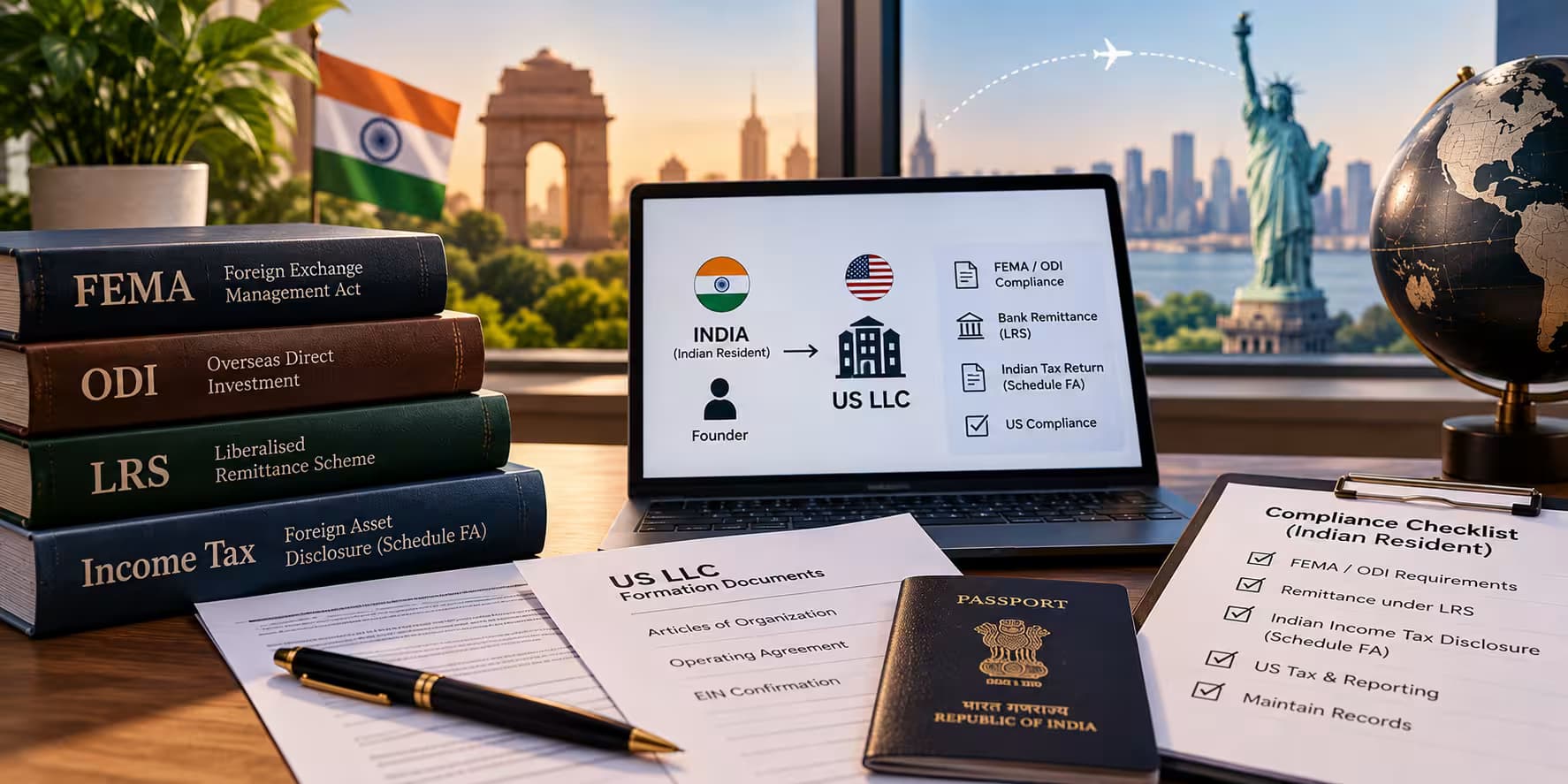
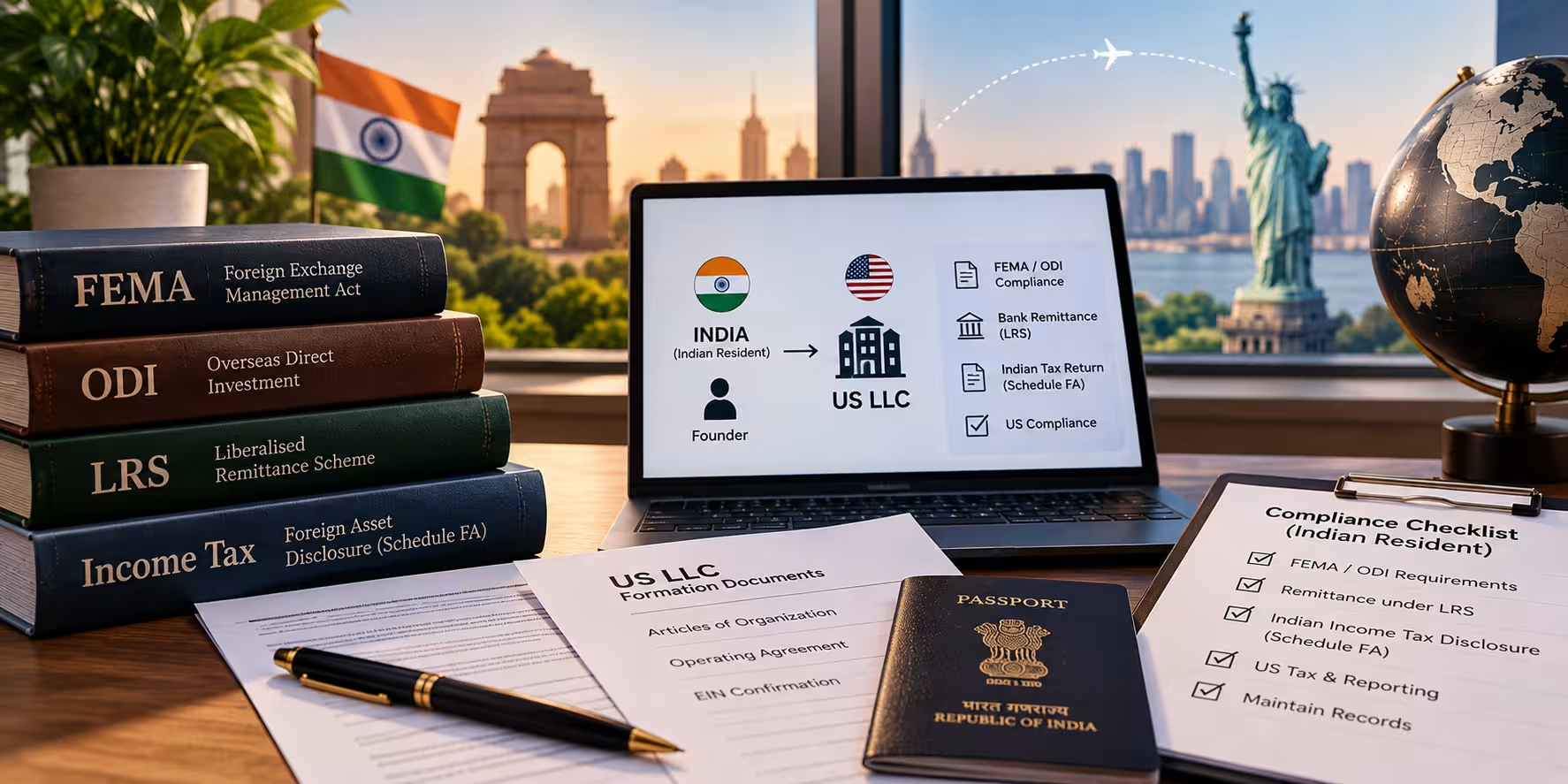
When I help an Indian entrepreneur set up a US company, the conversation often focuses on registering the LLC, obtaining an EIN, and opening a business bank account. But a US LLC owned by Indian resident founders can also raise important questions about Indian overseas investment and tax compliance. If you're researching a US LLC owned by an Indian resident, it's important to understand whether FEMA, ODI, remittance rules, and foreign asset disclosure requirements apply to your circumstances.
I remember a CA partner flagging an issue while reviewing a client's income tax return. The concern was that owning a foreign company can involve more than reporting income. It may also raise questions about overseas investment under FEMA and disclosure of foreign assets in an Indian income tax return. This is an important distinction many founders overlook when they concentrate only on US requirements.
US LLC Owned by Indian Resident: Does FEMA Compliance Apply?
A US LLC owned by an Indian resident may fall within India's overseas investment framework, depending on the ownership arrangement, funding route, and other circumstances. The Foreign Exchange Management Act (FEMA) governs certain cross-border investments and foreign exchange transactions involving Indian residents.
Under the Overseas Investment Rules, 2022, an investment in the equity capital of an unlisted foreign entity generally falls within Overseas Direct Investment (ODI). A US LLC is commonly privately held, but the exact treatment of your ownership and proposed structure should be confirmed with a qualified professional and your authorised dealer (AD) bank.
This matters because registering an LLC in the United States and complying with Indian overseas investment rules are two separate things. Obtaining a US formation certificate or an EIN does not, by itself, establish that every Indian regulatory requirement has been met.
If you're still planning your US business structure, start with this guide to forming a US LLC as a non-resident. Understanding the US formation process is useful, but it should be considered alongside the Indian rules that may apply to your investment.
What Are ODI and LRS, and Why Do They Matter?
ODI stands for Overseas Direct Investment. It generally covers investment in the equity capital of an unlisted foreign entity, along with certain investments in listed entities that meet the applicable criteria. The Liberalised Remittance Scheme (LRS), meanwhile, provides a framework under which eligible Indian resident individuals can make permitted remittances abroad, subject to its rules and limits.
The distinction matters for founders funding their US businesses from India. Under the overseas investment framework, resident individuals can make certain ODI investments, but eligibility is subject to specific conditions. For example, the rules generally restrict a resident individual's controlled ODI investment to an operating foreign entity that is not engaged in financial services and does not have a subsidiary or step-down subsidiary. Not every proposed LLC structure will automatically qualify.
Where ODI applies, reporting and documentation may also be required through the designated AD bank. RBI regulations cover matters such as obtaining a Unique Identification Number (UIN), providing evidence of investment, and submitting applicable reports. The precise requirements depend on the investment, the transaction, and any relevant exceptions.
My advice is to discuss the proposed ownership, funding route, and business activity with your CA and AD bank before assuming that a normal international transfer is all you need. The fact that money can be remitted abroad does not automatically mean that every proposed overseas investment structure is permitted.
What Should You Confirm Before Funding Your US LLC?
Before transferring funds from India, clarify how your proposed ownership will be classified under the overseas investment rules. Confirm whether the intended business activity and ownership structure are permitted, what documentation your bank requires, and whether ODI reporting or other formalities apply. Keep records of remittances and investment documents so you can demonstrate how the business was funded.
The ITR Step: Foreign Asset Disclosure
FEMA compliance is only one part of the picture. Indian income tax reporting is a separate consideration, and foreign asset disclosure in your ITR depends on your tax residential status and the applicable filing requirements.
If you qualify as a resident and ordinarily resident under Indian tax rules, your ownership interest in a foreign entity may need to be disclosed in Schedule FA (Foreign Assets) of your income tax return. Foreign-source income may also need to be reported in the relevant income schedules, depending on your circumstances.
The Income Tax Department explains that Schedule FA is generally not required for a non-resident or a resident but not ordinarily resident (RNOR). The correct reporting position therefore depends on your Indian tax residential status, the nature of your foreign interest, and the applicable return requirements.
This is why a CA reviewing your ITR may ask questions about a US LLC even when the company has not distributed profits to you. Foreign ownership and foreign income are related, but they are not identical questions. Do not assume that no distribution automatically means there is nothing to disclose.
If your LLC also has US reporting obligations, review this guide to non-resident US LLC tax filing. US filings and Indian foreign asset disclosures are separate compliance questions, and completing one does not automatically satisfy the other.
Does Every Indian LLC Owner Need to File Schedule FA?
Not necessarily. The reporting requirement depends on the individual's Indian tax residential status and the applicable income tax return rules. A resident and ordinarily resident taxpayer may have foreign asset disclosure obligations, while a non-resident or RNOR may be treated differently. Confirm your status and filing requirements with a qualified Indian tax professional for the relevant financial year.
US LLC Owned by Indian Resident: What Founders Should Do Before Setting Up
I encourage founders to look at the entire process, not just the US formation paperwork. Before transferring funds or completing the setup, clarify how your ownership will be classified under the Indian overseas investment rules, whether the proposed structure is permitted, and which reporting steps apply through your bank.
At tax time, separately confirm whether your foreign ownership interest and any foreign income need to be disclosed in your Indian return. Keep your LLC formation documents, ownership records, remittance proofs, financial statements, and relevant tax records organised so your CA can review the facts accurately.
A US LLC can be a useful structure for building an international business, but it should not be treated as a US-only decision when its owner remains resident in India. The right approach is to plan for Indian compliance at the same time as US formation—not after a CA flags a problem during ITR filing.
For founders who are still arranging their US business identification details, this guide on getting an EIN without an SSN as a non-resident covers another part of the setup process. Remember that obtaining an EIN is a US administrative step; it does not replace any Indian overseas investment or tax reporting requirements that may apply.
Frequently Asked Questions
Does an Indian resident need RBI approval to own a US LLC?
The answer depends on the ownership structure, funding route, nature of the investment, and applicable overseas investment rules. Certain investments may require reporting or other formalities through an authorised dealer bank. Confirm the specific requirements before funding or acquiring the foreign interest.
What is the difference between ODI and LRS?
ODI refers to overseas direct investment under the applicable framework, while LRS is a scheme that permits eligible resident individuals to make certain remittances abroad within its rules and limits. They are related in some transactions, but they are not interchangeable. The correct treatment depends on the purpose and structure of the transaction.
Do I need to disclose my US LLC in my Indian ITR if it earns no income?
A lack of income or distributions does not automatically eliminate foreign asset disclosure obligations. Whether Schedule FA or other disclosures apply depends on your Indian tax residential status, the nature of your foreign interest, and the applicable filing rules.
Is FEMA compliance the same as filing an Indian income tax return?
No. FEMA and overseas investment requirements concern certain cross-border transactions and investments. Income tax return requirements address matters such as taxable income and applicable disclosures. Meeting one set of requirements does not automatically satisfy the other.
What documents should I keep for my US LLC?
Keep your formation documents, ownership records, investment and remittance evidence, bank records, financial statements, and relevant tax filings. Your CA and authorised dealer bank can tell you which additional documents are needed for your particular investment and reporting obligations.
Should I speak to a CA before opening my US LLC?
If you are an Indian resident planning to own or fund a US LLC, discussing the proposed structure with a qualified Indian CA and your authorised dealer bank before transferring funds can help identify potential ODI, remittance, and tax reporting requirements early.
Final Thoughts
Setting up a US LLC can be an important step toward building an international business, but Indian founders should not overlook the compliance obligations that may arise in their home country. FEMA, ODI, remittance rules, and foreign asset disclosure in an Indian income tax return address different issues and should be considered together when planning the structure.
Before funding your LLC, confirm whether the proposed investment is permitted and what reporting or documentation is required. Before filing your ITR, check your residential status and determine whether your foreign ownership interest or income must be disclosed.
The goal is not simply to establish a US company. It is to build an international business with a clear understanding of the compliance responsibilities that apply in both countries.
*Disclaimer: This article is for general educational purposes only and is not individualized legal, FEMA, or tax advice. Overseas investment eligibility and ITR disclosures depend on the investor's residential status, ownership, business activity, funding route, and applicable rules. Confirm your situation with a qualified Indian CA and your authorised dealer bank before acting.*
This article is for general informational purposes only and does not constitute legal, tax, or financial advice. Tousif Akram and FormLLC are not a law firm or CPA firm. Consult a licensed professional for advice specific to your situation.
Ready to Form Your US LLC?
Free 30-minute consultation with no obligation and no sales pressure.
Book Free Call