Do You Need an LLC Operating Agreement as a Solo Non-Resident Owner?

Tousif Akram
IRS CAA | Founder, FormLLC
Do You Need an LLC Operating Agreement as a Solo Non-Resident Owner? Banks Think So
One question I often hear from founders after forming a US company is, “Why do I need an LLC operating agreement when I am the only owner?”
I understand the confusion. If you formed a Wyoming LLC from India, own 100% of the company, and make every business decision yourself, creating an agreement with yourself can seem unnecessary.
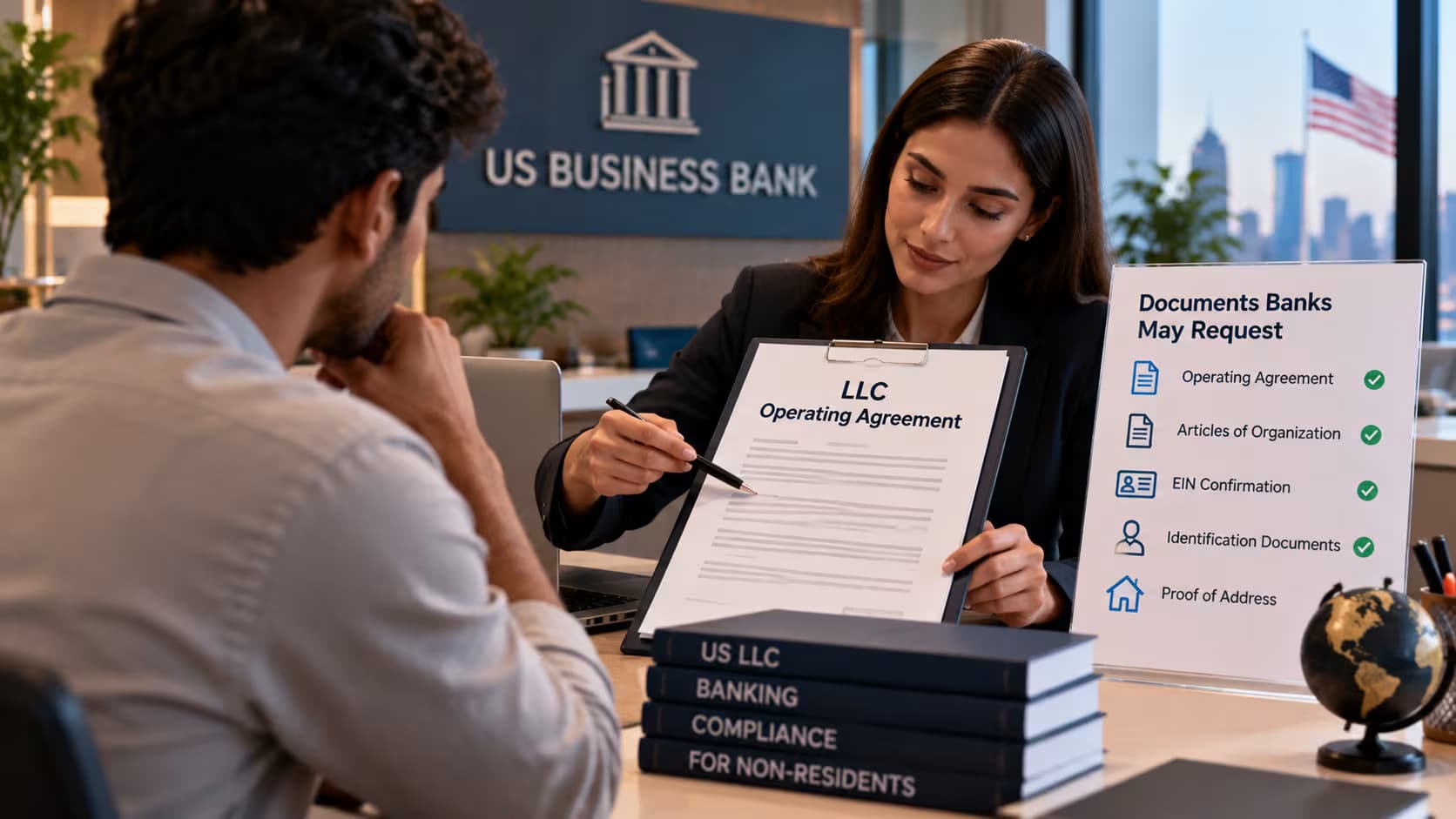
However, the question becomes more important when you apply for a US business bank account. A bank may ask for your operating agreement during verification, even if the state did not require you to submit one when forming your company.
That is why I encourage non-resident founders to prepare their ownership documents before starting banking applications. Having the right paperwork ready can help you respond more efficiently when a provider requests additional information.
What Is an LLC Operating Agreement?
An LLC operating agreement is an internal document that explains how a company is owned, managed, and operated. For a single-member LLC, it typically identifies the sole owner, confirms the ownership interest, and describes the owner's management authority.
The agreement can also cover capital contributions, distributions, recordkeeping, business decisions, and the process for dissolving the company. Its purpose is to document how the LLC is organised and how it will operate.
Unlike the Articles of Organization, which establish the LLC with the state, the operating agreement is generally kept with the company's internal records. Even when a written agreement is not legally required, having one can make your business documentation more complete.
Does Wyoming Require an Operating Agreement for a Single-Member LLC?
Wyoming law recognises operating agreements for LLCs, including single-member companies. However, a written operating agreement is not generally required as part of forming a standard Wyoming LLC, and the agreement is not filed with the Secretary of State.
Wyoming law also provides default rules for certain matters that an operating agreement does not address. This means that forming an LLC without a separate written agreement does not automatically mean the company was formed incorrectly.
If you have already established a Wyoming LLC without preparing an operating agreement, you can review your circumstances and decide whether to create one. In most cases, I recommend preparing a written agreement because it documents ownership and management authority clearly.
If you are still evaluating Wyoming as your formation state, our guide to Wyoming LLCs for non-US founders explains other considerations for international business owners.
Why Do Banks Ask for an LLC Operating Agreement?
When you apply for a business bank account, the provider needs to understand more than whether your LLC exists. It may also need to verify who owns the business and who has authority to act on its behalf.
Your Articles of Organization confirm important formation details, but they may not establish every ownership or management detail the bank wants to verify. An operating agreement can help fill that gap by documenting the company's ownership and internal authority.
What Banks May Want to Verify
For example, a bank may want to confirm the identity of the LLC's owner, determine whether the company is member-managed or manager-managed, and establish who can open or operate its accounts.
Requirements vary between financial institutions. Some may request an operating agreement from a single-member LLC, while others may require it only for particular ownership structures or applications.
A document that is optional for state formation can still be useful during banking verification. Preparing it in advance can reduce the need to create or correct paperwork in the middle of an application.
Does Every Bank Require an Operating Agreement?
No. Not every bank or financial service provider has the same documentation requirements. The documents requested may depend on the provider, the company's structure, the owner's residency, and the details of the application.
Before applying, review the provider's requirements and prepare the documents relevant to your situation. Our guide on opening a US bank account as a non-resident LLC owner explains common documentation requirements and other considerations for international founders.
What I Check Before a Non-Resident Founder Applies
For a solo founder, the operating agreement should accurately reflect the company's actual structure. I check that the legal LLC name matches the formation documents, the sole member is correctly identified, and the ownership information is accurate.
The agreement should also explain whether the LLC is member-managed or manager-managed. It should identify who has authority to make business decisions and act on the company's behalf, including opening and operating business accounts where appropriate.
Keep Ownership Information Accurate
If the owner lives in India or another country outside the United States, the agreement should reflect the owner's genuine details. Do not misrepresent your residential address or claim US residency when that is not your situation.
The ownership details, addresses, and signatures should be consistent with the other documents submitted to the bank. Inconsistencies can lead to additional questions or verification delays.
Organise Your Supporting Documents
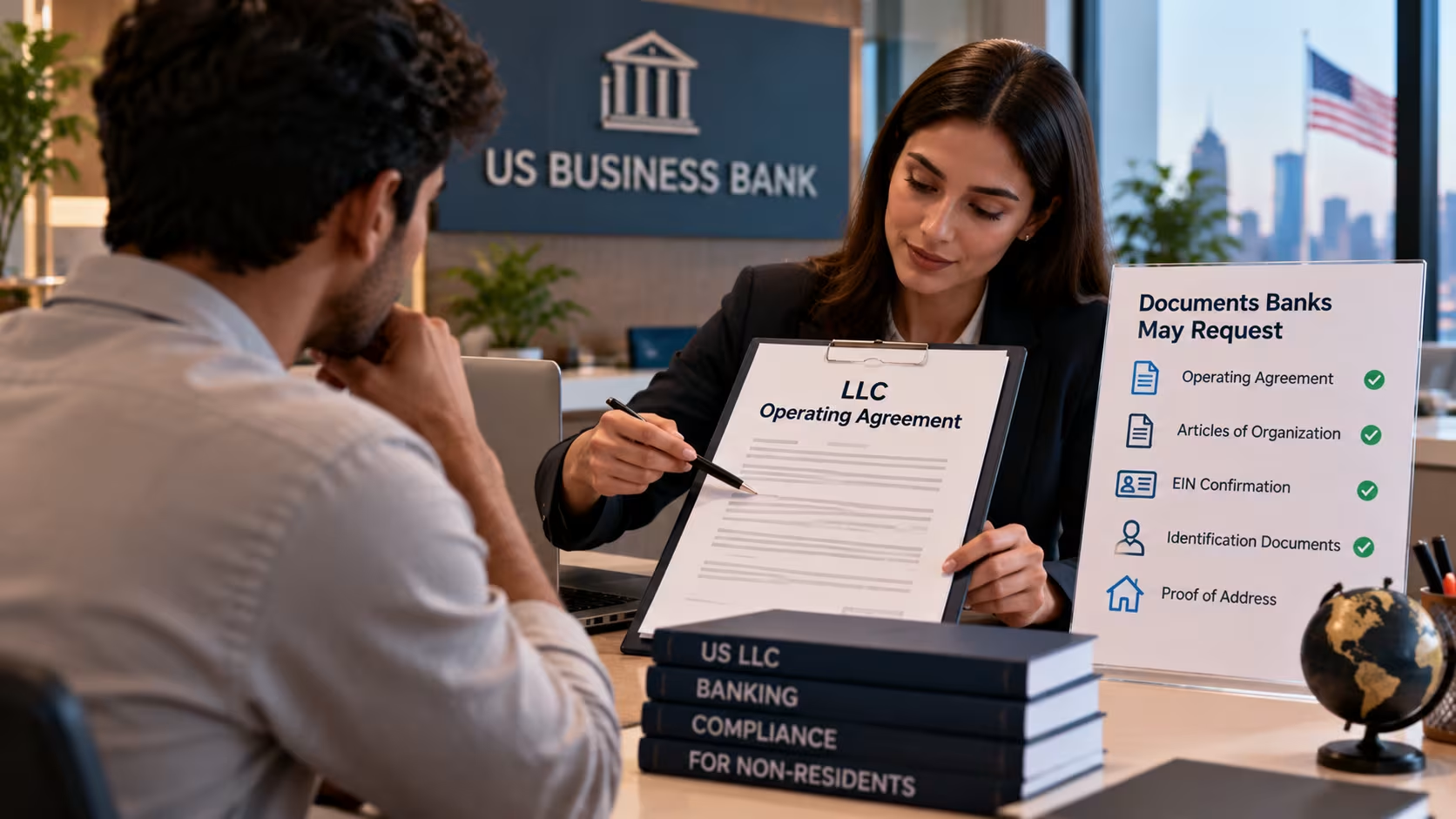
I recommend keeping the operating agreement together with the Articles of Organization, EIN confirmation, and relevant business records. This makes it easier to respond when a bank requests additional documentation.
Remember that an operating agreement does not replace identity verification, address documentation, or other banking eligibility requirements. A provider may still request additional information or decline an application based on its own policies.
If you have not obtained your company's EIN yet, our guide to getting an EIN without an SSN as a non-resident explains another important step for international founders.
Can You Write Your Own Single-Member LLC Operating Agreement?
In many cases, a founder can prepare a straightforward operating agreement, provided it accurately reflects the company and complies with the applicable state's law.
However, I would avoid downloading a random template and signing it without reviewing the terms. Some templates are written for multi-member LLCs, contain provisions that do not fit your business, or make assumptions about the owner's residency.
What Should a Single-Member Agreement Include?
A basic single-member operating agreement should identify the company and its sole owner. It should explain the ownership interest, management structure, decision-making authority, and how contributions and distributions will be handled.
It can also describe how company records will be maintained, how amendments will be made, and what happens if the business is dissolved. The exact provisions should reflect your circumstances and applicable state law.
If your LLC has significant assets, investors, unusual ownership arrangements, or cross-border legal complications, professional review is sensible. A qualified professional can help identify issues that a generic template may overlook.
The goal is not to create an unnecessarily complicated document. It is to maintain a clear, accurate record of how your LLC is organised and managed.
Common Operating Agreement Mistakes to Avoid
Several mistakes can make an operating agreement less useful. Using a template designed for a different state or ownership structure may leave important details unclear. Incorrect company names, inconsistent ownership information, or missing signatures can also create avoidable questions.
Another common mistake is assuming that the agreement solves every legal, tax, or banking issue. It does not replace state formation documents, required tax filings, identity verification, or a financial institution's approval process.
Review the agreement before signing it and make sure it matches your company's actual structure. If the ownership or management arrangements change later, update the document as appropriate and follow the applicable amendment procedures.
For a broader understanding of the responsibilities that continue after formation, read our guide to why forming an LLC is easy but compliance is the hard part.
My Advice to Solo Non-Resident Founders
If you are the only owner of a US LLC, do not dismiss the operating agreement simply because your state did not ask for one during registration.
From the founder's perspective, it may feel like extra paperwork. From a bank's perspective, it can help explain who owns the company and who has authority to manage its affairs.
I would rather see a founder prepare a clear, accurate LLC operating agreement before applying for banking than scramble to create one in the middle of verification. You may never be asked to upload it, but if a provider requests it, having the document ready can make the process easier.
The takeaway: Your state may not require a written operating agreement, but your business can still benefit from one—especially when you are running a US LLC from outside the United States.
This article is for general informational purposes only and does not constitute legal, tax, or financial advice. Tousif Akram and FormLLC are not a law firm or CPA firm. Consult a licensed professional for advice specific to your situation.
Ready to Form Your US LLC?
Free 30-minute consultation with no obligation and no sales pressure.
Book Free Call