Non-Resident LLC Formation: States, Countries & Industries

Tousif Akram
IRS CAA | Founder, FormLLC
Non-Resident LLC Formation: States, Industries and Countries
Our non-resident LLC formation records help us understand which states international founders choose and how their business needs vary across countries and industries. When you help founders form US companies from different parts of the world, you start noticing patterns that generic LLC guides rarely capture. Some states come up repeatedly, certain business models have similar setup needs, and founders from different countries often arrive with different questions about payments, banking, and compliance.
That is what made me look more closely at our own formation records at FormLLC. Rather than relying only on general advice about the best state for a non-resident LLC, I wanted to understand what our customers were actually choosing.
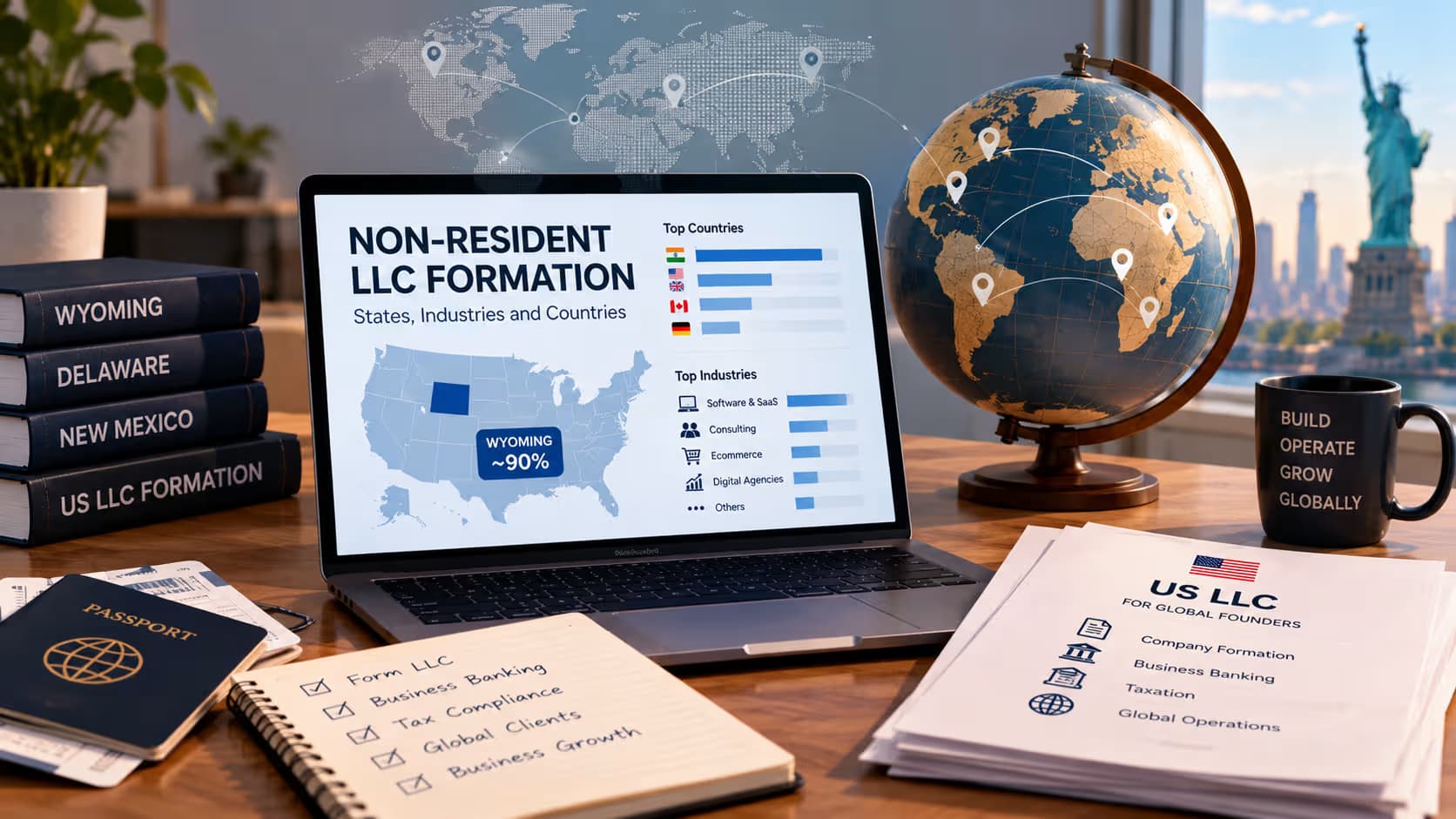
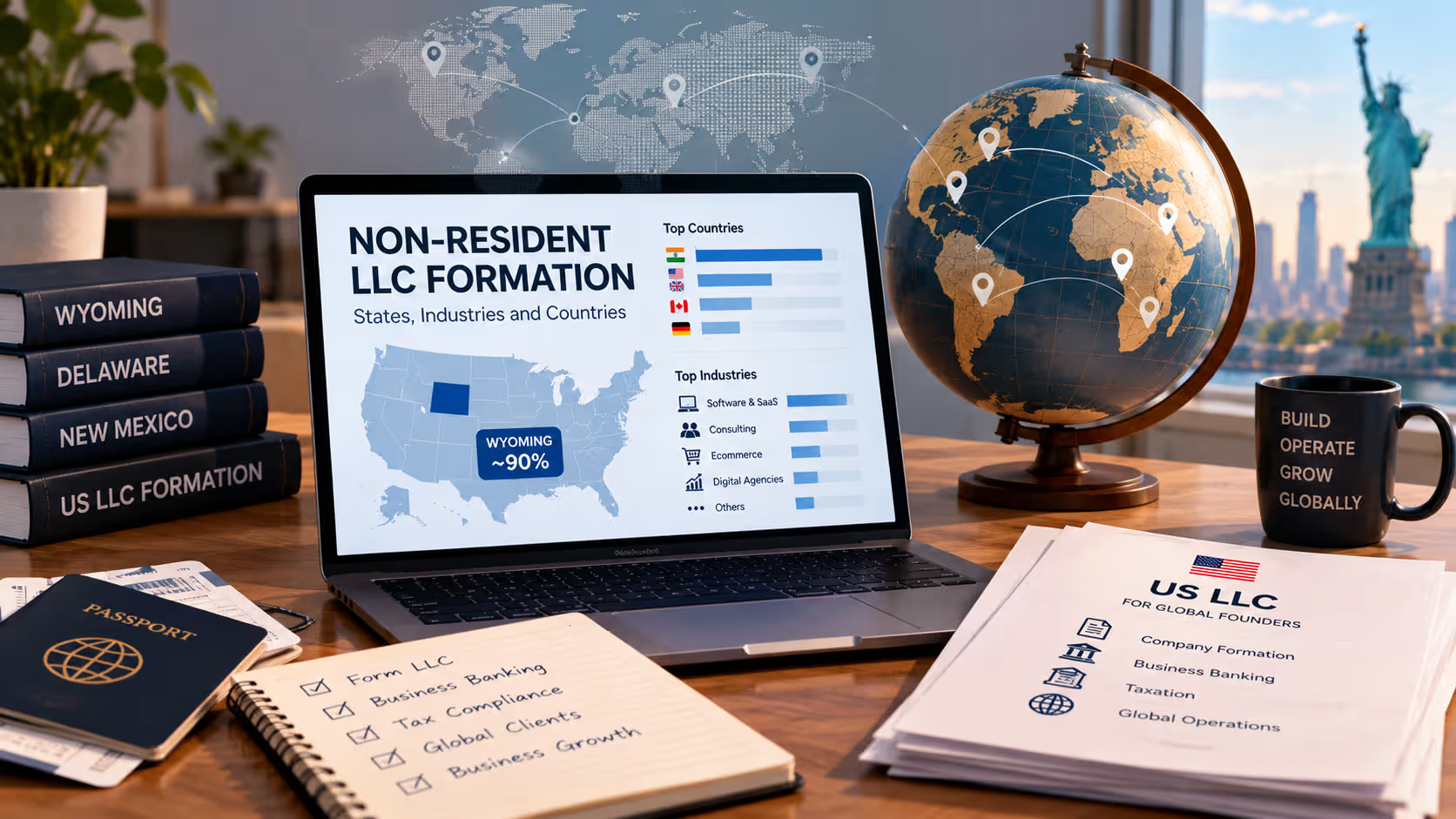
Our internal estimates suggest that we have helped form approximately 4,000 companies, served founders from around 50 countries, and worked predominantly with non-US owners. One pattern stands out: roughly 90% of our formations have been in Wyoming, based on the estimates shared previously. These figures should be verified against the latest company records before publication.
1. Why Wyoming Leads Our Non-Resident LLC Formations
When people search for the best US state for a non-resident LLC, Wyoming, Delaware, and New Mexico often come up in the conversation. However, our own formation experience at FormLLC points strongly toward Wyoming.
Why do so many of our customers choose Wyoming? Founders often look for a straightforward registration process, manageable ongoing requirements, and a business structure that can support an online company operated from abroad. However, a state's popularity among our customers does not automatically make it the right choice for every founder.
Delaware may suit businesses with particular legal or investment considerations, while New Mexico may appeal to founders comparing state-level requirements. The right decision depends on the company's activities, long-term plans, and compliance obligations—not simply on which state appears most frequently in online recommendations.
Our Wyoming-heavy customer mix tells us what the founders who work with us choose. It does not prove that 90% of all non-resident LLCs in the United States are formed in Wyoming. Keeping that distinction clear makes our analysis more transparent and useful.
For founders comparing their options, our guide to choosing the right US LLC structure can provide a starting point for understanding the broader formation process. Founders who want to understand the company's internal governance can also explore our guide to US LLC operating agreements for non-residents.
2. Our Customers Come From Around 50 Countries
One of the most interesting aspects of helping international founders is seeing how widely demand for US business infrastructure is distributed. Our internal figures indicate that we have served entrepreneurs from approximately 50 countries, demonstrating the international reach of our customer base.
Entrepreneurs can build software, provide professional services, sell products, and serve international customers without necessarily living in the United States. A US LLC may form part of their business structure, but the reasons for establishing one vary considerably.
One founder may want a company structure for working with international clients. Another may be building a software-as-a-service (SaaS) product, launching an ecommerce store, or exploring payment services that support their business model. Each situation comes with different practical questions about banking, payments, taxation, and ongoing compliance.
I would not assume that every founder from a particular country has the same motivation. Instead, the useful lesson is that international entrepreneurs need advice based on their actual business activities, country of residence, customer base, and operational requirements.
To make this country analysis more valuable, the next step is to add verified data. Publishing the top five countries by formation count or percentage would show readers where our customers are coming from without relying on assumptions about their motivations.
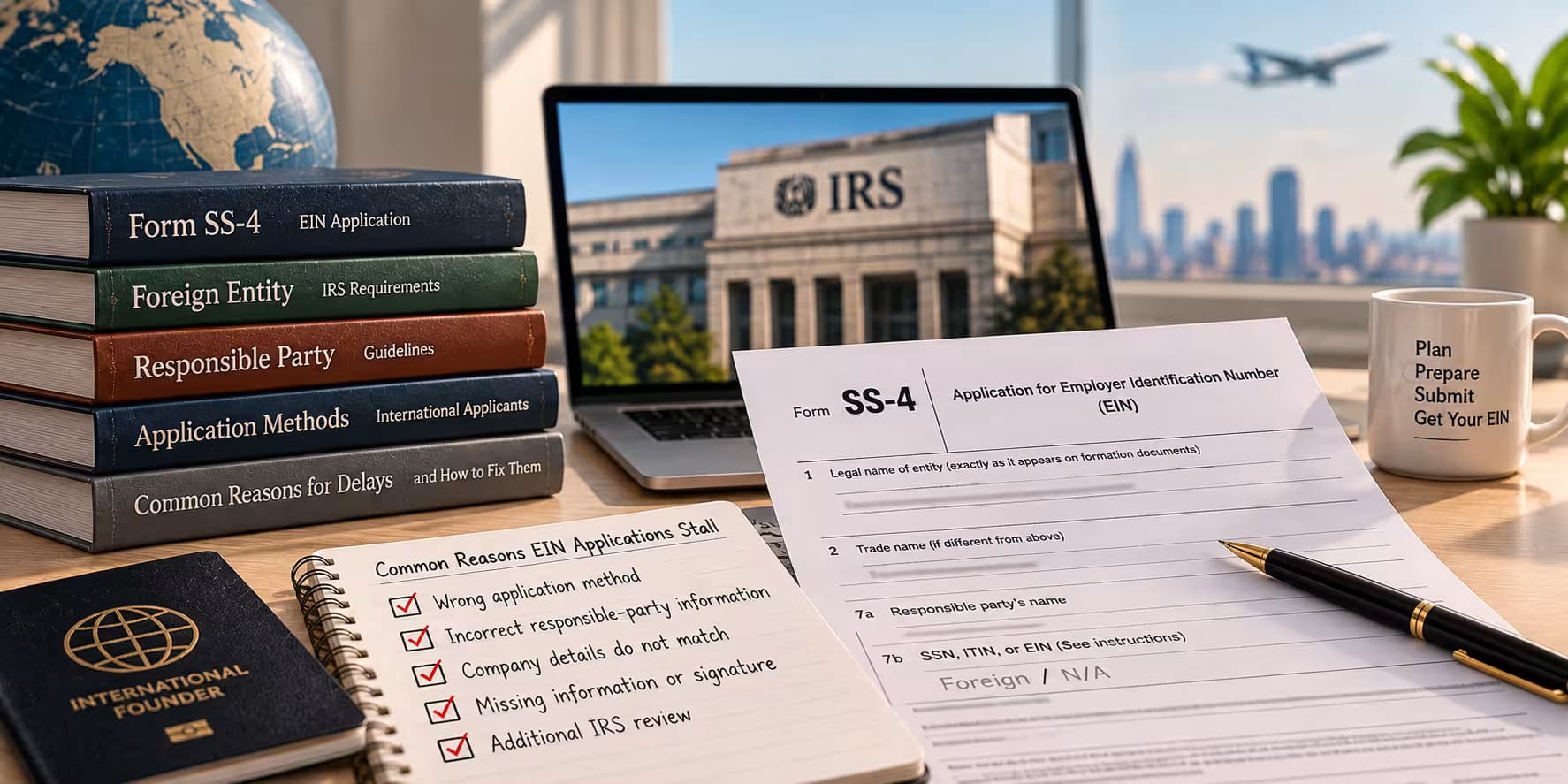
International founders may also need to obtain a US Employer Identification Number (EIN). Our guide to getting an EIN without an SSN as a non-resident explains a related part of the company setup process.
3. Which Industries Are Choosing US LLCs?
Our industry breakdown could offer another useful perspective on how international founders use US companies. However, the analysis only becomes meaningful when businesses are classified consistently.
For example, one software founder might describe a company as a technology business, while another might use the term SaaS. A freelancer may work in design, marketing, consulting, or software development. Ecommerce founders may sell through online marketplaces or operate independent stores. Counting every description as a separate industry could distort the results.
For a more reliable analysis, I would group formations into a few clearly defined categories: software and SaaS, consulting and professional services, digital agencies and freelancing, ecommerce, and other businesses. Each category should then include a verified company count and its percentage of the total dataset.
This approach would help us understand which types of businesses our customers are establishing without overstating what the records show. It would also make future comparisons more meaningful if we use the same categories in subsequent reports.
The figures should be added only after the records have been reviewed. Until the industry counts are verified, I would avoid claiming that a particular sector is our largest, fastest-growing, or most popular category.
Founders can also explore our guide to starting a US LLC from India for a broader look at the company formation process and the decisions involved in establishing a US business from abroad.
4. What Our Non-Resident LLC Formation Data Actually Tells Us
The main lesson from our formation records is not that every international founder should choose Wyoming. Rather, our customer mix suggests that many of the entrepreneurs who come to FormLLC are looking for a practical way to structure an international business through a US entity.
Choosing a state is only the beginning. Founders also need to understand registered-agent requirements, state annual reports, applicable federal tax and information filings, and whether their preferred banking or payment provider accepts their particular business setup.
Formation numbers alone cannot tell us whether a company succeeded, obtained banking approval, or increased its revenue. Those outcomes would require separate records and a different analysis. I believe the most credible conclusions are the ones that remain closely tied to what the data can actually demonstrate.
It is also important to distinguish our customer data from public state formation statistics. Overall formation totals may include domestic owners, non-resident owners, different business structures, and companies with very different purposes. They cannot automatically tell us how many LLCs were formed by international entrepreneurs.
Our internal records answer a narrower but still valuable question: What do the founders who come to us actually choose? That perspective can help us improve our guidance, identify the questions customers ask most often, and explain common formation decisions with greater clarity.
Founders evaluating their next steps can also read our guide on [opening a US bank account] (/blog/us-bank-account-non-resident) as a non-resident LLC owner, particularly when considering banking eligibility and the requirements of different financial providers.
5. How Founders Can Use These Insights When Choosing a State
Formation trends can be a helpful starting point, but they should not replace an assessment of an individual business. A state that works well for one online entrepreneur may not be the best option for a company with employees, physical operations, investors, or activities that create obligations in another state.
Before choosing where to register, founders should consider the nature of their business, where it will be managed, the locations in which it will operate, and the state-level obligations that may apply. They should also assess the ongoing costs and administrative work associated with maintaining the company.
International founders need to consider additional questions about their country of residence, tax responsibilities, banking eligibility, and payment processing. Registering an LLC in a particular state does not automatically resolve these matters or guarantee access to a specific financial service.
Our experience can help explain common choices, but the best recommendation should always reflect the founder's actual circumstances. The purpose of sharing formation patterns is to inform that decision—not to suggest that popularity alone determines suitability.
Understanding the responsibilities of a registered agent is another important consideration. Our guide on changing the registered agent for a US LLC covers a related aspect of maintaining a company's state registration.
What I Learned From Analysing Our Formations
Analysing our non-resident LLC formation data gives me a more practical perspective than simply repeating popular advice found online. Wyoming is the clear leader in our current customer estimates, and our founders come from a wide range of countries. The industry analysis could add another useful layer once the categories and figures have been verified.
The point of publishing this data is not to declare one state the winner for every founder. It is to give entrepreneurs a transparent view of what we see in practice, explain the limitations of the available figures, and help them ask better questions before forming a company.
I want FormLLC's educational resources to do more than explain how to register an LLC. They should help founders understand why a state might suit their situation, what obligations follow formation, and which decisions deserve closer attention. Our US LLC formation guide for non-residents is one place to continue exploring those decisions.
As we improve our internal reporting, verified country and industry breakdowns can make future articles more useful. They can also help us distinguish long-standing customer patterns from changes that emerge over time.
The most useful formation data isn't the biggest number. It's the data that helps a founder make a better decision.
This article is for general informational purposes only and does not constitute legal, tax, or financial advice. Tousif Akram and FormLLC are not a law firm or CPA firm. Consult a licensed professional for advice specific to your situation.
Ready to Form Your US LLC?
Free 30-minute consultation with no obligation and no sales pressure.
Book Free Call