Non Resident US LLC Tax Filing: What My Indian Clients Actually File Every Year

Tousif Akram
IRS CAA | Founder, FormLLC
Non Resident US LLC Tax Filing: What My Indian Clients Actually File Every Year
When I help Indian founders run a US company from India, one question comes up repeatedly: What do I need to file every year after forming my LLC? Understanding non resident US LLC tax filing is not just about submitting one tax return. It means keeping track of the US company's reporting requirements, state obligations, and the founder's personal tax responsibilities in India.
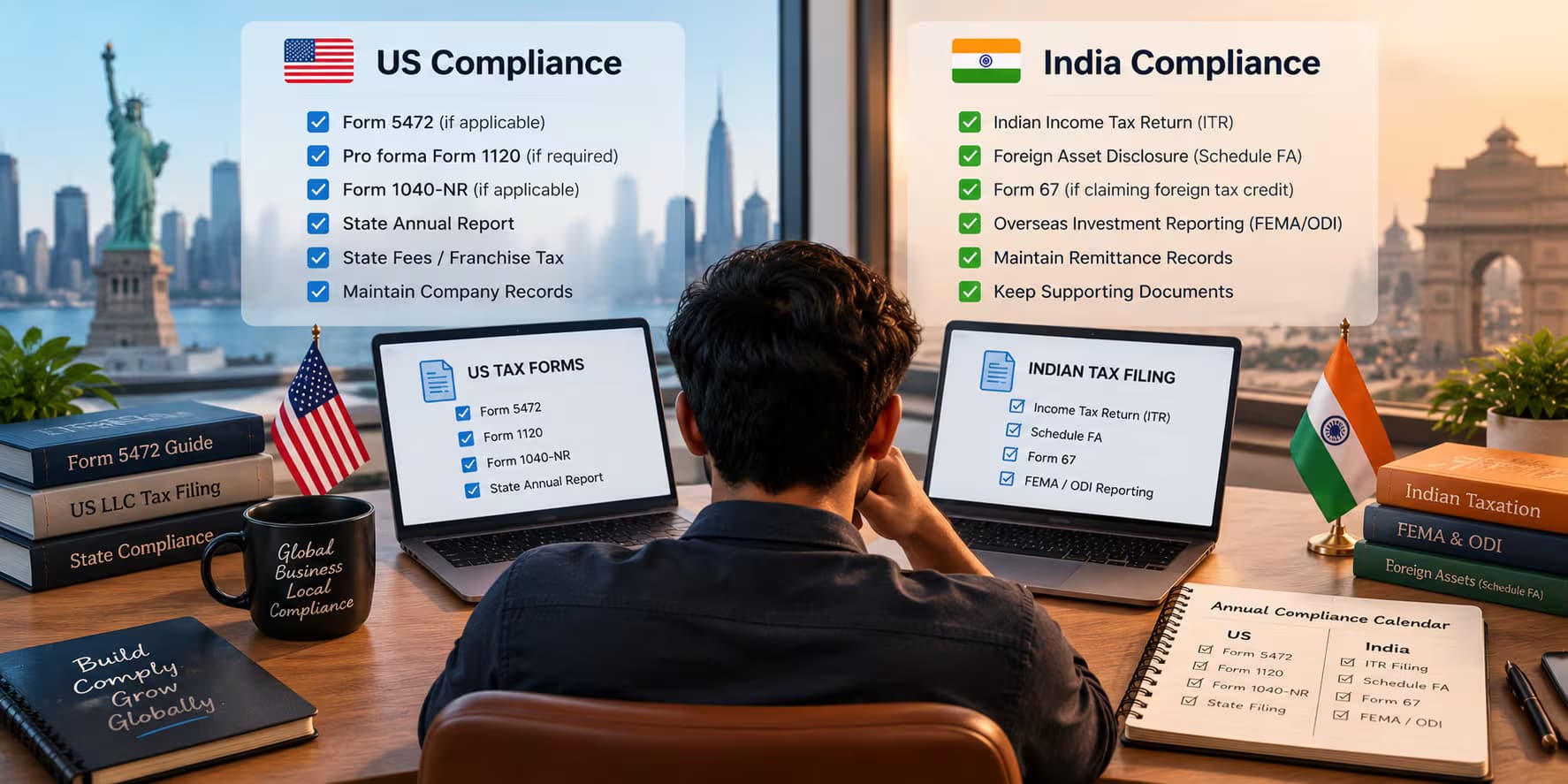
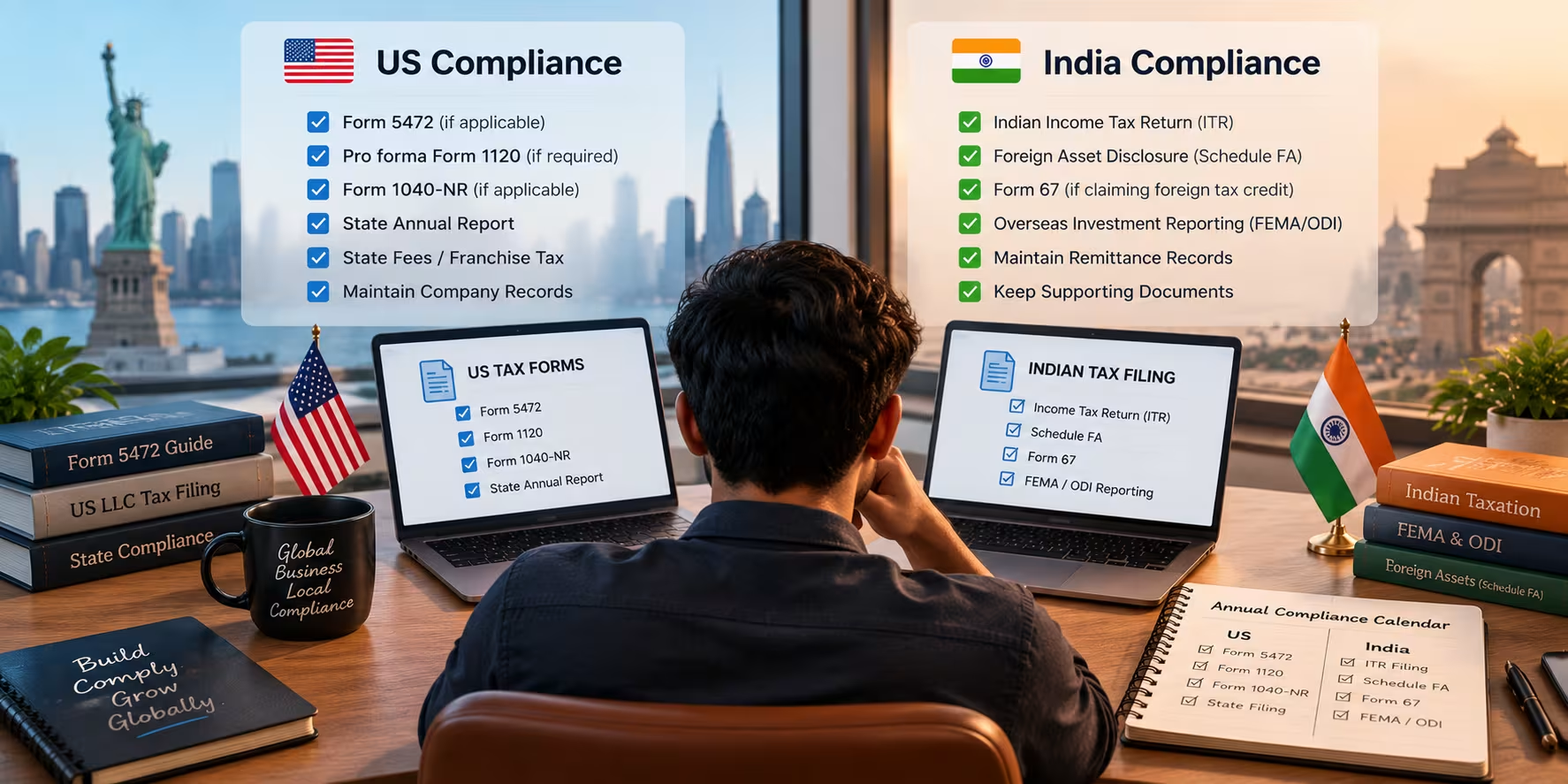
I encourage founders to think of compliance as two separate calendars: one for the United States and one for India. The exact forms depend on how the LLC is taxed, whether it has reportable transactions, the income it earns, and the owner's Indian tax residency. There is no single checklist that applies to every non-resident LLC owner. If you are still learning about the structure, my guide to starting a US LLC from India explains the broader setup and compliance considerations.
Understanding US Tax Filing Requirements for a Non-Resident LLC
Form 5472 and Pro Forma Form 1120
For many foreign founders who own a single-member US LLC treated as a disregarded entity for US federal tax purposes, the first forms to understand are Form 5472 and a pro forma Form 1120. When the reporting requirements apply, these forms may be required even if the business has little activity or owes no US federal income tax.
This is one reason I tell founders not to assume that no profit means no filing. Certain reportable transactions between a foreign-owned LLC and its foreign owner or other related parties can trigger reporting obligations. Missing a required Form 5472 can result in a $25,000 penalty, so it deserves a place on the annual compliance calendar. The precise filing requirement and deadline should be confirmed based on the LLC's tax classification and circumstances.
For a closer look at the relevant reporting rules, read my guide to Form 5472 for foreign-owned US LLCs.
Does Every Non-Resident LLC Owner Need to File Form 1040-NR?
Form 1040-NR is not automatically required for every non-resident LLC owner. Whether an individual must file a US non-resident income tax return depends on their US tax situation, including whether they were engaged in a US trade or business, the nature and source of their income, and any applicable treaty provisions.
I encourage founders to review their personal tax position separately from their LLC's reporting obligations. A filing requirement for the company does not automatically establish the owner's personal filing requirement, and the absence of a personal return requirement does not eliminate other obligations that may apply to the business.
State-Level LLC Annual Reports and Fees
Federal filings are only one part of non resident US LLC tax filing and compliance. Depending on where the LLC was formed and operates, state-level obligations may include an annual report, state fees, franchise taxes, or other filings.
A Wyoming LLC, for example, has an annual report requirement with a due date tied to its formation anniversary month. Other states have different rules and deadlines. I recommend keeping state compliance on a separate line in the calendar rather than assuming that completing a federal filing covers every obligation.
Indian Tax Filing Requirements for US LLC Owners
Indian Income Tax Returns and Foreign Asset Disclosures
The second calendar belongs to the person running the business from India. Owning a US LLC does not remove the need to review your Indian income-tax position. Your Indian tax residency, the LLC's US tax classification, how the business earns income, and how money reaches you can all affect the analysis.
For an Indian tax resident, the annual review should consider whether business income, foreign income, or foreign assets must be reported in the Indian income-tax return. The applicable disclosures depend on the person's residency status and individual circumstances.
The Indian tax return may involve disclosures relating to foreign assets, foreign-source income, and eligible foreign tax relief. The relevant schedules and reporting requirements depend on the taxpayer's residential status and the applicable rules. Schedule FA does not apply in the same way to taxpayers classified as non-residents or residents but not ordinarily resident.
When Form 67 May Be Relevant
If foreign tax has been paid and you are eligible to claim a foreign tax credit in India, Form 67 may also be relevant. It has its own conditions and filing timeline, so it should not be treated as an automatic requirement for every LLC owner.
Before claiming a credit, I recommend confirming whether the foreign tax qualifies, what supporting evidence is required, and how the relevant Indian tax rules apply to your circumstances.
Overseas Investment Reporting in India
There can also be overseas-investment reporting considerations under India's foreign-exchange framework. Whether these apply, and which reporting route is appropriate, depends on the ownership and investment arrangement.
Founders should not assume that forming a US LLC automatically determines which Indian reporting requirements apply. Discuss your ownership structure and investment arrangement with a qualified Indian chartered accountant who understands cross-border business.
How to Organize Your Annual US and India Compliance Calendar
Keep Separate Sections for US and Indian Obligations
In practice, I would ask an Indian founder with a US LLC to maintain one yearly tracker with two sections. The US section should record the LLC's federal information returns, any applicable personal tax return, and state filing dates. The India section should record the founder's Indian income-tax return, relevant foreign asset and income disclosures, foreign tax credit documentation, and any applicable overseas-investment reporting.
The tracker should distinguish confirmed filing requirements from items that need professional review. This helps prevent founders from treating every possible form as mandatory when its applicability depends on their particular circumstances.
Maintain Your Documents Throughout the Year
The calendar should also include the documents needed to prepare those filings, such as bank statements, payment processor reports, invoices, owner contributions and withdrawals, bookkeeping records, and evidence of taxes paid.
Keeping these records organized throughout the year is easier than trying to reconstruct every transaction when a deadline is close. I encourage founders to update their records regularly and keep company transactions clearly documented so their tax professionals can review the facts more efficiently.
Avoid Copying Another Founder's Filing Checklist
My biggest advice is not to copy another founder's filing list simply because they also own a US LLC. Two businesses can have the same state of formation but different tax classifications, transactions, income sources, and Indian reporting obligations.
The right checklist begins with those facts, not just the name of the LLC. For foreign-owned LLCs, Form 5472 reporting is one important area to review. You should determine whether the form applies to your company rather than assuming that every LLC has identical filing obligations.
Common Mistakes in Non Resident US LLC Tax Filing
Assuming No Profit Means No Filing
An LLC that has little or no profit may still have information-reporting or state-level obligations. Whether a specific form is required depends on the company's classification, transactions, and applicable rules. Review these requirements instead of relying only on whether the business owes income tax.
Treating US and Indian Compliance as One System
US company reporting and the owner's Indian tax responsibilities are separate areas that may both need attention. Completing one country's filings does not automatically satisfy the requirements of the other. Maintain separate records of the obligations that apply in each jurisdiction.
Waiting Until a Deadline Is Close
Leaving compliance until the last minute can make it harder to collect statements, confirm reportable transactions, and resolve questions about the correct forms. Year-round recordkeeping gives you and your advisers more time to identify issues before deadlines approach.
As I explain in why forming an LLC is only the easy part, creating the company is only the beginning. Maintaining accurate records and meeting ongoing obligations are essential parts of running a business responsibly.
Assuming Every Non-Resident Has the Same Obligations
The right filing checklist depends on the LLC's tax classification, reportable transactions, state requirements, the owner's tax residency, and other relevant facts. A checklist that works for one founder may not apply to another.
My Advice to Indian Founders Running US LLCs
Non resident US LLC tax filing is best treated as a year-round process, not a once-a-year form submission. Put the US and India deadlines on your calendar, verify which requirements apply to your particular setup, and review the list with qualified US and Indian tax professionals.
Start by confirming your LLC's federal tax classification and whether it has reportable transactions. Then review any personal US tax filing requirements, state-level obligations, and your Indian tax and reporting position. Keep the supporting documents organized so that each filing can be prepared using accurate information.
It is also important to understand the difference between owing income tax and having an information-reporting obligation. A business may have reporting responsibilities even when the tax outcome is not what the owner expected. My article on why a tax-free US LLC is not the whole story explains why founders should assess their circumstances rather than rely on blanket promises.
This approach is much safer than waiting until a reminder, bank request, or tax notice forces you to look into compliance. With a clear calendar and professional guidance where needed, founders can manage their responsibilities more confidently while focusing on building their businesses.
Frequently Asked Questions
What Is Non Resident US LLC Tax Filing?
Non resident US LLC tax filing refers to the federal, state, and potentially owner-level tax and reporting obligations associated with a US LLC owned by someone who is not a US resident. The applicable requirements depend on the LLC's tax classification, transactions, income, state, and the owner's circumstances.
Does a Foreign-Owned Single-Member US LLC Need to File Form 5472?
A foreign-owned single-member LLC treated as a disregarded entity may need to file Form 5472 with a pro forma Form 1120 when the applicable reporting requirements are met. The owner should confirm the filing obligation based on the LLC's transactions and circumstances.
Does Every Non-Resident LLC Owner Need Form 1040-NR?
No. Form 1040-NR is not automatically required for every non-resident LLC owner. The filing requirement depends on the individual's US tax situation and applicable rules.
Do Indian Residents Need to Report a US LLC in Their Indian Income Tax Return?
Potentially. The reporting obligations depend on Indian tax residency, the nature of the income, the ownership arrangement, and applicable disclosure rules. A qualified Indian tax professional can assess which income and foreign asset disclosures apply.
Is Form 67 Mandatory for Every Indian Owner of a US LLC?
No. Form 67 may be relevant when a taxpayer is eligible to claim a foreign tax credit in India. Its applicability depends on the foreign tax paid, the taxpayer's circumstances, and the relevant rules.
What Is the Best Way to Manage US and Indian Filing Deadlines?
Maintain a compliance calendar with separate sections for US federal filings, state requirements, and Indian tax and reporting obligations. Track relevant documents throughout the year and confirm deadlines and filing requirements with qualified professionals.
Final Thoughts
Running a US LLC from India involves more than registering the company and receiving payments. Founders need to understand the reporting requirements that apply to the LLC, the state where it is registered or operates, and their own tax position in India.
The most reliable approach is to maintain separate US and India compliance calendars, organize records throughout the year, and confirm the applicable requirements before filing. A clear process helps you avoid assumptions and manage your responsibilities more effectively as your international business grows.
*This article provides general educational information, not individualized tax or legal advice. Filing requirements and deadlines can change and depend on the LLC's classification, transactions, state, and owner's tax residency. Confirm the requirements for your specific situation with qualified US and Indian tax professionals before filing.*
This article is for general informational purposes only and does not constitute legal, tax, or financial advice. Tousif Akram and FormLLC are not a law firm or CPA firm. Consult a licensed professional for advice specific to your situation.
Ready to Form Your US LLC?
Free 30-minute consultation with no obligation and no sales pressure.
Book Free Call