Start a SaaS Business From India: Build for US Customers

Tousif Akram
IRS CAA | Founder, FormLLC
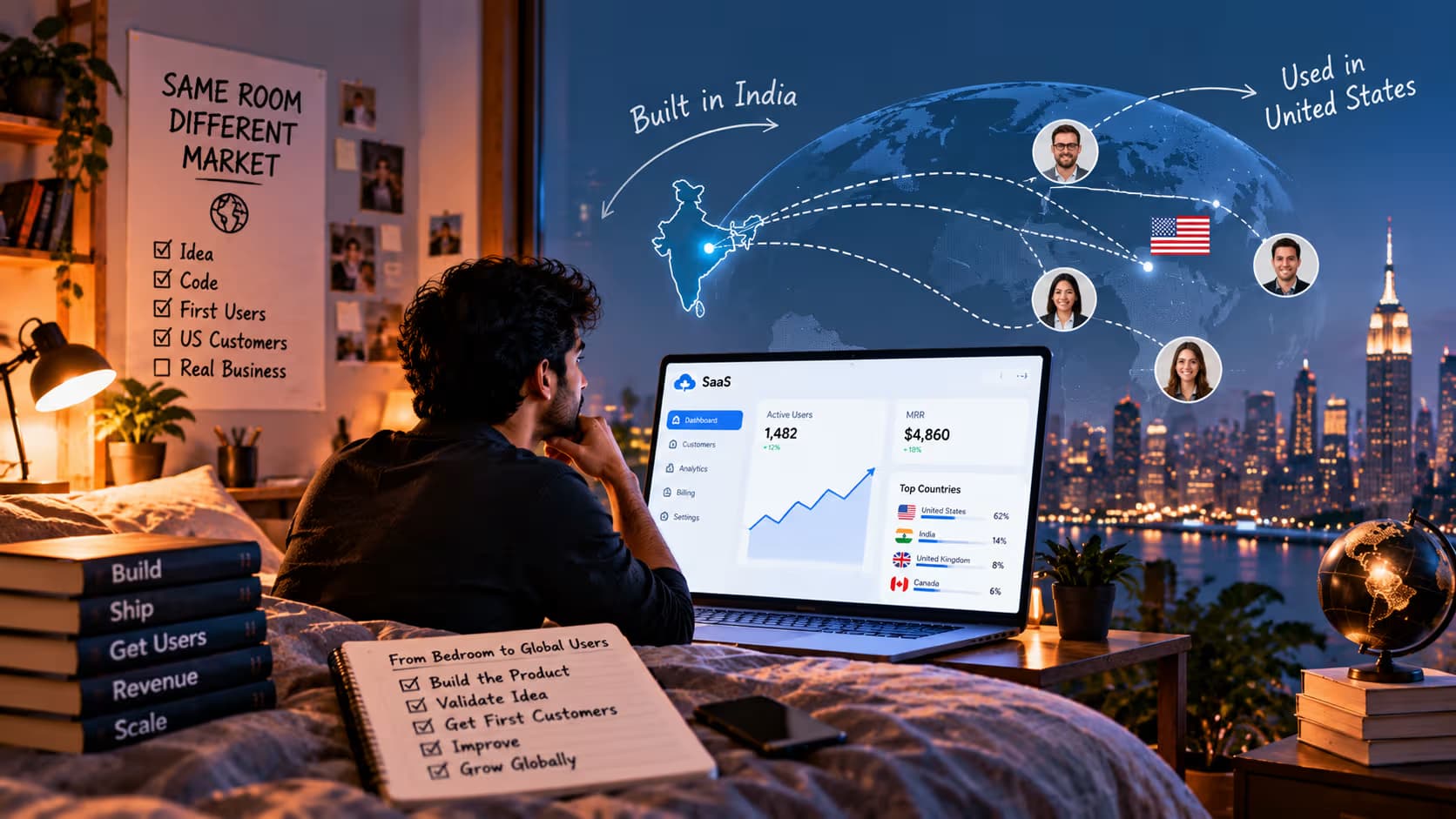
Start a SaaS Business From India: He Built His SaaS From a Bedroom for US Customers
The first version probably didn't look like a company. It looked like a laptop, a few late nights, a lot of unfinished code, and an idea that wouldn't leave the founder alone. Maybe the desk was in a bedroom. Maybe there was no office, no sales team, and no investor. But there was something more important: a product that solved a real problem for someone.
And then something interesting happened. The first customers weren't necessarily from the same city, or even the same country. They were in America.
This is the story I find increasingly common among founders building software from India. They start small, sometimes alone, and discover that the market for their product doesn't have to be limited by where they live. Starting a SaaS business from India can mean building the product in one country while serving customers in another.
Start a SaaS Business From India by Solving a Real Problem
If someone asks me how to start a SaaS business from India, I wouldn't begin with company registration. I'd begin with the customer.
What problem are you solving? Who has that problem? How frequently do they experience it? What are they currently paying for a solution? And most importantly, would they pay for yours?
These questions sound obvious, but founders can spend months building features before discovering that customers don't care about half of them. A SaaS company doesn't become valuable because it has a lot of code. It becomes valuable because it solves a problem repeatedly.
That is why the first customer can be more important than the first hundred features. Before thinking about a company structure, focus on proving that somebody wants what you are building.
The Internet Changed Where a Software Company Can Begin
For a long time, building a software company for American customers seemed to require being in America. That assumption is much less relevant when the product can be developed, distributed, supported, and improved remotely.
Today, a developer in India can build a product, put it online, find customers through search or communities, and support customers on the other side of the world. The founder's physical location does not necessarily have to match the customer's location.
But SaaS is different from traditional software services. You aren't simply building something for one client. You're building a product that you hope hundreds, thousands, or eventually millions of customers will use.
That changes the way you have to think about the business.
Your First American Customer Can Change Your Perspective
There is a psychological moment that happens when an Indian founder gets their first serious US customer. Suddenly, the market feels different.
The founder realizes that someone thousands of miles away is willing to trust a product built from a bedroom in India. That can change the ambition of the entire company.
Instead of asking, “Can I build a successful software business in India?”, the question becomes, “How big can this problem be globally?”
That is the beginning of an international SaaS business. The product may begin in one country, but the opportunity can extend far beyond it.
Build SaaS for US Customers, Not Just for the US Market
If your goal is to build SaaS for US customers, you need to understand the customer—not just the technology.
American customers may expect a certain level of onboarding, documentation, support, predictable billing, security information, privacy practices, integrations, and professional communication. They may compare your product with companies that have been operating for years.
Being technically good isn't enough.
You have to build a product and customer experience that gives someone in another country a reason to trust a company they may have never heard of. That is one of the biggest differences between building software and building a SaaS company.
Your Product Has to Earn Trust Across Borders
A global SaaS product is not simply a piece of software that happens to be available internationally. The entire customer experience has to work across borders.
That includes your website, pricing, onboarding, communication, support, billing, documentation, and the way you explain what your product does. If customers cannot quickly understand the value of the product or feel confident buying from you, technical quality alone may not be enough.
This is also where international founders need to think beyond their immediate product. The broader principles covered in starting a global business can help frame international growth as a business strategy rather than simply finding customers in another country.
When Should You Think About a US Company?
Eventually, the founder may start researching a US LLC for SaaS. This is where I think entrepreneurs should be careful.
A US entity can make sense for some SaaS founders depending on their ownership, operations, customers, contracts, fundraising plans, and overall business structure. But a US company isn't automatically required just because your customers are American.
The same applies to a US company for SaaS. The right structure depends on the business.
Don't start with:
“Which US LLC should I form?”
Start with:
“What kind of SaaS company am I building?”
If you are considering a US structure as a non-resident, my guide to US LLCs for non-residents can help you understand the broader considerations before treating incorporation as the first step.
A SaaS Company Eventually Becomes More Than Software
The early founder usually thinks about the product. Then customers arrive. Then billing becomes important. Then support. Then contracts. Then employees. Then intellectual property. Then accounting. Then compliance. Then perhaps fundraising.
The company slowly grows around the software.
That is why someone considering a US LLC for a software business or a US company for a software startup should think beyond the registration document. The entity is only one part of the infrastructure supporting the actual business.
The LLC is infrastructure.
The SaaS product is the business.
What About a US LLC for a Tech Startup?
I get this question frequently in different forms: “Should I create a US LLC for a tech startup?”
Sometimes the answer may be yes. Sometimes another structure may make more sense. And sometimes the founder needs to validate the product before worrying about any US entity at all.
For a bootstrapped SaaS company, the priorities may be very different from a venture-backed startup planning to raise institutional capital. A founder who is still searching for product-market fit may need to spend more time talking to customers and improving the product than deciding which structure to use.
That distinction matters.
Your legal structure should fit your business model, not the other way around.
If an EIN becomes relevant to your chosen structure, you can also review how to get an EIN without an SSN rather than making assumptions about the process.
The Bedroom Isn't the Important Part
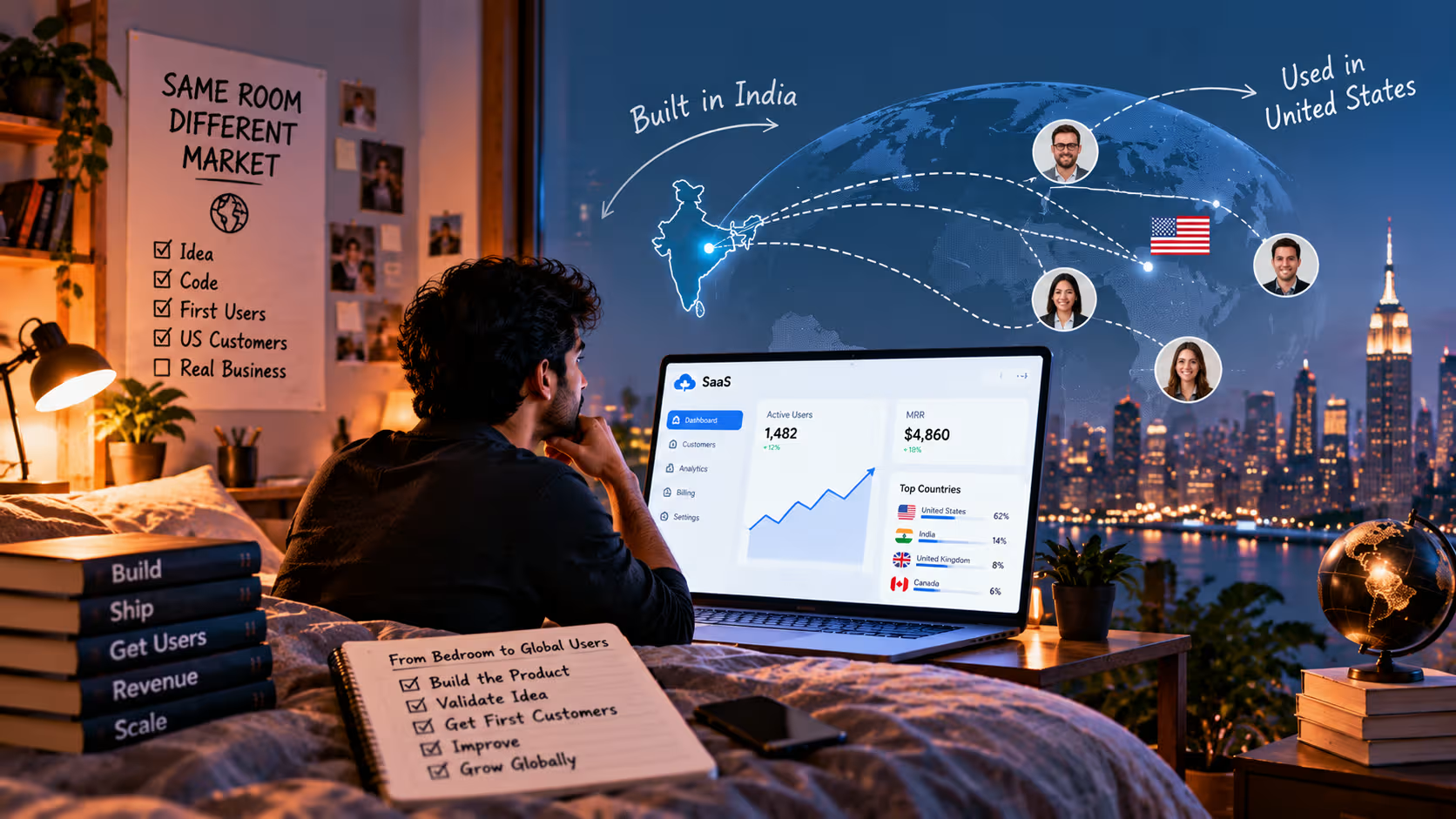
I like the image of the founder building SaaS from a bedroom because it reminds us where many companies actually begin.
But the bedroom isn't the story.
The story is what happens after the first customer.
Can you get another? Can you keep them? Can you improve the product based on what they tell you? Can you build predictable acquisition? Can you support customers without being awake every hour? Can the business operate when you aren't personally writing every line of code?
Those are the questions that turn a side project into a company.
Build Systems Before the Business Outgrows You
A SaaS founder can initially handle almost everything. Product development, customer support, sales, billing, onboarding, and product decisions may all happen through one person.
That can be useful in the beginning because it keeps the company close to its customers. But as the customer base grows, the founder has to start turning personal knowledge into systems.
Support needs processes. Product feedback needs to be organized. Customer onboarding needs consistency. Billing needs to be reliable. Documentation needs to exist outside the founder's head.
The goal is not to build a large organization immediately. The goal is to make sure growth doesn't turn every new customer into another task that only the founder can handle.
From Indian Founder to Global SaaS Company
I have always believed that geography should not decide how ambitious an entrepreneur can be.
A founder in India can build for America. A founder in Bangladesh can build for Europe. A founder in Africa can build for customers in Australia.
The internet has made the potential market global. The difficult part is building the product, trust, and infrastructure to serve that market properly.
That is what makes an Indian SaaS startup so interesting. It doesn't have to think of India as the boundary of its opportunity.
India can be where the company is built.
The United States can be where many of the customers are.
And the product can belong to a much larger global market.
Banking and Payments Become Part of the Infrastructure
As a SaaS company grows internationally, receiving and managing money becomes an important operational consideration. The founder may need to think about payment providers, business banking, currency conversion, accounting, and how business funds are separated from personal finances.
For a non-resident founder operating through an appropriate US structure, banking can become part of the wider business infrastructure. If that becomes relevant to your situation, my guide to US bank accounts for non-residents covers this part of the process.
But banking should support the SaaS business rather than become the focus of it.
The real foundation remains the product, customers, retention, distribution, and economics of the company.
The Lesson I Would Give the Founder in That Bedroom
If you're sitting in a bedroom today building your first SaaS product, don't worry too much about whether your company looks impressive.
Worry about whether the product is useful.
Find one customer. Then find another. Listen carefully. Improve the product. Build something people are willing to pay for repeatedly.
As the business grows, build the legal, financial, and operational infrastructure around it. If that eventually means creating a US entity, understand why you're doing it rather than treating incorporation as proof that the company has become successful.
A SaaS company in the USA isn't created simply by filing an LLC in America. It is created when a product built somewhere in the world becomes valuable enough that customers in America—and eventually elsewhere—want to keep paying for it.
The Bedroom Is Just Where the Story Begins
The most interesting thing about building SaaS from India isn't that someone can write code from a bedroom. It is that the founder can start with almost nothing and still test a product against a global market.
The first version may be unfinished. The first website may be basic. The first customer may be only one company.
But if the product solves a real problem, the business can grow from there.
Start with the problem. Build for the customer. Validate the product. Create the infrastructure as the business grows.
The bedroom is just where the story begins.
This article is for general informational purposes only and does not constitute legal, tax, or financial advice. Tousif Akram and FormLLC are not a law firm or CPA firm. Consult a licensed professional for advice specific to your situation.
Ready to Form Your US LLC?
Free 30-minute consultation with no obligation and no sales pressure.
Book Free Call