How to Start Ecommerce Business From India and Reach US Customers

Tousif Akram
IRS CAA | Founder, FormLLC
She Started Selling From Her Bedroom. Then Her Customers Started Coming From America.
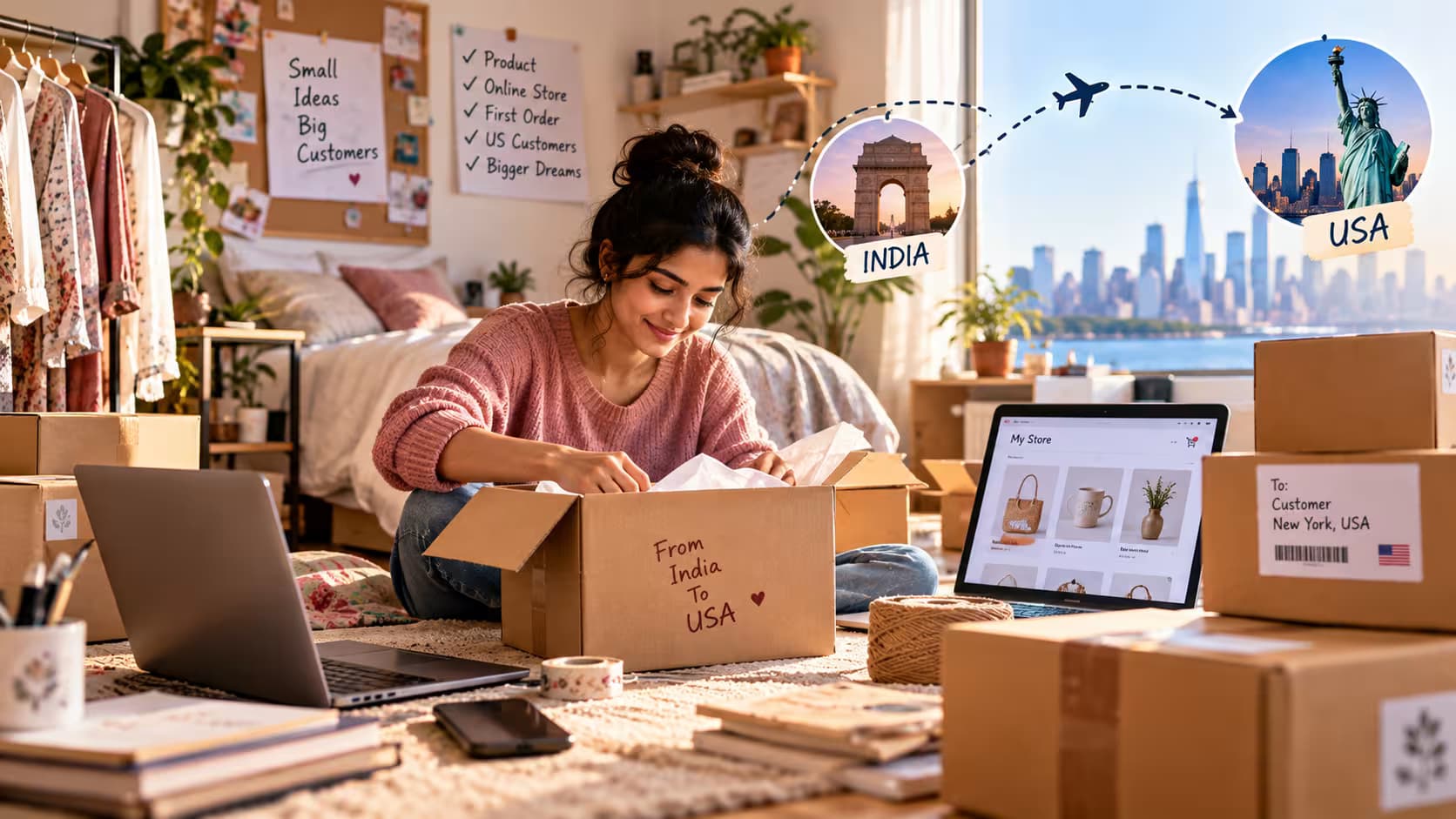
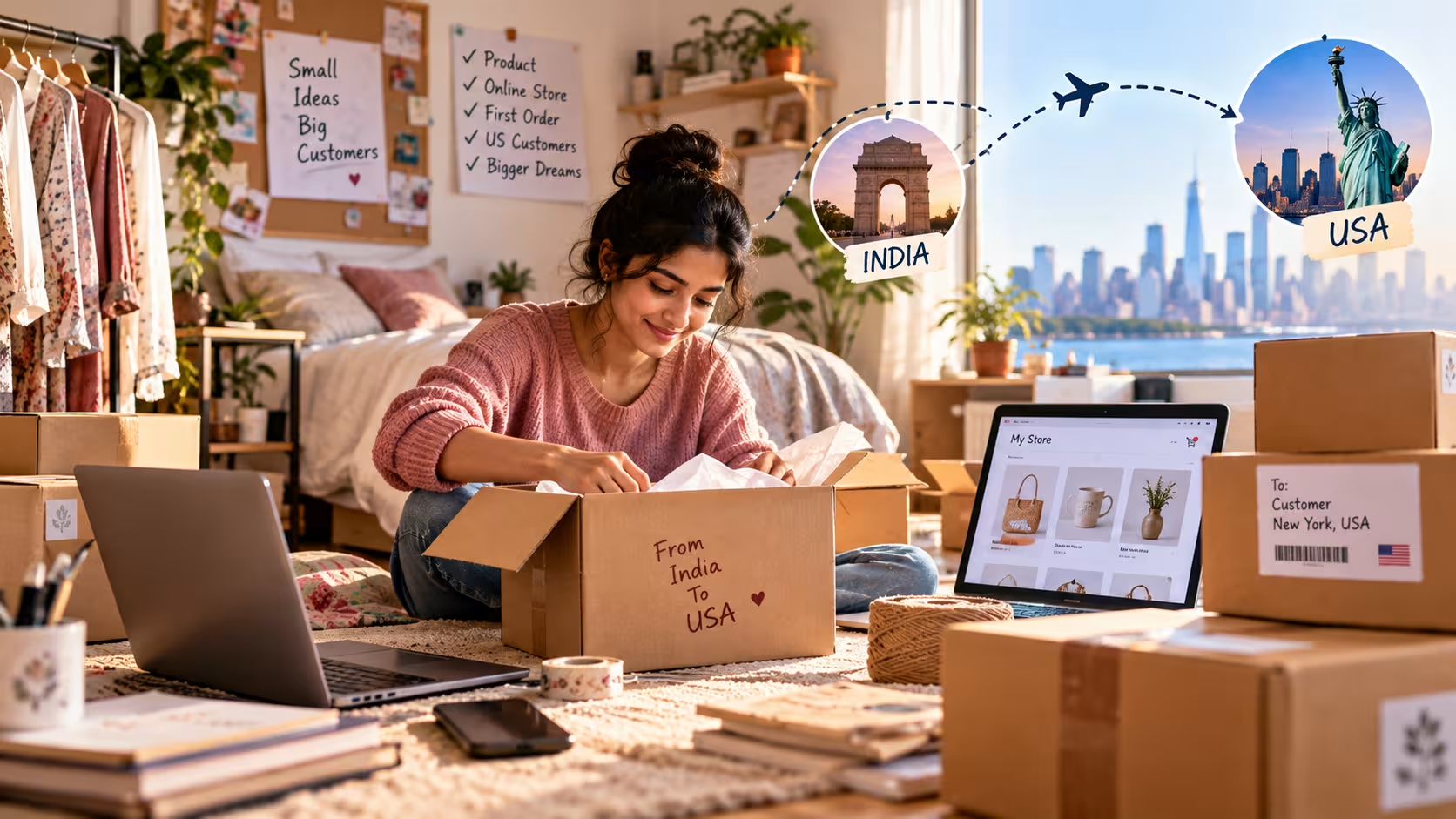
Start ecommerce business from India and your business may begin with something that barely looks like a business at all. There was a product, a laptop, a bedroom that doubled as a workspace, and a founder trying to figure out whether anyone outside her immediate circle would actually buy what she had created.
Then the first international customer arrived. Then another. And slowly, something changed. Her business was no longer just an Indian business selling to people around her. She was building something that could reach customers in another country.
I have seen versions of this story many times while working with entrepreneurs. And one of the most interesting opportunities I see today is the ability to start ecommerce business from India and build toward customers in the United States without starting with a large office, warehouse, or team.
Your First US Customer Changes How You Think
The first order from America can be psychologically different from the first order from India. It tells the founder something important: "Someone thousands of miles away is willing to pay for what I created."
That realization can completely change the ambition of a small ecommerce business. Suddenly, the founder starts thinking about packaging, international shipping, customer support, pricing, payment methods, returns, and fulfillment.
The question is no longer simply, "Can I sell this product?" It becomes: "Can I build a company that can consistently sell this product internationally?"
That is a much bigger question.
Start Ecommerce Business From India Without Thinking Only About India
The opportunity to build an ecommerce business from India to USA has never been more interesting. Platforms such as Amazon can give India-based sellers a path toward US customers, while ecommerce platforms such as Shopify can help merchants build online stores and sell internationally.
But access to the market doesn't mean the business is automatically ready for it. That's the part many new founders underestimate.
To start ecommerce business from India, the founder needs to think beyond simply putting a product online. The business needs to understand the customers it wants to serve, the costs involved in reaching them, and the systems required to deliver a reliable experience.
Selling Internationally Means Thinking Beyond the Product
When an Indian founder starts selling to America, the product is only one part of the equation. Where will it be manufactured? Where will inventory be stored? Who will ship it? Who is responsible for import duties? What happens when a customer wants a return? How long will delivery take? What happens if a shipment is delayed?
These aren't small operational details. They become part of the customer experience.
So when someone asks me how to sell products to USA from India, I don't think the answer should simply be "open a store and run ads." The real answer is to build the entire customer journey, from the moment someone discovers the product to the moment they receive it and decide whether they want to buy from you again.
The US LLC Question Usually Comes Later
Once the business starts getting traction, another question often appears: "Do I need a US company?"
This is where I think founders should be careful. A US LLC for ecommerce can be appropriate for some entrepreneurs depending on their business model, ownership, operations, payment needs, and long-term plans. But a US LLC isn't automatically required just because your customers are American.
I've written more about this idea in why customers don't really want a US LLC. They want the benefits and capabilities that a properly structured business can provide.
The same applies when someone starts researching a US LLC for Shopify. Shopify is a selling platform, while an LLC is a legal structure. They solve different problems.
Likewise, selling through Amazon does not automatically mean every founder needs a US LLC for Amazon seller operations. The important question is not, "Does everyone else have a US LLC?" It is: "Would a US entity make sense for the business I am actually building?"
When a US Company Can Become Useful
There are situations where a US company for ecommerce may fit an entrepreneur's growth strategy. For example, a founder may be deliberately building a US-focused brand, working with US partners, expanding operations into the US, or creating a broader international structure.
But forming the company should be part of a larger plan. A US company for online store operations doesn't replace a good product. It doesn't solve fulfillment. It doesn't automatically solve taxes. And it doesn't create customers.
The company is infrastructure. The ecommerce business is the engine.
If you're exploring whether a US structure makes sense for an international business, you can also read my guide on starting a US LLC from India.
I Would Start With the Customer, Not the Company
If someone came to me today and said, "I want to build an ecommerce brand for American customers from India," I would ask them about the product first.
Who is going to buy it? Why will they buy it? What does it cost to manufacture? What will shipping cost? What happens after duties and other cross-border costs? What is the selling price? What is the actual margin?
I would also ask how the customer will discover the product and whether the business can still make money after advertising, fulfillment, returns, and support.
These questions are much more important than choosing an LLC on day one. Once the model starts working, the business structure becomes a much more meaningful conversation.
The Bedroom Can Become a Real Company
I like these stories because they remind me that businesses rarely look impressive at the beginning. A bedroom can become an office, a few products can become a catalog, and one customer can become a customer base.
A small Indian seller can become an Indian ecommerce business serving USA customers, and an online store can eventually become an international ecommerce business.
But growth creates responsibility. As orders increase, the founder needs better systems, better inventory management, better customer support, better fulfillment, better financial controls, and better compliance.
The business has to mature at the same speed as the sales.
The US Market Is an Opportunity, Not a Shortcut
There is sometimes a dangerous assumption that selling in America automatically means the business will become successful. It doesn't.
The US is a huge market, but it is also competitive. American customers have choices, they compare prices, they expect reliable delivery, and they expect clear communication.
If you're importing physical products, the economics of duties, taxes, shipping, returns, and other cross-border costs can also materially affect your margins.
That is why I prefer to think about international expansion as a business-building exercise rather than simply a sales opportunity. You aren't just trying to get an American customer. You're trying to build a company that can keep serving American customers.
What I Learned From Founders Like Her
The most interesting part of this story isn't that she started in a bedroom. It is that she didn't allow the size of her beginning to define the size of her market.
That's something I have seen repeatedly among international entrepreneurs. The founder starts small because that is what they can afford. They test, they learn, they make mistakes, they find customers, and eventually they realize that geography doesn't have to determine ambition.
India can be where you build. America can be where your customers are. And the internet can connect the two.
I've written about geography and opportunity because I believe where you live doesn't necessarily have to determine where you can find business opportunities.
If the business eventually needs a US LLC for online store operations or another US structure, that decision should come from the needs of the growing business—not from the belief that a US company is a shortcut to success.
Because the real achievement isn't forming a company. It is building a business that customers, wherever they live, want to come back to.
And sometimes that business starts with nothing more than a product sitting in a bedroom.
Managing the Business After Formation
As an international ecommerce business grows, company formation is only one part of the process. The founder may also need to think about banking, payments, tax filings, and ongoing compliance.
For example, understanding how to open a US bank account as a non-resident LLC owner can become relevant when a business needs appropriate banking infrastructure for its international operations.
Similarly, foreign-owned US businesses may have additional reporting responsibilities. Founders should understand those obligations rather than assuming that forming an LLC is the end of the process. My guide to Form 5472 for foreign-owned US LLCs explains one of the important compliance requirements that can apply to certain foreign-owned businesses.
Frequently Asked Questions
Can You Start Ecommerce Business From India and Sell to US Customers?
Yes. An entrepreneur in India can build an ecommerce business targeting customers in the United States. The exact requirements depend on the products, business model, shipping arrangements, payment setup, and other circumstances.
The important thing is to understand the operational and financial requirements before trying to scale internationally.
Do You Need a US LLC to Sell Products to American Customers?
Not necessarily. Having American customers does not automatically mean that every Indian ecommerce business needs a US LLC.
A US LLC may make sense for some entrepreneurs depending on their business model and operational requirements, but the decision should be based on the actual needs of the business.
Is a US LLC Required for Shopify?
Not simply because you use Shopify. Shopify is an ecommerce platform, while an LLC is a legal business structure.
Whether you need a particular company structure depends on your business circumstances rather than the fact that you are using Shopify.
Do Amazon Sellers From India Need a US LLC?
Not every Amazon seller from India needs a US LLC. The appropriate structure can depend on the seller's business model, ownership, marketplace setup, payment requirements, fulfillment arrangements, and other factors.
What Should You Consider Before Selling Products From India to the USA?
You should consider product demand, manufacturing costs, shipping, fulfillment, returns, payment processing, customer support, taxes, duties, compliance, advertising costs, and your actual profit margins.
International sales can create significant opportunities, but the economics need to work before you scale.
Is Starting From a Bedroom a Disadvantage?
Not necessarily. Many businesses begin with limited resources. A bedroom can be a perfectly practical place to start while you validate a product and find customers.
What matters is whether the business can eventually develop the systems, processes, and infrastructure required to support sustainable growth.
This article is for general informational purposes only and does not constitute legal, tax, or financial advice. Tousif Akram and FormLLC are not a law firm or CPA firm. Consult a licensed professional for advice specific to your situation.
Ready to Form Your US LLC?
Free 30-minute consultation with no obligation and no sales pressure.
Book Free Call