US Address for LLC Non Resident: Virtual Address vs Registered Agent

Tousif Akram
IRS CAA | Founder, FormLLC
US Address for LLC Non Resident: Virtual Address vs Registered Agent
Finding the right US address for an LLC as a non-resident can be confusing, especially when you need to open a US business bank account. Many founders form a Wyoming LLC, hire a registered agent, purchase a virtual US address, and assume all three addresses can be used interchangeably. However, when a bank requests proof of the company's physical operating address, the application may be delayed.
The key is understanding that a registered agent address, a virtual mailing address, and your actual business address serve different purposes. If you are an entrepreneur managing a US LLC from India or another country, choosing the right address depends on your bank's requirements and where your business genuinely operates.
Why Does One US LLC Have Different Addresses?
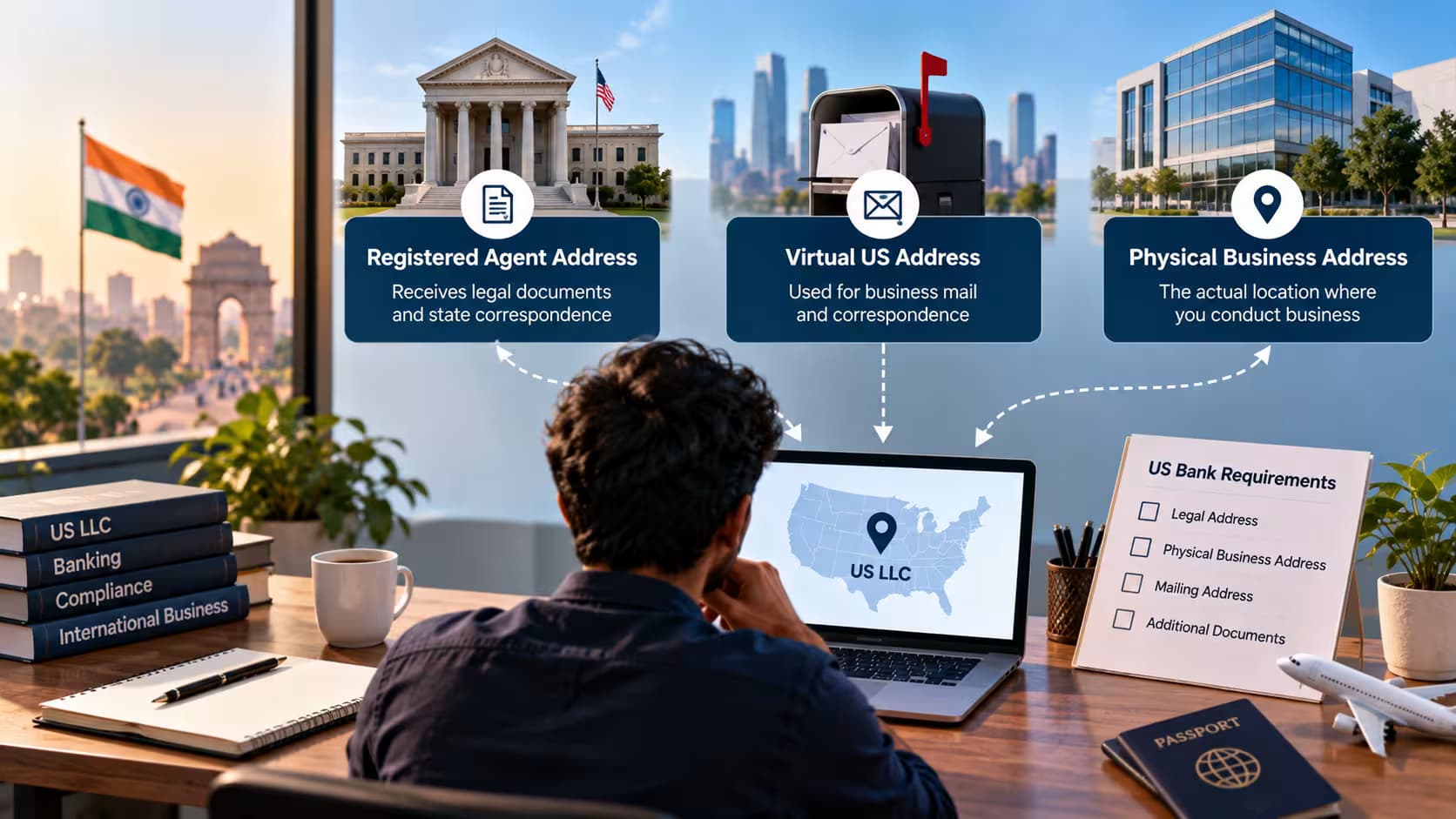
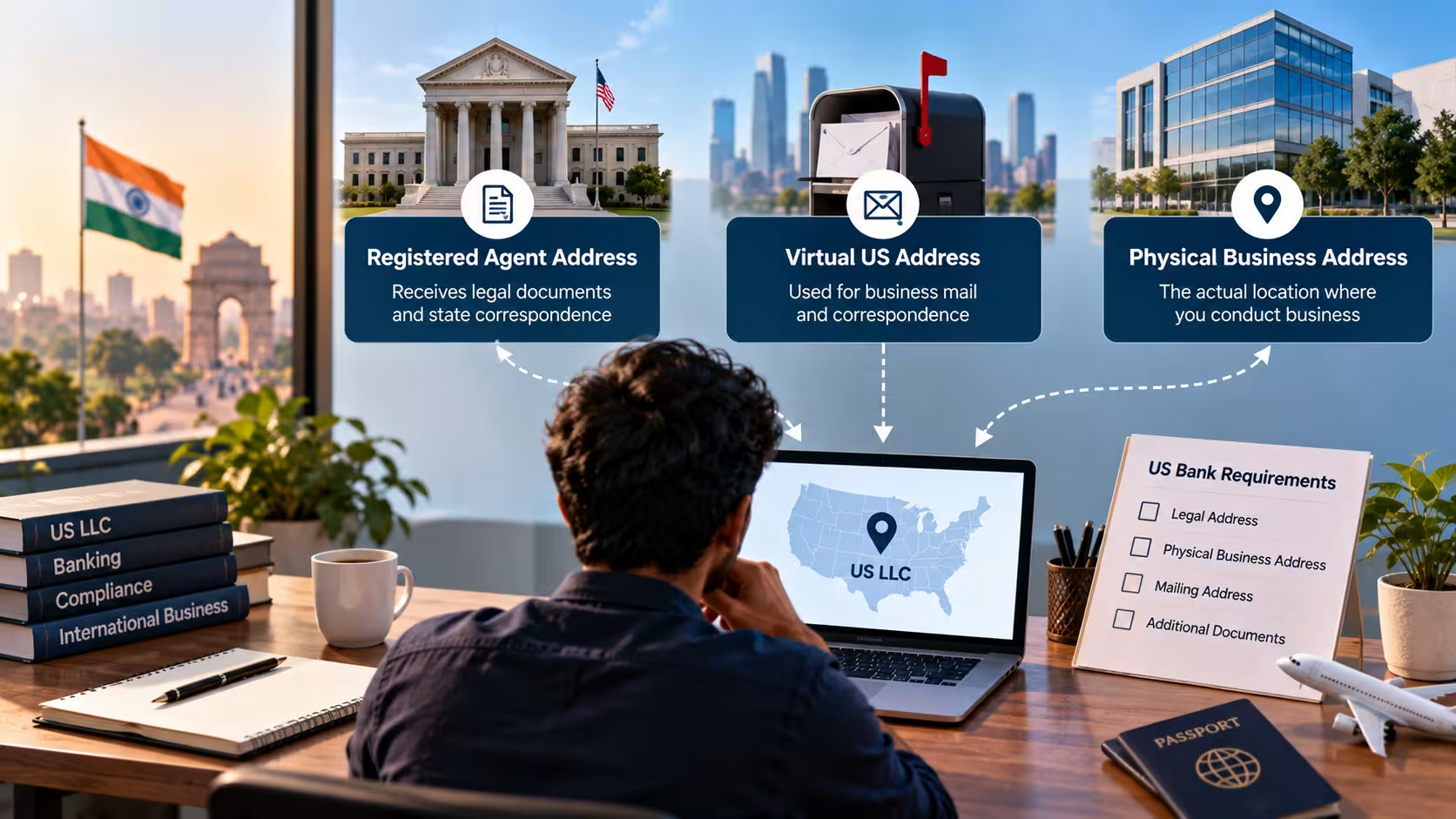
When you form a US LLC, the registered agent provides an address where the company can receive official legal documents and state correspondence. Maintaining an eligible registered agent is an important part of keeping your LLC in good standing, but the registered agent's address does not automatically represent the location where you conduct business.
A virtual address or virtual mailbox is generally used for business mail and correspondence. Depending on the provider, it may give your company a professional US mailing address without providing a physical office where you or your team actually work.
Your physical business address, by contrast, refers to the genuine location where you conduct business. If you manage your company from your home in India, that may be your actual operating location, even if your LLC is registered in Wyoming.
These address types can sometimes overlap, but they are not automatically interchangeable. Problems arise when founders enter an address into a bank application without checking whether it meets the requirements for that particular field.
What Is a Registered Agent Address?
A registered agent address is the registered office used for receiving service of process and certain official state documents. The agent must meet the requirements of the state where your LLC is registered.
This address helps your company maintain its official presence in the state. However, hiring a registered agent does not mean that you have rented an office, established a physical workplace, or obtained proof of business operations in the United States.
If you need to understand the responsibilities involved in maintaining this arrangement, read our guide on how to change the registered agent for a US LLC.
What Is a Virtual US Address?
A virtual US address is generally a mailing service that allows a business to receive correspondence at a US address. Some providers offer mail scanning, forwarding, and related services, while others may provide access to additional facilities.
For international founders, a virtual mailbox can be convenient for handling business correspondence. However, a mailing address does not automatically qualify as a physical operating address for banking verification.
Before purchasing a virtual address, check the provider's terms and the bank's requirements. Confirm whether the address can be used for business mail, state registration, banking correspondence, or any other intended purpose.
What Counts as a Physical Business Address?
A physical business address should accurately represent the location where the business operates, according to the relevant provider's definition and verification requirements.
For example, an entrepreneur who manages a business from India should not automatically enter a rented US mailbox as the company's physical operating address. If the bank asks where the business is actually managed, the answer should reflect the genuine operating arrangement.
Some banks may accept particular residential or commercial addresses, subject to their policies and verification procedures. Others may impose additional eligibility requirements. The important thing is to provide accurate information that can be supported with appropriate documentation.
Which Address Will a US Bank Accept?
There is no universal rule that every US bank follows. Each bank or financial service provider establishes its own address requirements, verification standards, and eligibility criteria for non-resident business owners.
Some financial providers distinguish between a company's legal address and its physical operating address. A registered-agent address, PO box, or virtual address may not qualify for a physical-address requirement. Traditional banks may have different onboarding processes, documentation requirements, and in-person verification policies. Requirements can also vary according to the company's structure and the owner's circumstances.
This is why I would never promise a founder that buying a virtual US address will automatically solve a banking problem. A provider may accept an address for correspondence but reject it as evidence of where the business operates.
Before applying, review our guide on how to open a US bank account as a non-resident LLC owner. It explains the documents, address information, eligibility requirements, and verification considerations that non-resident founders should review before submitting a banking application.
Check the Address Requirements Before Applying
Before purchasing an address service, identify the bank you intend to use and review its current requirements. Pay attention to the exact fields in the application, including the company's legal address, principal place of business, owner's residential address, and mailing address.
Do not assume that one address will be accepted in every field. If the provider's instructions are unclear, ask its support team which address types it accepts and what evidence it requires.
How to Choose a US Address for LLC Non Resident Banking
Choosing the right US address for LLC non resident banking requirements starts with understanding your bank's verification rules. Check whether the provider accepts your registered agent address, virtual mailing address, or actual operating address before paying for an address service or submitting your application.
For founders operating a US LLC from India, address planning should begin before purchasing services or submitting a banking application.
Use the registered-agent address for its intended legal and state correspondence purposes. Use a virtual mailbox for business mail where permitted. For the physical operating address, provide a genuine and verifiable location that accurately reflects where the business is conducted.
If you live in India and manage the business from India, do not claim that you operate from a US office simply because you rent a mailbox. If a bank requests supporting evidence, it may ask for documentation appropriate to the address type, such as a lease, utility bill, or another accepted record.
The right arrangement depends on the provider, your business model, and the reality of your operations, rather than simply which address looks most professional.
Plan Your Address Setup During LLC Formation
Address decisions should be considered as part of the broader company formation process, not as an afterthought when a bank application is rejected.
When planning your company, consider where the LLC will be registered, who will act as its registered agent, where you will receive correspondence, and where the business will actually operate. These details should be consistent across your company documents and applications.
If you are still setting up your business, our guide to starting a US LLC from India explains the broader formation process, including EIN applications, banking preparation, and ongoing compliance considerations for non-resident founders.
What If Your US Business Bank Application Has Already Been Rejected?
If your application has already been rejected or placed on hold, start by reading the bank's message carefully. Determine whether the issue concerns the company's legal address, the owner's residential address, the physical operating location, or evidence of US business activity.
Next, compare the information in your application with your LLC formation documents and the provider's current requirements. If you used a registered-agent or virtual address in a field that requires a physical operating location, ask the provider how to correct the information and which documents it will accept.
Do not submit a different address simply to get through the form. Inconsistent or inaccurate information can create more serious verification problems later. If the information you submitted was accurate, ask the provider to identify the specific requirement that remains unsatisfied.
You may need to provide additional documentation, correct a misunderstanding, or consider another provider whose eligibility requirements match your actual business setup. Approval is never guaranteed, so confirm the requirements before submitting another application.
Common Mistakes to Avoid When Choosing a US Address
Assuming a Registered Agent Provides a Business Office
A registered agent receives official documents and service of process. The service does not automatically provide a physical office or establish that the business operates at that address.
Treating a Virtual Mailbox as Proof of Physical Operations
A virtual mailbox can be useful for correspondence, but it does not necessarily meet a bank's physical-address requirements. Check the provider's rules before using the address in a banking application.
Entering Different Addresses Without Explaining Their Purpose
Your registered office, mailing address, physical operating location, and residential address may be different. That is not automatically a problem, but each address should be entered in the correct field and supported by accurate information.
Buying an Address Before Checking Banking Requirements
Paying for an address service before checking the bank's policies can lead to unnecessary expenses. Confirm what the provider accepts and whether the service meets your actual needs before purchasing it.
My Advice: Choose the Address After Checking the Bank's Rules
For founders setting up a US LLC from India, address planning should happen before the bank application, not after a rejection.
Your registered agent helps maintain the company's official presence in the state. A virtual address may help with correspondence. Your physical operating address tells the bank where the business is actually run, according to the bank's definition and verification requirements.
Sometimes these address roles can overlap, but you should never assume that they do. Before paying for an address service, review the bank's policies, ask questions where necessary, and ensure that every address you provide accurately reflects its purpose.
The takeaway: The best US address for a non-resident LLC is not necessarily the cheapest or most professional-looking one. It is an accurate, verifiable address that is accepted for the specific purpose the bank asks about.
Frequently Asked Questions
Can I Use My Registered Agent Address to Open a US Business Bank Account?
Not always. Some providers accept a registered-agent address for legal or company registration purposes but do not accept it as the physical operating address. Check the specific bank's requirements before applying.
Is a Virtual US Address Enough for a Non-Resident LLC?
A virtual address may be suitable for business correspondence, depending on the provider and the service terms. It does not automatically qualify as proof of physical business operations or satisfy every banking requirement.
Can I Use My Indian Home Address as My LLC's Physical Business Address?
If you genuinely manage and operate your business from your home in India, it may be relevant to the physical operating address requested by a bank. Whether the bank accepts it depends on its policies, eligibility criteria, and verification requirements.
Do I Need a US Office to Open a US Business Bank Account?
Not necessarily. Some financial providers accept eligible non-resident founders who operate their businesses outside the United States. Requirements vary, so check whether the provider accepts your location and business model before applying.
What Is the Difference Between a Registered Agent Address and a Mailing Address?
A registered-agent address is used for receiving official legal documents and certain state correspondence. A mailing address is used to receive business correspondence. A virtual mailbox may provide a mailing address, but it does not automatically qualify as a registered office or physical operating address.
What Should I Do If My Bank Rejects My Address?
Review the bank's explanation, identify which address requirement was not met, and ask what documentation it will accept. Correct any inaccurate information before reapplying, and do not substitute an address that misrepresents where your business operates.
This article is for general informational purposes only and does not constitute legal, tax, or financial advice. Tousif Akram and FormLLC are not a law firm or CPA firm. Consult a licensed professional for advice specific to your situation.
Ready to Form Your US LLC?
Free 30-minute consultation with no obligation and no sales pressure.
Book Free Call