Global Business Infrastructure: Why I'd Keep Building Without FormLLC

Tousif Akram
IRS CAA | Founder, FormLLC
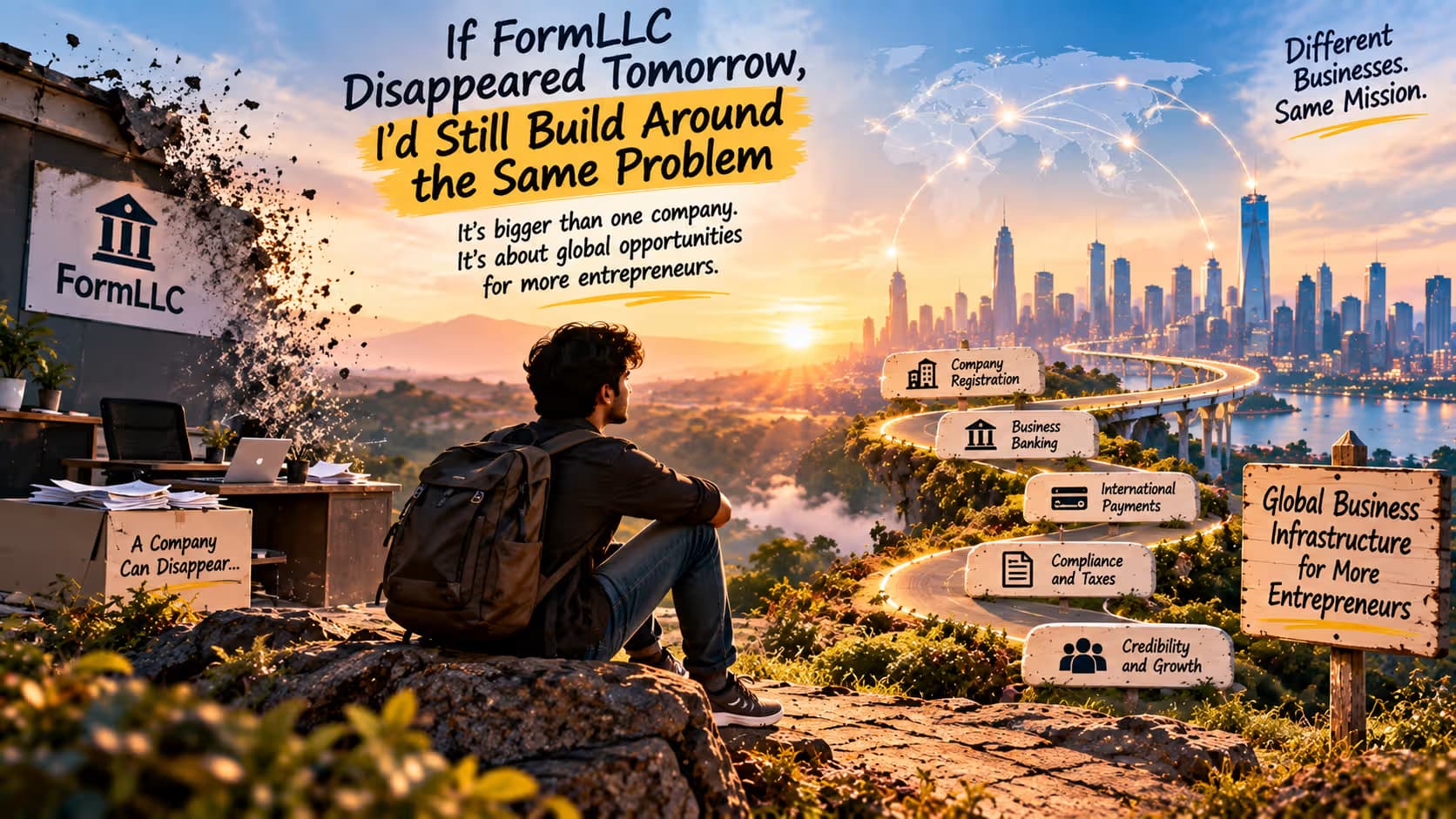
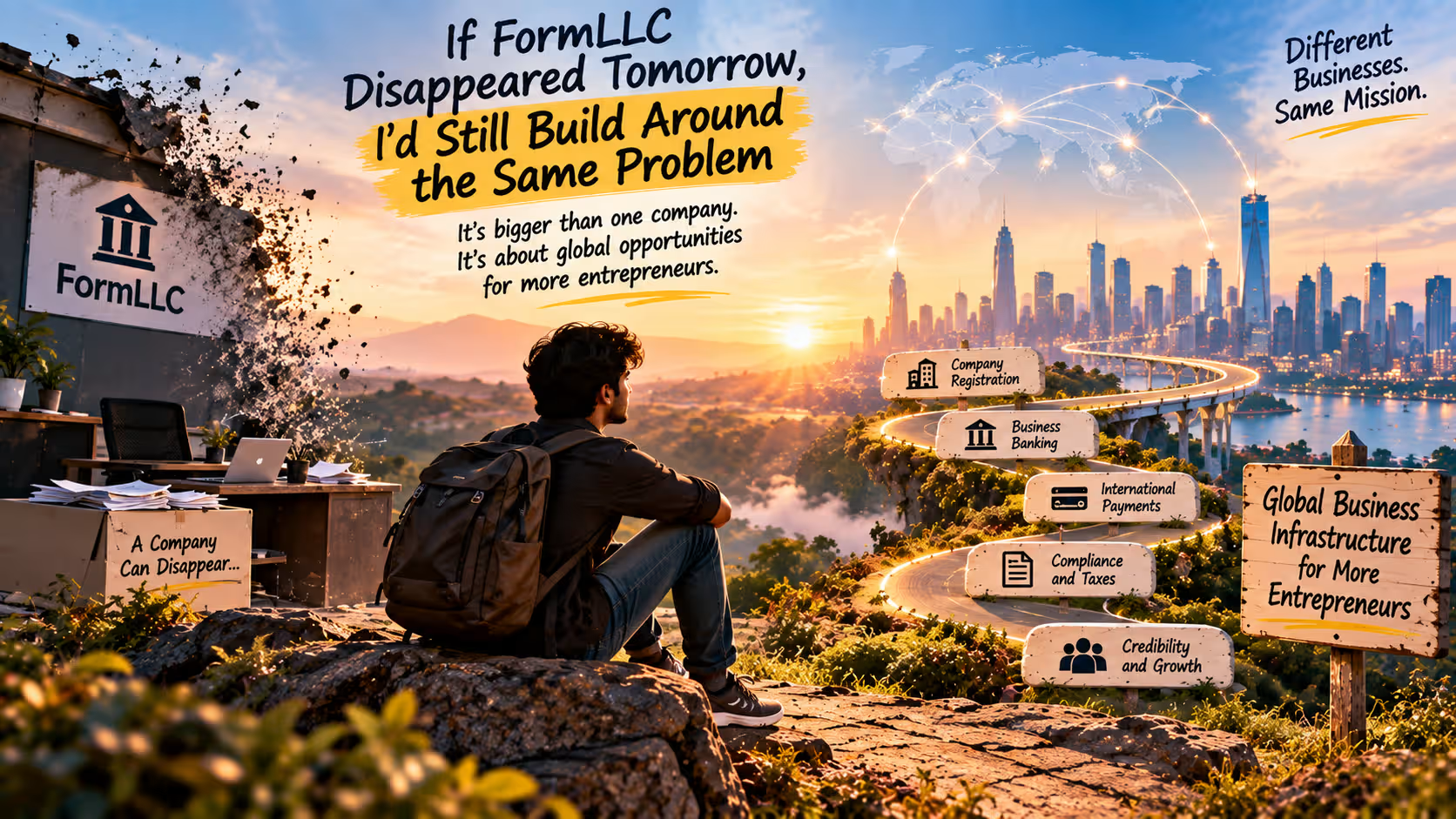
If FormLLC Disappeared Tomorrow, I'd Still Build Around the Same Problem
I sometimes think about a question that goes beyond the company I have built: If FormLLC disappeared tomorrow, would I still want to work on the same problem?
My answer is yes. My interest has always been connected to a bigger challenge: making global business infrastructure more accessible to talented entrepreneurs who want to serve international customers. Through years of working with entrepreneurs, I've realised that people have the talent, ideas, and ambition to build businesses across borders, but getting access to the right business systems and services isn't equally easy for everyone.
A founder might know how to build a product, find customers in another country, and deliver real value. But then come the practical questions. How do you establish the right business structure? How do you receive international payments? What about banking, tax responsibilities, compliance, and building credibility with customers? These questions can become obstacles before the business has even had a chance to grow.
For me, the real opportunity has always been bigger than company formation. It is about helping capable people build and operate businesses across borders without being held back by unnecessary complexity.
Why Global Business Infrastructure Matters Beyond Company Registration
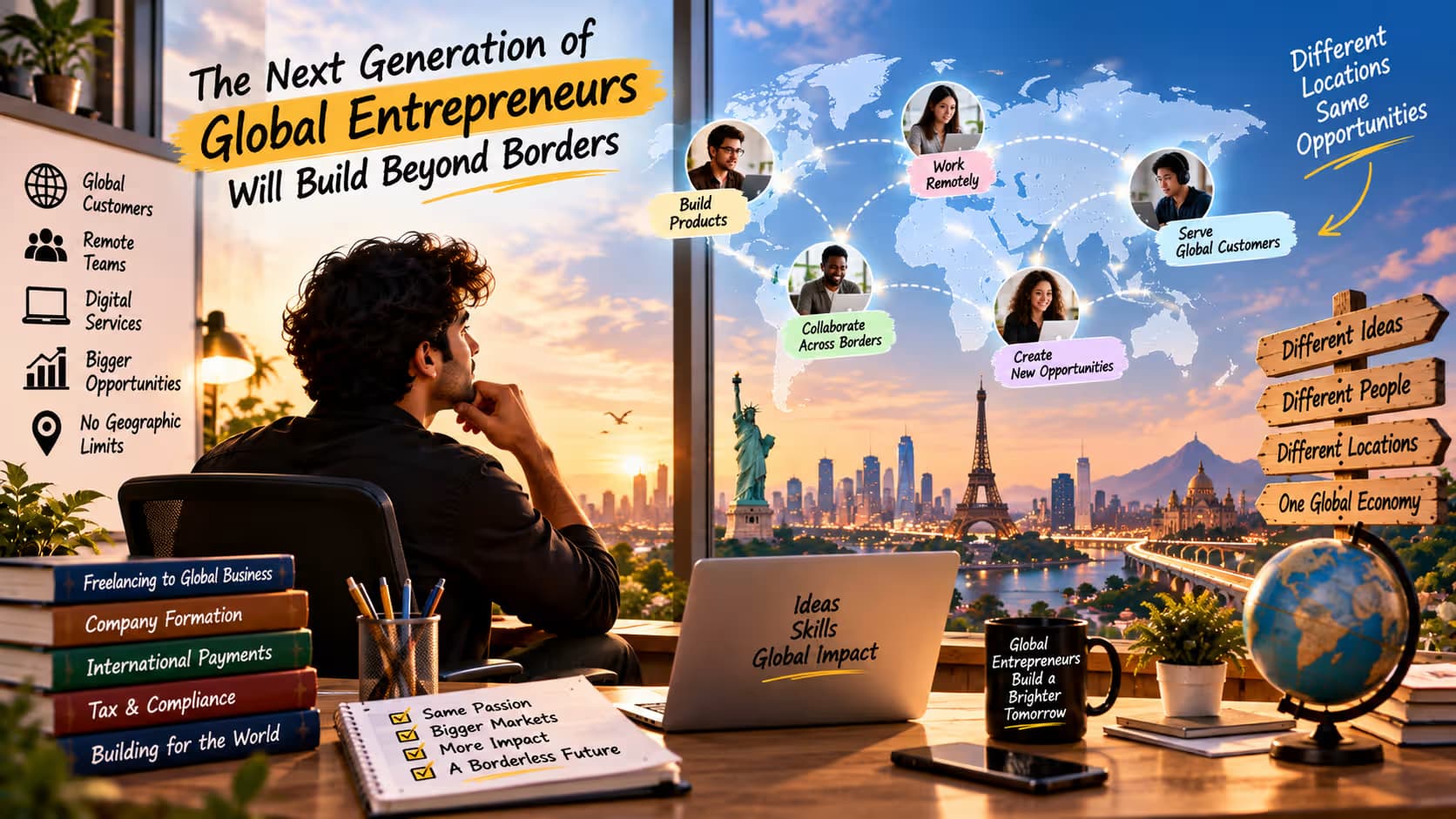
When I started working with international clients through freelancing, I realised that the internet had made it possible to find customers far beyond my own location. I could connect with people and businesses in other countries without needing to live in a major business centre. That experience shaped how I thought about global opportunities.
But as I became more involved in helping entrepreneurs establish businesses, I saw another side of the opportunity. Finding international customers and operating an international business are two different things.
A company registration document does not automatically give someone access to banking, payment services, or a complete understanding of their obligations. Each part has its own requirements, and those requirements can vary depending on the founder's location, business model, and the countries involved.
This is where many entrepreneurs begin facing difficulties. They may understand their product and know how to serve customers, but they still have to navigate unfamiliar administrative processes. I've explored this challenge in why customers want more than just a US LLC, because registering a company is only one part of building an international business.
The World Bank's research on digital trade highlights challenges such as cross-border payment limitations, regulatory differences, and trust-related barriers. These are not just technical details. They affect whether smaller businesses can participate in international markets.
I believe this is an important part of the conversation around global entrepreneurship. We often talk about technology making the world more connected, but we don't always discuss the practical systems that allow people to turn those connections into sustainable businesses.
A founder needs more than an internet connection and an idea. Depending on the business, they may also need access to suitable banking arrangements, payment providers, reliable professional services, and clear information about legal and tax responsibilities. My article on geography and opportunity explores how someone's location can shape their access to business opportunities, even when their talent and ambition are not limited by geography.
I Want Entrepreneurs to Focus on Building, Not Navigating Confusion
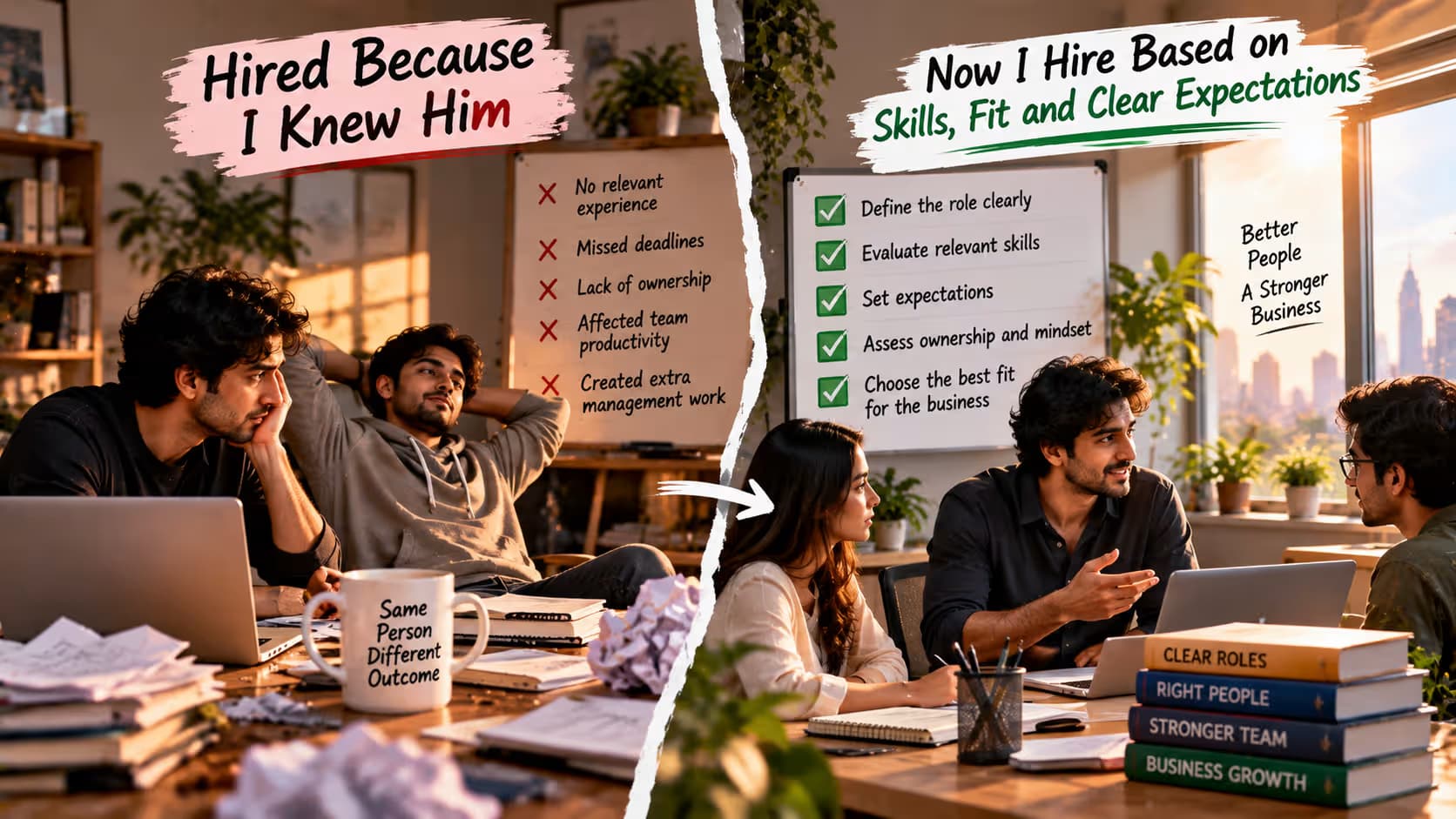
One thing I have learned from helping entrepreneurs is that many people don't start with a complete understanding of how international business works. They often arrive with a simple goal: they want to sell a service, launch a product, or work with customers in another market.
They don't necessarily want to become experts in company registration, banking procedures, or compliance just to get started. They want to understand what they need to do, which responsibilities apply to them, and how to move forward without making avoidable mistakes.
I believe businesses that support entrepreneurs should make these processes easier to understand. That means explaining what is included, being honest about what cannot be guaranteed, and helping customers understand what comes next. It also means not treating company formation as the finish line.
This is a responsibility I take seriously. In this industry, an unclear promise today can become a serious problem for a founder later. Helping someone make an informed decision is more important than simply convincing them to register a company.
Not every entrepreneur needs a US LLC, and I don't believe in recommending one simply because it is available. The right solution should depend on what the person is building, where they operate, who their customers are, and what their business actually needs.
For entrepreneurs considering a US company, understanding the process is only the beginning. They should also consider banking, payment access, tax responsibilities, and ongoing compliance. My US LLC guide for non-residents provides a starting point for understanding some of these considerations.
I want founders to approach these decisions with realistic expectations. They should know what a service can help them with and what may require separate providers or professional advice. That kind of transparency creates a better foundation for long-term business relationships.
How FormLLC Fits Into My Bigger Mission
Building FormLLC has given me an opportunity to work on one part of this problem. It has also helped me understand how many connected needs entrepreneurs have after forming a company.
Over time, I've seen that founders aren't simply looking for paperwork. They want to understand how to establish a business, receive payments, manage their responsibilities, and serve customers professionally. Their questions often continue long after the registration process is complete.
This has shaped how I think about the services entrepreneurs need. Company formation, banking, compliance, and business operations are connected parts of a much bigger journey. In my article about helping entrepreneurs start a global business, I explore some of the lessons that come from working with people who want to build beyond their local markets.
But I don't see the problem as belonging to one company or one service. It is much bigger than that. Entrepreneurs need reliable information, practical support, transparent services, and global business infrastructure that works across borders.
If FormLLC disappeared tomorrow, I would lose a company I have spent years building. But I would not lose my interest in the problem that led me here.
I would still want to help people who have the ability to serve global customers but face unnecessary complexity when trying to operate internationally. I would still want to make business processes easier to understand and more accessible. And I would still believe that where someone is born or lives should not automatically limit the scale of the business they can build.
I don't know exactly what that future business would look like. It might involve different services, better technology, or a completely different approach. The solution could change as technology and the needs of entrepreneurs evolve. But the underlying problem would remain the same.
The Mission Would Remain Even If the Business Changed
I think there is an important difference between building a company and building around a problem. A company is a particular way of delivering a solution. The problem itself can remain relevant even when the business model, technology, or services change.
That is how I see my journey with FormLLC. It has given me a way to contribute to making international business processes easier to understand, but it doesn't define the limits of what I want to work on.
I want to see more entrepreneurs from smaller cities and developing economies participate in the global economy. I want them to have access to practical information, trustworthy services, and the tools they need to build sustainable businesses. Better global business infrastructure can help reduce unnecessary barriers, although it cannot remove every legal, financial, or operational challenge of working across borders.
For me, FormLLC is not the mission. It is one way I am working toward the mission.
And that is probably the clearest way I can explain why I would continue building around this problem, even if the company itself were no longer there.
This article is for general informational purposes only and does not constitute legal, tax, or financial advice. Tousif Akram and FormLLC are not a law firm or CPA firm. Consult a licensed professional for advice specific to your situation.
Ready to Form Your US LLC?
Free 30-minute consultation with no obligation and no sales pressure.
Book Free Call