Shopify US LLC Non Resident: Setup From India for Working Payouts

Tousif Akram
IRS CAA | Founder, FormLLC
When founders ask me about a Shopify US LLC non resident setup, I don’t start with the LLC registration. I start with the payment gateway. I’ve seen how frustrating it can be when a founder invests time and money into a US company, connects Shopify, and then faces payment-gateway rejection or payout verification issues. The problem is that company formation and payment approval are two different processes.
A US LLC can give an India-based ecommerce founder a US business structure, but it does not automatically make every payment provider available. The setup needs to make sense on paper, match the platform’s requirements, and reflect how the business actually operates. Before choosing a structure, it helps to understand what customers really want from a US LLC: a working business infrastructure, not just company registration documents.
Shopify US LLC Non Resident: Why Payment Gateways Reject Some Setups
One common mistake is assuming that a US LLC, EIN, and US bank account are all that Shopify needs. Shopify Payments also verifies the business structure, the account representative, identity documents, and business details. Depending on the applicable US account requirements, a non-US resident who owns an eligible LLC may be able to provide a valid passport instead of an SSN or ITIN. Other verification requirements still apply, and approval is not guaranteed.
The details entered during onboarding must match the supporting documents. If the legal business name differs from the IRS record, the EIN is entered incorrectly, or the account representative’s residential address is listed as a US address when they actually live in India, verification can become difficult. Selecting the wrong business type can also create unnecessary problems.
My approach is to check the information before submitting the application, rather than trying random changes after a rejection. A payment review is not always caused by one missing document; sometimes the business details simply do not tell a consistent story. Preparing the company records properly from the beginning can make the process more organised.
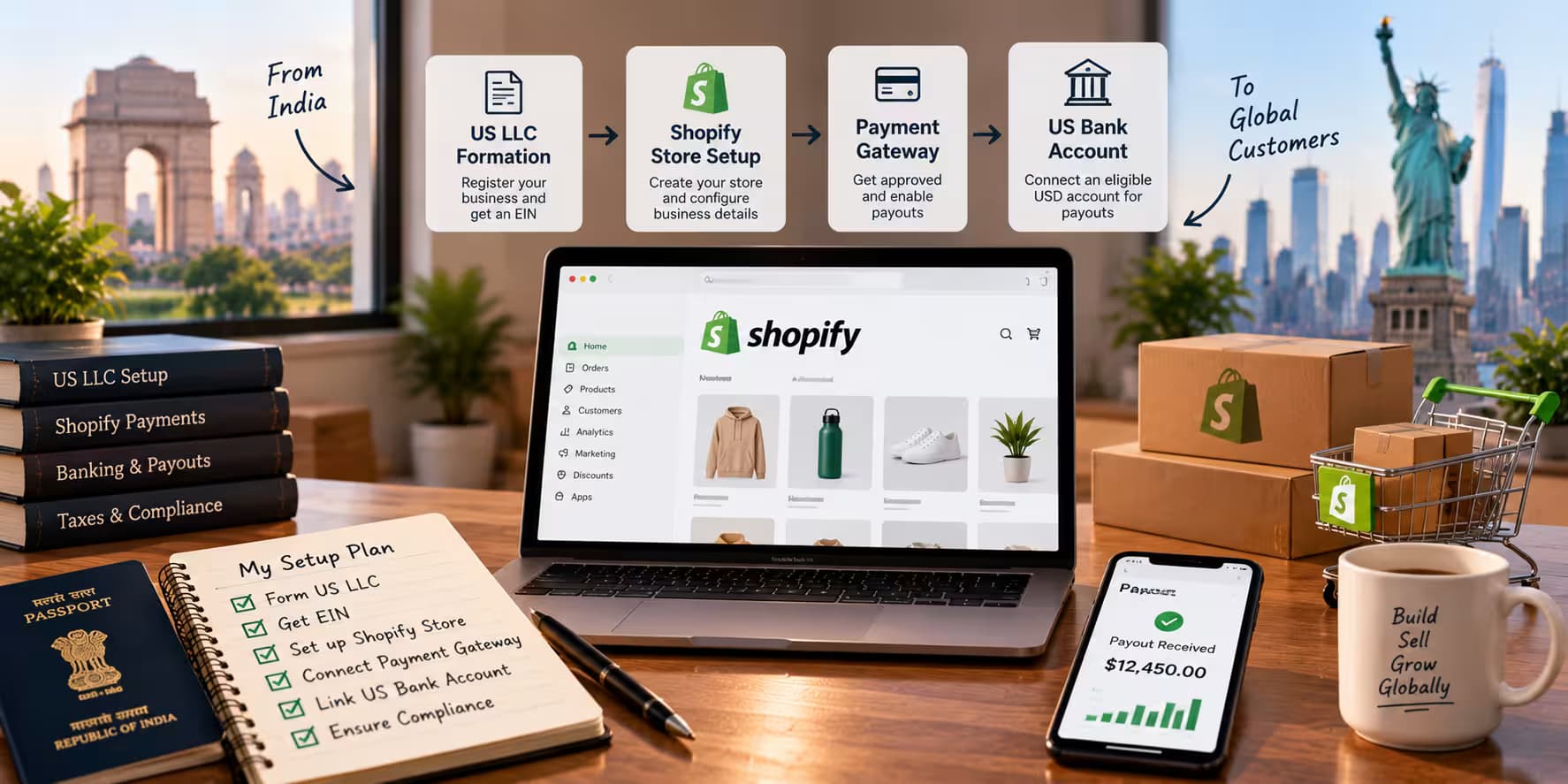
How to Set Up a Shopify US LLC From India for Payouts
Before activating Shopify Payments, I make sure the founder understands each part of the setup and how the company documents, identity information, and payout details fit together.
Step 1: Form the Right US LLC and Obtain an EIN
Register a US LLC only if it fits the business’s commercial needs. Obtain the EIN and keep the formation documents and IRS confirmation available. The registered business name and EIN should be entered exactly as shown on the relevant IRS documentation. Depending on the verification request, Shopify may ask for documents such as an EIN confirmation notice or other acceptable evidence of the business’s tax identification.
If you are still deciding how to establish the company, read this guide to starting a US LLC from India. It explains the broader formation process and the responsibilities that come with operating a US company from India.
Step 2: Enter Accurate Owner and Identity Details
The account representative must be a real individual with the authority required for the business. If you live in India, provide your genuine Indian residential address and follow Shopify’s instructions for non-US residents. Where the relevant LLC account flow permits it, a valid passport may be accepted instead of an SSN or ITIN.
Do not enter a made-up US home address or someone else’s identity details to get past verification. The information should accurately represent the owner and the company. Incorrect details can create additional verification problems or lead to an application being declined.
Step 3: Verify Your US Business Address
Shopify’s US LLC requirements may call for a physical US business address associated with the company’s operations. A registered-agent address is not automatically the same as an operating address, and a virtual address should not be presented as a place where you genuinely conduct operations. Requirements can differ by service and account type, so check the current rules before applying.
It is also important to understand the role of your registered agent. A registered agent receives official state correspondence and legal notices; their address should not automatically be treated as proof of where your ecommerce business operates. If you need to understand this distinction, read the guide on changing a registered agent for a US LLC as a non-resident.
Step 4: Connect an Eligible Payout Bank Account
For US Shopify Payments, the standard payout requirements generally include an eligible US-based USD bank account capable of receiving the required transfers. An account that only accepts wire transfers may not qualify. Some virtual accounts may be supported, but eligibility depends on Shopify’s current rules and the account provider’s capabilities.
Before relying on a particular account, confirm that it supports the payout method required by Shopify and that the account details match your business information. You can learn more about account eligibility and documentation in this guide to opening a US bank account as a non-resident LLC owner.
Do not assume that receiving an EIN or opening a financial account automatically means Shopify will approve your store for payments. Each provider makes its own eligibility and verification decisions.
What to Do When Shopify Payments Rejects Your Application
Do not assume that you need to form another LLC or apply for another EIN. Start by reading the exact message in your Shopify admin and identifying whether the issue concerns identity, business information, the address, or the payout account.
Compare the legal name, EIN, business address, owner’s details, and uploaded documents line by line. If Shopify asks for additional evidence, provide the genuine document that addresses the request. If the information is already correct but verification remains unresolved, contact Shopify Support and ask which specific requirement is not satisfied.
If Shopify Payments is not available to your business, check the third-party payment providers listed in your Shopify admin. Availability depends on your store’s location and the provider’s own eligibility rules. A provider appearing on a general gateway list does not guarantee that it will accept your business or pay out to your particular account. Third-party transaction fees may also apply.
The fix is not to find a way around verification. It is to identify a payment provider that legitimately supports your business model, ownership, location, and payout arrangements. A reliable payment setup should work within the provider’s rules rather than depend on inaccurate information or temporary workarounds.
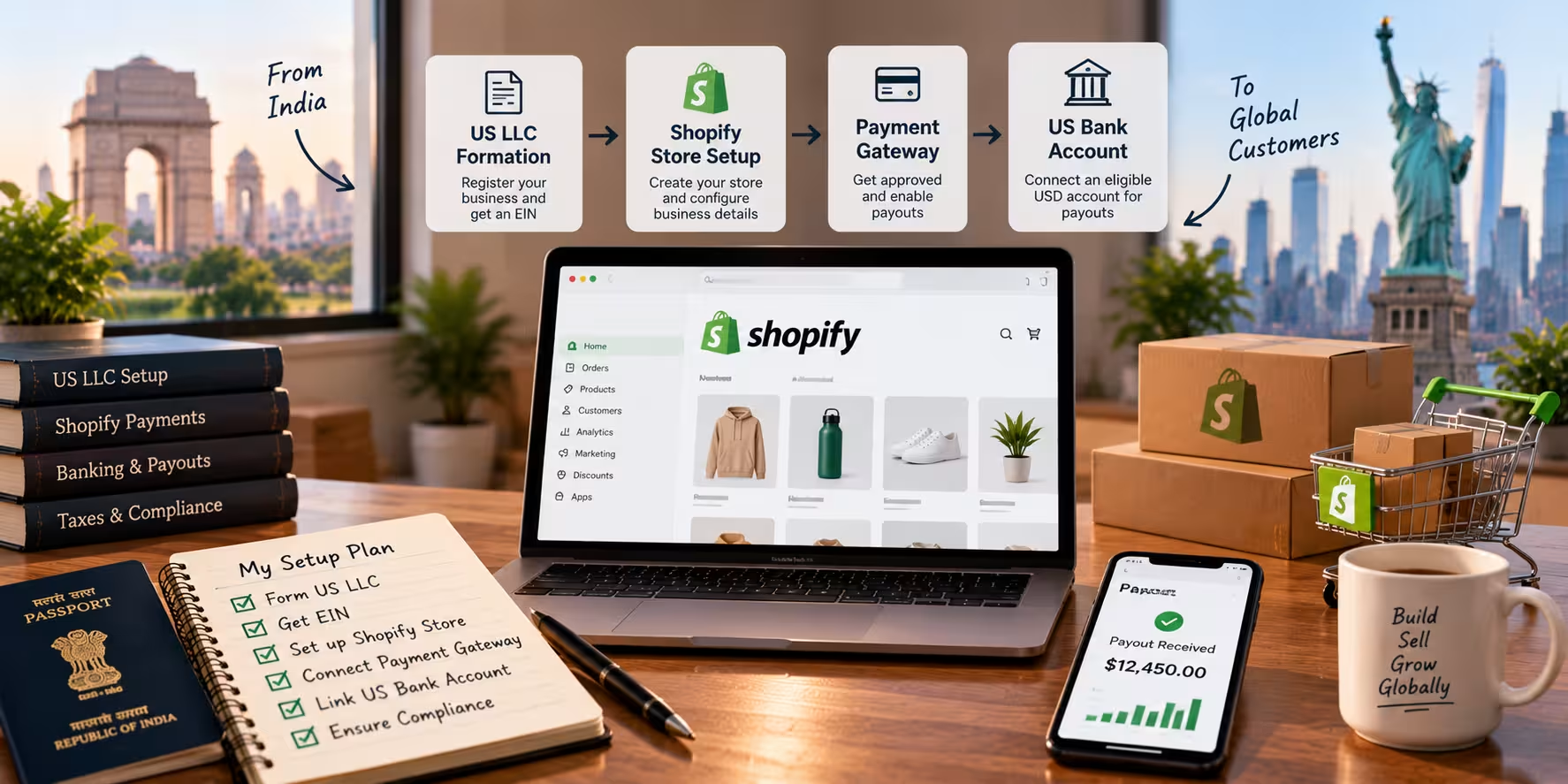
US LLC Tax and Compliance Requirements After Shopify Payouts Begin
Once payments are approved, keep your business records and compliance calendar organised. Certain foreign-owned, single-member US LLCs may have a Form 5472 filing obligation alongside a pro forma Form 1120 when the applicable reporting requirements are met. The obligation depends on the entity’s circumstances and reportable transactions, so do not assume that having no US income-tax liability means there are no filing requirements.
For more information, read the guide to Form 5472 for foreign-owned US LLCs. It is important to understand the relevant reporting rules and deadlines rather than waiting until the end of the tax year to investigate them.
Indian founders should also review their Indian tax and foreign-asset reporting obligations with a qualified adviser. Opening a US LLC or receiving Shopify payouts does not, by itself, settle those questions. Your personal tax residency, business activities, money transfers, and ownership arrangements may affect the requirements that apply.
Ongoing compliance deserves attention from the start. This is why I recommend reading why forming an LLC is the easy part and compliance is the hard part. A company that receives payments successfully still needs accurate records and a plan for its continuing obligations.
My Advice on Shopify US LLC Setup for Non-Residents in India
A Shopify US LLC non resident setup should be planned around the whole payment flow, not just the company registration. Before spending money on formation, check which gateway you intend to use, what it requires from a foreign owner, what kind of business address it accepts, and which bank accounts qualify for payouts.
I would rather see a founder verify these requirements before launching than discover after the first sales that the money cannot be transferred. A US LLC can be useful for the right ecommerce business, but the goal is not simply to own a US company. The goal is to build a legitimate setup that the payment provider can verify and that the founder can maintain over time.
Start by confirming the payment provider’s eligibility rules, preparing consistent company and owner information, and checking that your payout account meets the requirements. Then build a compliance process that covers your US company and your obligations in India. This approach is more practical than assuming company formation alone will solve every payment problem.
This article is for general informational purposes only and does not constitute legal, tax, or financial advice. Tousif Akram and FormLLC are not a law firm or CPA firm. Consult a licensed professional for advice specific to your situation.
Ready to Form Your US LLC?
Free 30-minute consultation with no obligation and no sales pressure.
Book Free Call