US LLC Compliance for Non Residents: What Founders Need to Know

Tousif Akram
IRS CAA | Founder, FormLLC
US LLC Compliance for Non Residents: Why Formation Is Only the Starting Line
I have seen this happen more times than I can count. A founder spends days choosing a company name, selecting a state, preparing documents, and finally gets the message they have been waiting for: “Your LLC has been approved.” For a moment, it feels like the hard part is over. But for international founders, US LLC compliance for non residents is where the real responsibility begins. Forming the company is only the starting point; maintaining it properly requires understanding reporting requirements, tax classification, state obligations, and important filing deadlines.
Then a few months later, the questions begin. “Do I have to file anything?” “Do I have to pay taxes in the US?” “What happens if my LLC has no US employees?” “Do I need to file even if I didn't make any money?” And sometimes the most uncomfortable question is, “I formed the company months ago. Was I supposed to do something already?”
This is the part of international company formation that I think deserves much more attention. Forming the company is Day 1. Maintaining it is the real business.
US LLC Compliance for Non Residents Is More Than an Annual Fee
When founders search for US LLC compliance for non residents, they often expect one simple checklist. Unfortunately, there isn't one checklist that applies identically to every foreign-owned LLC.
Your obligations can depend on how the LLC is classified for federal tax purposes, how many owners it has, whether it has employees, whether it has US activities or income, and what transactions take place between the company and its owners or other related parties.
That is why I don't like saying, “Just form a US LLC and file one annual return.” The reality is more complicated. A single-member LLC owned by a foreign person can have very different federal reporting requirements from a multi-member LLC that is taxed as a partnership or an LLC that elects corporate treatment.
The IRS recognizes different tax classifications, which means international founders need to understand their specific company structure rather than rely on a generic compliance checklist.
If you are still deciding whether forming a US company is right for you, my article on Forming an LLC Is Easy. Compliance Is the Hard Part explains why the work does not stop after the formation documents are approved.
The First Mistake: Thinking “No Tax” Means “No Filing”
This is probably the biggest misunderstanding I see. A founder may hear that their foreign-owned LLC doesn't necessarily owe US income tax in a particular situation. Then they conclude, “So I don't have to file anything.”
Those are two different questions.
Tax liability and reporting obligations are not always the same thing. Certain foreign-owned US disregarded entities can have Form 5472 information-reporting requirements, together with a pro forma Form 1120 when the applicable reporting rules are triggered.
That is one reason I tell founders never to build their compliance strategy around the phrase “my LLC is tax-free.” First understand what the company is required to report. Then determine whether any tax is actually due.
I wrote more about this distinction in Tax-Free US LLC: What International Founders Should Know, because the phrase “tax-free” can create expectations that do not match the actual compliance responsibilities of the company.
Foreign-Owned LLC Compliance Can Be Different
The phrase foreign owned LLC compliance covers a lot of different situations.
Suppose someone living in India owns a single-member US LLC. That LLC may be treated as a disregarded entity for federal income tax purposes. Now imagine another founder owns an LLC with a business partner. A domestic LLC with two or more members generally defaults to partnership classification for federal tax purposes unless it makes a different election.
Then consider an LLC that elects to be taxed as a corporation. The reporting picture changes again.
So when someone tells you, “Every foreign-owned LLC files the same forms,” I would be cautious. The ownership structure and tax classification matter.
Understanding US LLC Reporting Requirements
This is where US LLC reporting requirements become important. Your company may have state-level requirements and federal requirements, and these are not interchangeable.
The state where your LLC is registered may require an annual report, annual statement, franchise tax, or another recurring filing or payment. Separately, the federal government may require tax returns or information returns depending on the company's classification and activities.
A state annual report does not replace a federal tax filing. Likewise, completing a federal filing does not necessarily satisfy a state's annual requirements.
This is why I encourage founders to keep two separate questions in mind: What does my state require? What does the IRS require? Both matter.
US LLC Annual Compliance Is a System, Not a Single Form
People often search for US LLC annual compliance as if there is one universal annual filing. There isn't.
For some companies, maintaining good standing with the state may involve an annual report or recurring state fee. For others, federal reporting can be the bigger issue. The applicable deadlines can also depend on the company's structure and tax classification.
Certain foreign-owned US disregarded entities, for example, can have Form 5472 reporting requirements that involve submitting a pro forma Form 1120 with Form 5472 attached. That is very different from simply saying, “Your LLC has to file Form 1120 every year.”
That statement would be too broad.
The better approach is to identify the company's classification first and then determine which federal and state obligations actually apply.
What About US LLC Annual Filing?
The same problem applies to the phrase US LLC annual filing. An LLC doesn't have one universal federal “annual LLC filing.”
There can be a state filing to maintain the company's status, while federal filing requirements depend on how the LLC is taxed. A single-member LLC, a multi-member LLC, and an LLC taxed as a corporation should not automatically be treated as the same thing.
This distinction can seem boring when you're forming the company. It becomes very important when a deadline arrives.
The Forms That Make International Founders Nervous
Eventually, most founders hear names like Form 5472 and Form 1120. This is where I see a lot of confusion online because the names of the forms can make the situation sound simpler—or more complicated—than it actually is.
Form 5472 for a Foreign-Owned LLC
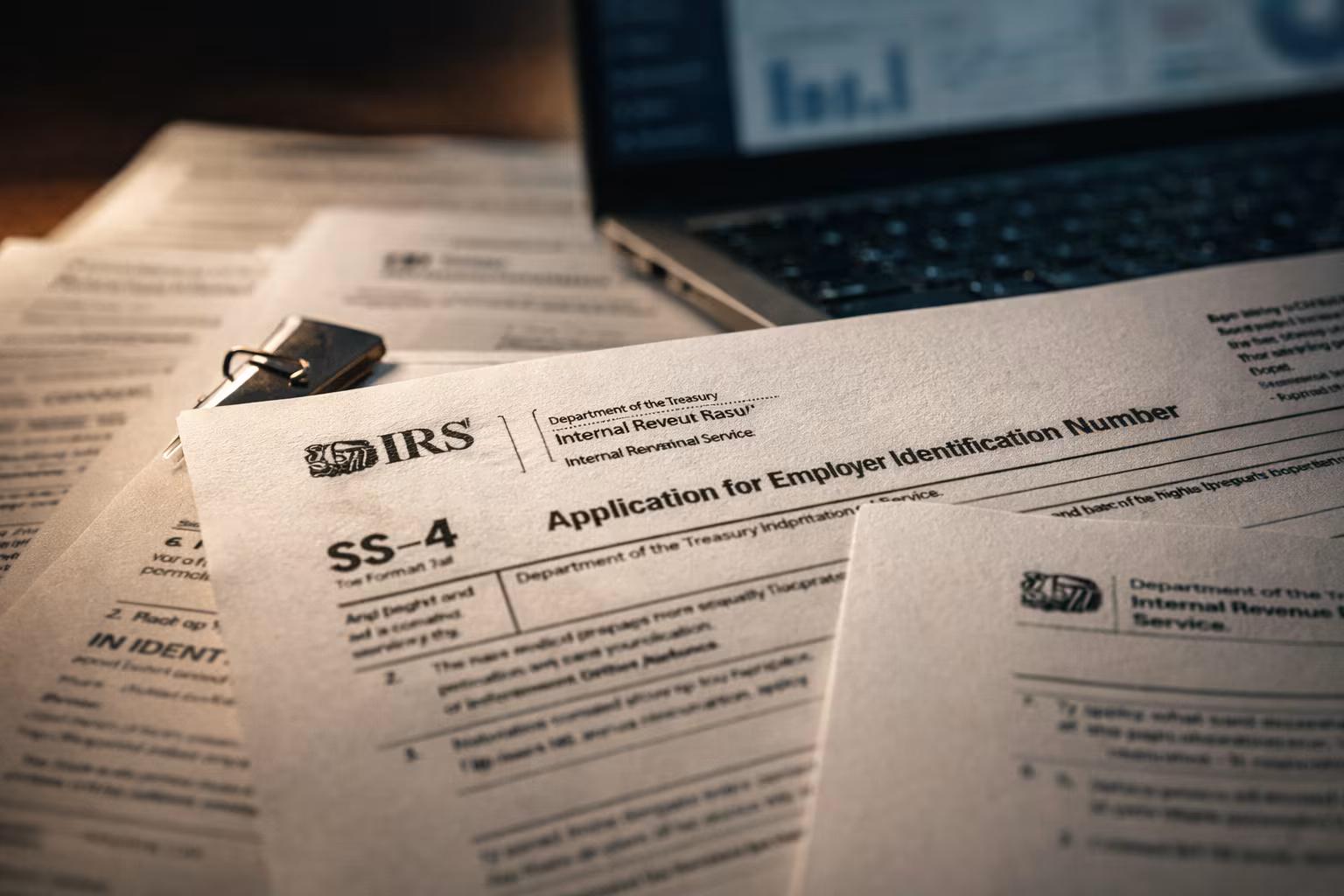
The search phrase Form 5472 foreign owned LLC is common because certain foreign-owned US disregarded entities can have a Form 5472 reporting requirement.
Form 5472 is an information return for certain 25% foreign-owned US corporations and foreign corporations engaged in a US trade or business. The reporting rules can also apply to foreign-owned US disregarded entities for applicable reportable transactions.
This is important because the reporting requirement can exist even where the founder thinks, “My company didn't really make any money in America.”
Transactions involving the owner and company can matter. That's why founders should not assume that “no revenue” automatically means “nothing to report.”
For a deeper explanation, you can read Form 5472 for Foreign-Owned US LLCs.
Form 1120 for a Foreign-Owned LLC
Then there is Form 1120 foreign owned LLC. This phrase can be misleading if you don't understand the company's tax classification.
Form 1120 is the US Corporation Income Tax Return and is generally associated with entities taxed as corporations. However, certain foreign-owned US disregarded entities can also have a requirement to submit a pro forma Form 1120 with Form 5472 attached when the applicable Form 5472 reporting rules apply.
The pro forma return is not the same thing as saying the LLC has elected to be taxed as a corporation.
That distinction is worth understanding. A form's name doesn't necessarily tell you how your entire company is taxed.
What Are the US LLC Tax Requirements for Non Residents?
This is where I become especially careful with advice.
The US LLC tax requirements for non residents depend on the actual facts. Where does the founder live? How is the LLC classified? Where is the business conducted? What type of income does the company earn? Does it have US employees? Does it have US business activities? Are there foreign owners or partners? Are there transactions between the company and its owner?
There isn't one sentence that can answer all of those questions.
And this is why I strongly disagree with the way some websites market international LLCs as simply “tax-free.” A foreign-owned LLC may have little or no US federal income tax in a particular situation, but that does not mean there are no reporting obligations.
The Foreign-Owned US LLC Needs Attention After Formation
A foreign owned US LLC is still a US company with obligations that need to be tracked.
The founder might live thousands of miles away. The customers might be outside America. The owner might never visit the state where the LLC was formed. But the company still needs to be maintained properly.
That can include keeping the registered agent active, maintaining state good standing, completing applicable federal filings, keeping ownership information accurate, and tracking transactions that may trigger reporting requirements.
The exact checklist depends on the company. That is why I would rather see a founder maintain a customized compliance calendar than rely on a generic internet checklist.
My US LLC Compliance Checklist for International Founders
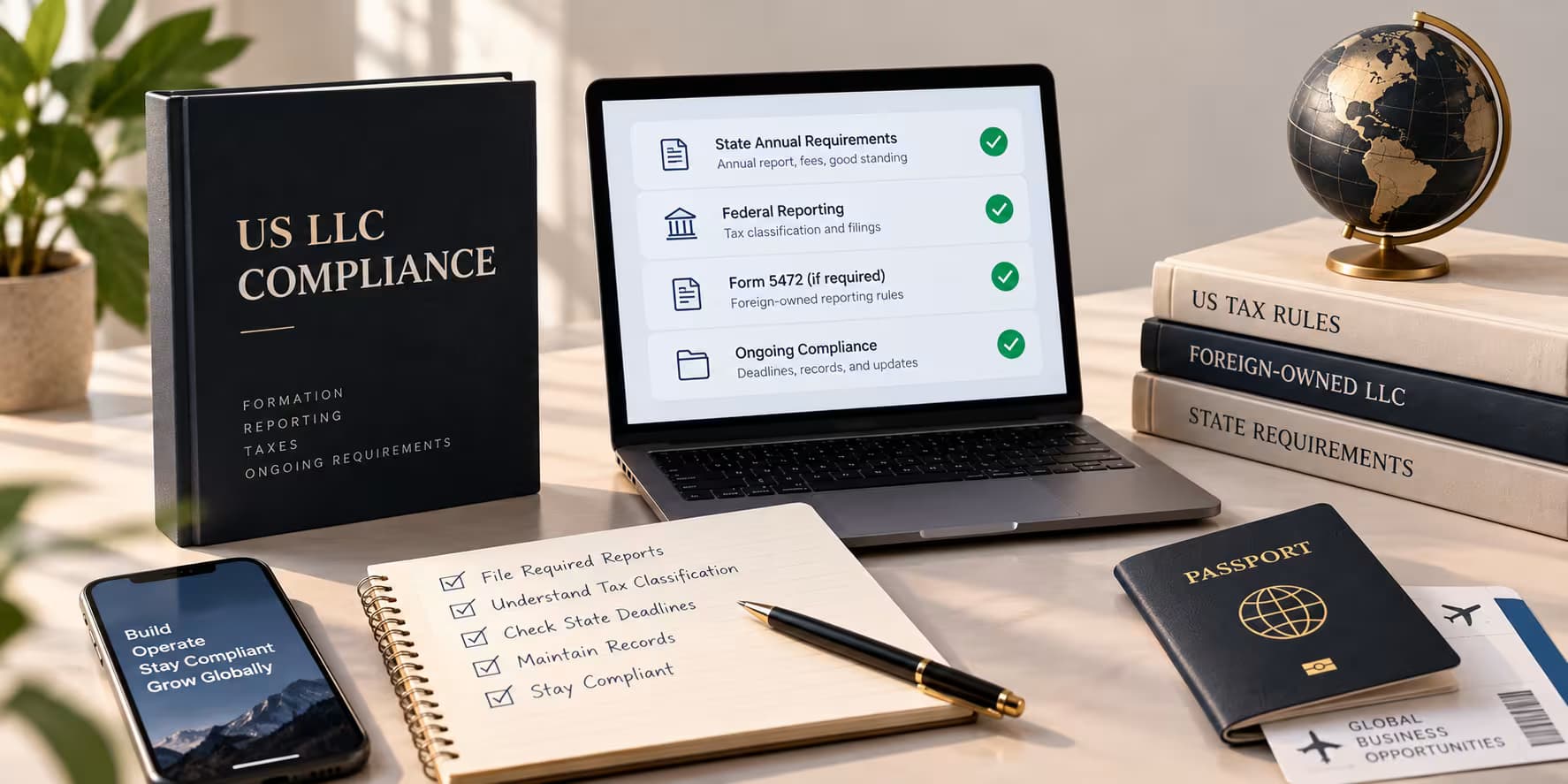
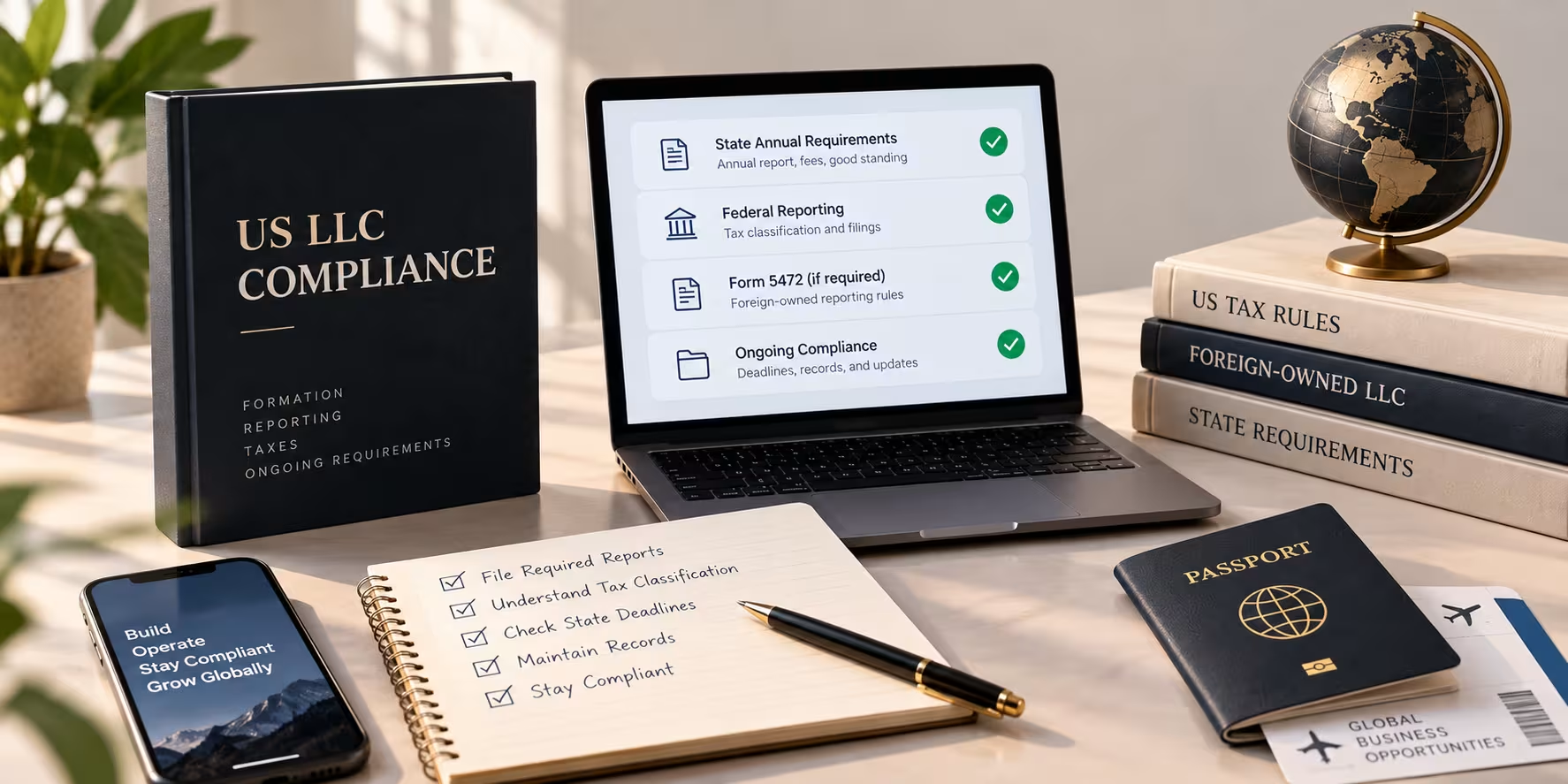
If I were building a simple US LLC compliance checklist for an international founder, I would start by asking whether the LLC's registered agent is active, whether the company remains in good standing, and whether any annual report, franchise tax, or recurring state filing is due.
Next, I would determine the LLC's federal tax classification and identify which federal return or information return applies. I would also confirm that the ownership information is accurate and consistent with the company's actual ownership and IRS records.
The next area I would review is transactions. Has the owner put money into the company? Has the owner taken money out? Has the founder paid business expenses personally? Are there transactions between the company and related foreign parties?
I would also make sure the company's banking and financial records are separate and organized. The business should be able to document income, expenses, owner contributions, distributions, and other relevant transactions.
Finally, I would record federal and state deadlines somewhere that the founder will actually check. That last step sounds simple, but missed deadlines are often caused by poor tracking rather than complicated tax law.
Non Resident LLC Tax Filing Is Where Founders Get Caught
The phrase non resident LLC tax filing makes the process sound like there is one return for every nonresident. There isn't.
The filing depends on the entity.
For example, a foreign-owned US disregarded entity with applicable Form 5472 reporting can have a specific filing process involving Form 5472 and a pro forma Form 1120. A multi-member LLC taxed as a partnership can have a different federal filing requirement, while an LLC taxed as a corporation can have another.
That's why I would never recommend choosing a tax filing based only on the fact that you are a nonresident.
Start with the entity's classification. Then determine the filing obligations.
The Expensive Lesson Is Usually Not the LLC
One of the biggest lessons I've learned from helping international founders is that the formation fee is rarely the biggest risk.
The bigger risk is assuming that the company can be formed and then ignored.
A founder may spend weeks deciding between states and then spend ten minutes thinking about compliance. I think that should be reversed.
State selection matters. Formation matters. But knowing what happens twelve months after formation matters just as much.
The company doesn't stop existing because the formation process is finished.
This is also something I have seen throughout the broader journey of international entrepreneurship. My article What Helping 5,000 Entrepreneurs Taught Me About Starting a Global Business explores how building a business is a longer process than simply reaching the first milestone.
Compliance Is Part of the Global Business Infrastructure
For international founders, compliance should not be viewed as an isolated administrative task. It is part of the infrastructure that allows a company to operate properly over time.
Your LLC structure, EIN, banking, bookkeeping, contracts, payments, tax reporting, and ongoing state obligations all connect to one another. When these pieces are organized, the business becomes easier to manage as it grows.
That broader perspective is something I also explored in Global Business from India, where I discuss how a small international business can gradually develop into something much larger.
The goal isn't simply to create a US company. The goal is to build a business that can continue operating responsibly after the formation documents are approved.
The Starting Line
This is why I call company formation Day 1.
The approval email feels like an ending because it gives you something tangible: a certificate, a company name, and a state filing. But what you have really received is a vehicle.
Now you have to maintain it.
You have to understand its reporting requirements. You have to keep its records organized. You have to meet the applicable deadlines. And, most importantly, you need to understand that the right compliance answer depends on the company you actually built.
That is the lesson I want international founders to remember:
Don't just form the LLC. Learn how to maintain it.
Because the LLC approval may be the finish line for the formation process.
But for the business itself, it is only the starting line.
— Tousif Akram Founder, FormLLC
This article is for general informational purposes only and does not constitute legal, tax, or financial advice. Tousif Akram and FormLLC are not a law firm or CPA firm. Consult a licensed professional for advice specific to your situation.
Ready to Form Your US LLC?
Free 30-minute consultation with no obligation and no sales pressure.
Book Free Call