The 10 Questions Indian Founders Ask About a US LLC for non-residents , Answered

Tousif Akram
IRS CAA | Founder, FormLLC
The 10 Questions Indian Founders Ask About a US LLC, Answered
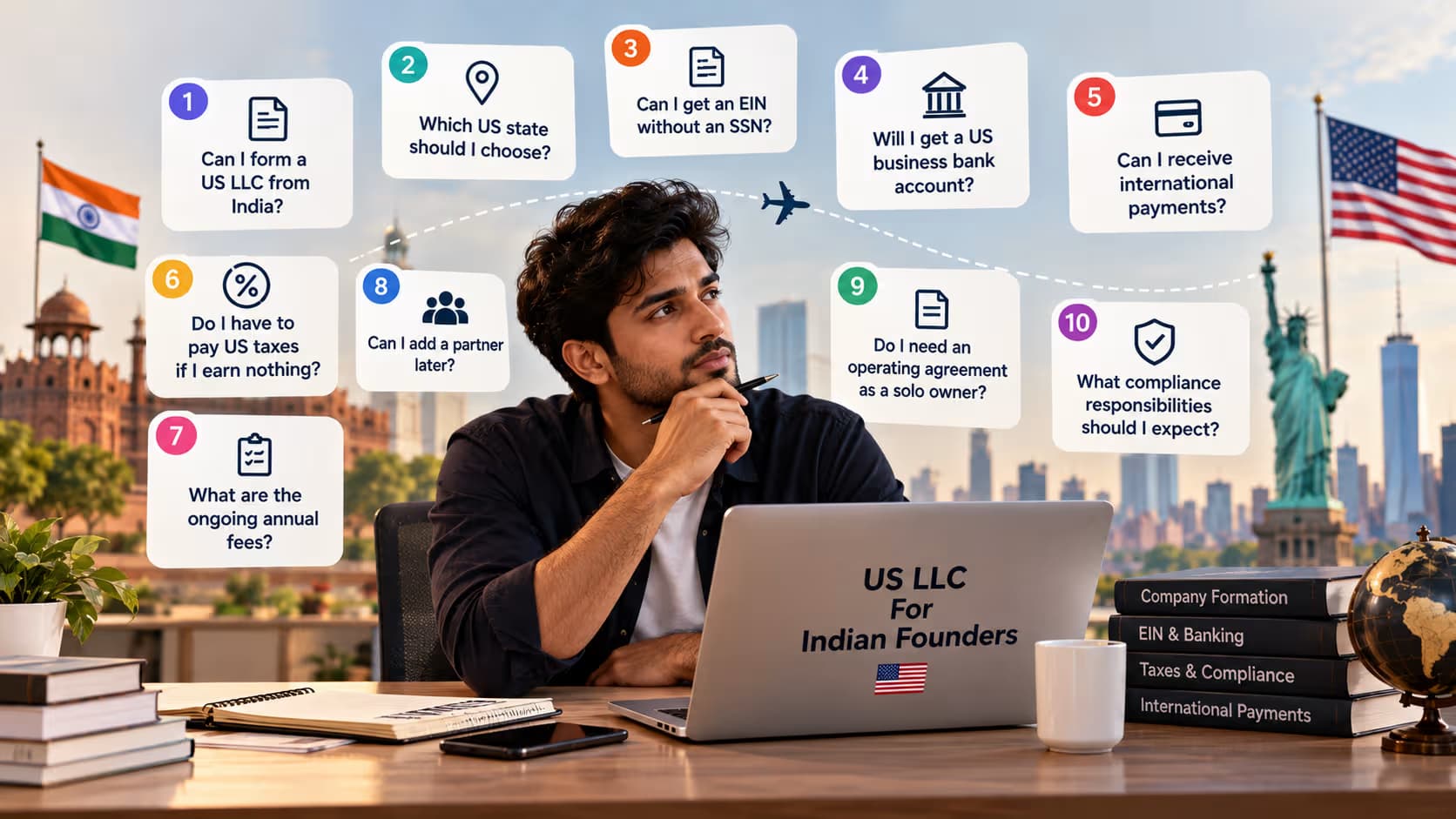
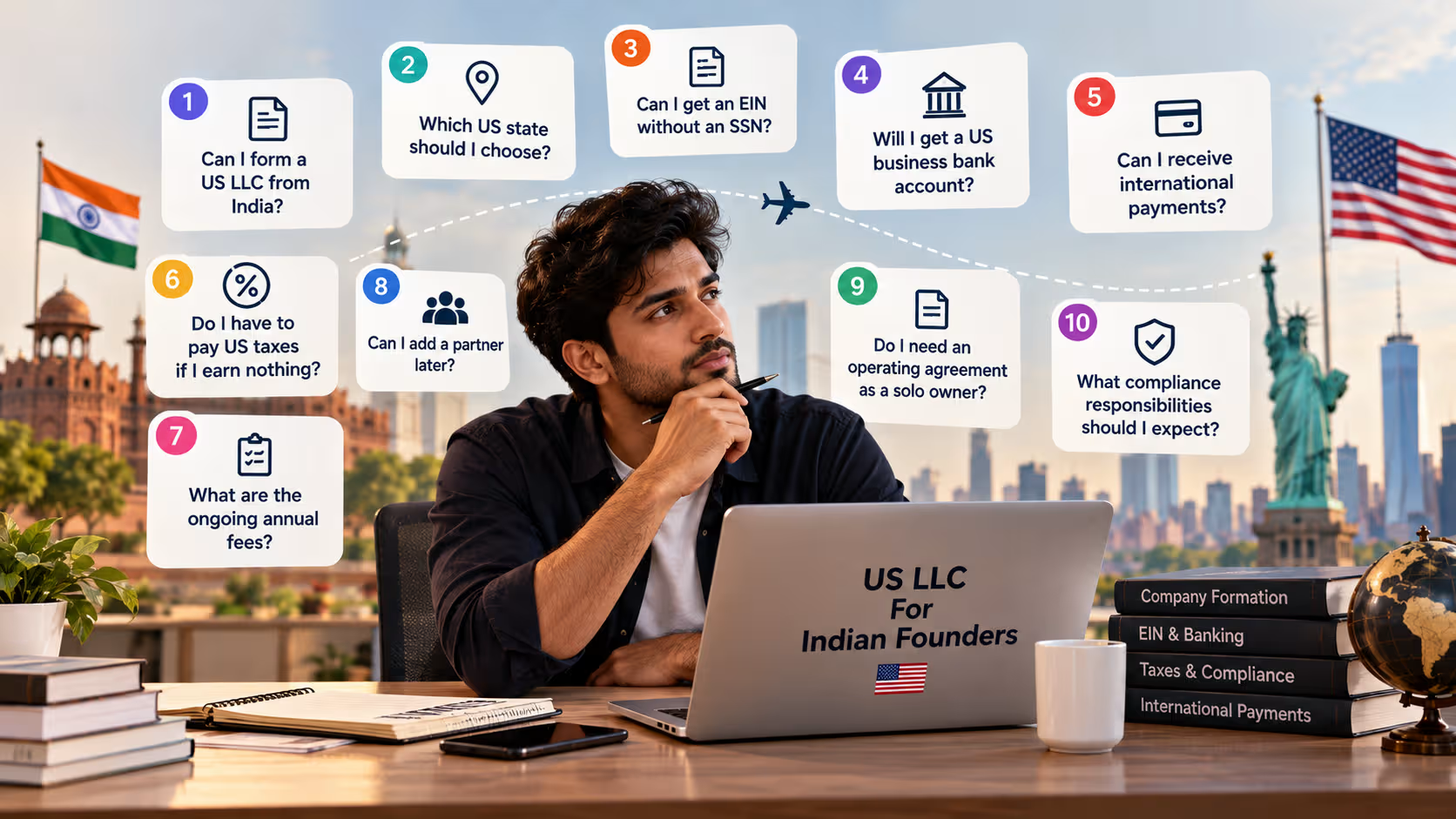
If you're researching a US LLC for non-residents, you probably have questions about more than just registering a company. Indian founders often ask me about EIN applications, US business bank accounts, payment gateways, taxes, annual fees, and ongoing compliance before deciding whether a US company is right for them.
After helping international founders through FormLLC, I've learned that the hardest part is often understanding what happens *after* the company is formed. I've brought together ten practical questions that reflect the recurring concerns I encounter when speaking with founders who want to establish and manage a US business from India.
This guide explains the key decisions to consider before formation and the responsibilities that may follow. My goal is to help you understand the process, prepare for common requirements, and make informed decisions about your business.
1. Can Indian Founders Form a US LLC for Non-Residents?
Yes. You generally do not need to be a US citizen or resident to own a US LLC. You can form a company in a state such as Wyoming or Delaware while living in India, subject to the applicable state requirements.
However, forming the LLC is only the first step. You still need to consider the business purpose, registered agent, EIN application, banking eligibility, and ongoing compliance. The right structure depends on what you plan to do with the company—not just where you want it registered.
Before starting, review our guide to starting a US LLC from India to understand the broader formation process and the decisions involved in establishing a company as an international founder.
2. Which US State Should I Choose for My LLC?
Wyoming and Delaware are two popular options, but neither is automatically the best state for every founder. Wyoming may suit founders looking for a straightforward LLC structure and predictable state filing requirements, while Delaware is often considered by businesses with particular legal or fundraising plans.
Your actual operations, future investors, state registration obligations, and ongoing costs should guide the decision. I encourage founders to compare the complete cost of maintaining a company rather than choosing based on the cheapest formation advertisement.
You can start with my US LLC guide for non-residents. If you're also considering how the company will be governed, review the US LLC operating agreement guide for non-residents.
3. Can I Get an EIN Without an SSN or ITIN?
Yes. International applicants can apply for an Employer Identification Number (EIN) without an SSN or ITIN, provided they follow the applicable IRS procedure and meet the requirements.
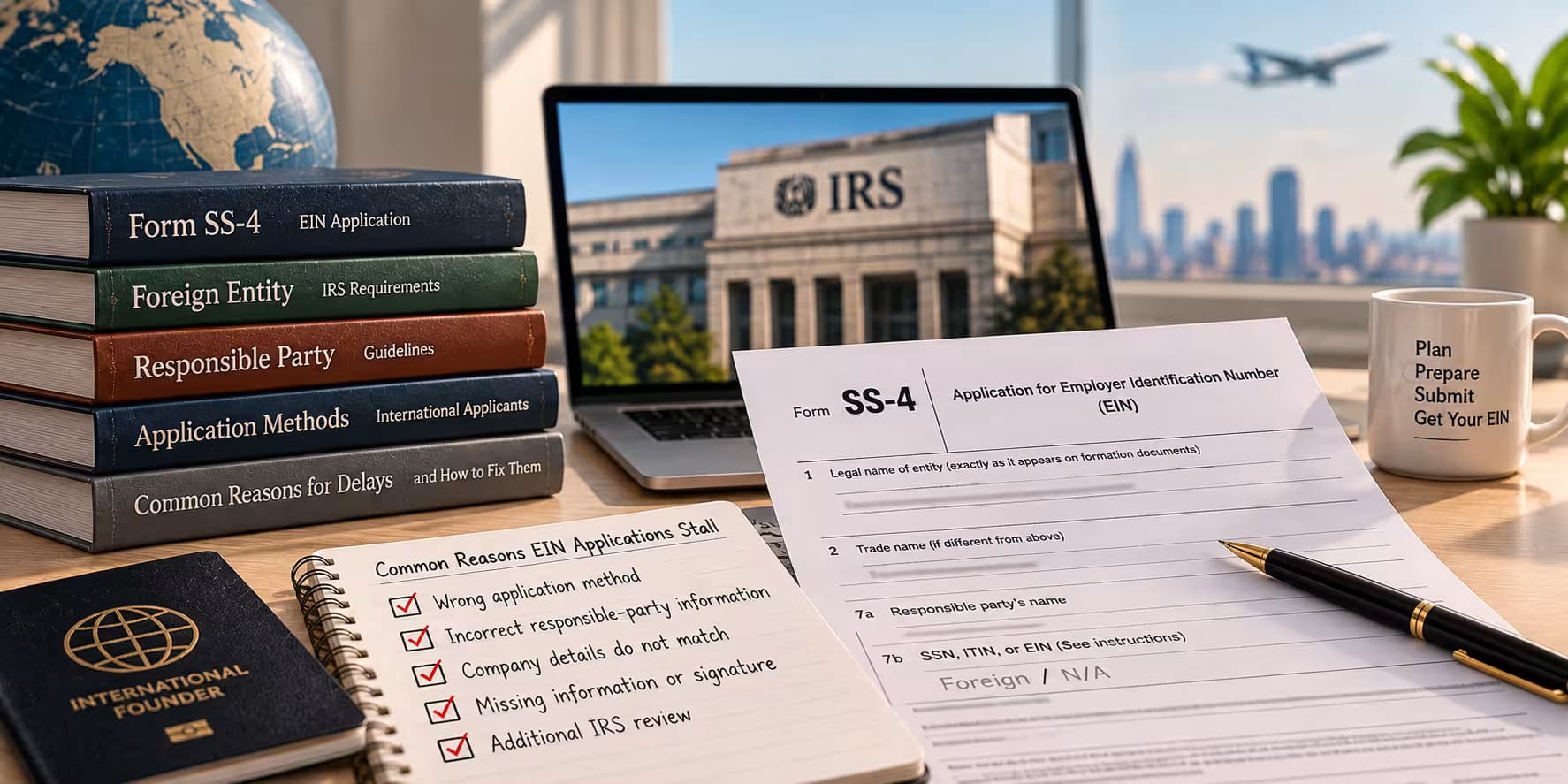
If your principal place of business is outside the United States, you generally cannot use the IRS's standard online EIN application. International applicants should review the available application methods and the instructions for Form SS-4 to determine the appropriate process.
The details on Form SS-4 matter, so make sure the responsible-party information and business details are accurate. My guide to getting an EIN without an SSN as a non-resident explains this part of the setup process in more detail.
4. Will a US LLC Guarantee Me a US Business Bank Account?
No. Forming an LLC and obtaining an EIN do not guarantee approval for a US business bank account. Banks and financial service providers assess the business, ownership, address information, planned or existing operations, and supporting documents.
Some providers accept applications from eligible founders who live outside the United States, but each has its own business eligibility and verification requirements. Before applying, check the provider's current rules, make sure your company information is consistent, and be prepared to explain your business activity clearly.
A US company is not a shortcut around banking verification. Read our guide on opening a US bank account as a non-resident LLC owner before choosing a provider or submitting an application.
5. Can I Use My US LLC to Receive International Payments?
Potentially, yes—but the answer depends on the payment provider, your business model, and your eligibility. A US LLC may make certain payment arrangements possible, but not every gateway supports every business type or non-resident owner.
If your main reason for forming an LLC is to access a particular payment gateway, check its requirements *before* spending money on formation. Confirm the owner-address rules, accepted verification documents, payout-account requirements, and any restrictions that could affect your business.
Payment processing should be part of your formation planning rather than something you investigate only after the company has been registered. A provider's acceptance of US companies does not automatically mean that every international founder or business model will qualify.
6. Do I Have to Pay US Taxes If My LLC Earns No Money?
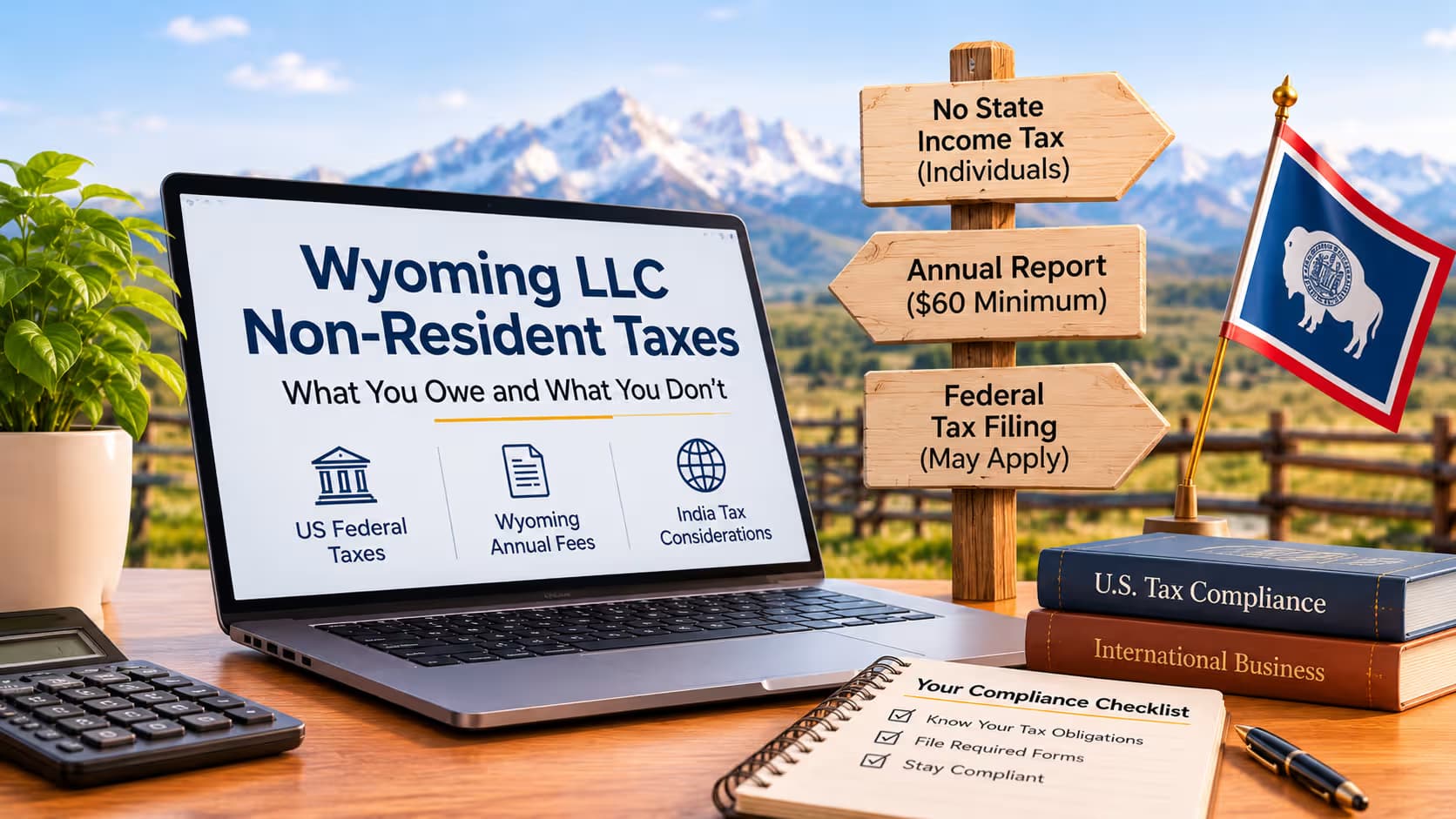
Not necessarily, but zero revenue does not automatically mean zero filing obligations. The answer depends on your LLC's tax classification, activities, ownership, transactions, and individual circumstances.
A foreign-owned, single-member US disregarded entity may have to file Form 5472 with a pro forma Form 1120 when the applicable reporting conditions are met. These information-reporting obligations are separate from whether the business owes federal income tax.
If you live in India, you should also review your Indian tax obligations with a qualified adviser. Do not assume that forming a US LLC moves your personal tax responsibilities out of India or that an inactive company has no filing requirements.
7. What Is Form 5472, and Why Do Foreign Owners Hear About It So Often?
Form 5472 is an IRS information return used to report certain transactions involving a reporting corporation and related parties. Special reporting rules can also apply to certain foreign-owned US disregarded entities.
The details matter because not every LLC has the same filing obligation. Whether you need to file depends on the applicable reporting rules and your company's transactions. Missing a required filing can be expensive, so it is important to understand your obligations before the filing deadline.
I recommend keeping records of owner contributions, distributions, and other relevant transactions from the beginning rather than trying to reconstruct them at tax time. If you're uncertain whether your company needs to file, consult a qualified tax professional familiar with foreign-owned US entities.
8. Do I Still Need a BOI Report in 2026?
Beneficial Ownership Information (BOI) reporting requirements have changed, which means older online guides may no longer reflect the current rules. The article's previous description of the current framework should be verified before publication, especially if the rules or reporting requirements have changed.
Before acting, check the requirements that apply to your company and confirm whether any reporting obligation remains. A BOI exemption does not eliminate separate IRS or state compliance requirements.
9. What Happens After I Form the LLC? Are There Annual Fees?
Yes. You should plan for ongoing costs, filing deadlines, and company maintenance after formation. Requirements vary by state. Wyoming LLCs generally file annual reports, while Delaware LLCs generally pay an annual LLC tax rather than filing the same type of annual report.
Your compliance calendar should include registered-agent services, state renewals, relevant tax filings, and any other obligations that apply to your business. Missing a deadline can lead to penalties or administrative problems, so keep official filing confirmations and payment records for each completed task.
You should also understand the role of your registered agent and what happens if you need to change providers. Our guide on changing the registered agent for a US LLC covers this related responsibility.
10. What If I Form an LLC and Later Decide I Don't Need It?
Do not simply stop using the company and assume it has been closed. First, check the company's status with the state, identify any outstanding filings or fees, and follow the applicable dissolution process.
You should also review federal tax requirements because state dissolution does not automatically complete your IRS obligations. Depending on your circumstances, final tax returns, information filings, or other administrative steps may still be required.
If the LLC is no longer useful, a deliberate closure is usually better than leaving it unattended. Check the requirements before the company becomes inactive, and seek professional help if earlier filings have been missed.
My Advice to Indian Founders Considering a US LLC
The questions above have one thing in common: company formation is only one part of running a US business from India. Before registering, be clear about why you need the LLC and how it will support your business model.
Before applying for banking or payment services, confirm that the provider supports your circumstances. Before assuming the company has no compliance obligations, check the rules that apply to your ownership, tax classification, transactions, and state of registration.
A US LLC for non-residents can be useful for the right business, but it is not a universal solution for every freelancer, ecommerce seller, or startup. The best setup is the one that supports your business goals, fits your circumstances, and can be maintained properly over time.
My advice is simple: research the requirements before you spend money, keep accurate company records from the beginning, and seek qualified professional advice when legal or tax questions depend on your specific situation.
This article is for general informational purposes only and does not constitute legal, tax, or financial advice. Tousif Akram and FormLLC are not a law firm or CPA firm. Consult a licensed professional for advice specific to your situation.
Ready to Form Your US LLC?
Free 30-minute consultation with no obligation and no sales pressure.
Book Free Call